



Should 30-year-old Ductwork Be Replaced?
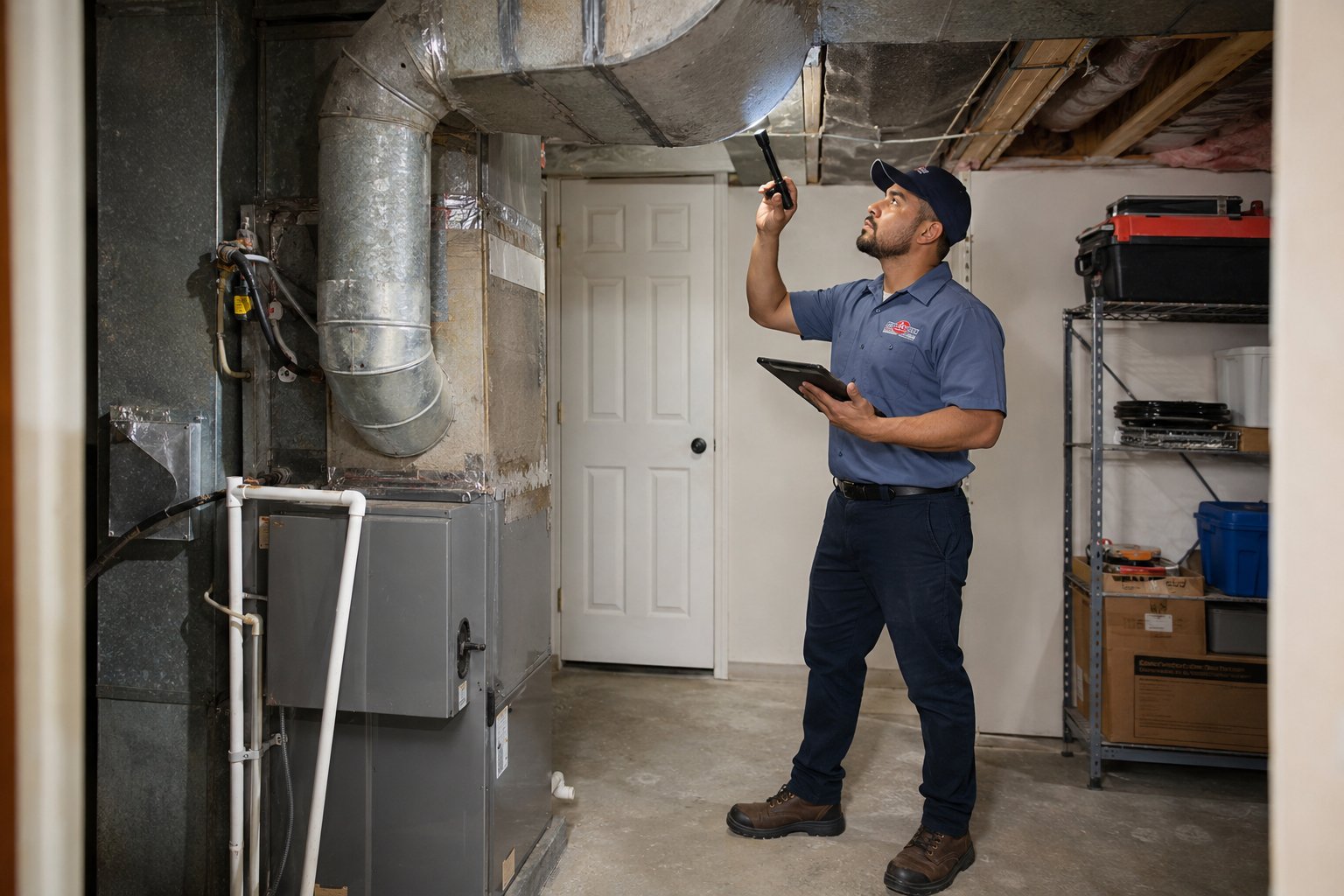
Yes, 30-year-old ductwork may need to be replaced, but age alone is not the only reason to make that decision. Some older ducts are still usable if they are sealed, properly sized, clean, insulated where needed, and delivering balanced airflow. Others lose comfort and efficiency because of leaks, poor insulation, damaged joints, old design choices, or hidden deterioration.
For homeowners in Central and Northern New Jersey, this question often comes up during an AC or heating replacement, a renovation, or a recurring comfort problem that never seems to go away. If your rooms feel uneven, your system runs longer than expected, or dust and stale air are constant concerns, a professional duct evaluation can help determine whether sealing, repairs, redesign, or replacement is the right next step. Meyer & Depew can evaluate ductwork as part of broader residential HVAC services when comfort or airflow problems point beyond the equipment itself.
Thirty-year-old ductwork should be inspected, not automatically replaced. Replacement becomes more likely when ducts are leaking heavily, undersized, poorly routed, contaminated, rusted, crushed, disconnected, or no longer compatible with the heating and cooling system serving the home.
When 30-year-old ductwork may still be usable
Ductwork can last a long time when it was installed well, protected from moisture, properly supported, and sized correctly for the home. If the ducts are delivering enough air to each room, are not visibly damaged, and can be sealed or insulated where needed, full replacement may not be necessary.
A qualified HVAC technician may recommend targeted improvements instead of a complete replacement. That can include sealing accessible joints, repairing loose connections, adding insulation in unconditioned spaces, improving return airflow, or correcting a limited section that has been crushed or disconnected.
The key is performance. If older ductwork is moving air safely and effectively, replacement may not offer enough benefit to justify the disruption. If the ducts are the reason a newer AC, furnace, heat pump, or air handler cannot perform properly, leaving them untouched can limit the value of the equipment upgrade.
Signs old ductwork may be holding your HVAC system back
Air ducts are easy to forget because much of the system is hidden behind walls, ceilings, attics, basements, crawl spaces, and mechanical rooms. Still, old ducts can create noticeable comfort problems throughout a home.
- Some rooms are much warmer or colder than others.
- Airflow feels weak at certain supply vents.
- The HVAC system runs for long cycles but comfort still feels uneven.
- Utility bills rise without an obvious change in usage.
- Dust returns quickly after cleaning.
- There are musty odors when the blower starts.
- Flexible ducts are kinked, crushed, torn, or poorly supported.
- Metal ducts show rust, separated seams, or loose connections.
None of these signs proves that the ductwork must be replaced by itself. They do suggest that the duct system deserves attention, especially if the equipment has already been maintained or replaced and the comfort complaints continue.
Why duct condition matters during HVAC replacement
Replacing heating or cooling equipment without looking at 30-year-old ductwork can be a missed opportunity. New equipment depends on the duct system to move the right amount of air. If the ducts are undersized, leaking, poorly balanced, or restricted, the new system may struggle to deliver the comfort and efficiency it was selected to provide.
This is especially important in older New Jersey homes where additions, finished basements, attic conversions, and past remodels may have changed the home’s heating and cooling needs. A duct layout that worked reasonably well decades ago may not serve the house evenly today.
Before investing in major equipment, it is worth asking whether the existing ductwork can support the system being proposed. That conversation may include airflow measurements, return air capacity, insulation, static pressure, room-by-room comfort concerns, and whether certain ducts should be repaired, resized, or replaced. If you are considering equipment replacement, Meyer & Depew’s quote request process can help start that evaluation.
Common ductwork problems in older homes
Thirty-year-old ductwork can develop problems slowly. In many homes, there is not one dramatic failure. Instead, small issues add up until the system feels noisy, dusty, inefficient, or uneven.
Air leaks at joints and seams
Leaky ducts can lose conditioned air before it reaches the rooms that need it. If ducts run through an attic, crawl space, basement, garage, or other unconditioned area, those leaks can make comfort problems more noticeable.
Poor insulation in unconditioned spaces
Ducts that pass through hot attics or cold spaces may gain or lose heat before air reaches the living area. Insulation problems can be especially frustrating during humid New Jersey summers and cold winter weather.
Undersized or poorly designed returns
Supply ducts get a lot of attention, but return airflow matters too. If the system cannot pull enough air back to the equipment, it can affect comfort, noise, filtration, and system performance.
Old layout choices that no longer fit the home
Additions, room changes, closed-off spaces, and finished basements can change airflow needs. A duct system may be old, patched, or extended in ways that leave certain rooms underserved.
Repair, seal, or replace: how the decision is usually made
The best solution depends on what is actually wrong. A duct system with a few accessible leaks may be a good candidate for sealing and repair. A system with widespread damage, poor sizing, missing returns, moisture problems, or major layout issues may be a stronger candidate for replacement or redesign.
| Situation | Likely next step |
|---|---|
| Minor leaks at accessible joints | Sealing and targeted repair may be enough. |
| Crushed or disconnected sections | Section replacement may be recommended. |
| Rooms with chronic weak airflow | Airflow testing and possible duct redesign may be needed. |
| Widespread rust, deterioration, or poor routing | Replacement may be the more practical long-term option. |
| New HVAC equipment with old, undersized ducts | Duct modifications may be needed to support the new system. |
A professional evaluation is important because duct problems are not always visible from the vents. Airflow, pressure, sizing, equipment capacity, and duct routing all work together.
- Make sure supply and return vents are open and not blocked by furniture, rugs, or storage.
- Inspect or replace the air filter if it is dirty.
- Check whether comfort problems are limited to one room, one floor, or the whole home.
- Look for obvious damage to accessible duct sections, such as loose connections or crushed flexible duct.
- Schedule professional service if airflow remains weak, rooms stay uneven, or ducts show signs of damage.
When duct replacement may be worth it
Duct replacement may be worth considering when the existing duct system is causing repeated comfort issues, limiting new equipment performance, or requiring repairs that do not address the underlying design problem. It may also make sense during a renovation when walls, ceilings, attics, or basements are already accessible.
Replacement can also be appropriate when ductwork has been affected by moisture, pests, severe rust, disconnected sections, or materials that are no longer in good condition. In those cases, simply sealing a few visible seams may not solve the larger issue.
For some homes, the answer is not all-or-nothing. A technician may recommend replacing a problem branch, adding a return, improving insulation, or modifying duct sizes rather than removing the entire system. The goal is to match the solution to the actual problem instead of assuming every older duct system needs the same fix.
How ductwork affects indoor air quality and comfort
Old ductwork can contribute to dust, odors, and uneven humidity concerns when it is leaky, dirty, poorly sealed, or pulling air from undesirable spaces. Duct issues can also make filtration less effective if air bypasses the filter or if return leaks draw in dust from basements, attics, or wall cavities.
That does not mean duct replacement is the only answer to indoor air quality concerns. Filtration, ventilation, humidity control, equipment maintenance, and air sealing can all play a role. If dust, stale air, or humidity are part of the concern, it may be useful to review both the duct system and broader air quality and comfort options.
When to call a professional
Call a qualified HVAC professional if you have 30-year-old ductwork and are noticing persistent airflow problems, rooms that never feel comfortable, loud duct noise, visible damage, musty odors, or comfort issues after equipment replacement. You should also have the ductwork evaluated before a major HVAC upgrade if the current system has always struggled to heat or cool the home evenly.
A professional can inspect accessible ductwork, evaluate airflow, look for obvious leaks or restrictions, and explain whether repair, sealing, modification, or replacement is the most practical recommendation. The right answer should be based on your home, your equipment, and the condition of the ducts, not on age alone.
FAQ
Does all ductwork need to be replaced after 30 years?
No. Some ductwork can remain serviceable beyond 30 years if it is in good condition, properly sized, sealed, and delivering balanced airflow. Age is a reason to inspect it, not an automatic replacement rule.
Can leaky ductwork make my AC or heating system seem weak?
Yes. Leaks, restrictions, undersized ducts, or poor return airflow can make an otherwise functional HVAC system feel less effective. A technician can help determine whether the issue is the equipment, the ducts, or both.
Should ductwork be replaced before or after a new HVAC system?
It should be evaluated before finalizing a new HVAC system. If the ducts cannot support the new equipment properly, modifications may be recommended as part of the installation plan.
Can I inspect ductwork myself?
You can safely look at accessible ducts for obvious damage, blocked vents, and dirty filters. Avoid opening equipment, disturbing sealed components, or attempting major duct modifications yourself. If the issue continues, schedule professional service.
Thirty-year-old ductwork should be replaced when its condition, sizing, layout, or leakage is hurting comfort, airflow, indoor air quality, or HVAC performance. If it is still sound and only needs targeted repairs, full replacement may not be necessary.
Thinking about replacing or upgrading your HVAC system?
Meyer & Depew can help you understand your options for comfort, efficiency, and long-term reliability in your New Jersey home or business.
Questions? Contact Meyer & Depew or call 908.272.2100.