


What Happens During a Professional AC Maintenance Visit?
Estimated reading time: 8 minutes
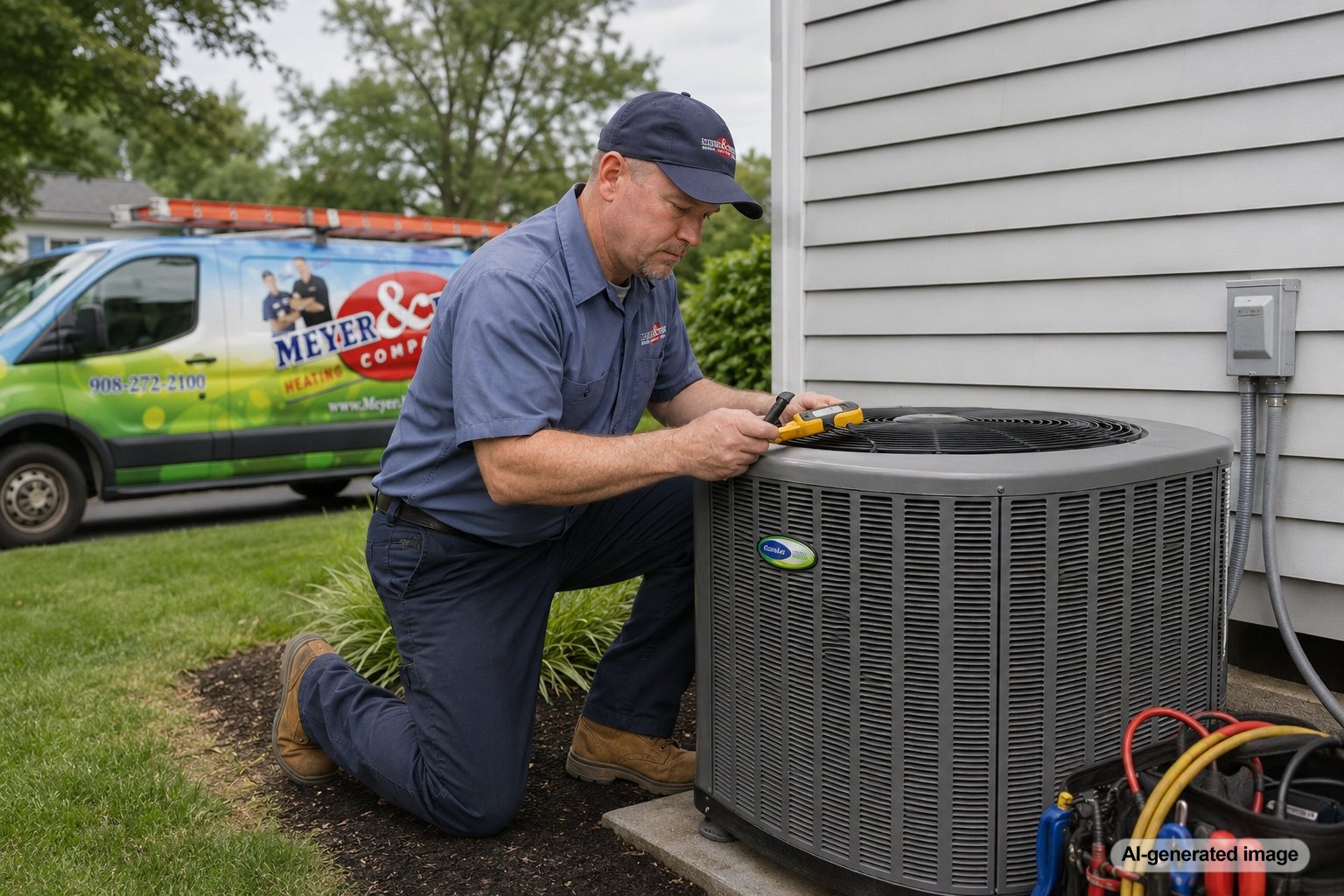
A professional AC maintenance visit is a careful checkup for your cooling system before heavy summer use puts it under steady demand. During the appointment, a qualified technician inspects, cleans, tests, and evaluates key parts of the system so small problems are easier to catch before they turn into larger comfort issues.
For homeowners in Central and Northern New Jersey, routine AC care can be especially helpful before humid, high-temperature weather settles in. A maintenance visit is not a promise that your system will never break down, but it can reduce the risk of avoidable strain and give you a clearer picture of how your cooling equipment is performing. If it has been a while since your last tune-up, Meyer & Depew offers professional AC service and maintenance for New Jersey homes.
During a professional AC maintenance visit, a technician typically checks thermostat operation, electrical connections, airflow, filters, coils, condensate drainage, refrigerant-related performance indicators, motor operation, safety controls, and overall cooling performance. The technician may also clean accessible components, identify wear, explain concerns, and recommend next steps when service or repair is needed.
Why AC Maintenance Is More Than A Quick Look
A good maintenance visit is more than turning the system on and confirming that cool air comes from the vents. Air conditioning equipment depends on a balance of airflow, electrical performance, heat transfer, drainage, controls, and refrigerant-side operation. If one part of that balance is off, the system may still run, but it may work harder than it should.
For example, a restricted filter can reduce airflow across the indoor coil. Dirt on the outdoor coil can make it harder for the system to release heat. A weakened capacitor can affect motor starting. A blocked condensate line can lead to water around the unit. These are different issues, but they can all show up as poor comfort, longer run times, higher operating strain, or an unexpected service call.
What The Technician Usually Checks First
Most AC maintenance visits begin with a conversation and a basic system review. The technician may ask whether you have noticed warm rooms, unusual noises, weak airflow, frequent cycling, water near the equipment, or changes in your utility bills. Those details help guide the inspection.
From there, the technician typically checks thermostat settings and operation, confirms that the system starts correctly, and looks at how the indoor and outdoor equipment respond. This first stage helps identify obvious operating concerns before deeper testing begins.
Airflow, Filters, And Comfort Performance
Airflow is one of the most important parts of AC performance. During maintenance, the technician may inspect the air filter, return air path, supply vents, blower components, and signs of airflow restriction. A dirty filter is simple, but it can create real problems when it forces the system to operate with less air moving through it.
Uneven cooling can also point to airflow issues, duct concerns, closed vents, blocked returns, zoning problems, or equipment that is not keeping up with the home. Maintenance does not always solve every comfort complaint in one visit, but it can help narrow down what may be causing the issue.
Cleaning Coils And Checking Heat Transfer
Your AC system cools the home by moving heat from indoors to outdoors. To do that efficiently, coils need to exchange heat properly. During a maintenance visit, the technician may clean accessible coil surfaces and inspect for dirt, debris, damage, or conditions that could interfere with heat transfer.
The outdoor unit is especially exposed to grass clippings, leaves, pollen, and everyday debris. In New Jersey, spring pollen and summer yard work can leave the outdoor coil coated enough to make the system work harder. Keeping the area around the outdoor unit clear can help, but professional maintenance allows the technician to evaluate the equipment more thoroughly and clean it safely.
Electrical Components And System Controls
Air conditioning systems use electrical components to start, run, and protect the equipment. A technician may check electrical connections, contactors, capacitors, relays, motors, disconnects, wiring condition, and control operation. Loose or worn electrical parts can contribute to unreliable starts, intermittent operation, or unnecessary strain on other components.
This is one of the areas where professional service matters. Homeowners should not open electrical compartments or test high-voltage parts. A qualified technician has the training and tools to evaluate these components while following appropriate safety practices.
Condensate Drainage And Moisture Issues
As your AC removes heat from indoor air, it also removes moisture. That moisture has to drain away properly. During maintenance, the technician may check the condensate drain, drain pan, pump if present, visible water stains, algae buildup, or signs that drainage has been backing up.
This step is easy to overlook, but it matters. A clogged drain can lead to water around the indoor equipment, ceiling stains in certain installations, musty odors, or system shutdowns if a safety switch is triggered. In humid New Jersey summers, moisture management is a practical part of cooling system care.
Refrigerant-Side Performance Checks
A technician may evaluate refrigerant-side performance using temperature readings, pressure readings, superheat or subcooling checks when appropriate, and other diagnostic indicators. The goal is not to simply add refrigerant as a routine step. Air conditioners are sealed systems, and low refrigerant often means there may be a leak or another issue that needs professional evaluation.
Homeowners should not attempt to add refrigerant, open sealed system components, or diagnose refrigerant leaks themselves. If performance readings suggest a refrigerant-related concern, the technician can explain what was found and recommend a safe, appropriate next step.
Safe Checks Homeowners Can Do Before Or Between Visits
There are a few simple checks that homeowners can do without opening equipment or handling hazardous components. These steps can also help you describe the issue more clearly if you need to schedule service.
- Check that the thermostat is set to cooling and the temperature setting is lower than the indoor temperature.
- Inspect or replace the air filter if it is dirty or overdue.
- Make sure supply and return vents are open and not blocked by furniture, rugs, or curtains.
- Look for obvious leaves, grass clippings, or debris around the outdoor unit.
- Check whether the breaker has tripped once, if it is safe to do so. If it trips again, schedule professional service.
These checks are not a substitute for professional maintenance, but they can prevent simple restrictions from turning into unnecessary comfort complaints. They can also help a technician understand whether the problem is likely related to airflow, controls, drainage, or equipment operation.
What You Should Expect After The Visit
At the end of a professional AC maintenance visit, the technician should explain what was inspected, what was cleaned or adjusted, and whether any concerns were found. You may receive notes about worn parts, airflow concerns, thermostat issues, drain conditions, or signs that the system may need repair.
If the system is older, the technician may also discuss whether continued maintenance, targeted repair, or future replacement planning makes the most sense. That does not mean every older system needs immediate replacement. It simply gives you more information so you can make a practical decision before a major breakdown happens during hot weather.
How Often Should AC Maintenance Be Scheduled?
For many homes, annual cooling maintenance is a sensible rhythm, often before the warmest part of the year. Homes with heavy cooling use, pets, allergy concerns, older equipment, or airflow challenges may need closer attention. The right schedule can depend on system age, home layout, usage patterns, and previous service history.
A maintenance plan can make routine care easier to remember and schedule. Meyer & Depew offers service plans designed to help homeowners keep heating and cooling maintenance on track throughout the year.
When To Call A Professional Between Maintenance Visits
Even with routine maintenance, cooling systems can develop problems. Schedule professional service if the AC is blowing warm air, short cycling, making unusual noises, leaking water, freezing on the coil or refrigerant lines, producing a burning smell, or failing to keep up with normal demand. If you notice smoke, sparks, a strong electrical odor, or any unsafe condition, prioritize safety and contact the appropriate emergency service or qualified professional.
You should also call if the breaker trips repeatedly, the outdoor unit will not start, the indoor blower runs without cooling, or one area of the home becomes noticeably uncomfortable compared with the rest. These symptoms can have several causes, and a qualified technician can evaluate the system without guessing.
FAQ: Professional AC Maintenance Visits
How long does an AC maintenance visit take?
The timing can vary based on the system type, equipment location, condition, accessibility, and whether the technician finds concerns that need extra evaluation. A straightforward tune-up is usually focused on inspection, cleaning, testing, and system performance review.
Does AC maintenance prevent all breakdowns?
No. Maintenance can reduce the risk of avoidable problems and catch certain issues earlier, but it cannot guarantee that a system will never break down. Parts can still fail, especially on older or heavily used equipment.
Will the technician add refrigerant during maintenance?
Refrigerant is not something that should be added automatically. If readings suggest a refrigerant issue, the technician can evaluate the system and explain whether leak detection, repair, or another step may be needed.
Should I change the filter before the appointment?
If the filter is dirty, replacing it is usually a good idea. The technician may still inspect filter condition, airflow, and other system factors during the visit.
Is professional maintenance worth it for a newer AC system?
Yes, maintenance can still be useful on newer systems because it helps confirm proper operation, supports reliable performance, and gives the technician a chance to catch installation, airflow, drainage, or control issues early.
A professional AC maintenance visit gives your cooling system a detailed seasonal checkup. It helps identify airflow restrictions, electrical wear, coil buildup, drainage issues, and performance concerns before New Jersey summer weather puts the system under heavier demand.
Want to make HVAC maintenance easier to stay on top of?
A service plan can help keep routine heating and cooling maintenance on your calendar before small issues become bigger headaches.
You can also request a service appointment.