

When Should a Rooftop HVAC Unit Be Replaced?
Estimated reading time: 8 minutes
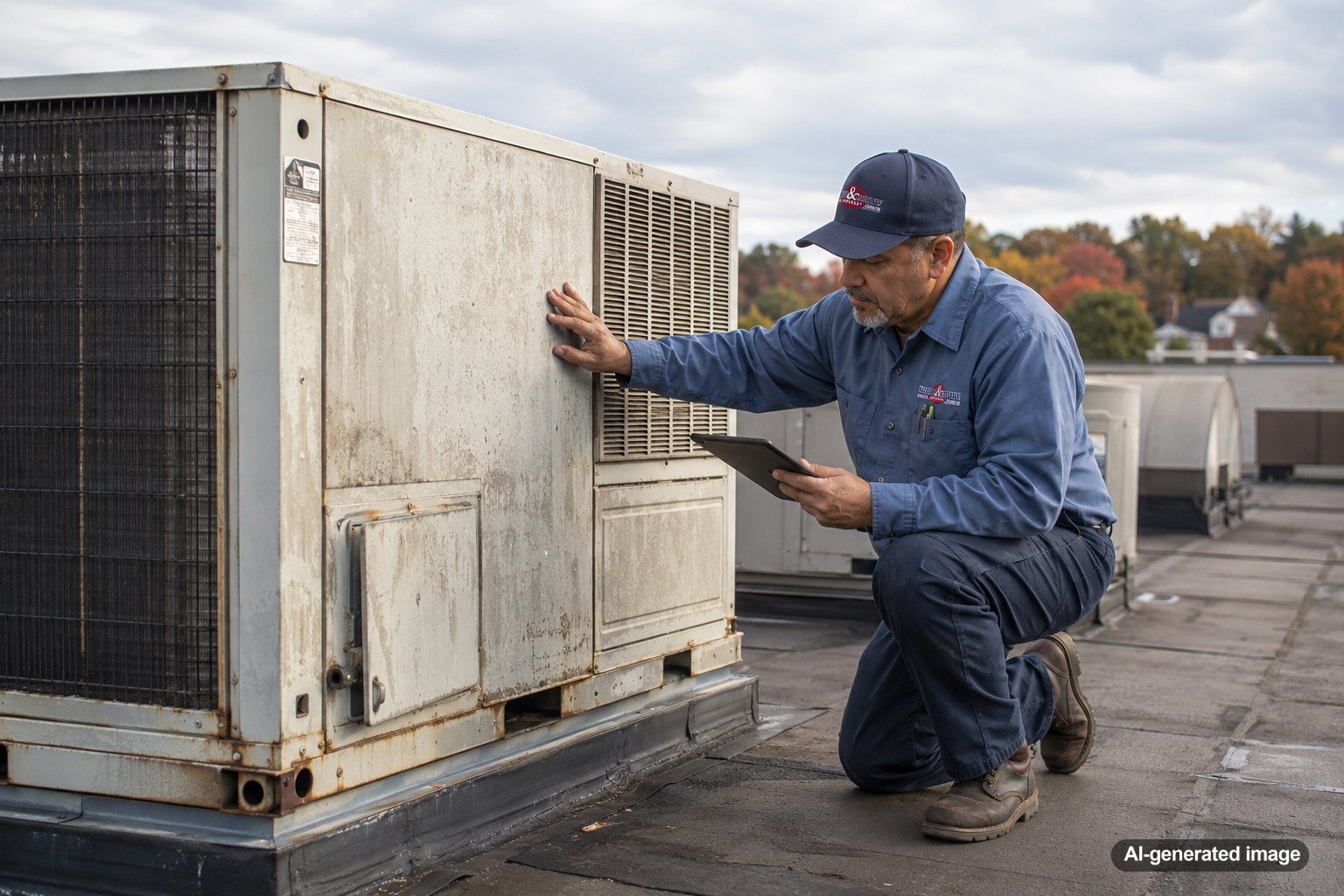
A rooftop HVAC unit should usually be considered for replacement when it is aging, breaking down often, struggling to control comfort, driving up operating costs, or putting your building at risk of repeated downtime. For many commercial properties in Central and Northern New Jersey, the right answer depends on the unit’s age, condition, repair history, building needs, and whether the equipment can still support daily operations reliably.
Because rooftop units serve offices, retail spaces, nonprofits, multifamily common areas, and other commercial buildings, replacement decisions are not only about comfort. They also affect tenant satisfaction, staff productivity, utility use, maintenance planning, and the risk of business disruption. If your building is already dealing with recurring service calls, it may be time to review your options for rooftop unit replacement instead of continuing to patch an unreliable system.
Consider replacing a rooftop HVAC unit when repairs are becoming frequent, major components are failing, comfort is inconsistent, energy use is rising without a clear explanation, the unit is near the end of its expected service life, or the building’s heating and cooling needs have changed. A qualified commercial HVAC technician can inspect the unit and help compare repair costs, replacement costs, efficiency, reliability, and long-term operating impact.
Replacement often makes sense when repairs become a pattern
One repair does not automatically mean a rooftop unit should be replaced. Commercial HVAC equipment works hard, and occasional repairs can be expected over time. The concern begins when breakdowns become a pattern, especially during high-demand weather when the building needs reliable heating or cooling the most.
Repeated fan motor failures, compressor issues, refrigerant-related problems, control board concerns, ignition problems, or airflow trouble can add up quickly. Even when each repair seems manageable on its own, the combined cost, downtime, and uncertainty can point toward replacement as the more practical long-term decision.
It is also important to look at timing. If a rooftop unit keeps failing during summer heat, winter cold, or peak business hours, the impact can be larger than the repair invoice. Lost comfort, tenant complaints, interrupted operations, and emergency service needs all matter when deciding whether to keep repairing an older unit.
Age is important, but condition matters more than the calendar
Age is one of the first things facility managers and business owners consider, but it should not be the only factor. A well-maintained rooftop unit may remain useful longer than a neglected unit of the same age. Exposure, maintenance history, installation quality, run time, building load, and past repairs all influence how much useful life remains.
Rooftop units in New Jersey also face year-round weather exposure. Heat, humidity, freezing temperatures, wind, storms, pollen, leaves, and rooftop debris can all contribute to wear. If the cabinet is deteriorating, coils are badly worn, electrical components are aging, or the unit has a long record of service problems, age becomes more than a number. It becomes part of a larger reliability picture.
A professional evaluation can help separate a unit that needs targeted repairs from one that is approaching the point where continued repair is no longer a strong investment.
Poor comfort can signal that the unit no longer matches the building
A rooftop HVAC unit may still run but fail to serve the building well. Uneven temperatures, humid indoor air, frequent cycling, weak airflow, hot or cold zones, and complaints from occupants can all suggest the system is no longer performing properly.
Sometimes the issue is repairable. Dirty coils, restricted filters, damaged economizer components, failing belts, incorrect controls, or ductwork issues can affect performance. In other cases, the building’s use has changed. A space that once had light occupancy may now have more people, equipment, lighting, computers, or longer operating hours. A restaurant, medical office, retail space, school, or nonprofit facility may place very different demands on HVAC equipment than the original design expected.
When comfort issues keep returning after reasonable repairs and maintenance, replacement may allow the building owner to select equipment that better matches current load, ventilation needs, control requirements, and operating schedule.
Rising energy use can point to declining efficiency
Higher utility bills are not always caused by the HVAC system, but an aging or poorly performing rooftop unit can be part of the problem. Worn components, poor airflow, refrigerant issues, failing controls, and short cycling can force the equipment to work harder than it should.
Commercial buildings often have many variables, including occupancy patterns, lighting, plug loads, doors opening frequently, ventilation requirements, and thermostat settings. That is why energy concerns should be reviewed carefully rather than blamed on one cause too quickly. Still, if energy use is climbing while comfort is getting worse, the rooftop unit deserves attention.
Newer equipment may offer improved efficiency and better control options, but replacement should be evaluated in the context of the building, not sold as a guaranteed savings promise. The practical question is whether the existing unit is still delivering reliable comfort at a reasonable operating cost.
Major component failure can shift the repair vs replacement decision
Some repairs are relatively routine. Others are expensive enough to raise a bigger question. Compressor failure, serious heat exchanger concerns, major refrigerant leaks, extensive electrical damage, deteriorated coils, or severe cabinet corrosion may make replacement worth considering, especially on an older unit.
The decision becomes more urgent when a major repair would only restore one part of a system that has several other aging components. For example, replacing a costly component on a rooftop unit with worn controls, poor airflow, and a long breakdown history may not provide the reliability the building needs.
A useful repair vs replacement conversation should include the repair cost, the age of the unit, the likelihood of additional failures, the effect on business operations, the availability of compatible parts, and whether replacement would better support the property over the next several years.
Maintenance history can change the answer
Two rooftop units of the same age can be in very different condition. A unit that has received consistent filter changes, coil cleaning, electrical checks, belt inspection, drain maintenance, combustion checks when applicable, and professional service may have a stronger case for repair. A unit with spotty maintenance may have hidden wear that makes continued repair less appealing.
For commercial properties, a planned maintenance approach can also help identify replacement needs before the equipment fails at the worst possible time. A commercial HVAC maintenance plan can support better budgeting by giving property decision-makers more visibility into equipment condition, repair trends, and upcoming replacement priorities.
A rooftop HVAC unit should not be replaced just because it needs a minor repair, but it also should not be kept running indefinitely when reliability, comfort, operating cost, and downtime are moving in the wrong direction. The best decision comes from looking at the full system, not one symptom.
What building owners can safely review before calling
Commercial rooftop equipment should be handled by qualified HVAC professionals, especially when electrical components, refrigerant, gas heat, combustion parts, rooftop access, or internal equipment panels are involved. However, building owners and managers can still gather helpful information before scheduling service.
- Review recent repair invoices and look for repeat problems.
- Note comfort complaints, including which areas are too hot, too cold, humid, or stuffy.
- Check thermostat schedules and settings to make sure the unit is being asked to run as intended.
- Confirm that supply and return areas inside the building are not blocked.
- Look at utility trends and occupancy changes that may affect HVAC demand.
- Document any unusual noises, odors, short cycling, or service interruptions without opening equipment panels.
If there is smoke, a burning smell, sparks, suspected gas odor, carbon monoxide concern, flooding, or another unsafe condition, prioritize safety and contact the appropriate emergency service, utility, or qualified professional.
When to call a commercial HVAC professional
Call a commercial HVAC professional when the rooftop unit is not maintaining temperature, has repeated breakdowns, shows signs of major component trouble, causes recurring occupant complaints, or requires a costly repair. Professional inspection is also important before making a capital replacement decision, because the unit may not be the only factor affecting comfort.
A technician can evaluate airflow, controls, refrigerant circuit performance, heating operation, electrical condition, economizer function, drainage, coil condition, equipment sizing, and the building’s current usage. That information helps determine whether repair, maintenance, control adjustments, or replacement is the most reasonable next step.
FAQ: Rooftop HVAC unit replacement
Should every old rooftop unit be replaced?
No. Age matters, but condition, repair history, performance, and building needs matter too. Some older units may still be worth maintaining, while others become poor candidates for continued repair.
Is it better to replace a rooftop unit before it fails?
Planned replacement can reduce the risk of emergency downtime and may make budgeting easier. This is especially important for buildings where comfort, operations, tenants, customers, or vulnerable occupants depend on reliable HVAC performance.
Can maintenance delay replacement?
Regular maintenance may help reduce avoidable wear and catch issues earlier, but it cannot prevent every failure or make an aging unit last forever. Maintenance is best viewed as a way to support reliability and informed planning.
What if only one rooftop unit in a multi-unit building is failing?
Each unit should be evaluated separately, but it is also useful to look at the whole building. If several units are similar in age and condition, a phased replacement plan may be more practical than waiting for each one to fail unexpectedly.
Who should evaluate rooftop HVAC replacement options?
A qualified commercial HVAC contractor should inspect the unit, review the building’s needs, and explain the practical differences between repair and replacement. Rooftop equipment involves electrical, refrigerant, heating, controls, and rooftop safety considerations that should not be handled as a DIY project.
Need commercial HVAC support in New Jersey?
Meyer & Depew works with businesses, organizations, and commercial properties throughout Central and Northern New Jersey.
Learn more about commercial HVAC maintenance plans.