



What is the Most Expensive Part of an AC System to Repair?
Estimated reading time: 7 minutes
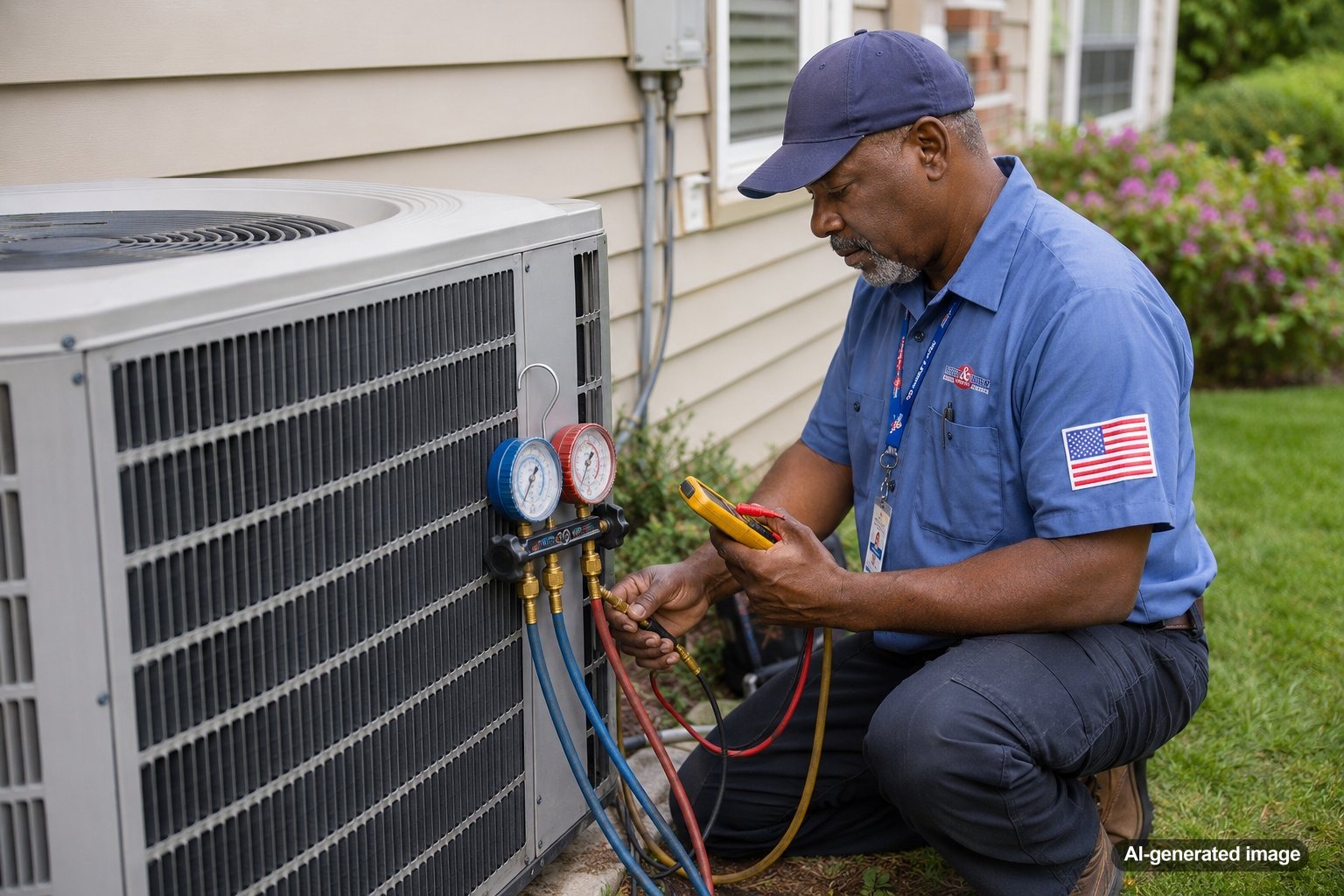
The most expensive part of an AC system to repair is usually the compressor, especially in a central air conditioning system. The compressor is a major component inside the outdoor condenser unit, and when it fails, the repair can involve parts, labor, refrigerant handling, system testing, and sometimes a larger conversation about whether the AC system is worth repairing at all.
For homeowners in Central and Northern New Jersey, that question often comes up during hot, humid weather when an older AC system suddenly stops cooling. A qualified technician can inspect the system, confirm the failed part, and help you compare repair and replacement options. If your cooling system is already struggling, Meyer & Depew offers AC service and maintenance for residential systems throughout the region.
The compressor is often the most expensive AC component to repair or replace. Other costly parts can include the evaporator coil, condenser coil, blower motor, control board, and refrigerant-related components. The right decision depends on the age of the system, the condition of the rest of the equipment, refrigerant type, warranty coverage, and whether repairs are likely to keep the system reliable.
Why The Compressor Is Usually The Most Expensive AC Repair
The compressor is sometimes described as the heart of the air conditioning system because it moves refrigerant through the system and helps make heat transfer possible. When the compressor is not working correctly, the AC may run without cooling, trip breakers, make unusual noises, short cycle, or fail to start at all.
Compressor work tends to be costly because it is not a simple swap of a small accessible part. A technician may need to recover refrigerant properly, evaluate the electrical system, check for contamination, inspect related components, replace supporting parts, recharge and test the system, and make sure the original cause of failure has been addressed. If the cause is missed, a new compressor may be placed at risk.
That is why compressor problems deserve a careful diagnosis rather than a quick assumption. A failed capacitor, contactor, wiring issue, control problem, or refrigerant issue can sometimes mimic a more serious compressor failure. A professional inspection helps separate a major repair from a smaller problem that only looks severe at first.
Other AC Parts That Can Be Expensive To Repair
While the compressor is usually at the top of the list, several other AC components can become expensive depending on the equipment design, accessibility, refrigerant type, and system age.
- Evaporator coil: This indoor coil absorbs heat from the air moving through your home. Leaks, corrosion, or icing problems can make coil replacement a significant repair.
- Condenser coil: Located in the outdoor unit, this coil releases heat outside. Damage, severe corrosion, or poor airflow can create major performance problems.
- Blower motor: The blower moves conditioned air through the ductwork. Variable-speed motors can be more complex and more expensive than basic motors.
- Control board: Modern HVAC systems rely on electronic controls. A failed board can prevent the system from starting, communicating, or operating safely.
- Refrigerant leak repairs: Finding and repairing a leak can be involved, especially if the leak is in a coil or other difficult-to-access area.
Why The Same AC Repair Can Vary From Home To Home
Two homeowners can hear the same part name and still receive very different recommendations. A newer system with an isolated component failure may be a good repair candidate. An older system with repeated breakdowns, poor airflow, an outdated refrigerant type, or declining efficiency may deserve a different conversation.
System age matters because major repairs on aging equipment can become harder to justify. If the AC system is near the later part of its expected service life, a large compressor or coil repair may put money into equipment that could have another major problem soon. In that situation, it can be helpful to compare the repair with AC installation and replacement options.
Home conditions also matter. Older New Jersey homes may have ductwork limitations, uneven rooms, insulation gaps, or humidity issues that make the AC work harder. A repair may restore operation, but it may not solve comfort problems caused by airflow, sizing, or distribution issues.
Repair Or Replace: What Should You Consider?
A major AC repair does not automatically mean replacement is the right choice, but it should prompt a practical review. The decision is usually less about one part and more about the total condition of the system.
| Factor | Why It Matters |
|---|---|
| System age | A major repair may be less attractive if the AC is older and other parts are wearing out. |
| Repair history | Frequent service calls can point to broader reliability problems. |
| Comfort performance | Uneven cooling, humidity problems, and long run times may indicate more than a single failed part. |
| Warranty coverage | Available warranty coverage can affect whether a major repair makes financial sense. |
| Refrigerant type | Some older systems can be more complicated to repair because refrigerant availability and system compatibility may affect service options. |
Safe Checks Before You Call For AC Service
Before assuming the most expensive part has failed, there are a few simple things homeowners can check safely. These steps will not fix a major mechanical failure, but they can rule out common issues that limit cooling.
- Make sure the thermostat is set to cooling and the temperature setting is below the current room temperature.
- Inspect or replace a dirty air filter if it is restricting airflow.
- Confirm that supply and return vents are open and not blocked by furniture, rugs, or storage.
- Look for leaves, weeds, or obvious debris around the outdoor unit without opening the equipment.
- Check whether the breaker has tripped once, if it is safe to do so. If it trips again, stop resetting it and call a professional.
Avoid opening sealed equipment, adding refrigerant, bypassing safety switches, or working around electrical components. AC systems involve high voltage, refrigerant, moving parts, and components that should be handled by trained professionals.
When To Call A Professional
Call for professional AC service if the system is blowing warm air, making loud or unusual noises, repeatedly tripping a breaker, freezing up, leaking around indoor equipment, or running without lowering the temperature. You should also schedule service if the system starts and stops frequently, struggles during humid weather, or has needed multiple repairs in a short period of time.
A technician can test the compressor, electrical components, refrigerant circuit, airflow, coils, and controls to determine what actually failed. That matters because replacing the wrong part can be expensive and frustrating, especially when the real problem is hidden elsewhere in the system.
FAQ: Expensive AC System Repairs
Is the compressor always the most expensive AC repair?
It is often the most expensive, but not always. Coil replacement, refrigerant leak repairs, specialty blower motors, and complex control issues can also become costly depending on the system and the situation.
Can an AC compressor be repaired instead of replaced?
In many residential systems, a failed compressor is replaced rather than rebuilt on site. A technician can determine whether the compressor has truly failed or whether another electrical or control issue is preventing it from operating.
Should I replace my AC if the compressor fails?
It depends on the age, condition, warranty status, repair history, and comfort performance of the system. If the AC is older or has had repeated problems, replacement may be worth discussing. If the system is newer and otherwise in good condition, repair may still make sense.
Can maintenance prevent compressor failure?
Routine maintenance can reduce the risk of certain problems by supporting airflow, cleaning, electrical checks, and overall system performance. It cannot prevent every breakdown, but it can help identify developing issues before they become more serious.
The compressor is usually the most expensive AC system part to repair, but the smartest next step is a proper diagnosis. The goal is to understand whether the issue is truly a major component failure, whether another part caused the problem, and whether repair or replacement is the better long-term decision.
Need help with your heating, cooling, or HVAC system?
Meyer & Depew serves homeowners and businesses throughout Central and Northern New Jersey.
Get a quote or call 908.272.2100.