


Why Your AC Struggles During a New Jersey Heat Wave
Estimated reading time: 5 minutes
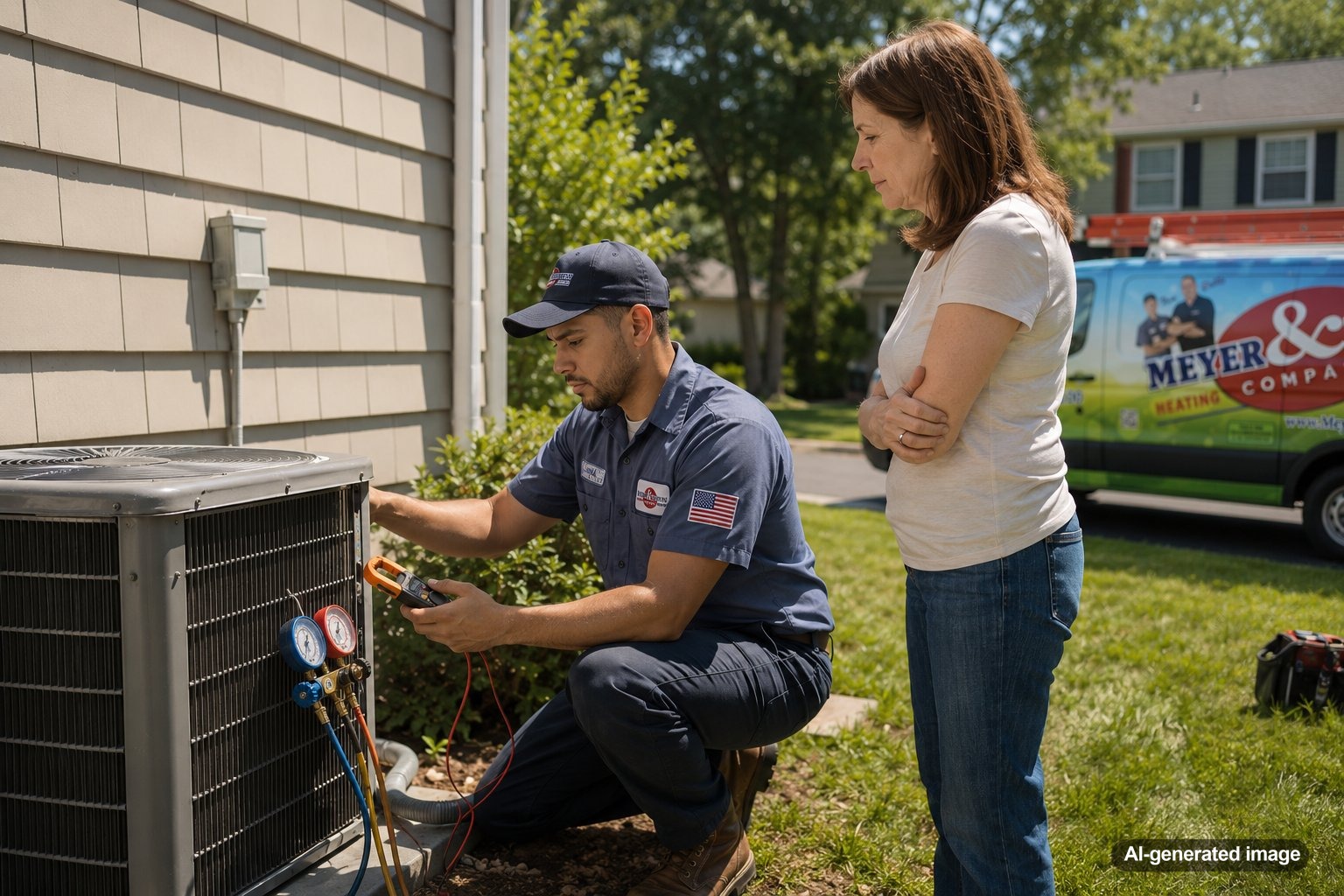
When the temperature climbs and the humidity hangs over New Jersey, even a normally dependable AC system can start to feel overwhelmed. Your air conditioner may run longer, cool unevenly, or struggle to bring the house down to the thermostat setting, especially during the hottest part of the afternoon.
That does not always mean the system has completely failed, but it does mean something deserves attention. Heat waves put extra strain on airflow, refrigerant performance, electrical components, ductwork, insulation, and even thermostat settings. If your cooling system is falling behind, Meyer & Depew can help with AC service and maintenance throughout Central and Northern New Jersey.
Your AC may struggle during a New Jersey heat wave because it is dealing with extreme outdoor temperatures, high humidity, restricted airflow, dirty coils, aging parts, undersized equipment, duct issues, or maintenance problems that were less noticeable in milder weather.
Heat waves expose problems your AC could hide on milder days
On a typical warm day, an air conditioner may have enough capacity to mask small issues. A dirty filter, a weak capacitor, a slightly clogged outdoor coil, or leaky ductwork might not be obvious when the system only needs to run in shorter cycles.
During a heat wave, the system has less room for error. Outdoor temperatures stay high for longer, indoor heat builds up through windows and walls, and humidity makes the air feel warmer even when the thermostat number looks reasonable. Small restrictions can turn into noticeable comfort problems.
Common reasons your AC cannot keep up
There are several practical reasons an AC system may run constantly without cooling the home the way it should. A qualified technician can evaluate the system, but these are some of the most common contributors:
- Restricted airflow: A clogged air filter, blocked return, closed supply vents, or dirty blower components can reduce the amount of cooled air moving through the home.
- Dirty outdoor coil: Grass clippings, leaves, cottonwood, and general debris around the outdoor unit can make it harder for the system to release heat.
- High indoor humidity: New Jersey humidity can make rooms feel sticky and warmer, even when the AC is lowering the temperature.
- Aging equipment: Older systems may lose performance over time and may struggle more during long stretches of extreme heat.
- Duct or insulation issues: Leaky ducts, poorly insulated attics, and sun-soaked rooms can make some spaces much harder to cool.
- Thermostat location or settings: A thermostat near sunlight, electronics, or a draft can misread the home and affect how the system runs.
Humidity makes the problem feel worse
New Jersey heat waves are rarely just about temperature. Humidity adds another layer of demand because your AC is also removing moisture from indoor air. When humidity is high, the system may spend more time dehumidifying, and the home can still feel uncomfortable even if the thermostat is close to the target temperature.
If the system is short cycling, oversized, poorly maintained, or not moving air correctly, it may not remove humidity effectively. Indoor air quality and comfort equipment, including options under Air Quality & Comfort, may be worth discussing if your home often feels damp, sticky, or uneven in summer.
Safe checks before you call
- Make sure the thermostat is set to cooling mode and the temperature setting is realistic for the conditions.
- Inspect the air filter and replace it if it is dirty or clogged.
- Confirm that supply and return vents are open and not blocked by furniture, rugs, or curtains.
- Look for obvious debris around the outdoor unit and keep the area clear, without opening the equipment.
- Check whether a breaker has tripped once, if it is safe to do so. If it trips again, stop and schedule professional service.
Avoid opening sealed panels, handling refrigerant lines, bypassing safety controls, or attempting electrical repairs. Those areas should be evaluated by a qualified HVAC professional.
When constant running is normal, and when it is not
During an extreme heat wave, it can be normal for an AC system to run for long periods, especially in the afternoon. The system is working against outdoor heat, solar gain, indoor activity, and humidity at the same time.
However, it is not normal for the system to blow warm air, freeze up, make burning smells, trip breakers repeatedly, leak water heavily, or fail to cool at all. It is also worth scheduling service if the AC runs nonstop and still cannot maintain a reasonable indoor temperature after filters, vents, and thermostat settings have been checked.
Older homes and additions can make cooling uneven
Many New Jersey homes were built or expanded before modern cooling expectations. Finished attics, sunrooms, additions, older duct layouts, and second floors can all create comfort challenges. In those homes, the AC may be functioning, but the distribution system may not deliver cooling evenly.
If one room is comfortable while another stays hot, the issue may involve airflow balance, duct leakage, insulation, zoning, or a room-by-room comfort solution. Options such as zoning systems can sometimes help address uneven comfort when the home layout is part of the problem.
FAQ: AC struggles during New Jersey heat waves
Should I lower the thermostat a lot during a heat wave?
Lowering the thermostat far below your desired temperature usually does not make the AC cool faster. It can make the system run longer and may increase strain. A steady, reasonable setting is often better for comfort and performance.
Is it bad if my AC runs all day in extreme heat?
Longer run times can be normal during severe heat, but the system should still produce cool air and make progress toward the thermostat setting. If it cannot, there may be an airflow, maintenance, refrigerant, electrical, duct, or sizing issue.
Can a dirty filter really make that much difference?
Yes. A heavily clogged filter can restrict airflow, reduce comfort, increase system strain, and contribute to frozen coils or weak cooling. Filter checks are one of the safest and simplest homeowner steps.
When should I schedule AC service?
Schedule service if the AC blows warm air, cools unevenly, runs constantly without improving comfort, makes unusual noises, freezes up, leaks heavily, or trips a breaker more than once. A technician can diagnose the issue safely.
A New Jersey heat wave does not automatically mean your AC is broken, but it can reveal airflow restrictions, maintenance issues, aging equipment, humidity problems, or comfort challenges that deserve attention.
Need help with your heating, cooling, or HVAC system?
Meyer & Depew serves homeowners and businesses throughout Central and Northern New Jersey.
Get a quote or call 908.272.2100.