



What Does an HVAC Service Visit Usually Include?
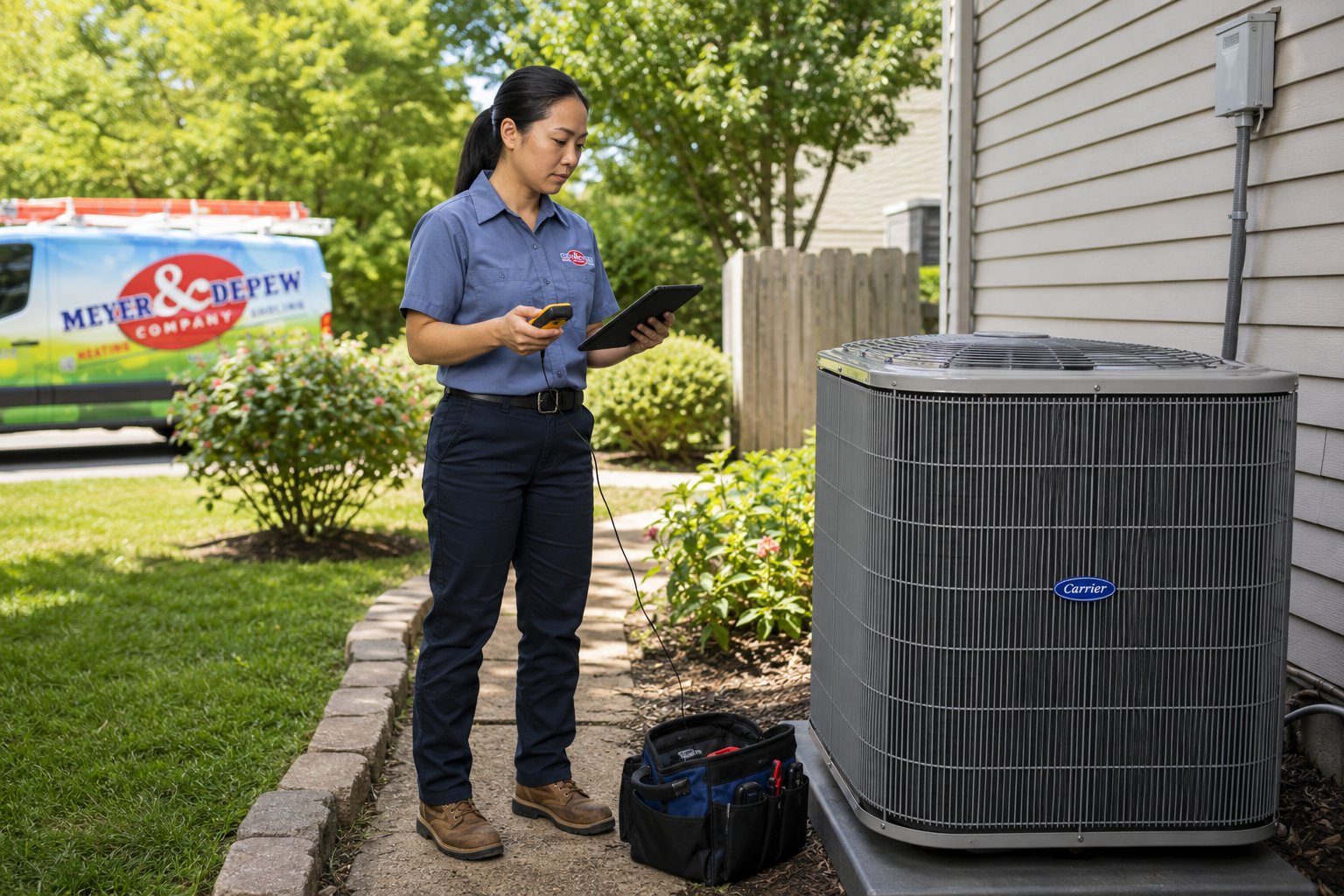
An HVAC service visit usually includes a careful inspection, basic cleaning, system testing, safety checks, and a conversation about anything the technician finds. For homeowners and business owners in Central and Northern New Jersey, the goal is not just to get equipment running for the moment, but to understand whether the heating or cooling system is operating safely, efficiently, and reliably for the season ahead.
A visit may focus on cooling, heating, indoor comfort, or a specific problem, depending on why it was scheduled. Routine maintenance is different from a repair call, but both should leave you with clearer information about your system. If you are planning ahead, Meyer & Depew offers Service Plans that help keep regular HVAC maintenance on the calendar.
A typical HVAC service visit includes checking the thermostat, inspecting electrical and mechanical components, reviewing airflow, cleaning accessible parts, testing system operation, looking for safety concerns, and explaining any repair or maintenance recommendations. The exact checklist depends on the equipment type, system condition, season, and whether the visit is for maintenance or troubleshooting.
What a technician typically checks first
Most HVAC service visits begin with basic system information. The technician may ask what you have noticed: weak airflow, uneven temperatures, unusual noises, short cycling, higher energy bills, poor humidity control, or a system that struggles during hot or cold weather. Those details help guide the inspection.
From there, the technician will usually check thermostat settings, confirm the system responds properly, and review the visible condition of the equipment. On a cooling visit, that may include the indoor air handler or furnace, evaporator coil area when accessible, condensate drain, outdoor condenser, refrigerant-related indicators, and airflow. On a heating visit, it may include ignition operation, burners, blower components, venting, safety controls, and other equipment-specific items.
Common items included in an HVAC maintenance visit
While every system is different, a routine HVAC maintenance visit often includes several core tasks designed to reduce wear, catch developing concerns, and keep the system operating as intended.
- Thermostat review to confirm settings, response, and basic communication with the system.
- Air filter inspection and replacement guidance if the filter is dirty, clogged, or the wrong size.
- Airflow review, including supply and return vents, blower operation, and signs of restriction.
- Inspection of accessible electrical connections, controls, capacitors, contactors, wiring, and shutoffs.
- Cleaning of accessible components such as the outdoor coil area or blower compartment when appropriate.
- Condensate drain inspection during cooling season to look for clogs, overflow risk, or drainage issues.
- System performance testing, including temperature split, operating cycles, startup, shutdown, and unusual sounds.
- Safety checks for heating equipment, especially where combustion, venting, gas, or carbon monoxide risk may be involved.
These checks are especially useful in New Jersey homes where older equipment, humid summers, cold snaps, finished basements, additions, and multi-level layouts can all affect comfort. A service visit can help separate a simple maintenance issue from a deeper equipment or airflow concern.
How a service visit differs from a repair call
A maintenance visit is usually preventive. It is meant to inspect, clean, test, and identify problems before they become more disruptive. A repair call is more focused on diagnosing a specific issue, such as no cooling, no heat, a system that will not start, water near the indoor unit, or a breaker that keeps tripping.
During a repair visit, the technician may spend more time tracing symptoms, testing components, and determining why the equipment is not operating correctly. A repair call may still include maintenance observations, but the main purpose is to find the cause of the problem and discuss repair options. For cooling concerns, you can learn more about Meyer & Depew’s AC Service and Maintenance support.
What homeowners can safely check before the appointment
- Confirm the thermostat is set to the correct mode and temperature.
- Inspect the air filter and replace it if it is visibly dirty or overdue.
- Make sure supply and return vents are open and not blocked by furniture, rugs, or storage.
- Look for obvious leaves, branches, or debris around the outdoor unit without opening the equipment.
- Check whether the breaker has tripped once, if it is safe to do so. If it trips again, leave it off and schedule service.
Homeowners should avoid opening sealed equipment, handling refrigerant, bypassing safety switches, adjusting gas pressure, or working inside electrical compartments. If you smell gas, notice smoke, see sparks, suspect carbon monoxide, or find flooding around electrical equipment, prioritize safety and contact the appropriate emergency service, utility, or qualified professional.
What the technician should explain before leaving
A useful HVAC service visit should not end with a vague summary. The technician should explain what was checked, what was cleaned or adjusted, whether the system operated normally, and whether any concerns need attention. If a part is worn, dirty, failing, or outside expected operating range, you should understand why it matters and how urgent it is.
You may also receive recommendations about filter changes, maintenance frequency, thermostat use, humidity control, airflow improvements, or whether the system’s age and repair history should factor into future replacement planning. A good recommendation should be practical, not alarmist. Maintenance can reduce the risk of many problems, but no visit can guarantee that equipment will never break down.
Questions to ask during an HVAC service visit
Asking a few direct questions can make the visit more helpful. You might ask whether the system is operating within normal ranges, whether the air filter type is appropriate, whether airflow looks balanced, whether the outdoor unit has enough clearance, and whether any concerns are urgent or simply worth monitoring.
For older systems, ask whether repairs are becoming more frequent or whether replacement planning should be on your radar. For homes with uneven rooms, humidity problems, or comfort complaints, ask whether the issue appears to be equipment-related, duct-related, thermostat-related, or connected to the layout of the home.
FAQ
How long does an HVAC service visit usually take?
The length depends on the system type, condition, accessibility, and whether the appointment is routine maintenance or troubleshooting. A straightforward maintenance visit may be relatively simple, while a repair diagnosis or multi-system property can take longer.
Should HVAC service be done before the season starts?
Yes, it is often best to schedule cooling maintenance before peak summer heat and heating maintenance before winter. Pre-season service can help catch issues before the equipment is under its heaviest demand.
Does an HVAC service visit include replacing the filter?
Filter replacement may be included or recommended depending on the service, filter type, and whether the correct filter is available. Even when replacement is not part of the visit, the technician can usually advise whether the filter is dirty, restrictive, or the wrong fit.
Will the technician tell me if I need a new HVAC system?
If the equipment is aging, unreliable, inefficient, or facing a costly repair, the technician may discuss replacement as one option. That should be based on the system’s condition, repair history, comfort performance, and your long-term goals, not pressure tactics.
An HVAC service visit should give you a clearer picture of your heating or cooling system’s condition. It should cover system operation, safety, airflow, cleanliness, maintenance needs, and any practical next steps for comfort and reliability.
Want to make HVAC maintenance easier to stay on top of?
A service plan can help keep routine heating and cooling maintenance on your calendar before small issues become bigger headaches.
You can also request a service appointment.