

Why AC Installation Quality Matters As Much As Equipment Size
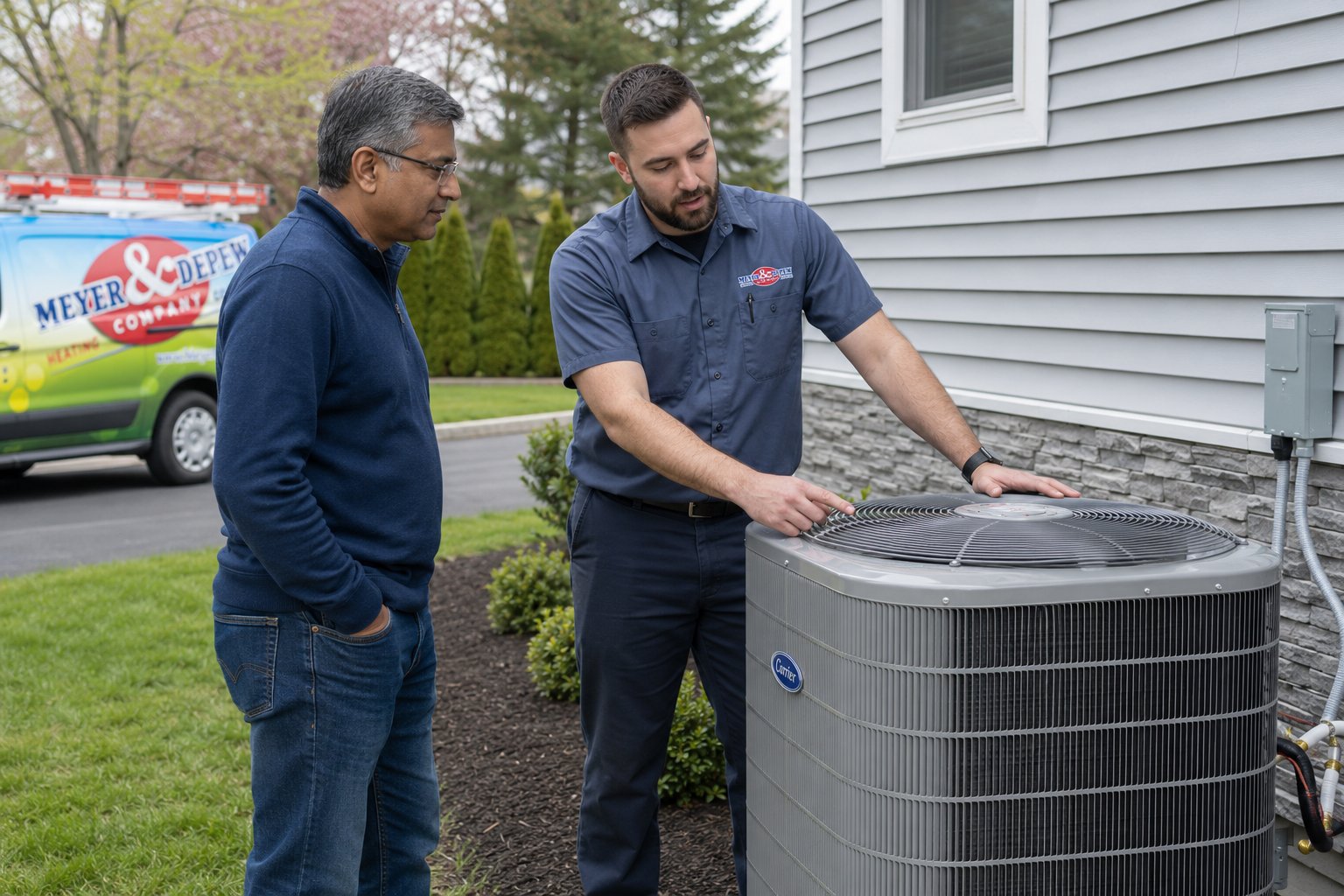
A correctly sized air conditioner matters, but size alone does not make a cooling system perform well. Even the right equipment can leave a home uncomfortable if the installation is rushed, poorly planned, or not matched to the ductwork, airflow, thermostat setup, and real cooling needs of the space.
For homeowners in Central and Northern New Jersey, where humid summers can put steady pressure on cooling equipment, installation quality can affect comfort, efficiency, noise, humidity control, and long-term reliability. If you are planning an upgrade, it helps to look beyond the equipment label and focus on how the system will be designed, installed, tested, and supported. Meyer & Depew provides AC installation and replacement services for homeowners who want a practical, well-planned approach.
AC installation quality matters because the system has to move the right amount of air, remove humidity, match the ductwork, drain properly, and operate within manufacturer specifications. Equipment size is only one part of the comfort equation.
Size Is Important, But It Is Not The Whole System
Many homeowners focus first on tonnage or BTU capacity when comparing air conditioners. That is understandable because equipment size affects whether the system can keep up on hot days. An undersized AC may run constantly and still struggle. An oversized system may cool the air too quickly, short cycle, and leave humidity behind.
Still, the best size on paper can disappoint if the installation is not done carefully. A cooling system is not just an outdoor unit and an indoor coil. It is a connected system that includes refrigerant lines, electrical connections, condensate drainage, ductwork, airflow, controls, filtration, and the home itself. Each part has to work together.
Airflow Can Make Or Break Cooling Performance
Proper airflow is one of the biggest reasons installation quality matters. If the blower, ductwork, return air, filter setup, or supply registers do not support the new equipment, the system may not deliver the comfort the homeowner expected.
Poor airflow can show up as weak cooling in certain rooms, noisy operation, frozen coils, short cycling, or uneven temperatures between floors. In older New Jersey homes, additions, finished basements, attic renovations, and previous equipment changes can all create airflow challenges that should be considered before installation.
A qualified HVAC contractor should evaluate whether the existing duct system can handle the equipment being installed. In some homes, the right solution may include duct adjustments, return air improvements, zoning, or a different equipment approach rather than simply installing a larger AC. Meyer & Depew also offers zoning systems that may help address room-by-room comfort concerns in certain homes.
Humidity Control Depends On More Than Cooling Power
New Jersey summers often bring humid air, and humidity is one reason a home can feel uncomfortable even when the thermostat reads a reasonable temperature. A properly installed AC should do more than lower the temperature. It should also have enough run time and airflow balance to help remove moisture from the air.
If a system is oversized, poorly configured, or not commissioned correctly, it may shut off before it has had enough time to remove humidity. If airflow is too high or too low, comfort and moisture removal can suffer. That can leave rooms feeling clammy, especially during mild but humid weather when the AC does not need to run for long stretches.
Refrigerant Lines, Drainage, And Electrical Details Matter
Some installation details are easy for homeowners to overlook because they are not as visible as the equipment itself. Refrigerant line sizing, line set condition, evacuation procedures, condensate drain design, electrical connections, equipment clearances, and thermostat wiring all affect how the system operates.
These are not safe DIY areas. Refrigerant systems, high-voltage wiring, sealed equipment, and internal components should be handled by qualified professionals. A careful installation helps reduce the risk of avoidable problems such as nuisance shutdowns, water around the indoor unit, inefficient operation, or premature wear.
Commissioning Helps Confirm The System Is Working As Intended
Installation should not end when the equipment turns on. The system should be checked and tested so the contractor can verify that it is operating properly. That may include evaluating airflow, temperature split, refrigerant performance, condensate drainage, thermostat operation, and overall system behavior.
This final step is important because small setup issues can lead to comfort complaints later. A system that starts up is not automatically a system that is performing well. Good commissioning gives the homeowner more confidence that the installation matches the design and the needs of the home.
- Check that the thermostat is set to cooling and the temperature setting is reasonable.
- Inspect or replace the air filter if it is dirty or restrictive.
- Make sure supply and return vents are open and not blocked by furniture, rugs, or curtains.
- Look for obvious leaves, weeds, or debris around the outdoor unit without opening the equipment.
- Check whether the breaker has tripped once, if it is safe to do so. If it trips again, schedule professional service.
Good Installation Supports Long-Term Value
A new AC system is a significant investment, so the installation should support more than the first week of cooling. Proper installation may help reduce avoidable strain, improve comfort consistency, and support more dependable operation over time. It can also make routine maintenance easier because the system is set up with access, drainage, airflow, and serviceability in mind.
Ongoing care still matters after the installation. Filters need attention, outdoor units need reasonable clearance, and the system should be maintained before heavy cooling demand. For homeowners who want maintenance to stay on the calendar, Meyer & Depew offers residential service plans.
Questions To Ask Before An AC Installation
When comparing AC replacement options, do not stop at brand names and equipment size. Ask how the contractor determines the right system, whether the ductwork and airflow will be evaluated, what installation steps are included, and how the system will be tested after startup.
It is also worth asking about comfort concerns you already have. Rooms that are always warm, high humidity, noisy airflow, frequent repairs, or an old system that never seemed to cool evenly can all point to issues that should be addressed during the planning stage, not after the new equipment is already in place.
FAQ About AC Installation Quality
Can the right size AC still perform poorly?
Yes. A system can be properly sized but still perform poorly if airflow, ductwork, refrigerant setup, drainage, thermostat control, or commissioning are not handled correctly.
Is a bigger AC better for cooling?
Not necessarily. An oversized AC can short cycle, reduce humidity control, create uneven comfort, and add unnecessary strain. The right system should be matched to the home and installed properly.
Why does my new AC not cool every room evenly?
Uneven cooling can be related to duct design, airflow restrictions, insulation, sun exposure, thermostat location, zoning needs, or installation details. A qualified technician can evaluate the system and the home together.
Should ductwork be checked before replacing an AC?
Yes, especially if the home has uneven rooms, weak airflow, additions, older ducts, or comfort complaints. New equipment cannot always overcome ductwork limitations on its own.
When should I call a professional after installation?
Schedule professional service if the system short cycles, makes unusual noises, leaks water, struggles to cool, trips breakers, produces weak airflow, or leaves the home unusually humid.
Equipment size is important, but installation quality determines whether the AC can deliver the comfort, airflow, humidity control, and reliability the home actually needs.
Thinking about replacing or upgrading your HVAC system?
Meyer & Depew can help you understand your options for comfort, efficiency, and long-term reliability in your New Jersey home or business.
Questions? Contact Meyer & Depew or call 908.272.2100.