

Why Commercial HVAC Breakdowns Are More Expensive During Heat Waves
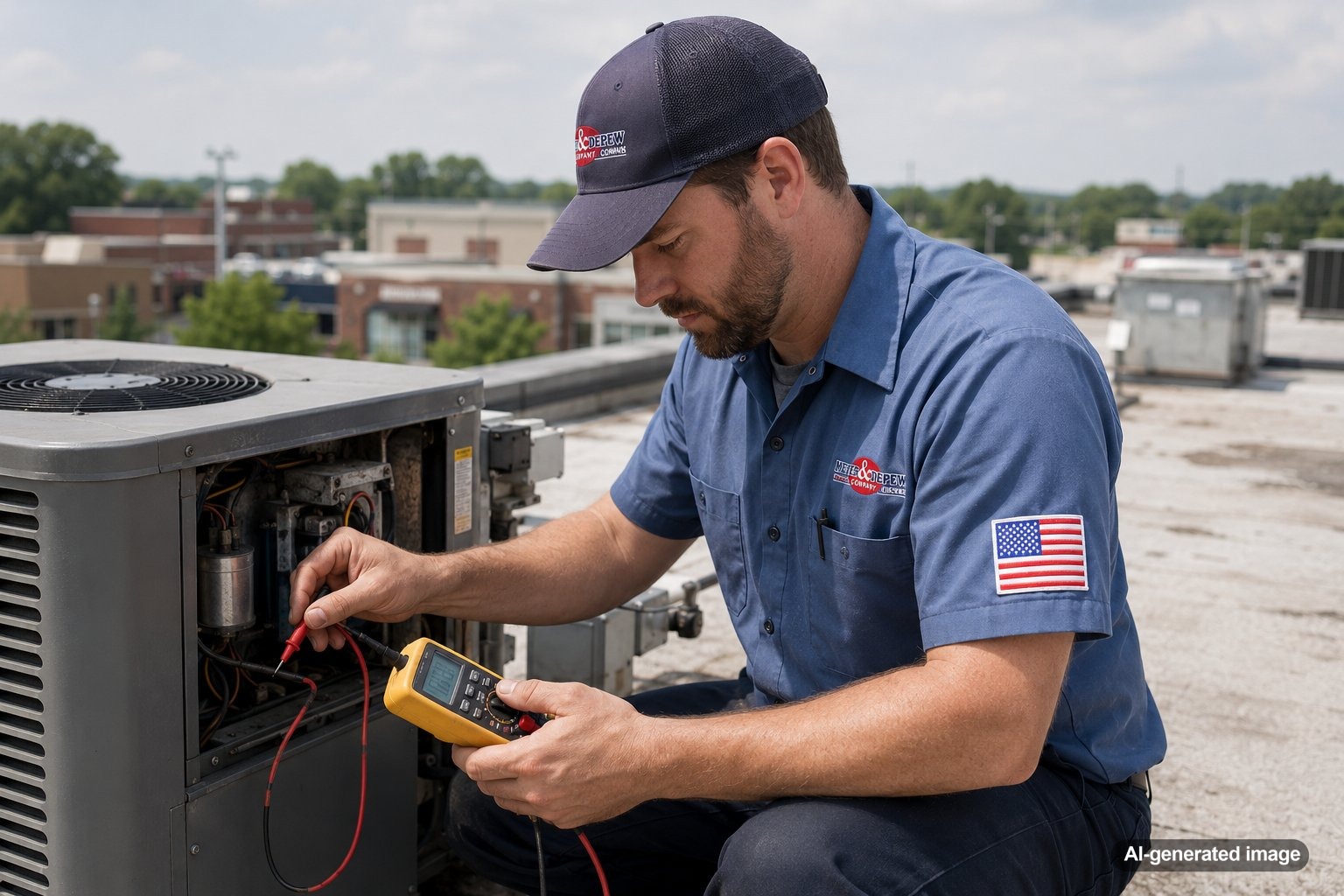
Commercial HVAC breakdowns are rarely convenient, but they become especially costly during a heat wave. When temperatures climb across Central and Northern New Jersey, cooling equipment runs longer, buildings gain heat faster, and service demand increases at the exact moment businesses have the least tolerance for downtime.
For offices, retail spaces, medical buildings, restaurants, schools, warehouses, and nonprofit facilities, a failed cooling system can affect more than comfort. It can disrupt employees, customers, tenants, inventory, equipment rooms, and daily operations. That is why a breakdown during extreme heat often costs more than the repair itself. Businesses that plan ahead with commercial HVAC maintenance are often better positioned to reduce risk, spot problems earlier, and respond more calmly when equipment is under heavy seasonal stress.
Commercial HVAC breakdowns are more expensive during heat waves because equipment is working harder, emergency service demand is higher, replacement parts may be harder to get quickly, indoor temperatures rise faster, and business disruption can add real operational costs beyond the repair invoice.
Heat waves push commercial HVAC equipment harder
A commercial cooling system is designed to manage expected loads, but heat waves can stretch that load for days at a time. Rooftop units, split systems, VRF systems, exhaust systems, ventilation equipment, and controls may all operate for longer cycles with fewer breaks. That extra runtime can expose weak capacitors, worn belts, dirty coils, failing motors, low airflow, control issues, or refrigerant-related problems that were less obvious during milder weather.
Commercial buildings also generate internal heat from people, lighting, kitchen equipment, computers, servers, production equipment, and large windows. During normal summer weather, the system may keep up well enough. During a long stretch of high heat and humidity, the same building can become much harder to cool, especially if filters are clogged, coils are dirty, dampers are not balanced, or one rooftop unit is carrying more of the load than it should.
Emergency service demand increases at the worst time
When a heat wave hits New Jersey, many businesses and homeowners need service at the same time. That surge in demand can make emergency calls more difficult to schedule, especially for buildings without an established service relationship or maintenance agreement. Even when a contractor responds quickly, commercial diagnosis and repair can take longer than a basic residential service call because access, roof safety, equipment size, controls, zoning, and building schedules all matter.
For a property manager or facility director, the real cost may include staff time, tenant complaints, temporary cooling arrangements, after-hours coordination, and decisions about whether parts, repairs, or replacement make the most sense. If a rooftop unit has been neglected for years, the conversation can quickly move from a simple repair to a larger operational decision.
Parts, access, and labor can become more complicated
Commercial HVAC equipment is not always repaired with a universal part from a nearby shelf. Some systems require specific motors, boards, sensors, compressors, economizer parts, belts, bearings, contactors, filters, or manufacturer-specific components. During periods of heavy demand, commonly needed parts may move quickly, and specialty parts can take longer to source.
Access can also add cost. Many commercial units are on rooftops, above ceilings, in mechanical rooms, or in areas that require coordination with building staff. A repair may need a roof hatch, ladder, lift, crane planning, safe work access, or after-hours scheduling to avoid interrupting business operations. These details are easier to manage during planned maintenance than during an urgent no-cooling call on a hot afternoon.
Downtime can cost more than the repair
For many businesses, the biggest expense is not the failed component. It is what happens while the building is uncomfortable. A restaurant may lose reservations. A retail store may see fewer customers. An office may struggle with employee productivity. A medical or professional office may need to adjust appointments. A building with sensitive equipment, inventory, or technology may face added risk when indoor temperatures climb.
Heat and humidity can also make indoor conditions feel worse quickly. High humidity affects comfort, odors, paper goods, storage areas, and some equipment. If the system is limping along instead of fully down, occupants may notice uneven temperatures, stuffy rooms, short cycling, or hot zones that create repeated complaints before the system finally fails.
Deferred maintenance often shows up during extreme weather
Commercial HVAC systems often give warnings before they fail. Rising energy use, longer run times, noisy operation, nuisance trips, uneven cooling, repeated thermostat complaints, and frequent small repairs can all suggest that the system needs attention. Heat waves turn those small warnings into bigger problems because the system has less margin for error.
Routine maintenance cannot prevent every breakdown, but it can reduce the risk of avoidable failures. During a professional visit, a qualified technician can inspect electrical components, verify airflow, check belts and moving parts where applicable, clean or evaluate coils, review filters, look for drainage issues, test controls, and identify wear before peak demand arrives. For commercial properties, a planned approach also helps decision-makers budget for repair or replacement instead of reacting under pressure.
What businesses can safely check before calling
- Confirm thermostat settings, schedules, and occupied versus unoccupied modes.
- Check whether filters are visibly dirty or overdue for replacement.
- Make sure supply and return grilles are open and not blocked by furniture, boxes, or displays.
- Look for obvious debris around accessible outdoor equipment, if it is safe to view.
- Check whether a breaker has tripped once, if it is safe and appropriate for your facility procedures.
- Document which areas are warm, when the issue started, and whether the equipment is running, short cycling, or completely off.
Business owners and building staff should not open sealed HVAC equipment, bypass safety switches, handle refrigerant, adjust gas or electrical components, or attempt rooftop repairs without proper training. If there is a burning smell, smoke, sparks, flooding around equipment, suspected refrigerant leak, or another unsafe condition, prioritize safety and contact the appropriate professional or emergency resource.
When repair becomes a replacement conversation
Heat wave breakdowns often force a practical question: is this repair worth it, or is the equipment nearing the end of its useful service life? The answer depends on the system age, repair history, part availability, efficiency, building use, comfort complaints, and whether the unit still matches the needs of the space.
A single repair on a well-maintained unit may be reasonable. Repeated failures on an aging rooftop unit may point toward replacement planning, especially if the system struggles every summer or no longer supports the building’s occupancy patterns. For businesses comparing repair and replacement, Meyer & Depew can help evaluate options such as rooftop unit replacement, updated controls, improved maintenance planning, or other commercial HVAC solutions.
How to reduce the risk before the next heat wave
The best time to prepare commercial HVAC equipment for extreme heat is before the forecast gets uncomfortable. Schedule maintenance before peak cooling season, keep filters on a consistent replacement schedule, review tenant or employee comfort complaints, and make sure facility staff know who to contact when a problem appears. For multi-unit buildings, it can also help to track which units serve which areas so service teams can respond more efficiently.
Commercial properties in New Jersey face a mix of heat, humidity, storms, and seasonal temperature swings. A planned maintenance strategy gives owners and managers a clearer view of equipment condition, likely repair needs, and replacement timing. It does not guarantee that a breakdown will never happen, but it can reduce surprise and help keep decisions from being made under the pressure of an overheated building.
FAQ: Commercial HVAC breakdowns during heat waves
Why does commercial HVAC equipment fail during heat waves?
Heat waves create longer run times, higher cooling loads, and more stress on electrical and mechanical components. Existing issues such as dirty coils, poor airflow, worn parts, or control problems often become more noticeable when equipment has to operate nearly nonstop.
Is emergency commercial HVAC repair usually more expensive?
It can be. The final cost depends on the issue, timing, labor needs, access, parts, and system type. During peak demand, businesses may also face indirect costs from downtime, uncomfortable spaces, lost productivity, tenant concerns, or temporary cooling needs.
Can maintenance prevent all commercial HVAC breakdowns?
No maintenance plan can prevent every failure. However, routine commercial HVAC maintenance may help reduce the risk of avoidable breakdowns, identify worn components earlier, improve airflow, and give building owners more time to plan for repairs or replacement.
When should a business call for commercial HVAC service?
Call when cooling is weak, indoor temperatures are rising, the system is short cycling, breakers keep tripping, unusual noises or odors appear, or comfort complaints repeat across the building. For safety concerns such as smoke, sparks, burning smells, or suspected hazardous conditions, prioritize safety first.
What is the best way to prepare for summer cooling demand?
Schedule professional maintenance before peak summer weather, replace filters on time, review past repair history, confirm thermostat schedules, and consider a commercial HVAC service agreement if your building depends on reliable cooling for daily operations.
Need commercial HVAC support in New Jersey?
Meyer & Depew works with businesses, organizations, and commercial properties throughout Central and Northern New Jersey.
Learn more about commercial HVAC maintenance plans.