



Why Your AC Smells Musty When It Turns on
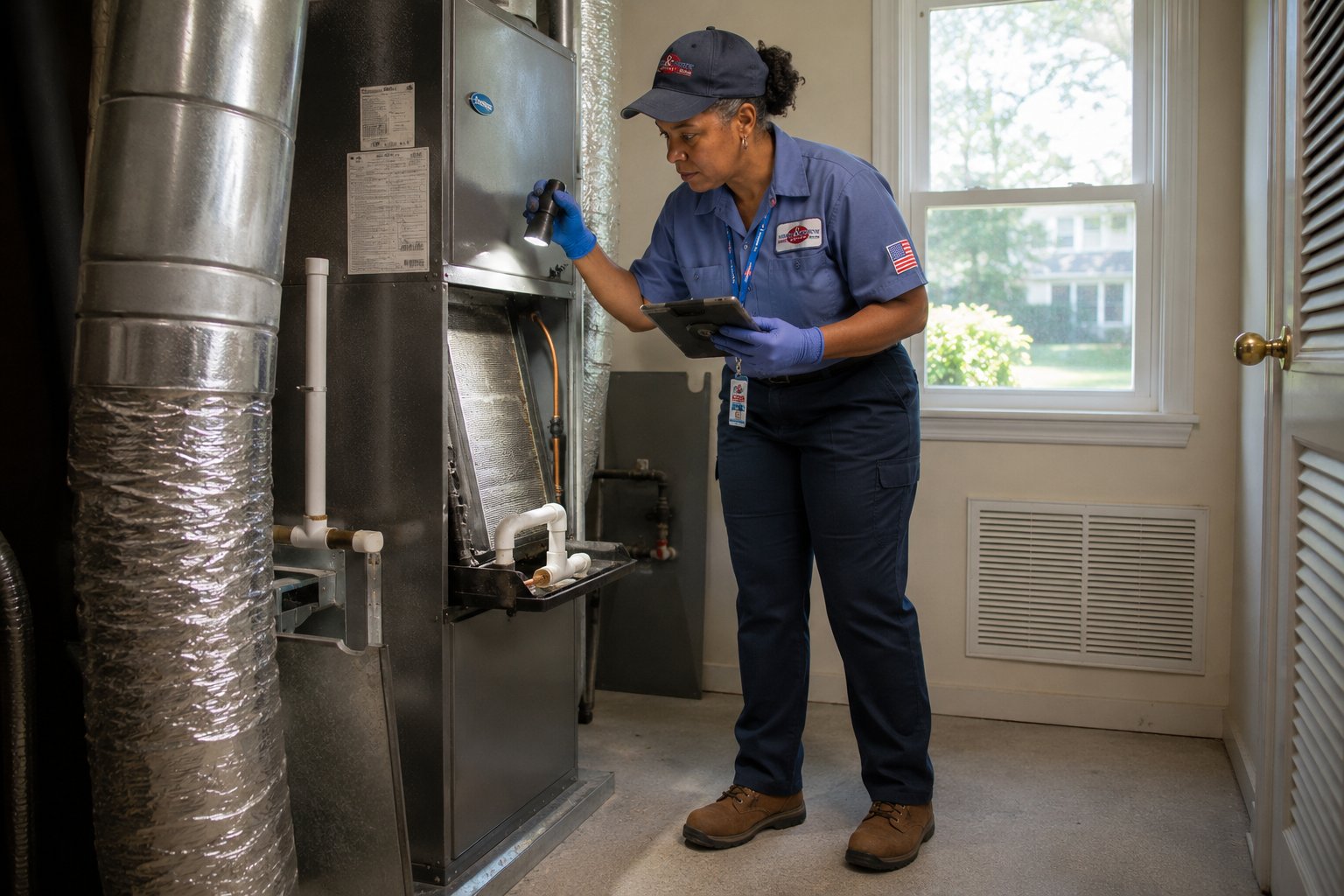
A musty smell when your AC first turns on usually means moisture, dust, microbial growth, or stale air is sitting somewhere in the cooling system. In Central and Northern New Jersey, where summer humidity can linger in homes, basements, crawl spaces, and ductwork, that damp odor is a common warning sign that your system needs attention rather than a room spray.
The smell may fade after a few minutes, but it should not be ignored if it keeps coming back. Your air conditioner moves air through filters, coils, drain components, ductwork, and vents, so an odor at startup can point to anything from a simple filter issue to a deeper indoor air quality concern. If the odor continues, AC service and maintenance can help identify the source before it affects comfort, airflow, or system performance.
Your AC may smell musty when it turns on because moisture has collected on the evaporator coil, in the drain pan, inside ductwork, around a dirty air filter, or in areas where humid air has been sitting. A homeowner can safely check the filter, vents, thermostat settings, and visible moisture near the indoor unit. Persistent odors should be evaluated by a qualified HVAC technician.
Why a Musty AC Smell Usually Points to Moisture
Air conditioners do more than cool the air. They also remove moisture as warm indoor air passes across the cold evaporator coil. Under normal conditions, that moisture drains away through the condensate system. If drainage is slow, the coil is dirty, airflow is restricted, or the system is cycling in a way that leaves surfaces damp, musty odors can develop.
That odor often appears right when the AC starts because the blower pushes air across components that have been sitting damp or stale. Once airflow continues, the smell may seem less noticeable, but the underlying condition can remain. This is especially common after a stretch of humid weather, after the system has been off for several days, or in homes where the basement or attic stays damp.
Common Causes of a Musty Smell When the AC Starts
A musty AC smell can have several causes. The exact source depends on your system layout, maintenance history, duct condition, home humidity, and how often the system runs.
A dirty or damp air filter
A clogged filter can trap dust, pet dander, pollen, and moisture. When air starts moving through that filter, it can carry a stale odor into the home. A dirty filter can also reduce airflow, which may allow the evaporator coil to stay colder and wetter than it should.
Moisture on the evaporator coil
The evaporator coil is supposed to collect condensation while the AC runs, but dirt on the coil can hold moisture and create an odor source. Because the coil is inside the equipment, this is not a homeowner cleaning job. A qualified technician can inspect it safely and clean it when appropriate.
A clogged or dirty condensate drain
The condensate drain removes water produced during cooling. If the drain line, trap, or pan is dirty or partially blocked, water can sit longer than it should. Standing water near HVAC equipment can create musty smells and may eventually lead to water damage if ignored.
Ductwork with dust, leaks, or damp conditions
Ducts that run through humid basements, crawl spaces, garages, or attics can pick up odors if they are leaky, dirty, or exposed to damp conditions. If the smell is stronger in certain rooms, ductwork or nearby building conditions may be part of the problem.
High indoor humidity
When indoor humidity stays elevated, surfaces can feel clammy, rooms may smell stale, and the AC may struggle to remove enough moisture. This can be a comfort issue as much as an equipment issue. Meyer & Depew’s Air Quality & Comfort services can help homeowners look beyond cooling alone when humidity and odor problems overlap.
- Inspect the air filter and replace it if it is dirty or overdue.
- Make sure supply and return vents are open and not blocked by furniture, rugs, or storage.
- Check that the thermostat is set correctly and the fan is not running constantly if that is contributing to a stale-air feeling.
- Look for visible water around the indoor unit, drain pan, or nearby floor area.
- Notice whether the odor is throughout the home or stronger from specific vents.
When the Smell Is More Than a Simple Filter Issue
If replacing the filter does not help, the odor returns every time the AC starts, or you see moisture near the indoor equipment, the issue deserves professional attention. A technician can evaluate airflow, coil condition, condensate drainage, cabinet cleanliness, and related indoor air quality factors without opening components in an unsafe way.
You should also schedule service if the odor appears with weak airflow, warm air from the vents, short cycling, unusual noises, or a rise in indoor humidity. These symptoms can point to a system that is not moving air or removing moisture properly.
If you ever smell something electrical, burning, smoky, chemical, or like gas, do not treat it as a normal musty AC odor. Turn the system off if it is safe to do so and contact the appropriate emergency service, utility, or qualified professional.
Why New Jersey Homes Can Notice Musty AC Odors
Many homes in New Jersey deal with humid summers, shaded lots, older duct systems, finished basements, and seasonal periods when the AC sits unused. When the cooling system starts up after damp weather or after a long break, trapped moisture and dust can make odors more noticeable.
Older homes may also have ductwork in spaces that were not designed with modern comfort expectations in mind. If ducts pass through humid or unconditioned areas, air leaks and insulation issues can contribute to odor and comfort complaints. In newer homes, tight construction can sometimes make stale indoor air more noticeable when ventilation and humidity control are not well balanced.
How Maintenance Helps Reduce Musty AC Odors
Routine maintenance cannot guarantee that an odor will never happen, but it can reduce the risk of many common conditions that cause musty smells. During an AC maintenance visit, a technician can check the filter area, inspect the indoor and outdoor components, evaluate condensate drainage, look for airflow restrictions, and identify issues that may affect humidity removal.
For homeowners who want a more consistent maintenance routine, a service plan can help keep heating and cooling care on the calendar. That matters because odor issues often develop gradually, especially when small drainage, airflow, or cleanliness problems go unnoticed.
FAQ About Musty AC Smells
Is a musty AC smell dangerous?
A musty smell is not something to panic over, but it should be taken seriously if it persists. It often points to moisture, dust, microbial growth, or stale air somewhere in the system. A qualified technician can help determine whether the source is the equipment, ductwork, drainage, or indoor humidity.
Will changing the air filter fix the smell?
It may help if the filter is dirty, damp, or overdue for replacement. If the smell returns after the filter is changed, the source may be deeper in the system, such as the evaporator coil, drain pan, condensate line, ductwork, or humidity conditions in the home.
Why does the smell happen only when the AC first turns on?
When the system starts, the blower pushes air across components that may have been sitting damp or stale. After a few minutes, the odor can become less noticeable as air circulates, but that does not always mean the source is gone.
Can indoor humidity make AC odors worse?
Yes. High indoor humidity can make rooms feel damp and can contribute to musty odors. If the AC is not removing enough moisture, or if your home has damp areas such as a basement or crawl space, humidity control and ventilation may need to be evaluated.
Should I clean inside my AC unit myself?
Homeowners can safely replace filters, check vents, and look for visible water around equipment. Internal components, coils, electrical parts, drain assemblies, and sealed equipment should be handled by a qualified HVAC professional.
A musty smell from your AC is usually a moisture and airflow clue. Start with safe checks like the filter and vents, but do not ignore an odor that keeps coming back. Professional service can help find the source and reduce the chance of ongoing comfort or indoor air quality problems.
Need help with your heating, cooling, or HVAC system?
Meyer & Depew serves homeowners and businesses throughout Central and Northern New Jersey.
Get a quote or call 908.272.2100.