



Can You Just Add Refrigerant to an AC System?
Estimated reading time: 6 minutes
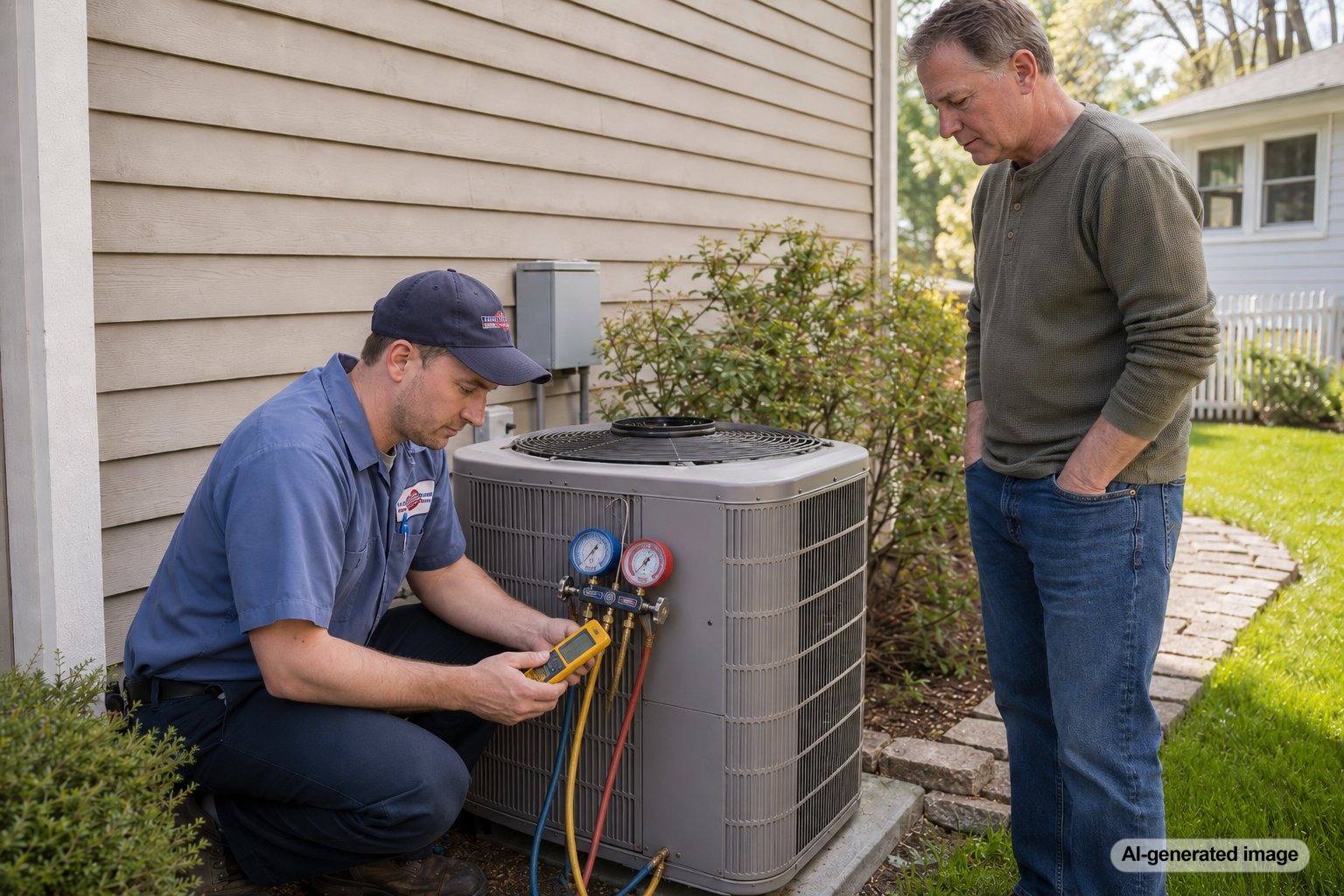
If your AC is blowing warm air or struggling during a humid New Jersey afternoon, it is natural to wonder whether the system simply needs more refrigerant. The short answer is no, you should not treat refrigerant like fuel that gets used up and topped off every season. In a properly operating AC system, refrigerant circulates inside a sealed loop. If the level is low, there is usually a reason that needs professional attention.
Adding refrigerant without finding the cause can leave you with the same cooling problem, higher operating strain, and a leak that continues to get worse. For homeowners and businesses in Central and Northern New Jersey, the better step is to schedule professional AC service and maintenance so a qualified technician can evaluate the system safely and correctly.
You should not just add refrigerant to an AC system without diagnosing why the level is low. Refrigerant is part of a sealed system, so low refrigerant often indicates a leak, an installation issue, or another system problem. A qualified HVAC technician can test the system, look for leaks, make repairs when appropriate, and charge the equipment according to manufacturer specifications.
Why refrigerant is different from fuel
Gasoline, heating oil, and propane are consumed as equipment runs. AC refrigerant is different. It absorbs heat from inside your home or building, carries that heat outdoors, and repeats the cycle. The refrigerant should remain inside the system unless there is a leak or a problem with the original charge.
That is why a low refrigerant reading is not the actual root cause by itself. It is a clue. The system may have a small leak at a coil, a joint, a valve, or another component. In some cases, the issue may trace back to an earlier repair, improper installation, or equipment that has become worn over time.
What happens if refrigerant is added without fixing the problem?
Adding refrigerant without addressing the cause can create a frustrating cycle. The AC may cool better for a short time, then gradually lose performance again as refrigerant escapes. Meanwhile, the equipment may continue running longer than normal as it tries to satisfy the thermostat.
Low refrigerant can contribute to poor cooling, longer run times, higher energy use, frozen evaporator coils, compressor strain, and uneven comfort. It can also make troubleshooting harder because the system may have more than one issue, especially if airflow problems, dirty coils, or an aging compressor are also involved.
Common signs your AC may have a refrigerant issue
Low refrigerant is not the only reason an AC stops cooling, but certain symptoms can point in that direction. A qualified technician will still need to verify the cause with proper tools and testing.
- Warm or lukewarm air coming from the vents when the thermostat is calling for cooling.
- The AC runs for long periods but does not bring the indoor temperature down.
- Ice forms on the indoor coil or refrigerant lines.
- Hissing or bubbling sounds near refrigerant lines or coils.
- Cooling performance gets worse over time instead of failing all at once.
- Indoor humidity feels high even when the AC is running.
Some of these signs can also be caused by restricted airflow, dirty filters, blocked returns, electrical issues, duct problems, or outdoor unit problems. That is why refrigerant should not be added based on symptoms alone.
What a technician should check before adding refrigerant
A proper service visit is more than connecting gauges and adding refrigerant. The technician needs to understand how the system is operating as a whole. That may include checking airflow, filter condition, coil condition, electrical components, temperature split, pressures, and signs of leaks.
If the system is low, the next step is to determine whether a leak repair makes sense. The answer depends on the age and condition of the AC, the location and severity of the leak, the type of refrigerant used, and whether other major components are nearing the end of their service life.
Safe checks homeowners can do first
- Confirm the thermostat is set to cooling and the temperature setting is below the indoor temperature.
- Inspect or replace a dirty air filter.
- Make sure supply and return vents are open and not blocked by furniture, rugs, or curtains.
- Look for obvious debris around the outdoor unit, keeping the area clear without opening the equipment.
- Check whether the breaker has tripped once, if it is safe to do so. If it trips again, stop and call for service.
These checks can help rule out simple airflow or control issues. They do not replace professional refrigerant testing, and homeowners should not open sealed equipment, handle refrigerant, bypass controls, or attempt leak repairs.
Repair, recharge, or replace: what makes sense?
When an AC system has a refrigerant problem, the right decision is not always the same. A newer system with an accessible repairable leak may be a reasonable candidate for repair and proper recharge. An older system with a major coil leak, repeated refrigerant loss, or declining performance may be better evaluated for replacement.
Refrigerant type can also matter. Some older systems use refrigerants that are being phased down or are more costly to service. That does not automatically mean replacement is the only option, but it should be part of the conversation when repair costs are compared with long-term reliability. If your system is older and repairs are becoming frequent, it may also be worth reviewing AC installation and replacement options.
When to call a professional
Call for professional service if your AC is blowing warm air, icing up, running constantly, making unusual hissing sounds, or repeatedly losing cooling performance. Refrigerant handling requires proper training, tools, and procedures. It is not a safe or appropriate DIY repair.
For commercial buildings, refrigerant issues can also affect tenant comfort, employee productivity, customer experience, and operating costs. Property managers and business owners should not wait until a small comfort complaint turns into a larger equipment failure during peak cooling demand.
FAQ: Adding refrigerant to an AC system
Can an AC just be low on refrigerant?
Yes, but low refrigerant usually means there is a leak or another issue that needs to be diagnosed. AC refrigerant should not be consumed during normal operation.
How often should refrigerant be added to an AC?
Ideally, never as routine maintenance. If refrigerant has to be added more than once, the system should be checked for leaks or other problems.
Will adding refrigerant make my AC colder?
It may improve cooling if the system is truly undercharged, but only temporarily if a leak remains. Too much refrigerant can also harm performance, so the charge must be measured correctly.
Is low refrigerant dangerous?
The bigger concern for most homeowners is equipment damage, poor cooling, and improper handling. Refrigerant should only be handled by qualified professionals using appropriate procedures.
Should I replace my AC if it has a refrigerant leak?
Not always. The decision depends on the leak location, repair cost, system age, refrigerant type, overall condition, and how well the system has been performing.
Adding refrigerant is not a simple seasonal top-off. It should be part of a proper diagnosis that identifies why the level is low and whether repair or replacement is the smarter long-term choice.
Need help with your heating, cooling, or HVAC system?
Meyer & Depew serves homeowners and businesses throughout Central and Northern New Jersey.
Get a quote or call 908.272.2100.