



Where Should Your Thermostat Be Located?
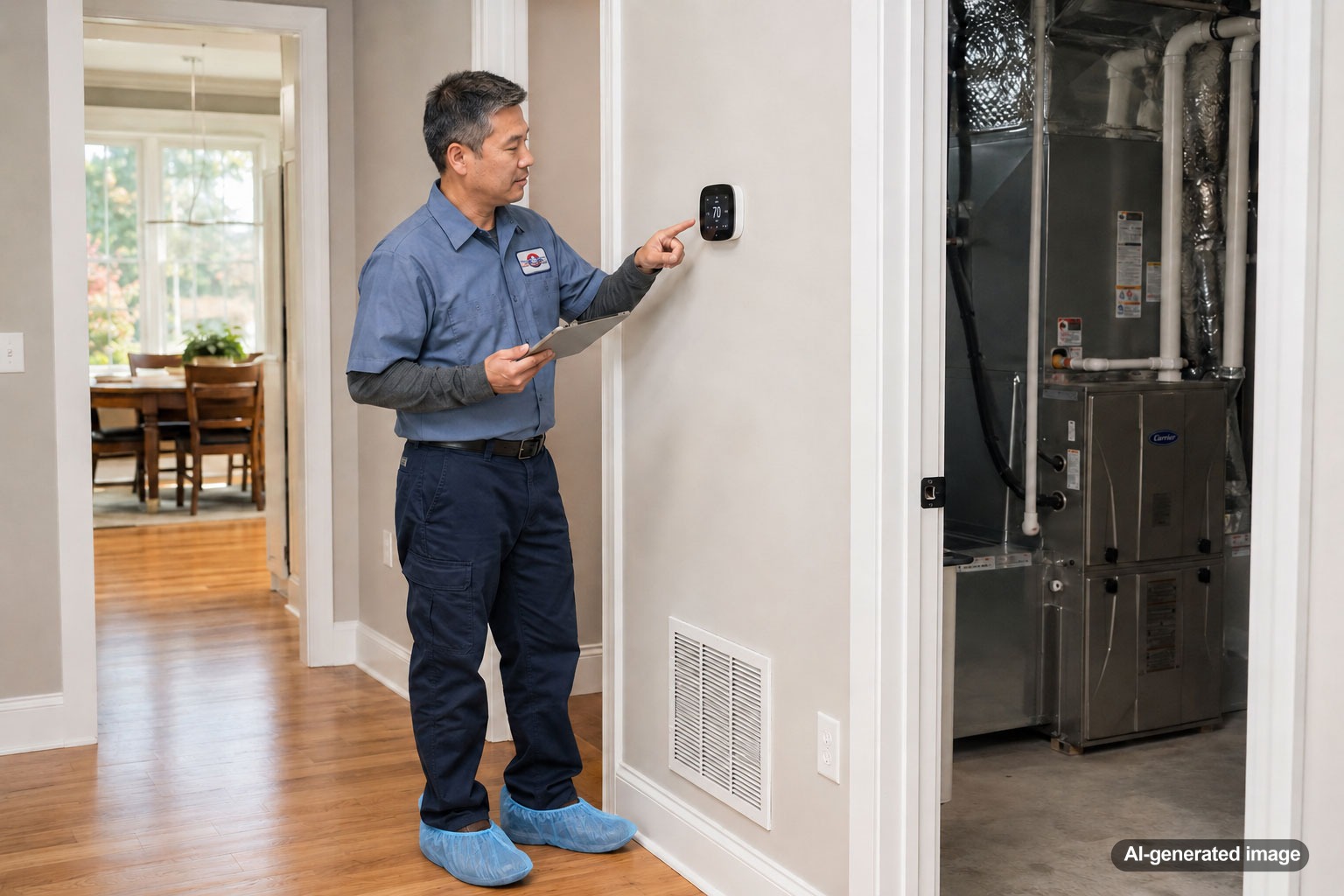
Your thermostat should be located on an interior wall in a central area of the home, away from direct sunlight, drafts, supply vents, exterior doors, kitchens, fireplaces, and appliances that give off heat. That location helps the thermostat read the average temperature your home is actually experiencing, instead of reacting to one hot, cold, drafty, or unusually sunny spot.
Thermostat placement may seem like a small detail, but it can affect comfort, run time, short cycling, uneven rooms, and whether your heating and cooling system responds when you need it most. If you are upgrading to a smart thermostat, replacing older controls, or trying to solve comfort problems in a New Jersey home, Meyer & Depew can help evaluate thermostat options through thermostat services and whole-home comfort recommendations.
The best thermostat location is usually an interior wall near the center of the home, about chest height, in a room or hallway that reflects normal daily living conditions.
- Choose an interior wall, not an exterior wall.
- Keep it away from direct sunlight, lamps, TVs, ovens, fireplaces, and other heat sources.
- Avoid drafts from doors, windows, stairwells, vents, and leaky wall cavities.
- Place it where air can circulate naturally around it.
- Avoid rooms that are rarely used or often closed off.
Why thermostat location matters
Your thermostat is the control point for the HVAC system. It senses the temperature near the wall where it is installed, compares that reading to your setting, and signals the system to heat or cool. If that reading is not representative of the rest of the home, the system may run too long, shut off too soon, or cycle in a way that leaves certain rooms uncomfortable.
For example, a thermostat in a sunny hallway may think the house is warmer than it really is during a summer afternoon. The AC may shut off before bedrooms, offices, or shaded rooms are comfortable. In winter, a thermostat near a drafty front door may call for heat too often, even though the rest of the home feels fine.
The best places for a thermostat
In many homes, the best thermostat location is a first-floor interior hallway or central living area that is used regularly and has good air movement. It should be far enough from unusual temperature influences, but not tucked into a dead corner where the air barely changes.
A good location usually has these qualities:
- It is on an interior wall that is not exposed to outdoor temperature swings.
- It is near the center of the home or the main conditioned zone.
- It is in a space where your household spends time or that reflects average home conditions.
- It is away from direct sunlight and direct airflow from supply registers.
- It is easy to access for adjustments, programming, and maintenance.
For many New Jersey homes, especially older homes with additions, finished basements, enclosed porches, or uneven upstairs rooms, the best answer is not always one thermostat doing everything. In some cases, zoning systems or additional temperature sensors may help the system respond more accurately to different parts of the home.
Thermostat locations to avoid
Some locations can make a perfectly good thermostat act like it has bad information. The thermostat may be working, but the placement is giving it a misleading temperature reading.
Near windows or direct sunlight
Sunlight can warm the thermostat and make the home seem hotter than it really is. During cooling season, that may cause the AC to run longer than needed. During heating season, it may prevent the system from turning on soon enough.
Near supply vents or return grilles
If conditioned air blows directly across the thermostat, the reading can change too quickly. That can lead to short cycling, where the system turns on and off in brief bursts instead of running a steadier, more effective cycle.
Near exterior doors, windows, or drafty areas
Drafts can fool the thermostat into thinking the whole home is colder or warmer than it actually is. This is common near entryways, poorly sealed windows, and stairwells where air movement is stronger.
Near kitchens, fireplaces, lamps, or electronics
Heat from cooking, lighting, televisions, computers, and fireplaces can affect nearby temperature readings. A thermostat near a kitchen may call for less heat in winter or too much cooling in summer because it senses the heat from appliances instead of the actual room conditions.
In rarely used or closed-off rooms
A thermostat in a guest room, storage room, or closed-off office may not reflect the rooms where people actually spend time. Closed doors can also trap air and separate the thermostat from the rest of the home.
How high should a thermostat be mounted?
Most thermostats are placed around 52 to 60 inches from the floor, with many homes using about chest height as a practical reference point. The goal is not to chase an exact number in every home, but to place the thermostat where it can sense normal room air, away from floor-level drafts and ceiling-level heat buildup.
Placement should also be practical. A thermostat that is too high, blocked by furniture, hidden behind a door, or hard to reach can make programming and adjustments inconvenient. Smart thermostats still need a sensible physical location, even when they offer scheduling, learning features, or remote app control.
Smart thermostats still need smart placement
A smart thermostat can improve control, scheduling, and system visibility, but it cannot fully overcome a poor installation location. If it is mounted in direct sun, near a draft, or above a heat-producing appliance, its readings may still be misleading.
Some smart thermostat setups can work with remote sensors, which may help in homes with uneven temperatures. That can be useful for upstairs bedrooms, home offices, nurseries, finished basements, or larger homes where one hallway temperature is not enough information. Meyer & Depew offers support for Ecobee smart thermostat options when a homeowner wants better control and a more modern comfort setup.
Safe checks before moving or replacing a thermostat
- Confirm the thermostat is set to the correct mode, such as heat, cool, or auto.
- Check whether the thermostat is getting direct sunlight at certain times of day.
- Look for nearby vents, lamps, electronics, appliances, or fireplaces that may affect the reading.
- Make sure supply and return vents are open and not blocked by furniture or rugs.
- Replace or inspect the HVAC filter if airflow has been weak or uneven.
Homeowners should not open HVAC equipment, modify wiring, bypass safety controls, or move thermostat wiring without the right training. A thermostat relocation can involve wiring, wall repair, system compatibility, and control setup. If the current location is causing comfort problems, a qualified technician can evaluate whether relocation, recalibration, a smart thermostat, remote sensors, zoning, or HVAC service is the right next step.
When thermostat placement may be part of a bigger comfort issue
Sometimes the thermostat is only one piece of the problem. Uneven temperatures can also be related to duct design, aging equipment, dirty filters, closed vents, poor insulation, leaky air paths, oversized or undersized systems, or humidity issues. In New Jersey homes, older construction, additions, finished attics, and seasonal humidity can all make comfort more complicated than one thermostat setting suggests.
If one room is always uncomfortable while the thermostat area feels fine, the system may need more than a new wall control. A technician can check airflow, equipment performance, duct conditions, thermostat location, and whether the system is operating as intended.
FAQ: Thermostat placement
Can I put a thermostat in a hallway?
Yes, a hallway can be a good location if it is central, used regularly, and not affected by drafts, sunlight, stairs, or nearby vents. A narrow hallway with poor airflow or an exterior door nearby may not be ideal.
Should a thermostat be upstairs or downstairs?
It depends on the home, the HVAC system, and where comfort problems occur. In a single-zone home, the thermostat is often placed in a central main living area. Multi-story homes with uneven temperatures may benefit from zoning or remote sensors.
Is it bad to place a thermostat near a return vent?
It can be. A return grille may pull air past the thermostat in a way that affects the reading, especially if the airflow is strong or the location does not represent the rest of the home.
Can a bad thermostat location increase energy use?
It may. If the thermostat gets misleading readings, the HVAC system can run longer than necessary or cycle too often. Correct placement can support more consistent operation, though energy use depends on many factors.
Should I move my thermostat myself?
It is usually better to have a qualified professional evaluate and move it. Thermostat relocation may involve low-voltage wiring, system compatibility, wall access, and setup details that affect proper operation.
The right thermostat location is central, shaded, draft-free, easy to access, and representative of the space you actually want to control. If your home never feels right even when the thermostat says it should, placement may be worth a closer look.
Need help with your heating, cooling, or HVAC system?
Meyer & Depew serves homeowners and businesses throughout Central and Northern New Jersey.
Get a quote or call 908.272.2100.