



Why Your Outdoor AC Fan May Stop Spinning
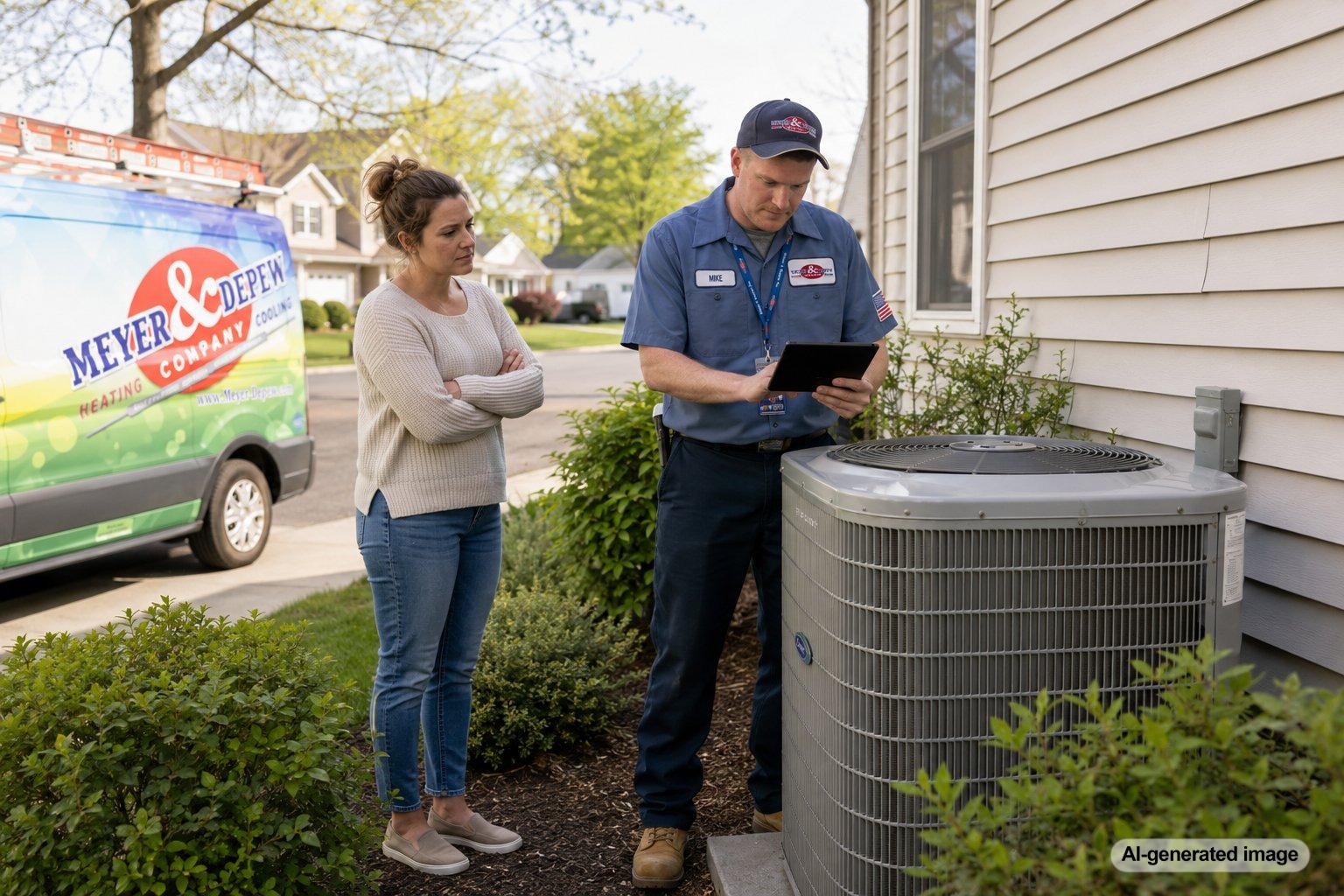
When your outdoor AC fan stops spinning, your cooling system may still sound like it is trying to run, but the home may not cool properly. The outdoor fan helps move heat away from the refrigerant coil, so when it is not working, the system can struggle, shut down, or risk additional wear if it continues operating.
For homeowners in Central and Northern New Jersey, this often shows up during hot, humid weather when the AC is already working hard. Some causes are simple to check from the outside, while others involve electrical parts, motors, capacitors, refrigerant pressures, or control components that should be handled by a qualified HVAC technician. If the problem continues after basic safe checks, scheduling AC service and maintenance is the safest next step.
An outdoor AC fan may stop spinning because of a tripped breaker, thermostat issue, debris around the unit, a failed capacitor, a worn fan motor, control board trouble, or a safety shutdown caused by another cooling problem. Homeowners can safely check thermostat settings, the air filter, outdoor airflow, and a tripped breaker once if it is safe to do so. Do not open the outdoor unit, push the fan blade, bypass electrical parts, or keep running the system if the fan will not operate.
What the outdoor AC fan does
The outdoor unit, often called the condenser, releases heat collected from inside your home. The fan pulls air across the outdoor coil so that heat can move out of the refrigerant and into the outside air. When the fan stops, that heat transfer can be interrupted.
That is why an AC system with a non-spinning outdoor fan may blow warm air, cool weakly, shut off quickly, or make humming noises near the outdoor unit. In some cases, the indoor blower may still run, which can make the system seem partly operational even though the outdoor section is not doing its job.
Common reasons an outdoor AC fan may stop spinning
A tripped breaker or loss of power
Outdoor AC units need power to run the compressor and fan motor. A tripped breaker, disconnected switch, or power interruption can prevent the outdoor fan from starting. If it is safe and accessible, you can check whether the breaker has tripped once. If it trips again, leave it alone and call for professional service. Repeated breaker trips can indicate an electrical problem that should not be ignored.
Thermostat or control issue
If the thermostat is not calling for cooling, the outdoor fan may not run. Check that the thermostat is set to cool, the temperature setting is below the current indoor temperature, and the batteries are not weak if your thermostat uses them. Smart thermostats, zoning systems, and control wiring can add another layer of complexity, so a technician may need to test the system if the settings look correct.
Debris or blocked airflow around the outdoor unit
Leaves, grass clippings, mulch, weeds, shrubs, or storm debris can restrict airflow around the condenser. This does not always stop the fan immediately, but poor airflow can make the system run hotter and harder. Homeowners can safely clear loose debris from around the outside of the unit, keeping space open around the cabinet. Do not remove panels or reach inside the equipment.
A weak or failed capacitor
The capacitor helps certain motors start and run. When it weakens or fails, the outdoor fan may hum, start slowly, run intermittently, or not spin at all. Capacitors store electrical energy and should only be tested or replaced by a qualified technician. This is one of the most common service-related causes of a fan that will not start, but it should still be diagnosed properly instead of assumed.
A worn fan motor
Fan motors can wear out from age, heat, electrical strain, or lack of maintenance. A failing motor may make grinding, rattling, or buzzing sounds, or it may overheat and shut down. If the motor has failed, a technician can evaluate whether repair makes sense based on the age and condition of the equipment.
A larger AC problem causing a safety shutdown
Sometimes the fan is not the only issue. The system may be shutting down because of high pressure, poor airflow, a refrigerant-related problem, a dirty coil, or another protective control. This is one reason it is important not to force the system to keep running. The fan symptom may be pointing to a broader cooling issue.
- Confirm the thermostat is set to cool and set below the indoor temperature.
- Inspect or replace a dirty air filter.
- Make sure supply and return vents are open and not blocked.
- Look for obvious leaves, branches, weeds, or debris around the outdoor unit.
- Check the breaker once if it is safe to do so. If it trips again, stop and schedule service.
What not to do when the outdoor fan stops
Do not remove outdoor unit panels, reach inside the cabinet, push the fan blade with a stick, bypass a safety switch, or attempt electrical repairs. The outdoor unit can contain high-voltage components and parts that may hold electrical charge even when the system appears off.
It is also wise to avoid repeatedly restarting the AC when the fan will not run. Continued operation can put stress on the compressor and other components. If you notice humming, burning smells, smoke, sparks, or repeated breaker trips, turn the system off if it is safe to do so and contact a qualified professional. For emergency electrical or fire concerns, prioritize safety and contact the appropriate emergency service.
Why the problem often appears during New Jersey heat and humidity
Outdoor AC fan problems often become noticeable during long stretches of hot, humid weather because the system is running more frequently. Central and Northern New Jersey homes can see heavy cooling loads during summer, especially in older homes, homes with limited shade, finished attics, additions, or airflow challenges.
A part that was already weak may fail when the AC is under sustained demand. That does not always mean the entire system needs replacement, but it does mean the equipment should be evaluated before a minor issue leads to a more expensive repair.
When to call a professional
Schedule professional AC service if the outdoor fan does not run after basic safe checks, if the unit hums but the blade does not move, if the breaker trips again, if the system blows warm air, or if cooling becomes unreliable. A trained technician can test power, controls, capacitor performance, fan motor operation, coil condition, and system pressures without guessing.
If your AC system is older, has had repeated summer breakdowns, or struggles to cool the home even after repairs, it may also be worth discussing replacement options. Meyer & Depew can help homeowners compare repair and replacement considerations through its AC services without making assumptions before the system is inspected.
FAQ: Outdoor AC fan not spinning
Can I run my AC if the outdoor fan is not spinning?
It is best to turn the system off if the outdoor fan is not running. Running the AC without proper outdoor airflow can place stress on the compressor and may lead to additional damage.
Is a non-spinning outdoor fan always a bad motor?
No. A bad motor is possible, but the cause could also be a capacitor, breaker, thermostat signal, control issue, airflow restriction, or safety shutdown. A technician can test the system and identify the actual cause.
Why is my outdoor unit humming but the fan is not moving?
Humming may indicate that the unit is receiving some power but a component is not starting properly. A failed capacitor or motor can cause this, but electrical testing is needed to confirm it safely.
Can maintenance help reduce the risk of this problem?
Routine maintenance can help identify worn parts, dirty coils, weak electrical components, and airflow problems before the system is under peak summer demand. It cannot prevent every breakdown, but it can reduce the risk of avoidable problems.
Should I call if the fan starts working again later?
Yes, if the fan stopped and then restarted, service is still a good idea. Intermittent problems can be signs of overheating, weak electrical components, or control issues that may return during the next hot day.
An outdoor AC fan that stops spinning is not something to ignore. Start with safe, basic checks, then schedule professional service if the fan still will not run or the system is not cooling normally.
Need help with your heating, cooling, or HVAC system?
Meyer & Depew serves homeowners and businesses throughout Central and Northern New Jersey.
Get a quote or call 908.272.2100.