



Can a Mini Split Help Cool a Room Over the Garage?
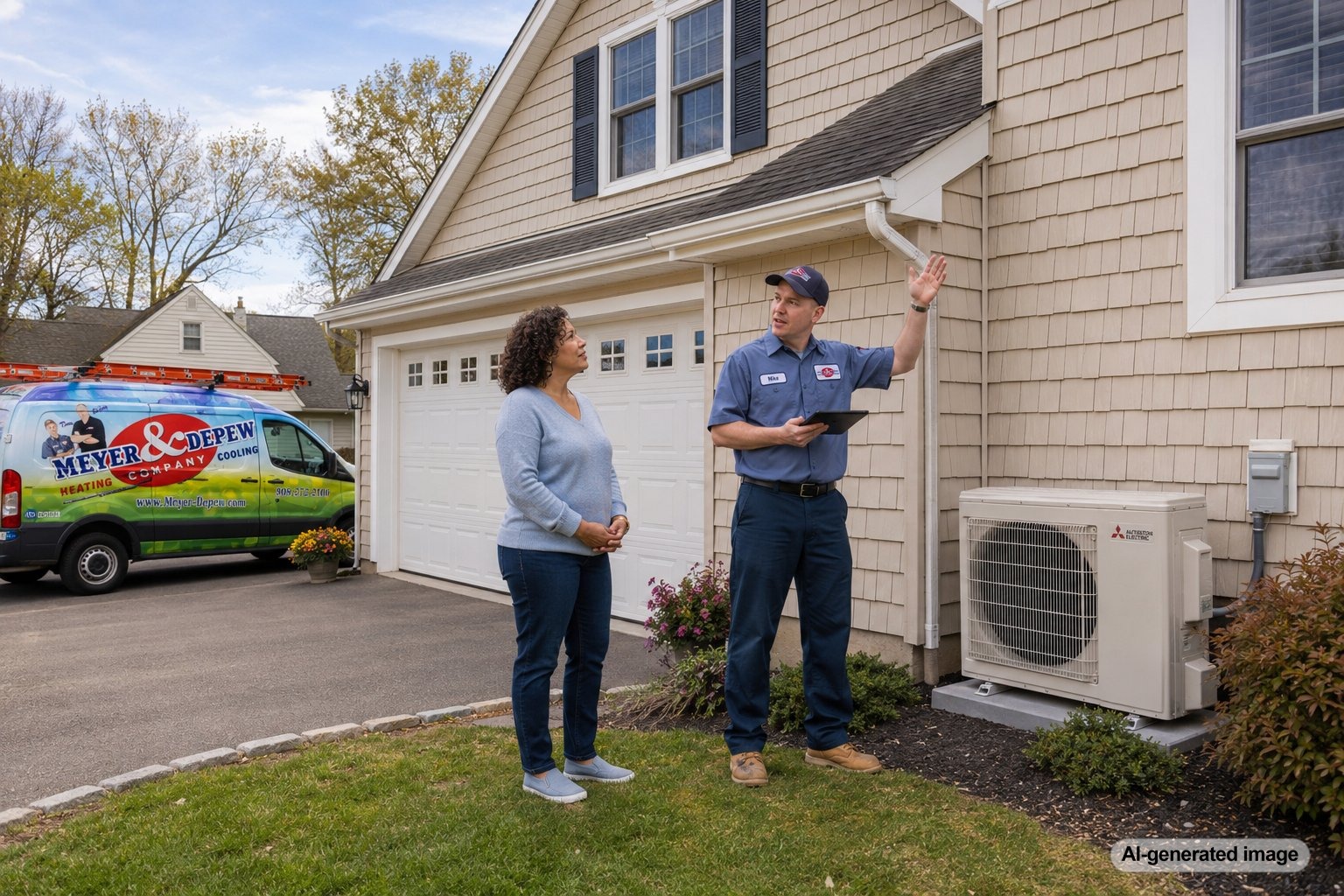
Yes, a mini split can often help cool a room over the garage, especially when that space runs warmer than the rest of the house and the existing central AC does not reach it well. Rooms above garages are common comfort problem areas in New Jersey homes because they may sit over an unconditioned space, have extra sun exposure, limited ductwork, or insulation challenges.
A properly selected ductless mini split system can give that room its own cooling control without forcing you to overcool the rest of the house. The key is making sure the system is sized, placed, and installed correctly for the room, the insulation, the garage below, and the way your home is used.
A mini split may be a strong option for a room over the garage if the space is consistently hot, poorly served by existing ducts, or used as a bedroom, office, guest room, gym, or bonus room. It works best when a qualified HVAC professional evaluates the room’s size, insulation, heat gain, electrical requirements, and airflow needs before installation.
Why Rooms Over Garages Are Often Hard To Cool
A room over the garage has a different comfort profile than a typical second-floor bedroom. The garage below is usually not cooled, so heat can rise into the room above. If the garage door faces afternoon sun, that heat load can build quickly during warm weather. Even if the main AC system is working properly, that one room may still lag behind.
Insulation and air sealing also matter. A room over the garage may have knee walls, sloped ceilings, attic cavities, or floor sections that are harder to insulate evenly. If warm air leaks into the space or heat transfers through the floor from the garage below, the room can feel hot even when nearby rooms are comfortable.
Ductwork can be another issue. In some homes, the room over the garage is at the end of a long duct run, added after the original system was designed, or served by ductwork that is undersized for the space. Closing vents in other rooms is not a good fix because it can create pressure problems and may strain the system. A targeted comfort solution is usually safer and more effective.
How A Mini Split Helps
A mini split cools the room directly instead of relying on the main duct system to push enough air into a difficult area. Indoor units are commonly mounted high on a wall, while the outdoor unit sits outside and connects through a small line set. This allows the room to have its own thermostat-like control and its own cooling output.
That room-by-room control is one of the biggest advantages. If the room over the garage is used only at certain times, you can condition it when needed instead of lowering the temperature throughout the entire house. This can be especially helpful for home offices, guest rooms, craft rooms, exercise rooms, or bedrooms that need more consistent comfort at night.
A mini split may also reduce the temptation to overwork the central AC system. If you have been lowering the whole-home thermostat just to make one room tolerable, the rest of the house may become too cold while the problem room still struggles. A ductless system can address the room more directly.
What Needs To Be Evaluated Before Installing One
Mini splits are flexible, but they are not one-size-fits-all. The room’s square footage is only one part of the sizing decision. A professional load calculation may consider ceiling height, insulation, window size and direction, sun exposure, air leakage, room use, and how much heat comes from electronics or occupancy.
BTU capacity matters. A unit that is too small may run constantly without keeping up on hot days. A unit that is too large may cool the room too quickly without managing humidity as well as it should. In New Jersey summers, humidity control can be just as important as temperature because a room can feel uncomfortable even when the thermostat number looks reasonable.
Placement is important too. The indoor unit should be positioned so air can circulate through the occupied area without blowing directly on a bed, desk, or seating area all day. The outdoor unit also needs appropriate clearance, drainage, service access, and a location that makes sense for the home. Electrical requirements should always be handled by qualified professionals.
When A Mini Split Makes The Most Sense
A mini split is often worth considering when the room over the garage is a finished living space and the rest of the house is reasonably comfortable. It can be a practical fit when the main HVAC system is not failing, but one room has a separate comfort problem.
- The room is much warmer than nearby rooms during summer.
- The space is used regularly as a bedroom, office, playroom, guest room, or hobby room.
- The existing ductwork does not provide enough airflow.
- Adding or redesigning ductwork would be difficult, disruptive, or impractical.
- You want independent temperature control for that one space.
It may also be a good fit for older homes or additions where the original HVAC design does not match the way the house is used today. In those cases, ductless comfort can work alongside the existing system instead of replacing it entirely.
When The Room May Need More Than A Mini Split
A mini split can help with cooling, but it should not be used to cover up building problems that need attention. If the room has major insulation gaps, air leaks, poorly sealed knee walls, or excessive heat transfer from the garage, those issues may still affect comfort and operating performance.
For example, if the garage ceiling below the room is poorly insulated, the mini split may have to work harder than necessary. If the room has leaky windows or attic air entering through gaps, the system may still struggle during peak heat. In some homes, improving insulation, air sealing, or shading may be part of the bigger solution.
Another possibility is that the home’s existing HVAC system is undersized, aging, or not operating as intended. If multiple rooms are uncomfortable, airflow is weak throughout the house, or the AC is short cycling, a broader evaluation of the air conditioning system may be needed before deciding that one ductless unit is the right answer.
- Make sure the room’s supply and return vents are open and not blocked.
- Inspect or replace the air filter if it is dirty.
- Check thermostat settings and fan settings.
- Look for obvious heat sources, such as uncovered sunny windows or electronics running all day.
- Do not open sealed HVAC equipment, modify ductwork, or attempt electrical or refrigerant work yourself.
Mini Split Vs. Zoning For A Room Over The Garage
Some homeowners wonder whether they should install a mini split or add zoning to the existing ducted system. Both can help with uneven comfort, but they solve the problem differently. A mini split adds a separate ductless heating and cooling source for the room. A zoning system uses dampers, controls, and thermostats to manage airflow through the ducted system.
If the room already has good ductwork but needs better control, zoning systems may be worth discussing. If the room has weak duct service, limited duct access, or was added after the original HVAC design, a ductless mini split may be more practical. The best answer depends on the home, not just the room name.
FAQ About Mini Splits For Rooms Over Garages
Can one mini split cool just the room over the garage?
Yes, one properly sized indoor unit can often cool a single room over the garage. The exact capacity and placement should be based on the room’s load, insulation, windows, ceiling height, and use.
Will a mini split also heat the room?
Many ductless mini splits are heat pumps, so they can provide both cooling and heating. Performance depends on the equipment selected and the conditions it is designed for. A qualified technician can explain whether a heat pump mini split makes sense for your New Jersey home.
Can I install a mini split myself?
Mini split installation involves refrigerant lines, electrical work, condensate management, equipment mounting, and system commissioning. Those are not safe DIY tasks for most homeowners. Professional installation helps protect comfort, reliability, and safety.
Will a mini split fix every comfort issue in the room?
Not always. A mini split can be a very effective cooling solution, but insulation, air leakage, sun exposure, garage heat, and overall HVAC performance can still affect comfort. A good evaluation looks at both the equipment and the room itself.
The Bottom Line For A Hot Room Over The Garage
A mini split can be an excellent way to cool a room over the garage when the space is isolated from the home’s main comfort pattern. It gives that room direct cooling, independent control, and a practical path to better comfort without forcing the rest of the house to compensate.
The right design matters. Before installing a ductless system, have the room evaluated for sizing, heat gain, insulation, airflow, and electrical needs. That step helps prevent common problems such as undersizing, oversizing, poor placement, or disappointing humidity control.
Thinking about replacing or upgrading your HVAC system?
Meyer & Depew can help you understand your options for comfort, efficiency, and long-term reliability in your New Jersey home or business.
Questions? Contact Meyer & Depew or call 908.272.2100.