



Why New Flooring Projects Can Stress Your HVAC Filter
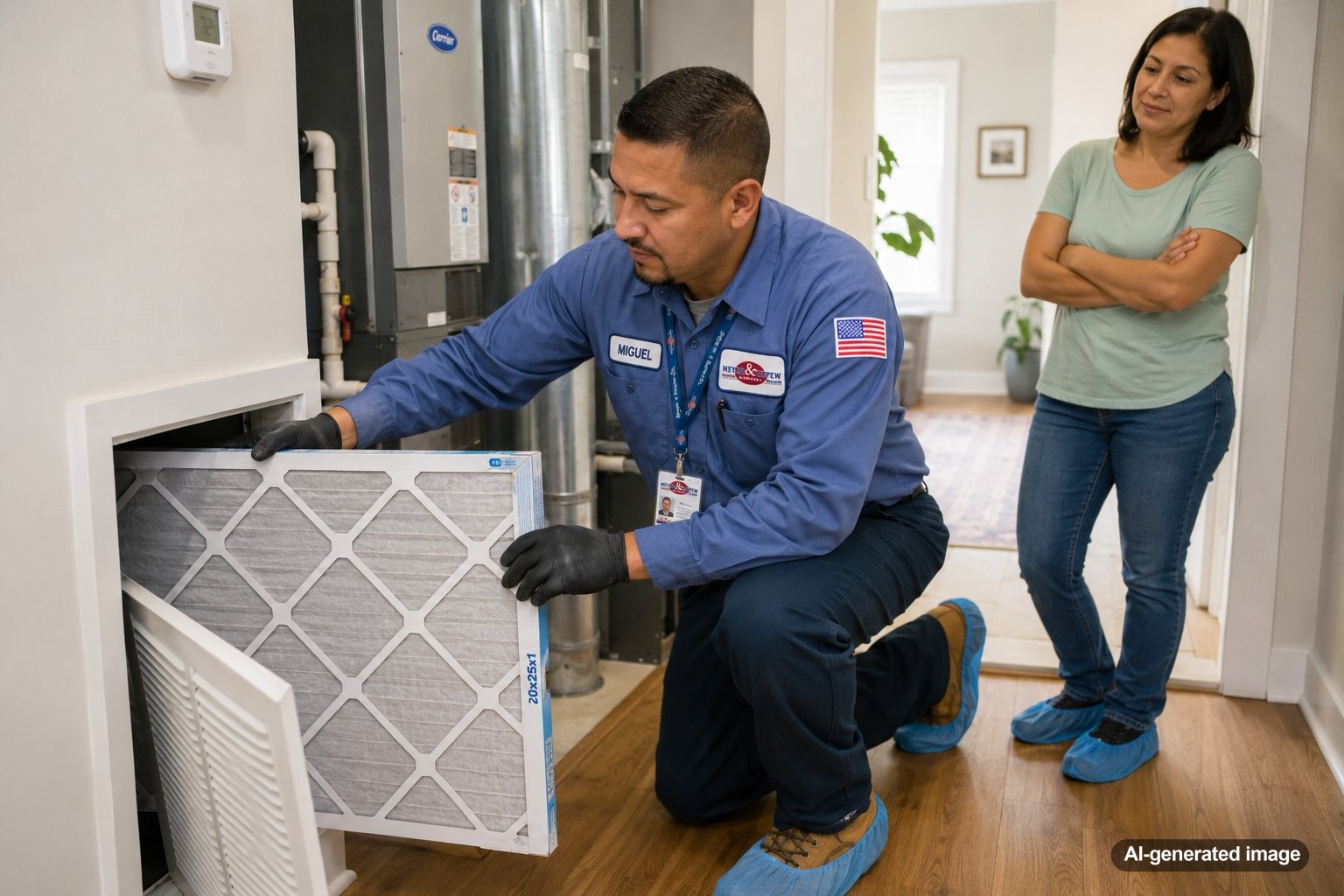
New flooring can make a home look cleaner, brighter, and more comfortable, but the installation process often sends more dust into the air than homeowners expect. Sawdust, sanding residue, adhesive particles, subfloor debris, and fine construction dust can all move through the home while the HVAC system is trying to heat, cool, or circulate air.
That extra airborne debris can load up an HVAC filter quickly, especially in Central and Northern New Jersey homes where flooring work often happens while the system is running for comfort. If your filter looks dirty soon after a flooring project, it does not always mean something is wrong with the equipment. It may mean the system has been catching more dust than usual. Meyer & Depew’s AC service and maintenance team can help evaluate airflow issues if the system keeps struggling after the project is complete.
New flooring projects can stress your HVAC filter because installation dust and fine debris get pulled toward return vents and trapped in the filter. The filter may clog faster than normal, which can reduce airflow, make rooms feel uneven, and put extra strain on heating or cooling equipment. After flooring work, homeowners should check the filter, keep returns clear, and schedule professional service if airflow, comfort, odors, or dust problems continue.
How Flooring Work Creates More Airborne Dust
Flooring installation can disturb more material than the finished room suggests. Removing old carpet can release trapped dust, pet dander, and debris that may have settled deep into the fibers. Pulling up tile or hardwood can expose old adhesive, underlayment, and subfloor particles. Cutting planks, sanding transitions, trimming doors, and sweeping construction debris can also create fine dust that stays suspended in the air.
Because HVAC systems move air through returns and supply vents, they can pull some of that dust toward the filter. A quality filter is designed to capture particles, but during a renovation it may be asked to handle days of concentrated dust instead of normal household activity. That is why a filter that usually lasts one to three months may look dirty much sooner after flooring work.
Why A Clogged Filter Matters
An HVAC filter is not just there to keep the air cleaner. It also helps protect the equipment from dust buildup. When the filter becomes heavily loaded, air has a harder time moving through the system. Restricted airflow can make the system work longer to reach the thermostat setting, and some rooms may start to feel warmer, cooler, or stuffier than others.
In cooling season, poor airflow can contribute to comfort problems, short cycling, or coil issues that need professional evaluation. In heating season, restricted airflow can also interfere with normal system performance. A dirty filter is one of the simplest problems to check, but it should not be ignored, especially after a dusty home improvement project.
Common Flooring Scenarios That Are Hard On HVAC Filters
Some flooring projects are dustier than others. Carpet removal can release years of trapped particles all at once. Hardwood refinishing can create fine sanding dust that travels easily. Luxury vinyl plank or laminate installation may involve repeated cutting, trimming, and sweeping. Tile removal can be especially dusty when old mortar, grout, or backer board is disturbed.
Even a careful contractor can leave fine dust in the air if the home is closed up, return vents are uncovered, or the HVAC fan is set to run continuously. In older New Jersey homes with older ductwork, unfinished basements, or return pathways near work areas, debris may move into the system more easily.
Safe Checks Homeowners Can Make After New Flooring
- Inspect the HVAC filter after the flooring work is finished, even if it was changed recently.
- Replace the filter if it looks heavily loaded, dusty, or gray.
- Make sure return vents and supply vents are open, uncovered, and not blocked by furniture, rugs, boxes, or flooring materials.
- Vacuum nearby return grilles and surrounding floor areas with care.
- Check thermostat settings and avoid running the fan continuously if dust is still being cleaned up.
- Schedule professional service if weak airflow, unusual odors, loud operation, or comfort problems continue.
Do not open sealed HVAC compartments, bypass safety switches, clean internal components yourself, or attempt electrical, refrigerant, gas, or combustion repairs. Those areas should be handled by a qualified technician.
When To Replace The Filter After A Flooring Project
A good rule of thumb is to check the filter as soon as the project is complete, then check it again within a couple of weeks. If the first filter catches heavy dust immediately after installation, a second check helps confirm whether the home is returning to normal or whether dust is still circulating.
Homes with pets, allergy concerns, large renovation areas, or multi-day projects may need more frequent filter changes during and shortly after the work. The right filter type also matters. A filter that is too restrictive for the system can create airflow problems, while a very basic filter may not capture as much fine dust. A technician can help determine what filter range is appropriate for your specific equipment.
How Flooring Dust Can Affect Indoor Air Quality
After new flooring is installed, some homeowners notice more visible dust on furniture, a dry or scratchy feeling in the air, or a stale smell when the system starts. These symptoms can come from renovation debris, disturbed household dust, adhesives, or cleaning residue. Ventilation, cleaning, filter changes, and time may help, but ongoing air quality concerns should be evaluated carefully.
If your home often feels dusty even after regular cleaning and filter replacement, it may be worth reviewing broader comfort options through air quality and comfort solutions. Depending on the home, ventilation, filtration, humidity control, or air purification may be part of a more complete strategy.
When To Call A Professional
If your system was running during a dusty flooring project and now seems weaker, louder, or slower to heat or cool, professional HVAC service is a smart next step. A technician can check airflow, inspect accessible system components, look for dust-related restrictions, and determine whether maintenance is needed.
You should also call if the filter becomes dirty again unusually fast, if certain rooms remain uncomfortable, or if you notice burning smells, electrical concerns, smoke, water around equipment, or other unsafe conditions. For urgent safety concerns, prioritize safety and contact the appropriate emergency service, utility, or qualified professional.
FAQ: New Flooring And HVAC Filters
Should I turn off my HVAC system during flooring work?
In many cases, reducing system run time while dusty work is happening can help limit how much debris gets pulled toward the filter and ductwork. Comfort, weather, pets, and contractor needs can affect the decision, so ask the flooring contractor and use practical judgment.
Can flooring dust damage my HVAC system?
Dust does not automatically mean damage, but heavy debris can contribute to restricted airflow and buildup. The filter is the first line of defense, which is why checking and replacing it after the project matters.
Is one filter change enough after new flooring?
Sometimes, but not always. A large or dusty project may require one filter change right after the work and another inspection a week or two later.
Why does my house still smell dusty after new floors?
Fine debris, adhesive odors, cleaning products, and disturbed household dust can linger for a while. If odors continue or the system smells unusual when it runs, schedule professional service.
New flooring can temporarily create a heavier dust load than your HVAC filter is used to handling. A simple filter check after the project can protect airflow, support comfort, and help you catch problems before they become harder to ignore.
Want to make HVAC maintenance easier to stay on top of?
A service plan can help keep routine heating and cooling maintenance on your calendar before small issues become bigger headaches.
You can also request a service appointment.