



How Skylights Affect Summer Cooling Comfort
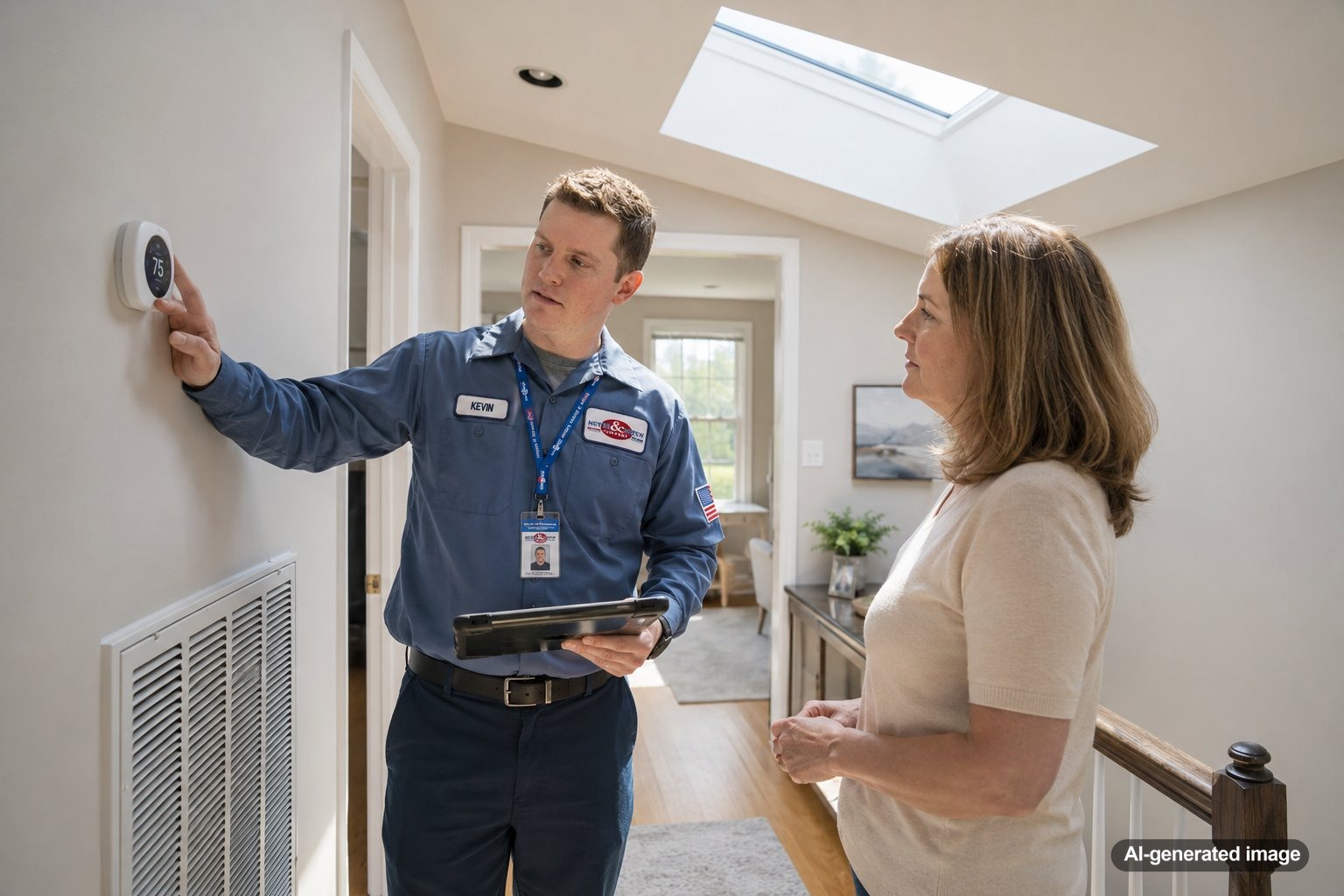
Skylights can make a home feel brighter, more open, and more inviting, but they can also change the way rooms feel during hot New Jersey summers. When sunlight pours through overhead glass for hours at a time, it can add heat directly into the living space, make certain rooms warmer than others, and cause your AC system to work harder to keep up.
The effect depends on the skylight size, direction, glass type, shading, room layout, insulation, and how well your cooling system moves air through the home. For homeowners in Central and Northern New Jersey, understanding that relationship can make it easier to solve comfort problems without guessing. If your AC seems to run constantly or one sunny room never feels comfortable, AC service and maintenance can help determine whether the issue is the skylight, the cooling system, airflow, or a combination of factors.
Skylights can affect summer cooling comfort by adding solar heat gain, increasing room temperature near the glass, contributing to glare, and creating uneven cooling between rooms. Better glass, shades, proper sealing, balanced airflow, and a correctly maintained AC system may help reduce the impact.
Why skylights can make rooms feel warmer in summer
A skylight is different from a regular vertical window because it faces the sky and can receive strong direct sun during parts of the day. In summer, that sunlight can bring radiant heat into the room, especially when the skylight has older glass, limited tinting, no shade, or a large exposed area.
This heat gain is most noticeable in rooms with vaulted ceilings, finished attics, sunrooms, lofts, upper-floor bedrooms, kitchens, and open living areas. Warm air naturally rises, so rooms with skylights may also trap heat near the ceiling before the cooling system has a chance to remove it. The result can be a room that feels bright and beautiful in the morning but uncomfortable by late afternoon.
How skylights affect AC performance
Your AC system is designed to remove heat and humidity from the home, but it is not always sized or designed around extra solar heat from overhead glass. A room with multiple skylights may gain heat faster than nearby rooms, which can make the thermostat reading less useful. The thermostat may be located in a hallway or shaded room that feels fine while the skylit area feels several degrees warmer.
That mismatch can lead homeowners to keep lowering the thermostat, which may make other areas too cold while the sunny room still feels warm. In some homes, this can also contribute to longer AC run times, uneven comfort, and frustration with a system that seems to be working but not solving the actual problem.
Glass type, direction, and shading matter
Not all skylights affect comfort the same way. Older clear glass or acrylic units may allow more heat transfer than modern options designed to reduce solar heat gain. South-facing and west-facing roof areas can be especially challenging during summer because they may receive intense sun when outdoor temperatures are already high.
Shades, blinds, coatings, and low solar heat gain glass can make a noticeable difference in how a room feels. Exterior roof conditions matter too. A skylight under partial tree cover may behave very differently from one on an open roof with no shade. The right solution often depends on the room, the roof orientation, and whether the discomfort is mainly heat, glare, humidity, or poor air movement.
Skylights can reveal airflow problems
Sometimes the skylight is only part of the story. A room may feel hotter because it does not receive enough supply air, has an undersized return path, or has vents blocked by furniture, rugs, or renovations. In older New Jersey homes, additions and attic conversions can also have ductwork that was not designed for the current room layout.
When airflow is weak, the AC may cool the rest of the house reasonably well while the skylit room lags behind. This is one reason comfort problems should not be blamed on the skylight alone. A qualified technician can evaluate airflow, duct performance, filter condition, refrigerant-related symptoms, thermostat behavior, and equipment operation without assuming one cause too quickly.
Humidity can make skylit rooms feel even less comfortable
Summer comfort is not only about temperature. New Jersey humidity can make a warm room feel heavier and less comfortable, especially when the AC is short cycling, oversized, poorly maintained, or struggling with airflow. A skylit room that gains heat quickly may encourage more thermostat adjustments, but lower thermostat settings do not always solve humidity concerns.
In some homes, indoor air quality and comfort upgrades may be worth discussing along with cooling service. Options related to air quality and comfort, thermostats, zoning, ventilation, and humidity control can help homeowners better understand what is possible for their specific layout.
- Check whether skylight shades or blinds are closed during the hottest part of the day.
- Replace or inspect the air filter if it appears dirty or restricted.
- Make sure supply and return vents are open and not blocked.
- Look for obvious gaps, stains, or signs of moisture around the skylight, without climbing onto the roof.
- Notice when the room feels worst so you can describe the pattern during service.
Practical ways to improve comfort in rooms with skylights
Improving summer comfort often starts with reducing heat gain before asking the AC system to remove it. Skylight shades, reflective blinds, better glass, roof overhang considerations, and professional skylight evaluation may all help depending on the age and design of the unit. Simple habits, such as closing shades during peak sun, can also reduce the afternoon heat load in the room.
HVAC solutions may include maintenance, airflow balancing, thermostat adjustments, zoning, duct improvements, or a room-by-room comfort option such as a ductless system in the right situation. Homes with large open spaces, finished upper floors, or rooms that were added after the original HVAC design may need a more complete comfort evaluation rather than another quick thermostat adjustment.
When to call an HVAC professional
Call for professional help if your AC runs constantly, the skylit room stays uncomfortable even with shades closed, airflow feels weak, the system short cycles, utility bills have changed noticeably, or you see signs that the equipment is struggling. You should also schedule service if you notice water around HVAC equipment, electrical burning smells, smoke, sparks, or other unsafe conditions. Prioritize safety and contact the appropriate emergency service, utility, or qualified professional when needed.
For many homes, the best answer is not simply a bigger AC system. Oversizing equipment can create its own comfort and humidity problems. A professional evaluation can help determine whether the issue is solar heat gain, duct design, thermostat placement, equipment performance, insulation, or several issues working together.
FAQ: Skylights and summer cooling comfort
Do skylights always make a room hotter?
No. The impact depends on the skylight design, glass, direction, size, shading, ceiling height, insulation, and airflow. Some skylights have a modest effect, while others can create noticeable heat gain during summer.
Can my AC compensate for skylight heat?
Sometimes, but not always evenly. Your AC may cool the home overall while the room with the skylight still feels warmer. If the room has weak airflow or high solar gain, the system may need service, balancing, zoning, or another comfort strategy.
Should I lower the thermostat to cool a skylit room?
Lowering the thermostat may help briefly, but it can also make other rooms too cold and increase run time. It is better to reduce heat gain, check airflow, and have the cooling system evaluated if the problem continues.
Can zoning help rooms with skylights?
Zoning may help in some homes by giving different areas more targeted temperature control. It depends on the duct design, system type, and layout. Rooms with major sun exposure, additions, or upper-floor comfort issues may be good candidates for a discussion about zoning systems.
Skylights can improve natural light, but they can also add summer heat, expose airflow problems, and make cooling feel uneven. The most useful solution usually combines sensible heat control at the skylight with a properly maintained and balanced cooling system.
Need help with your heating, cooling, or HVAC system?
Meyer & Depew serves homeowners and businesses throughout Central and Northern New Jersey.
Get a quote or call 908.272.2100.