



Why Your Bedroom Gets Hot at Night Even With the AC On
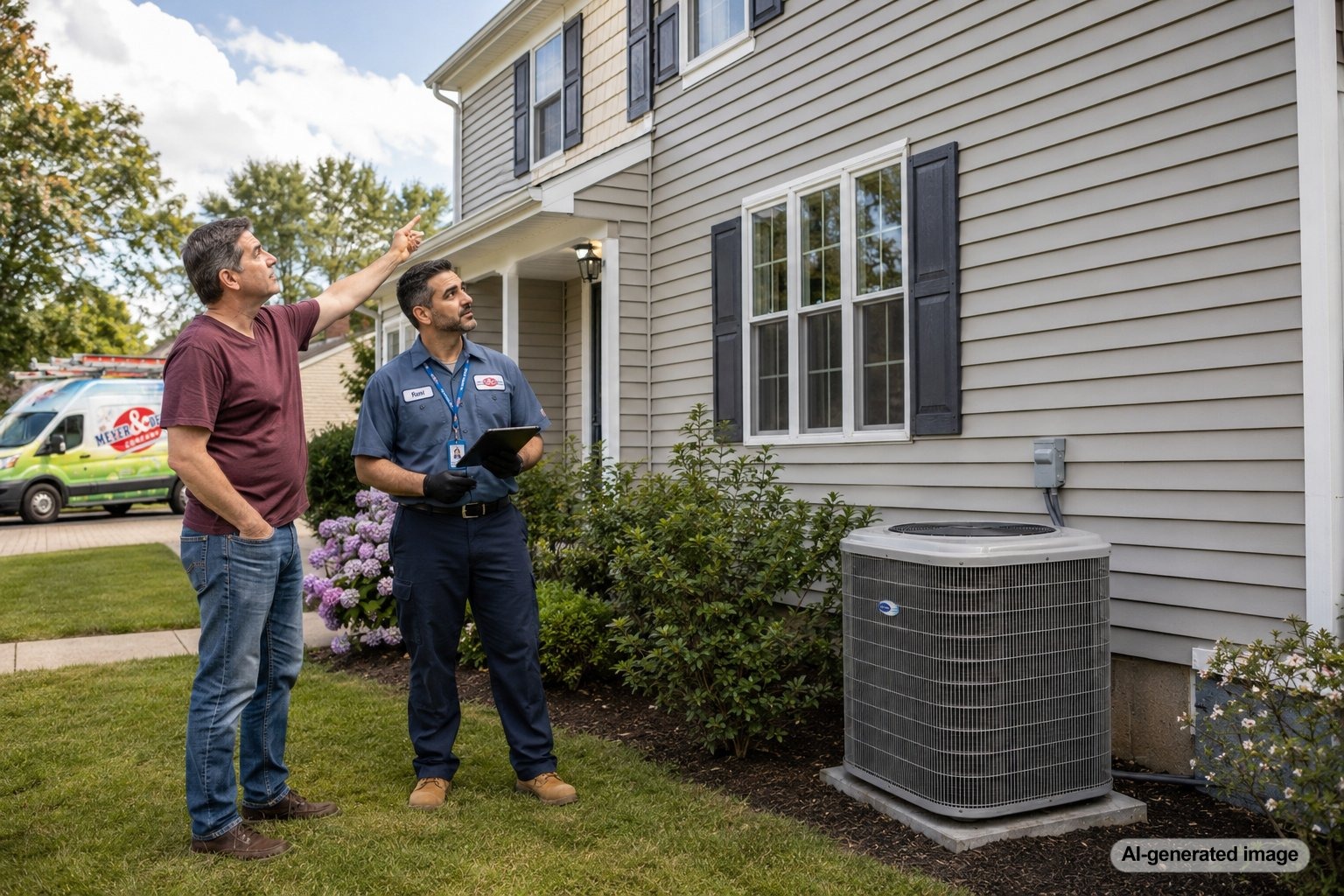
A bedroom that gets hot at night while the AC is running can make an otherwise comfortable home feel frustrating fast. In many Central and Northern New Jersey homes, the problem is not always that the air conditioner is broken. It may be a mix of airflow restrictions, duct design, thermostat location, upstairs heat gain, closed doors, humidity, or a cooling system that cannot keep up with the way the home is used after dark.
The quick answer is this: your AC may be producing cool air, but that cool air may not be reaching the bedroom in the right amount, at the right time, or with enough moisture control. If the issue keeps happening, professional AC service and maintenance can help identify whether the problem is airflow, equipment performance, ductwork, controls, or a comfort design issue.
A bedroom often gets hot at night because the room has poor airflow, the return air path is restricted, the thermostat is satisfied before the bedroom cools down, heat builds up upstairs, or the system is struggling with humidity. A few safe checks may help, but recurring uneven cooling usually deserves a closer look from a qualified HVAC technician.
Why the bedroom heats up after dark
Nighttime comfort problems can feel confusing because the outdoor temperature usually drops after sunset. But bedrooms have their own cooling challenges. They often sit at the end of duct runs, upstairs, under attic space, behind closed doors, or on the sunny side of the home. By the time you are ready to sleep, that room may have absorbed heat all day.
Once the bedroom door closes, airflow can change even more. If cool supply air enters the room but warm air cannot easily return to the HVAC system, pressure can build inside the room and reduce circulation. The AC may still run, but the bedroom may feel stale, warm, or heavy.
Common reasons your bedroom stays hot with the AC on
The thermostat is in a cooler part of the house
Most homes have one main thermostat. If that thermostat is located in a hallway, living room, or lower level that cools faster than the bedroom, the AC may shut off before the bedroom reaches a comfortable temperature. The system thinks the house is satisfied, even though the bedroom is still too warm.
The bedroom is far from the air handler
Rooms at the end of longer duct runs may receive weaker airflow, especially if ducts are undersized, leaky, poorly balanced, or routed through hot attic areas. This is common in older homes, additions, and second-floor bedrooms where duct design was not built around modern comfort expectations.
Closed doors can restrict return airflow
Many bedrooms have supply vents but limited return air. When the door is closed at night, the room may not have a clear path for air to move back to the system. That can make the room feel warmer and can reduce the effectiveness of the cool air entering the space.
Heat gain from the attic, roof, or windows lingers
Bedrooms under attic space or facing afternoon sun can hold heat long after the rest of the home feels comfortable. Poor insulation, air leaks, older windows, or inadequate attic ventilation may allow heat to radiate into the room during the evening.
Humidity makes the room feel warmer
New Jersey summer humidity can make a bedroom feel sticky even when the thermostat looks reasonable. If the AC is short cycling, oversized, low on performance, or not running long enough to remove moisture effectively, the bedroom may feel warmer than the actual temperature suggests.
Safe checks you can make before calling for service
- Confirm the thermostat is set to cool and the fan setting is appropriate for your comfort goals.
- Inspect or replace a dirty air filter, since restricted airflow can affect the whole system.
- Make sure bedroom supply vents and return vents are open and not blocked by furniture, rugs, curtains, or storage.
- Check whether the bedroom door makes the room noticeably warmer when closed for several hours.
- Look for obvious debris around the outdoor AC unit that could limit airflow.
- If it is safe, check whether the breaker has tripped once. If it trips again, stop and call a qualified professional.
These checks are simple and reasonable for most homeowners. They do not involve opening sealed HVAC equipment, handling refrigerant, bypassing safety controls, or working with electrical components. If you notice burning smells, smoke, sparks, flooding near equipment, or any unsafe condition, prioritize safety and contact the appropriate professional right away.
When the issue may be bigger than one room
If one bedroom is hot but the rest of the house is comfortable, the cause is often airflow, duct balance, insulation, room location, or controls. If several rooms are warm, the AC may be struggling more broadly. Weak cooling throughout the home could point to a dirty coil, failing component, refrigerant-related issue, undersized system, aging equipment, or poor overall airflow.
A qualified technician can evaluate temperature split, static pressure, duct performance, refrigerant circuit operation, electrical components, blower performance, and thermostat behavior. The goal is not just to make the AC run, but to understand why comfort is uneven and what options may make sense for the home.
Why zoning or ductless comfort may help
Some bedrooms are difficult to cool evenly with a single-zone central AC system. In those cases, comfort upgrades may be worth discussing. Zoning systems can help divide a home into areas with different temperature needs, while ductless mini split systems may help with bedrooms, additions, finished spaces, or rooms that never seem to match the rest of the house.
These solutions are not right for every home, and they should be designed carefully. The best option depends on the existing ductwork, equipment condition, insulation, room layout, electrical capacity, and how your household uses the space at night.
When to call a professional
If the bedroom gets hot every night, if the system runs constantly without improving comfort, or if you notice weak airflow, unusual noises, ice on equipment, water around the system, or rising utility bills, it is time to schedule service. A professional evaluation can help separate a simple maintenance issue from a ductwork, thermostat, zoning, or equipment performance problem.
Meyer & Depew works with homeowners throughout Central and Northern New Jersey on AC service, maintenance, replacement, airflow concerns, smart thermostats, and comfort upgrades. For some homes, the answer may be a targeted repair or adjustment. For others, a more complete comfort strategy may be the better long-term path.
FAQ
Why is only my bedroom hot when the AC is on?
One hot bedroom often points to uneven airflow, duct design, closed-door pressure issues, insulation problems, sun exposure, or thermostat placement. The AC may be cooling the home, but not distributing air evenly to that room.
Can closing vents in other rooms push more cold air to my bedroom?
Closing too many vents can increase pressure in the duct system and may create other comfort or performance issues. It is usually better to have airflow evaluated and balanced properly rather than trying to force air from one area to another.
Should I lower the thermostat at night?
Lowering the thermostat may help temporarily, but it can also make other rooms too cold and may not fix the underlying issue. If one room consistently needs a much lower setting, airflow, zoning, ductwork, insulation, or thermostat placement may need attention.
Could a smart thermostat fix a hot bedroom?
A smart thermostat or remote sensor may help in some homes, especially when the main thermostat is in a misleading location. However, controls cannot fully solve poor duct design, weak airflow, or equipment performance problems.
Is a hot bedroom a sign that I need a new AC system?
Not always. A hot bedroom may be caused by airflow, ductwork, insulation, or thermostat issues rather than the AC unit itself. If the system is older, unreliable, or struggling throughout the home, replacement may be part of the conversation, but it should be based on a professional evaluation.
A hot bedroom at night usually means there is a comfort imbalance, not necessarily a simple thermostat problem. Start with safe airflow checks, then schedule professional service if the issue continues.
Need help with your heating, cooling, or HVAC system?
Meyer & Depew serves homeowners and businesses throughout Central and Northern New Jersey.
Get a quote or call 908.272.2100.