



How to Know If Your Thermostat Needs Recalibration
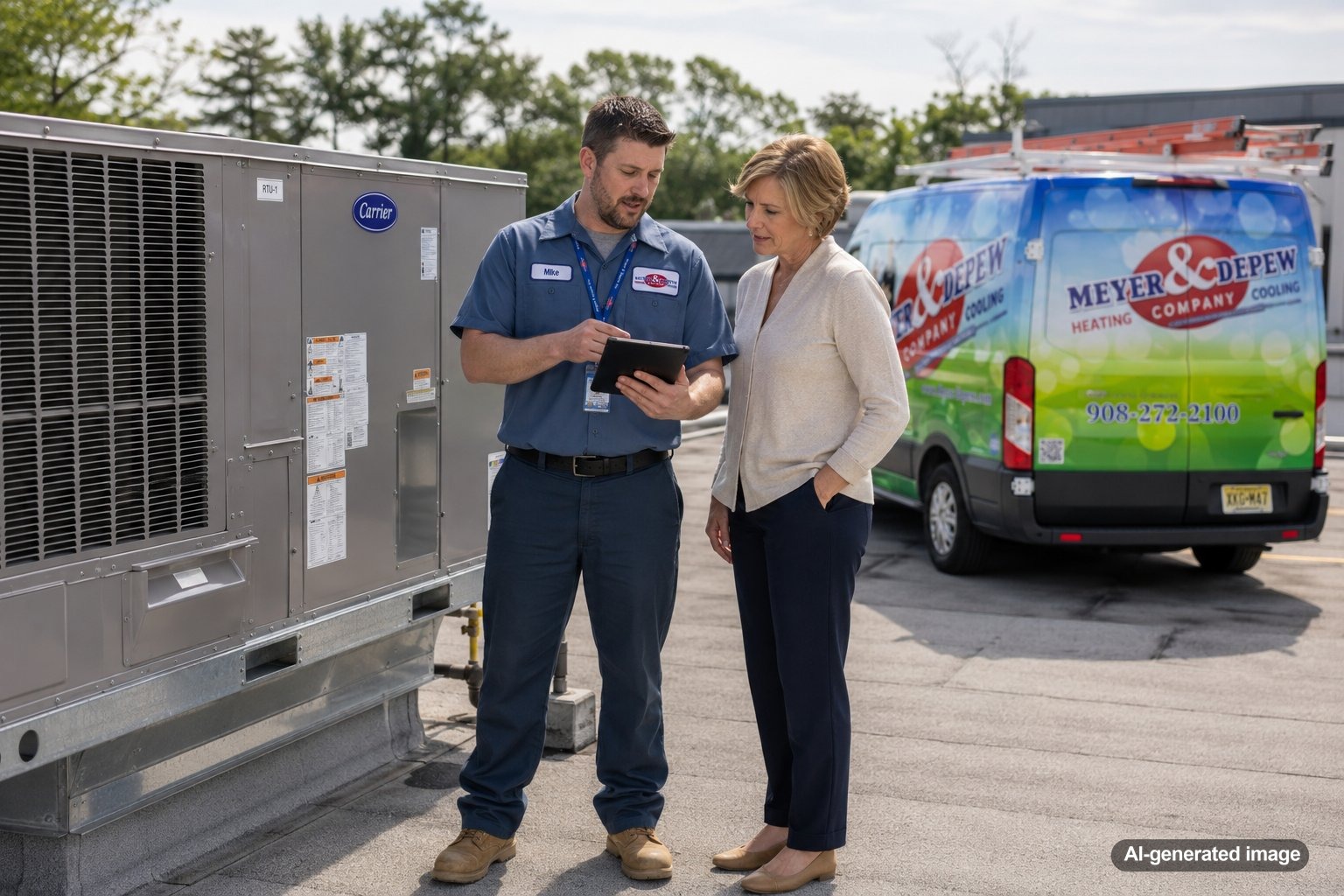
A thermostat that is off by a few degrees can make your home feel uncomfortable, even when the heating or cooling system itself is working. If the room feels warmer or colder than the number on the display, your system cycles at odd times, or you keep adjusting the setting without getting steady comfort, thermostat recalibration may be worth looking into.
For homeowners in Central and Northern New Jersey, this can show up during humid summer weather, chilly shoulder seasons, or winter cold snaps when accurate temperature control matters most. Some thermostat problems are simple setting or placement issues, while others point to wiring, sensor, zoning, or broader HVAC concerns. Meyer & Depew can help evaluate all thermostats and related comfort issues when the problem is not easy to pin down.
Your thermostat may need recalibration if the displayed temperature does not match the actual room temperature, the HVAC system turns on and off at the wrong times, certain rooms feel consistently uncomfortable, or the thermostat responds slowly after you change the setting.
What Thermostat Recalibration Means
Thermostat recalibration is the process of correcting how the thermostat reads and responds to the room temperature. In a traditional thermostat, this may involve adjusting the internal sensing mechanism. With many digital or smart thermostats, calibration may involve checking the sensor reading, placement, settings, wiring, and system configuration.
The key point is that the thermostat is the control center for your comfort system. If it thinks the room is 72 degrees when the actual temperature is 76 degrees, your AC may shut off too soon. If it reads lower than the room actually is during heating season, your furnace or boiler may run longer than needed. That does not always mean the thermostat is defective, but it does mean the reading should be checked.
Signs Your Thermostat May Be Reading the Temperature Wrong
One of the most common clues is a noticeable gap between the thermostat display and a separate room thermometer placed nearby. A small difference can be normal, especially if the thermometer is in sunlight, near a vent, or on an exterior wall. A consistent difference of several degrees, however, may indicate a calibration problem or a poor thermostat location.
You may also notice that the HVAC system starts or stops before the home feels comfortable. During AC season, the system might shut off while the living room still feels warm and sticky. During heating season, the system might run until upstairs bedrooms feel overheated. These patterns can come from thermostat calibration, but they can also be related to airflow, duct design, insulation, zoning, or system sizing.
Common Reasons a Thermostat Falls Out of Sync
Older thermostats can lose accuracy over time as internal parts wear or dust collects inside the unit. Digital thermostats may show incorrect readings if the sensor is affected by poor placement, nearby heat sources, direct sun, drafts, or incorrect settings. Smart thermostats can also behave unexpectedly when schedules, occupancy settings, learning features, or app-based controls are not aligned with how the home is actually used.
Placement matters more than many homeowners realize. A thermostat mounted near a kitchen, fireplace, exterior door, sunny window, return duct, or supply register may respond to that small area instead of the overall living space. In older New Jersey homes, additions, finished basements, and renovated spaces can make temperature sensing even more complicated because airflow and insulation may vary from room to room.
Safe Checks You Can Make Before Calling for Service
- Compare the thermostat reading with a reliable room thermometer placed near the thermostat for at least 15 minutes.
- Confirm the thermostat is set to the correct mode, such as heating, cooling, or auto.
- Check the schedule, hold setting, fan setting, and any smart thermostat app controls.
- Replace or inspect the air filter if airflow seems weak or uneven.
- Make sure supply and return vents are open and not blocked by furniture, rugs, or curtains.
If the thermostat uses batteries, replacing them may also help with blank screens, weak response, or inconsistent operation. Avoid opening sealed HVAC equipment, adjusting electrical wiring, bypassing safety switches, or trying to modify controls inside the system. If the thermostat is connected to low-voltage wiring, a qualified technician can check it safely.
When the Thermostat Is Not the Only Problem
A thermostat can only control the system based on the information it receives. If the home has restricted airflow, dirty coils, duct leaks, low refrigerant, short cycling, or an aging system, recalibration alone may not solve the comfort issue. For example, a thermostat may be reading correctly, but a clogged filter or weak blower could keep conditioned air from reaching certain rooms.
This is why thermostat concerns often overlap with routine HVAC maintenance. If your comfort issues happen at the start of every cooling or heating season, or if the system has not been serviced recently, it may be smart to pair thermostat evaluation with a broader check of the equipment. Meyer & Depew’s Service Plans can help keep regular maintenance on the calendar so small issues are easier to catch.
When to Call a Professional
Call for professional service if the thermostat is consistently off by several degrees, the HVAC system short cycles, the display is blank despite new batteries, the system does not respond to setting changes, or comfort problems continue after basic homeowner checks. You should also call if the thermostat was recently replaced and the system has not worked correctly since installation.
A technician can compare temperature readings, inspect the thermostat location, verify wiring, review system settings, and evaluate whether the issue is with the thermostat, HVAC equipment, airflow, or zoning. If a thermostat is outdated or no longer reliable, replacement with a properly configured modern thermostat may be a better option than repeated adjustments.
FAQ About Thermostat Recalibration
How far off does a thermostat have to be before it matters?
A difference of one degree may not be a serious concern, but a consistent difference of several degrees can affect comfort and system operation. The pattern matters, especially if the HVAC system cycles at the wrong times.
Can a smart thermostat need recalibration?
Yes. Smart thermostats can have sensor, placement, setup, schedule, or wiring issues that make the temperature feel inaccurate. The solution may be a setting adjustment, relocation, equipment check, or replacement depending on the situation.
Should I replace my thermostat instead of recalibrating it?
If the thermostat is old, unreliable, poorly placed, or no longer compatible with your comfort needs, replacement may make more sense. A qualified technician can help determine whether recalibration, repair, or replacement is the better path.
Can thermostat problems make energy bills higher?
They can contribute to longer run times, short cycling, or unnecessary heating and cooling, but energy bills can rise for many reasons. Airflow issues, maintenance needs, insulation, weather, and equipment age may also play a role.
If the number on the thermostat does not match the comfort in your home, do not ignore the pattern. Recalibration may help, but a full look at the thermostat, airflow, and HVAC system can give you a clearer answer.
Need help with your heating, cooling, or HVAC system?
Meyer & Depew serves homeowners and businesses throughout Central and Northern New Jersey.
Get a quote or call 908.272.2100.