

Why Your AC Shuts Off When the Drain Pan Fills
When your AC shuts off because the drain pan fills, it is usually not random. Many cooling systems have a safety switch that turns the system off when water collects where it should not. That shutdown can be frustrating during a warm New Jersey day, but it is often doing an important job: helping prevent ceiling stains, floor damage, equipment damage, and a larger moisture problem around your indoor HVAC system.
In many homes, especially during humid Central and Northern New Jersey summers, an air conditioner removes a steady amount of moisture from the air. That moisture should drain away through the condensate system. When the pan fills instead, the system is telling you there may be a clogged drain line, a drainage issue, a dirty coil, a poor installation detail, or another problem that needs attention. For service on cooling system drainage issues, Meyer & Depew’s AC Service and Maintenance team can evaluate the system safely.
Your AC may shut off when the drain pan fills because a float switch or water safety switch detects standing water and stops cooling operation. The most common reason is a clogged or slow condensate drain, but the cause can also involve a cracked pan, dirty evaporator coil, poor slope, blocked tubing, or a condensate pump problem.
What The Drain Pan Does
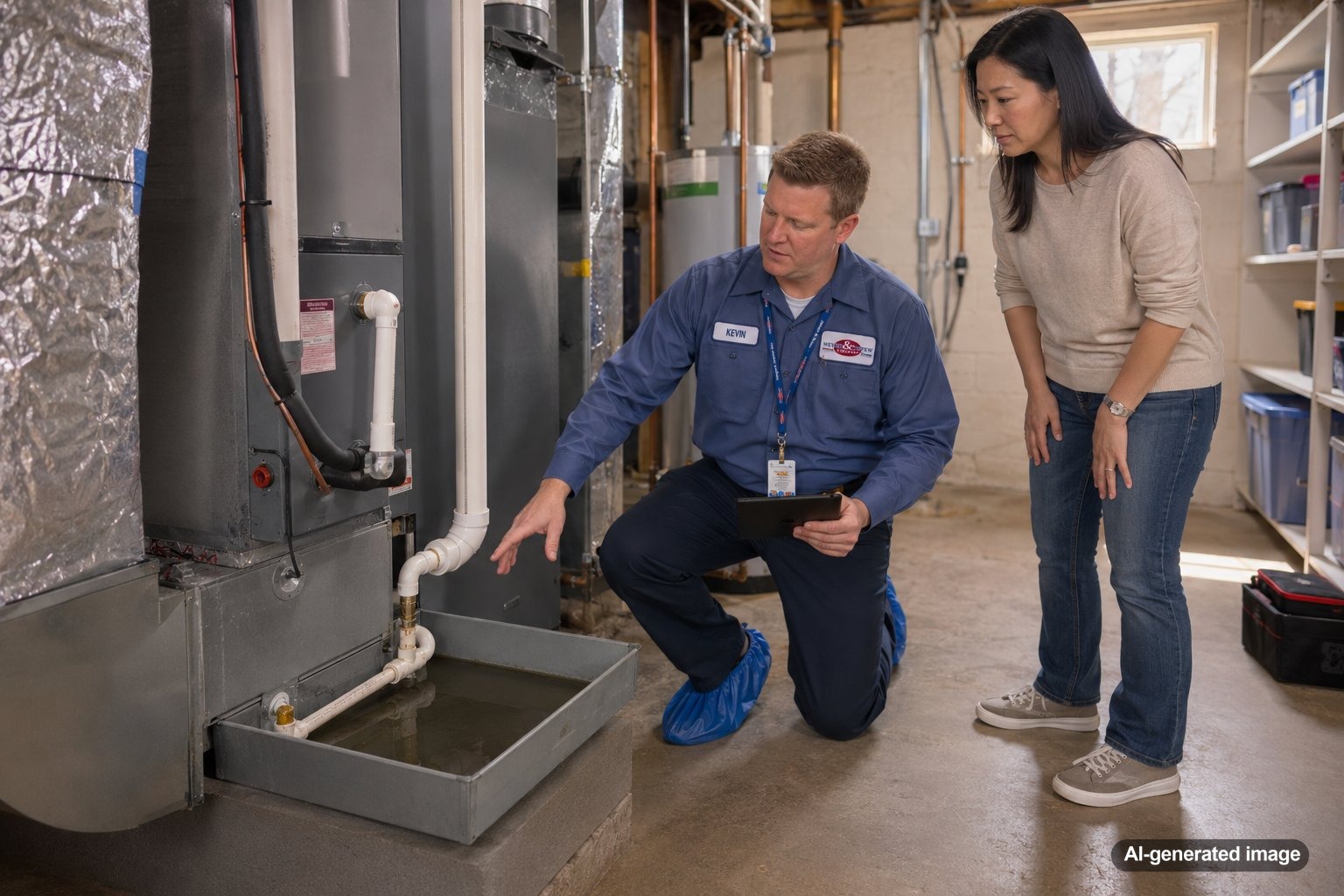
Your air conditioner does more than cool the air. As warm indoor air moves across the cold evaporator coil, moisture condenses on the coil and drips into a drain pan. From there, the water should flow through a condensate drain line to an approved drainage point.
In a properly draining system, you may never think about this process. During humid weather, though, the amount of water can be significant. If the drain line slows down or stops, water backs up into the pan. Many systems are equipped with a float switch that rises with the water level. Once the water gets too high, the switch can interrupt the cooling cycle so the system stops before water spills where it can cause damage.
Why The AC Turns Off Instead Of Keeping Cool
An AC that shuts off when the drain pan fills is often protecting your home. The safety switch is not designed to fix the drainage problem. It is designed to reduce the risk of water overflow. That distinction matters because resetting the system without addressing the cause can lead to the same shutdown again.
Some homeowners describe this as the system short cycling, but the drain pan shutdown is different from normal temperature-based cycling. The thermostat may still be calling for cooling, but the water safety control may be preventing the system from running. If the air handler is in an attic, closet, basement, or above a finished ceiling, that protection can be especially important.
Common Reasons The Drain Pan Fills
The most common cause is a clogged condensate drain line. Dust, algae, debris, or buildup can restrict the pipe over time. When water cannot move through the line fast enough, it backs up into the pan and triggers the switch.
A dirty air filter can contribute indirectly. Reduced airflow may cause the evaporator coil to get too cold, which can increase the chance of freezing and thawing water. When ice melts, the extra water can overwhelm the pan or drainage system. A dirty evaporator coil can create similar drainage problems because water may not shed cleanly into the pan.
The issue can also come from a cracked, rusted, or misaligned drain pan, a condensate line that is not pitched correctly, or a condensate pump that is not working as it should. In older homes or tight mechanical spaces, small drainage details can become more noticeable during long cooling cycles and humid weather.
Safe Checks Before You Call
- Check the thermostat to confirm the system is set to cool and the temperature setting is reasonable.
- Inspect or replace a dirty air filter if it is easy and safe to access.
- Make sure supply and return vents are open and not blocked by furniture, rugs, or storage.
- Look for obvious standing water near the indoor unit, but do not open sealed equipment panels or touch electrical components.
- If the breaker has tripped, check it once only if it is safe to do so. If it trips again, stop and call a qualified professional.
A homeowner should not bypass the float switch, remove safety controls, open sealed HVAC compartments, work around high-voltage wiring, or pour chemicals into the system without professional guidance. A shutdown related to water is a signal to slow down and avoid making the problem worse.
Why This Problem Is More Noticeable In Humid Weather
New Jersey humidity can make condensate problems show up quickly. On a mild, dry day, a partially restricted drain line may still move enough water to avoid a shutdown. During a hot, sticky stretch, the same system may remove much more moisture from the air, and the drain restriction can become obvious.
This is one reason routine maintenance matters. During cooling system maintenance, a technician can inspect drainage, airflow, the evaporator area, electrical components, and the general condition of the equipment. A maintenance visit cannot guarantee that a drain will never clog, but it can reduce the risk of unnoticed issues building into a no-cooling situation. Homeowners who want routine care on a more predictable schedule can also review Meyer & Depew’s Service Plans.
When To Call A Professional
Call for professional AC service if the system shuts off again after the pan fills, if water is visible around the indoor unit, if you see staining on ceilings or walls near the air handler, or if the AC will not restart after the water issue appears. You should also call if the system is in an attic, crawl space, or other hard-to-access area where water can cause damage before you notice it.
A qualified technician can check whether the condensate line is clogged, whether the pan and float switch are positioned correctly, whether the pump is working, and whether airflow or coil conditions are contributing to the issue. The goal is not just to get the AC running again. It is to understand why water collected in the first place.
FAQ: AC Drain Pan Shutdowns
Can I just empty the drain pan and turn the AC back on?
Emptying the pan may allow the switch to reset, but it does not solve the underlying problem. If the drain line is clogged or the system is producing more water than it can drain, the pan can fill again.
Is a full drain pan an emergency?
It can become urgent if water is leaking into finished spaces, near electrical components, or around ceilings, walls, or flooring. If there is active leaking or unsafe electrical concern, prioritize safety and contact a qualified professional.
Does a full drain pan mean my AC is broken?
Not always. The cooling equipment may still be capable of operating, but the condensate drainage system needs attention. A technician can determine whether the issue is limited to drainage or tied to airflow, coil condition, pump operation, or equipment setup.
Can maintenance help prevent this?
Regular maintenance may help catch drainage, airflow, and equipment condition issues before they interrupt cooling. It cannot prevent every clog or breakdown, but it is a practical way to reduce avoidable problems.
If your AC shuts off when the drain pan fills, the safety switch is likely doing its job. The real concern is why water is backing up. Addressing the drainage issue promptly can help protect your comfort, your equipment, and your home.
Need help with your heating, cooling, or HVAC system?
Meyer & Depew serves homeowners and businesses throughout Central and Northern New Jersey.
Get a quote or call 908.272.2100.