

How Often Should Commercial HVAC Systems Be Serviced?
Most commercial HVAC systems should be professionally serviced at least twice a year: once before the cooling season and once before the heating season. That schedule gives a qualified technician time to inspect the equipment, clean key components, check airflow, review controls, and look for wear before the system is under heavy demand.
For many businesses in Central and Northern New Jersey, twice-yearly service is the baseline, not the ceiling. Restaurants, medical offices, retail spaces, older buildings, rooftop units, and facilities with long operating hours may need more frequent maintenance. Meyer & Depew offers commercial HVAC maintenance plans that can help building owners and facility managers keep service on a practical schedule.
Commercial HVAC systems are commonly serviced two times per year, but the right frequency depends on the building, equipment type, occupancy, hours of operation, indoor air quality needs, and how critical comfort is to daily operations.
Why twice a year is the usual starting point
Commercial heating and cooling equipment often works harder than residential systems. A home may cycle around family routines, but a commercial system may serve employees, customers, tenants, equipment rooms, conference areas, kitchens, lobbies, or large open spaces for long stretches of the day.
A spring service visit helps prepare the cooling side before summer heat and humidity arrive. A fall service visit helps prepare heating equipment before colder weather. In New Jersey, that timing matters because systems can move quickly from light seasonal use to long daily run times.
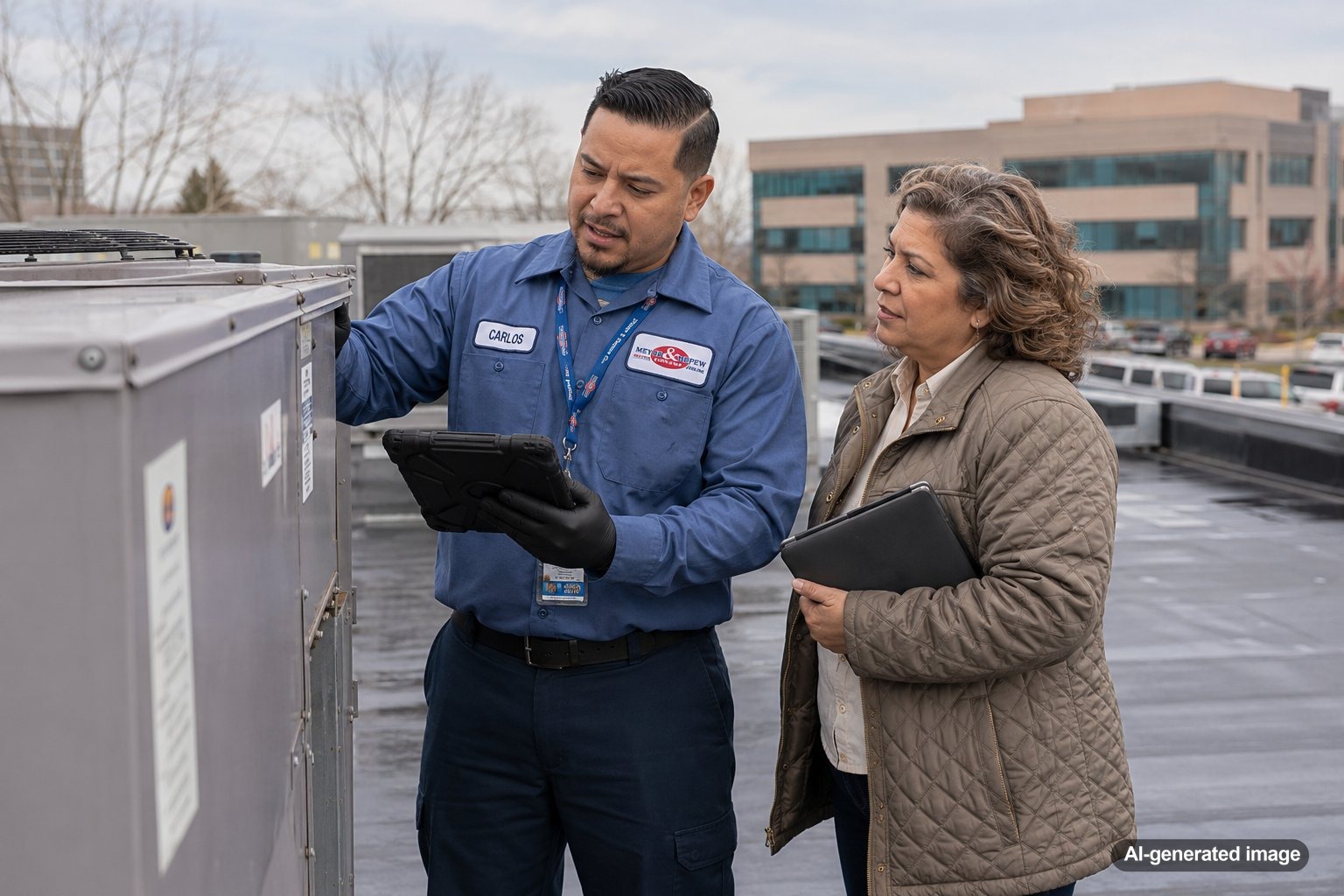
During a professional maintenance visit, a technician may inspect belts, motors, electrical connections, condensate drainage, filters, coils, refrigerant-related performance indicators, economizers, controls, safety devices, burners, heat exchangers, and overall system operation. The exact checklist depends on the equipment type and scope of service.
When commercial HVAC systems may need quarterly service
Some commercial systems should be checked more than twice a year. Quarterly service is often worth discussing when the building has high occupancy, long business hours, sensitive indoor conditions, or equipment that is difficult to access and costly to neglect.
- Restaurants and food service spaces can place extra load on HVAC equipment because of kitchen heat, grease, exhaust requirements, and frequent door openings.
- Medical, dental, wellness, and childcare facilities may have higher expectations for comfort, ventilation, filtration, and reliability.
- Retail stores and offices with heavy foot traffic can experience more dust, filter loading, and uneven temperature complaints.
- Buildings with rooftop units may benefit from regular inspection because weather exposure, debris, belts, drains, and electrical components all deserve attention.
- Properties with older equipment may need closer monitoring to reduce the risk of surprise failures and help plan for eventual replacement.
For larger facilities, maintenance frequency may also vary by system. One rooftop unit serving a busy storefront may need closer attention than a smaller system serving a lightly used office area.
Factors that affect the right service schedule
The best maintenance schedule is based on how the building actually operates. A commercial HVAC system in a nine-to-five office does not face the same demands as equipment serving a gym, restaurant, school, house of worship, or multi-tenant property.
Operating hours
Systems that run early mornings, evenings, weekends, or nearly continuously should be evaluated more often. More runtime means more wear, more filter loading, and more opportunity for small issues to develop between visits.
Occupancy and use
More people usually means more heat gain, more ventilation demand, and more comfort complaints when airflow is not balanced. Conference rooms, sales floors, classrooms, and shared workspaces often reveal HVAC issues faster than low-traffic areas.
Equipment location
Rooftop units are exposed to weather, leaves, windblown debris, temperature swings, and access challenges. Mechanical rooms can have their own concerns, especially if storage, dust, or poor ventilation interferes with equipment access and performance.
Indoor air quality expectations
Buildings with filtration, ventilation, humidity control, or air purification goals may need maintenance intervals that support those systems properly. If indoor air quality is a priority, commercial property owners may also want to review commercial air purification systems as part of a broader comfort and air quality plan.
What can happen when commercial HVAC service is skipped
Deferred maintenance does not always cause an immediate shutdown. More often, it shows up gradually: weaker airflow, uneven temperatures, rising energy use, short cycling, nuisance alarms, water around equipment, unusual noises, or repeated complaints from occupants.
Dirty coils, worn belts, clogged filters, blocked drains, loose electrical connections, poor airflow, and control issues can make equipment work harder than it should. Over time, that may increase wear and make service calls more urgent and disruptive.
Maintenance cannot prevent every breakdown, but it can reduce the risk of avoidable problems and help decision-makers understand the condition of their equipment before peak season.
Safe checks between professional visits
- Confirm thermostats or building controls are set correctly for the current schedule.
- Make sure supply and return vents are open and not blocked by furniture, boxes, displays, or temporary partitions.
- Replace or inspect accessible air filters according to the maintenance plan and equipment requirements.
- Look for obvious debris around outdoor or rooftop equipment from a safe location only.
- Check whether a breaker has tripped once, if it is safe and appropriate to do so.
Business owners and facility teams should not open sealed equipment, bypass safety devices, handle refrigerant, adjust gas components, or work on high-voltage parts. If there is a burning smell, smoke, sparks, flooding, suspected gas issue, carbon monoxide concern, or unsafe condition, prioritize safety and contact the proper emergency service, utility, or qualified professional.
How a service agreement helps commercial properties stay organized
Commercial HVAC maintenance is easier to manage when it is scheduled in advance. A service agreement can help keep seasonal visits from being forgotten during busy business periods, especially for properties with multiple units or several stakeholders.
Planned service also gives property managers better documentation. Notes from prior visits can help identify recurring problems, aging components, airflow concerns, thermostat issues, and equipment that may be approaching replacement. For rooftop equipment, that record can be especially useful when comparing ongoing repair costs with rooftop unit replacement planning.
FAQ: Commercial HVAC service frequency
Is once a year enough for commercial HVAC maintenance?
Once a year may be too little for many commercial buildings, especially if the system provides both heating and cooling. Twice a year is a more common starting point because it gives the equipment attention before the cooling season and before the heating season.
Do rooftop units need more frequent service?
They often do. Rooftop units are exposed to weather, debris, access challenges, and long operating hours. Depending on the building and equipment condition, quarterly service may be appropriate.
Should filters be changed only during scheduled maintenance?
Not always. Filter replacement frequency depends on the building, system use, filter type, dust levels, occupancy, and indoor air quality needs. Some commercial spaces need filters checked or replaced between professional service visits.
Can maintenance lower commercial HVAC repair risk?
Routine maintenance can reduce the risk of avoidable problems, but it cannot guarantee that equipment will never break down. It is best viewed as a practical way to support reliability, performance, and better planning.
Who should decide the right maintenance schedule?
A qualified commercial HVAC technician can evaluate the building, equipment type, age, runtime, access, operating conditions, and comfort requirements to recommend an appropriate service interval.
Most commercial HVAC systems should be serviced at least twice a year, while demanding buildings, rooftop units, older systems, and high-occupancy spaces may benefit from quarterly maintenance.
Need commercial HVAC support in New Jersey?
Meyer & Depew works with businesses, organizations, and commercial properties throughout Central and Northern New Jersey.
Learn more about commercial HVAC maintenance plans.