



Why Leaky Ducts Can Waste Cooling in the Summer
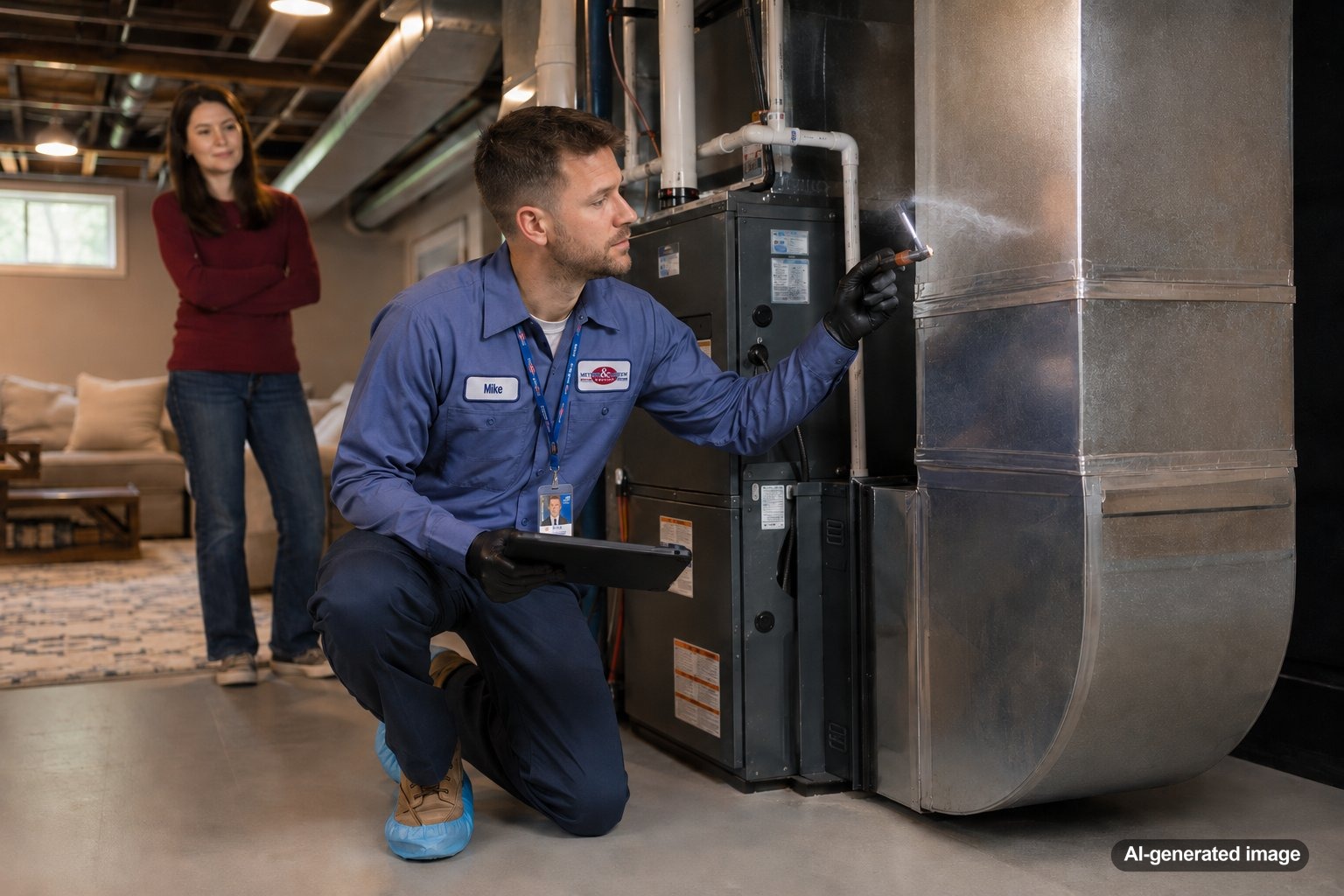
Leaky ducts can quietly waste cooling all summer long, even when your AC system seems to be running normally. In many Central and Northern New Jersey homes, the problem is not always the air conditioner itself. Cooled air may be escaping into an attic, crawl space, basement, wall cavity, or unfinished area before it ever reaches the rooms where people actually need it.
That lost airflow can make a home feel uneven, raise utility use, and cause the AC to run longer than it should. If your system is working hard but certain rooms still feel warm, it may be worth scheduling AC service and maintenance to evaluate the cooling system, ductwork, airflow, and overall performance.
Leaky ducts can waste cooling by allowing conditioned air to escape before it reaches your living spaces. That can leave rooms uncomfortable, reduce airflow at vents, pull hot or humid air into the system, and make the AC run longer. A professional duct and HVAC evaluation can help determine whether leaks, poor insulation, blocked airflow, or equipment issues are contributing to the problem.
How duct leaks waste cooled air
Your AC does more than create cold air. It also depends on a delivery system that moves that air through supply ducts and pulls household air back through return ducts. When the ductwork has gaps, loose joints, damaged sections, or poorly sealed connections, some of that cooled air escapes into spaces that are not meant to be cooled.
In summer, this is especially frustrating because the system may be doing the work, but the comfort never fully arrives. A duct leak in an attic can release cool air into a hot space. A leak near a return duct can pull in warm, dusty, or humid air from unfinished areas. Both situations can interfere with comfort and make the AC work harder than necessary.
Why summer makes duct leaks more noticeable
New Jersey summers often bring heat, humidity, and long stretches of AC use. During those periods, small duct problems can become much easier to feel. A room that was only slightly uncomfortable in spring may become noticeably warm in July. A second floor may lag behind the rest of the house. A finished basement may feel fine while bedrooms stay sticky.
Humidity can make the issue feel worse. If return-side leaks pull humid air from an attic, basement, or crawl space, the AC may have to manage more moisture than expected. That can affect comfort even if the thermostat setting looks reasonable. The result is often a home that feels cool in some rooms and muggy or under-conditioned in others.
Common signs your ducts may be part of the problem
Duct leaks are not always visible from the main living area, but they often leave clues. These signs do not prove that ductwork is the only issue, but they can help you decide when to have the system checked.
- Some rooms stay warmer than others even when vents are open.
- Airflow feels weak at one or more supply registers.
- The AC runs for long periods without improving comfort much.
- Utility bills rise without a clear change in usage.
- Dust seems to collect quickly near vents or returns.
- The system feels less effective during humid weather.
These symptoms can also be linked to dirty filters, undersized ducts, blocked returns, aging equipment, refrigerant issues, insulation problems, or thermostat placement. A qualified technician can look at the full picture instead of guessing from one symptom.
Supply leaks versus return leaks
Not all duct leaks affect your home in the same way. Supply duct leaks let cooled air escape after the AC has already conditioned it. That can reduce the amount of air reaching bedrooms, living rooms, offices, or other occupied spaces.
Return duct leaks can create a different problem. Instead of losing cooled air, the system may draw in hot, dusty, or humid air from areas outside the normal living space. This can make the AC work with air that is harder to cool and dehumidify. In some homes, return leaks may also contribute to more dust around vents or more frequent filter loading.
Why leaky ducts can strain the AC system
When cooled air escapes, the thermostat may take longer to reach the set temperature. The AC may respond by running longer cycles or cycling more frequently, depending on the system and the home. Longer run time does not automatically mean damage, but it can add wear and make existing comfort problems more noticeable.
Leaky ductwork can also hide the real condition of the equipment. A homeowner may think the AC is too small or failing when the bigger issue is poor air delivery. In other cases, both problems may exist together: an older AC system, leaky ducts, and inadequate insulation can all contribute to weak summer performance. That is why a proper evaluation matters before making repair or replacement decisions.
Safe checks homeowners can do first
- Make sure supply and return vents are open and not blocked by furniture, rugs, or curtains.
- Inspect or replace the air filter if it is dirty or overdue.
- Confirm that the thermostat is set correctly and not affected by direct sunlight or nearby heat sources.
- Look for obvious disconnected, crushed, or damaged duct sections only in safely accessible areas.
- Check whether the outdoor unit has obvious debris around it, without opening equipment panels.
Avoid opening sealed equipment, adjusting electrical components, adding refrigerant, or trying to repair major duct sections in hard-to-reach areas. If ductwork runs through an attic, crawl space, or tight mechanical area, professional service is the safer and more reliable route.
How professionals evaluate duct-related cooling waste
A technician may check airflow, temperature differences, duct connections, visible leakage points, insulation, static pressure, filter condition, blower operation, and overall AC performance. The goal is not just to find a loose duct. It is to understand whether the air distribution system is helping or hurting comfort.
In some homes, duct sealing or duct repairs may improve comfort. In others, the better answer may include balancing airflow, improving insulation around ducts, addressing return-air issues, or evaluating whether the AC system itself needs repair. If your home has persistent room-by-room temperature differences, zoning systems may also be worth discussing as part of a broader comfort strategy.
When duct issues affect replacement decisions
If you are considering a new AC system, ductwork should not be ignored. Installing new equipment on leaky, poorly sized, or poorly insulated ducts can limit the comfort benefits of the upgrade. The new system may be more capable, but it still depends on the duct system to deliver air properly.
Before replacing equipment, it is often helpful to ask whether duct leakage, airflow imbalance, or return-air problems are part of the concern. For some homes, a combined approach may provide a more practical result than focusing on equipment alone. Meyer & Depew can help homeowners evaluate whether repair, duct improvements, maintenance, or replacement should be part of the next step.
FAQ: Leaky ducts and summer cooling
Can leaky ducts make my AC run all day?
They can contribute to longer run times because cooled air may not be reaching the rooms where the thermostat is trying to satisfy demand. However, long run times can also be caused by dirty filters, low airflow, undersized equipment, aging components, poor insulation, or extreme outdoor heat.
Are duct leaks always easy to see?
No. Some leaks are hidden behind walls, above ceilings, in attics, or in crawl spaces. Loose joints, disconnected sections, damaged flex duct, and poorly sealed connections may not be obvious from the living area.
Can duct sealing lower cooling costs?
Duct sealing may help reduce wasted conditioned air when leaks are present, but exact savings depend on the home, duct location, system condition, usage patterns, and the extent of leakage. It should be evaluated as part of the whole HVAC system.
Should I replace my AC if my rooms are uneven?
Not automatically. Uneven cooling can come from duct leaks, airflow imbalance, blocked vents, insulation issues, thermostat placement, zoning needs, or equipment problems. A professional evaluation can help identify the most practical next step before you commit to replacement.
The bottom line on leaky ducts in summer
Leaky ducts can waste cooling, reduce comfort, and make a working AC system look less effective than it really is. If your home has weak airflow, uneven rooms, high humidity, or long AC run times, the ductwork should be part of the conversation, not an afterthought.
Need help with your heating, cooling, or HVAC system?
Meyer & Depew serves homeowners and businesses throughout Central and Northern New Jersey.
Get a quote or call 908.272.2100.