

Why AC Systems Often Fail on the Hottest Day of the Year
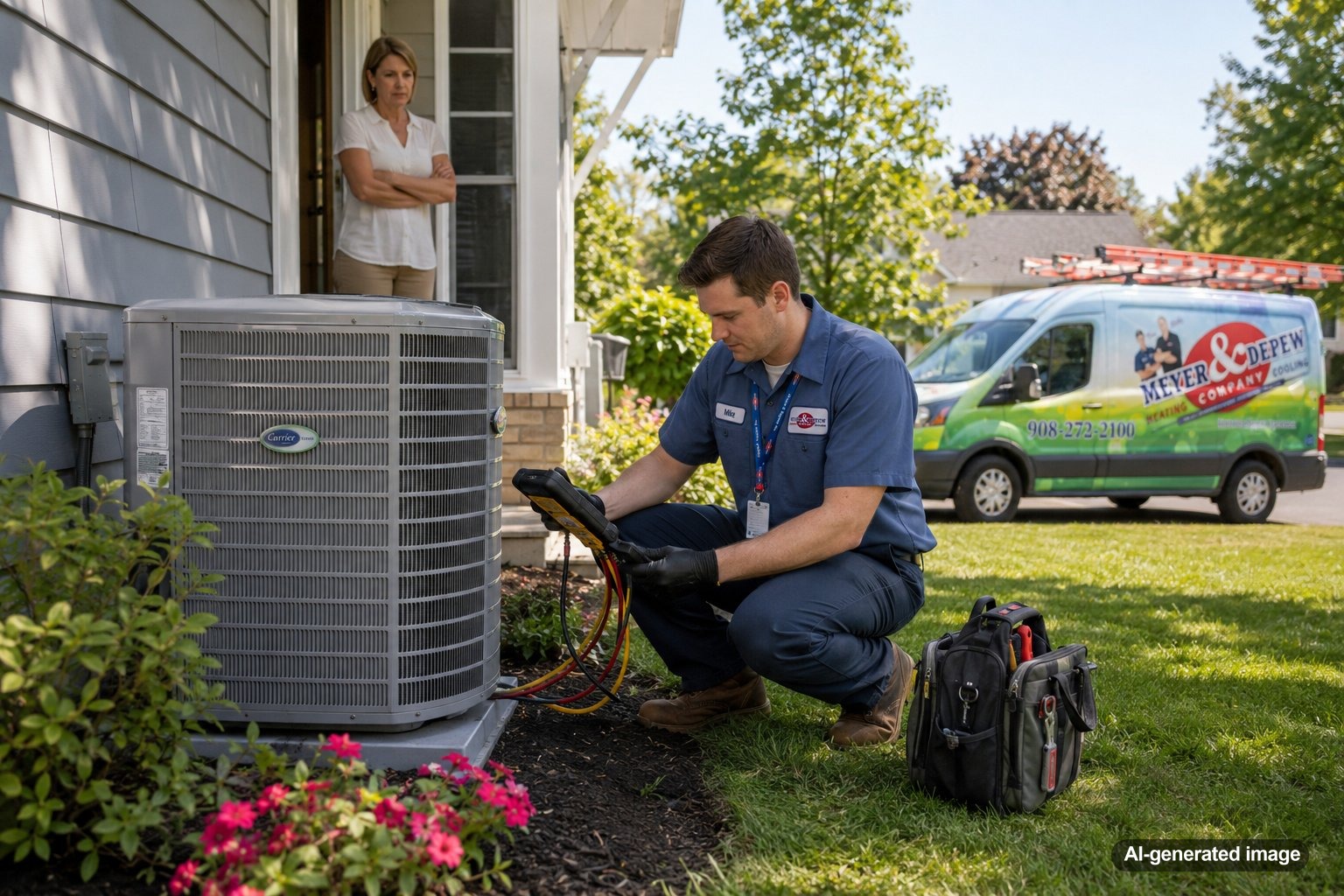
AC systems often fail on the hottest day of the year because that is when they are working under the greatest stress. During a New Jersey heat wave, your cooling system may run for long cycles, fight heavy humidity, and try to keep up with indoor heat gain from sunlight, people, appliances, and warm attic spaces. If there is already a weak part, restricted airflow, low performance, or neglected maintenance, extreme heat can expose the problem quickly.
For homeowners in Central and Northern New Jersey, a sudden AC breakdown is not always random. It is often the result of small issues building quietly until the system is pushed to its limit. Routine AC service and maintenance can reduce that risk, but even well-maintained systems can struggle when outdoor temperatures stay high and humidity does not let up.
AC systems tend to fail during extreme heat because they run longer, move more heat, and have less margin for weak airflow, dirty coils, worn electrical parts, low refrigerant charge, clogged filters, aging motors, or poor maintenance history.
Extreme Heat Forces The AC To Run Longer
On a mild summer day, an air conditioner may cycle on and off with time to rest between cooling calls. On the hottest day of the year, that pattern changes. The system may run almost continuously, especially in homes with large sun-facing windows, older insulation, leaky ductwork, high indoor humidity, or an aging cooling system.
Long run times are not automatically a problem. AC systems are designed to operate for extended periods during hot weather. Trouble starts when the system has an underlying weakness. A motor that was already wearing down, a capacitor that was close to failing, or a dirty coil that had been reducing efficiency may finally reach the point where it cannot keep up.
Restricted Airflow Makes The System Work Harder
Airflow problems are one of the most common reasons an AC system struggles during severe heat. The system needs enough air moving across the indoor coil and through the ductwork to remove heat from the home. When airflow is restricted, the equipment has to work harder while delivering less comfort.
Common airflow restrictions include a dirty air filter, blocked return vents, closed supply vents, furniture covering registers, duct leakage, or debris near the outdoor unit. These issues can make certain rooms feel warmer, cause longer run times, and increase strain on system components.
- Confirm the thermostat is set to cooling and the temperature setting is reasonable.
- Inspect the air filter and replace it if it is dirty or clogged.
- Make sure supply and return vents are open and not blocked by furniture, rugs, or curtains.
- Look for obvious leaves, grass clippings, or debris around the outdoor unit.
- If it is safe, check whether the breaker has tripped once. If it trips again, stop and call a professional.
Humidity Adds A Hidden Load
New Jersey summer heat is often paired with heavy humidity. That matters because your AC is not only lowering the temperature; it is also removing moisture from the air. When humidity is high, the system has to handle both sensible heat and moisture removal, which can make comfort harder to achieve.
A home may feel sticky even when the thermostat is close to the set temperature. That can lead homeowners to keep lowering the thermostat, which makes the AC run even longer. If the system is oversized, undersized, aging, poorly maintained, or not moving enough air, humidity can make the comfort problem more noticeable.
Weak Electrical Components Often Fail Under Peak Demand
Capacitors, contactors, fan motors, blower motors, and other electrical components can weaken over time. On a normal day, a worn part may still appear to work. During extreme heat, the same part may be asked to start repeatedly, run longer, or operate in a hotter outdoor environment.
That is one reason an AC system may seem fine in June but fail during the first serious heat wave. The hottest day did not necessarily create the entire problem. It may have revealed a part that was already near the end of its useful service life.
Dirty Coils Reduce Heat Transfer
Your AC system depends on heat transfer. The indoor coil absorbs heat from the home, and the outdoor coil releases that heat outside. When coils become coated with dirt, dust, pollen, grass clippings, or other buildup, the system has to work harder to move the same amount of heat.
Dirty outdoor coils can be especially troublesome during hot weather because the system is already trying to reject heat into very warm outdoor air. If the coil cannot release heat properly, pressures and temperatures inside the system may rise, performance may drop, and components may experience additional stress.
Low Refrigerant Or Refrigerant Leaks Can Show Up As Poor Cooling
Refrigerant issues should always be handled by a qualified professional. An AC system does not use up refrigerant the way a car uses fuel. If refrigerant is low, there may be a leak or another system issue that needs proper evaluation.
During mild weather, a system with a refrigerant problem may still produce some cooling. During a heat wave, weak cooling, long run times, icing, or poor humidity control may become more obvious. Homeowners should not attempt to add refrigerant or open sealed equipment. A trained technician can evaluate system operation, look for signs of leakage, and recommend the appropriate next step.
Older Systems Have Less Room For Error
An older AC system may still cool the home under moderate conditions but struggle during peak summer demand. Motors wear, coils lose performance when they are not properly maintained, electrical parts age, and older systems may not match the comfort expectations of the home anymore.
That does not mean every older system needs immediate replacement. It does mean that repeated breakdowns, rising repair costs, poor humidity control, uneven rooms, and frequent service calls deserve a closer look. In some cases, repair is practical. In others, discussing AC installation and replacement options may make more sense for comfort and reliability.
What You Should Not Try To Fix Yourself
Safe homeowner checks are helpful, but AC systems include high-voltage electrical parts, refrigerant circuits, moving components, and controls that should not be adjusted without proper training. Do not bypass safety switches, open sealed refrigerant lines, replace electrical parts, or modify wiring.
If you notice a burning smell, smoke, sparks, repeated breaker trips, flooding around equipment, or signs of unsafe operation, turn the system off if it is safe to do so and contact a qualified professional. Safety should come before comfort, especially during severe weather or extreme heat.
When To Call For AC Service
Call for professional AC service if the system is blowing warm air, running constantly without reaching the set temperature, making unusual noises, cycling on and off rapidly, freezing up, leaking water, or causing the breaker to trip. You should also schedule service if one area of the home is comfortable while another stays hot, especially if that pattern is new.
For businesses and commercial properties, the same heat-related issues can affect employee comfort, customer experience, equipment rooms, and tenant satisfaction. Longer occupancy hours, rooftop equipment exposure, and high internal heat loads can make preventive maintenance especially important during peak cooling season.
FAQ: AC Breakdowns During Extreme Heat
Is it normal for my AC to run all day during a heat wave?
It can be normal for an AC system to run longer during extreme heat, especially when humidity is high. However, if the system cannot reach the set temperature, blows warm air, short cycles, or makes unusual noises, it should be checked.
Should I lower the thermostat a lot to cool the house faster?
No. Setting the thermostat much lower usually does not make the AC cool faster. It often just makes the system run longer. A reasonable set point can help reduce unnecessary strain while you monitor comfort.
Can a dirty filter really cause an AC problem?
Yes. A dirty filter can restrict airflow, reduce cooling performance, and increase stress on the system. Checking the filter is one of the safest and most useful homeowner steps before calling for service.
Does maintenance prevent every AC breakdown?
No maintenance can prevent every breakdown, but routine service can reduce risk, identify developing problems, and help the system operate more reliably during high-demand weather.
What if my AC keeps failing every summer?
Repeated summer failures may point to aging equipment, poor airflow, improper sizing, duct issues, or recurring component problems. A qualified technician can help determine whether repair, maintenance, or replacement is the better path.
The hottest day of the year does not usually cause an AC system to fail out of nowhere. It places maximum demand on equipment and exposes problems that were already developing. Paying attention to airflow, maintenance, age, humidity, and early warning signs can help you respond before a minor issue becomes a major comfort problem.
Need help with your heating, cooling, or HVAC system?
Meyer & Depew serves homeowners and businesses throughout Central and Northern New Jersey.
Get a quote or call 908.272.2100.