



Why Ductless Mini Splits Are Popular for Home Additions
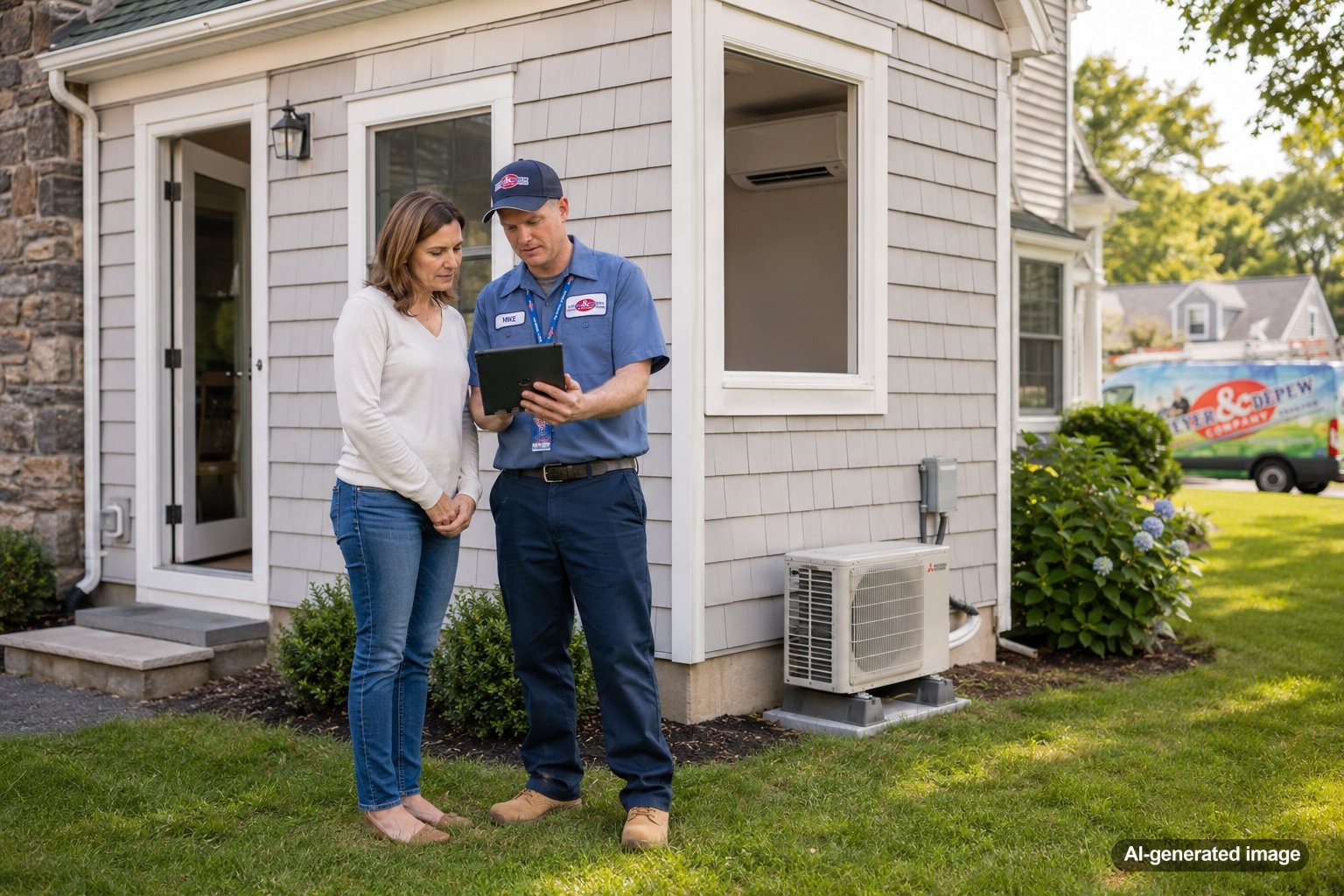
Ductless mini splits are popular for home additions because they solve one of the most common problems homeowners face after expanding their living space: how to keep the new room comfortable without overworking the existing HVAC system. Whether the project is a bedroom addition, sunroom, finished attic, home office, garage conversion, or expanded family room, the new space often has different heating and cooling needs than the original house.
For many Central and Northern New Jersey homes, extending ductwork is not always simple, practical, or cost-effective. A properly selected ductless mini split system can provide dedicated comfort for the addition while leaving the rest of the home operating as intended.
Ductless mini splits are a strong fit for many home additions because they provide heating and cooling without new ductwork, allow room-by-room temperature control, and can reduce strain on an existing central HVAC system when the addition has separate comfort needs.
They avoid major ductwork changes
One reason ductless mini splits are so common in additions is simple: the room did not exist when the original duct system was designed. Extending ductwork into a new space may sound straightforward, but it can create airflow problems if the existing system was not sized for the extra square footage.
In some homes, the duct path is blocked by framing, finished ceilings, tight attic space, crawl space limitations, or older construction. In others, adding a long duct run to reach a new room may leave that room weakly conditioned while also stealing airflow from existing bedrooms, living spaces, or upstairs areas.
A ductless mini split uses an indoor unit and an outdoor unit connected through a small line set, which can make it a cleaner solution for additions where traditional ducts would be difficult or disruptive. That does not mean ductless is the right answer for every project, but it gives homeowners another practical option when ductwork is the obstacle.
They provide dedicated comfort for the new room
Home additions often behave differently than the rest of the house. A sunroom may gain a lot of heat through glass. A finished attic may trap heat in summer. A garage conversion may have more exposed surfaces than a typical bedroom. A new office may need steady comfort during the day even when the rest of the house is not being used the same way.
Ductless mini splits are popular because they let the addition have its own temperature control. Instead of relying on one central thermostat located somewhere else in the house, the new space can be adjusted based on how it is actually being used.
This can be especially helpful when the addition is occupied at different times than the rest of the home. A guest suite, studio, playroom, or home office may not need the same setting as the main living area all day, but it still needs to be comfortable when someone is in it.
They can help protect the performance of the existing HVAC system
A central HVAC system is designed around a certain load, duct layout, and airflow requirement. When an addition is connected without evaluating those details, the original system may struggle to maintain comfort. That can show up as longer run times, uneven temperatures, weak airflow, short cycling, or rooms that never quite feel right.
Using a ductless mini split for the addition can allow the existing AC and heating system to continue serving the original part of the home while the new space has its own equipment. This approach may reduce the risk of stretching the central system beyond what it was designed to handle.
A qualified HVAC professional can evaluate whether your current system has the capacity to support the addition, whether duct modifications make sense, or whether a separate ductless system would be the better fit. The answer depends on the home’s layout, insulation, window exposure, room size, and comfort expectations.
They work well for New Jersey’s mixed heating and cooling needs
New Jersey additions often need more than summer cooling. Many rooms that feel hot in July can also feel chilly during winter cold snaps, especially if they have lots of windows, are built over garages, or sit at the edge of the home’s original envelope.
Many ductless mini split systems can provide both cooling and heat, which makes them useful for spaces that need year-round comfort. This is one reason they are often considered for sunrooms, bonus rooms, finished basements, and additions that do not connect cleanly to the home’s existing duct system.
Proper sizing matters. A system that is too small may not keep up on very hot or cold days. A system that is too large may cycle too frequently and leave the room less comfortable. Load calculation, insulation quality, ceiling height, window area, and room orientation all matter when selecting equipment.
They support room-by-room comfort without conditioning the whole house
Another reason homeowners like ductless systems is flexibility. If the addition is used as a home office during the day or a guest room only occasionally, it may not make sense to adjust the entire house just to make that one room comfortable.
Room-by-room control is also helpful when different people prefer different temperatures. A new primary suite, nursery, workout room, or hobby space may need its own comfort strategy. Ductless mini splits can work alongside broader zoning systems when the goal is more precise control throughout the home.
This does not mean homeowners should close off rooms or ignore airflow balance in the rest of the house. It simply means the addition can be treated as its own comfort zone when that makes more sense than tying it into the existing system.
What homeowners should consider before choosing ductless
Ductless mini splits are versatile, but they still need careful planning. The indoor unit location affects airflow, appearance, noise perception, service access, and how evenly the room feels conditioned. The outdoor unit location affects drainage, clearance, service access, and snow or debris exposure.
Homeowners should also think about how the room will be used. A glass-heavy sunroom, a bedroom addition, and a finished garage do not have the same comfort needs. The right equipment selection depends on the space, not just the square footage.
- Consider how often the addition will be used and at what times of day.
- Look at insulation, windows, ceiling height, and sun exposure before selecting equipment.
- Think about where the indoor unit can deliver airflow without blowing directly on seating or sleeping areas.
- Make sure outdoor equipment has proper clearance and service access.
- Ask whether the existing central HVAC system can realistically support the added space before extending ductwork.
When ductless may not be the best fit
Ductless is not automatically the right solution for every home addition. In some projects, expanding or redesigning the duct system may be practical. In others, a larger HVAC replacement, a multi-zone system, or another comfort approach may make more sense.
Appearance is another factor. Some homeowners like wall-mounted indoor units, while others prefer ceiling cassette, floor-mounted, or ducted options when available. Drainage, wall space, electrical requirements, and equipment placement all need to be considered before installation.
The best decision usually starts with an evaluation of the whole home, not just the new room. That helps prevent a situation where the addition feels better but the rest of the house becomes less balanced.
FAQ: Ductless mini splits for home additions
Can a ductless mini split heat and cool a home addition?
Many ductless mini split systems can provide both heating and cooling, which makes them useful for additions that need year-round comfort. The system must be properly sized for the room and selected for New Jersey weather conditions.
Is ductless better than extending my existing ducts?
It depends on the home. If the existing ductwork and HVAC system can support the added space, duct extension may be an option. If not, a ductless system may provide better dedicated comfort without disrupting the balance of the original system.
Where can ductless mini splits be used?
They are often considered for sunrooms, finished attics, finished basements, bedrooms, home offices, garage conversions, bonus rooms, and other spaces where ductwork is difficult or where separate temperature control is useful.
Do ductless systems still need professional maintenance?
Yes. Filters, coils, drainage, electrical components, refrigerant circuits, and outdoor units all need proper care. Homeowners can clean or inspect accessible filters according to manufacturer guidance, but service and troubleshooting should be handled by a qualified technician.
Ductless mini splits are popular for home additions because they offer a practical way to add comfort without forcing the existing HVAC system to do a job it may not have been designed to handle.
Thinking about replacing or upgrading your HVAC system?
Meyer & Depew can help you understand your options for comfort, efficiency, and long-term reliability in your New Jersey home or business.
Questions? Contact Meyer & Depew or call 908.272.2100.