



How Ductless Cooling Handles New Jersey Humidity
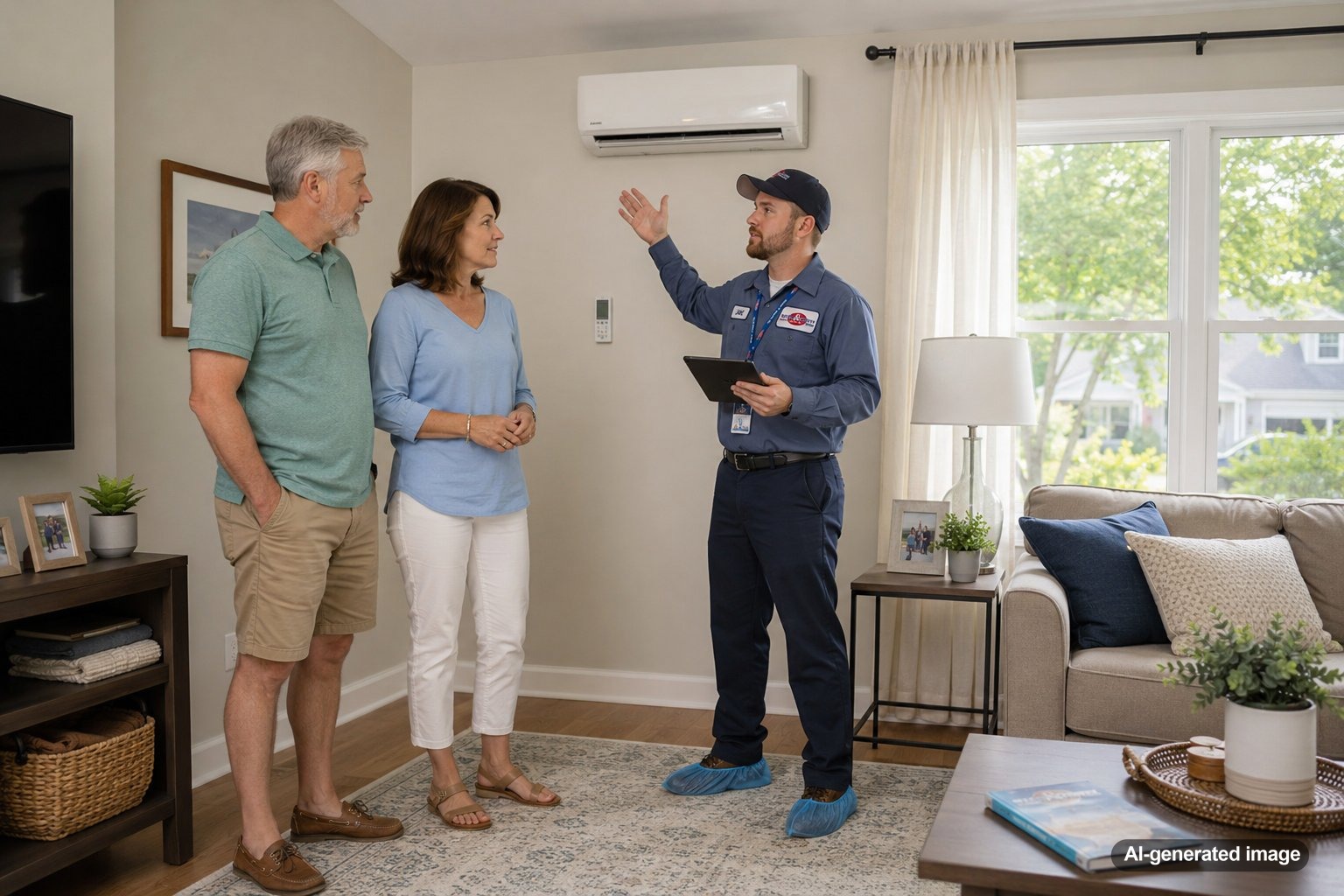
Ductless cooling can be a strong fit for New Jersey homes because it cools specific rooms while also helping remove moisture from the air. During humid Central and Northern New Jersey summers, comfort is not only about the thermostat reading. A room can feel sticky and heavy even when the temperature looks reasonable, especially in additions, finished attics, sunrooms, older homes, and spaces that never seem to cool evenly.
A properly selected and installed ductless mini split system can help address those problem areas without relying on new ductwork. The key is understanding what ductless cooling can do well, where it has limits, and why sizing, placement, and maintenance matter so much in humid weather.
Ductless cooling helps handle New Jersey humidity by running conditioned air through an indoor coil, where moisture can condense and drain away as the system cools the room. Many ductless systems also offer variable-speed operation, which can help the system run longer and steadier instead of blasting cold air in short cycles. That longer operation may improve moisture removal when the equipment is properly sized and installed.
Why Humidity Makes Cooling Feel Harder In New Jersey
New Jersey summers often bring heat and moisture together. When indoor humidity is high, sweat does not evaporate as easily, so a 74-degree room can feel warmer than expected. High humidity can also make rooms feel stuffy, encourage musty odors, and make upstairs spaces, basements, and additions feel uncomfortable even when the main AC system is running.
Traditional central air systems cool the whole home through ductwork. That can work very well when the system, duct design, airflow, and home insulation are all in good condition. But in many homes, certain rooms still lag behind because of duct losses, poor return airflow, sun exposure, older construction, or layout challenges. Ductless cooling gives homeowners another way to focus comfort where the issue is actually happening.
How Ductless Systems Remove Moisture While Cooling
A ductless mini split works by moving heat from inside the room to the outdoors. As warm, humid indoor air passes across the cold indoor coil, moisture in that air can condense on the coil and drain away through the system’s condensate line. This is similar to how other air conditioning systems remove moisture, but ductless equipment is often used closer to the rooms that need help most.
The moisture removal process depends on proper runtime. If a system is oversized, it may cool the room too quickly and shut off before it has enough time to remove much humidity. If it is undersized, it may struggle to keep up during hot, muggy stretches. A qualified technician can evaluate room size, insulation, sun exposure, ceiling height, window area, and how the space is used before recommending the right equipment capacity.
Why Variable-Speed Operation Can Help Comfort
Many ductless systems are designed to adjust output instead of only turning fully on and fully off. This variable-speed operation can help maintain more even temperatures and longer cooling cycles. In humid conditions, steady operation often feels better than short bursts of cold air because the system has more opportunity to remove moisture while keeping the room from swinging between too warm and too cold.
This is especially useful in spaces with changing loads, such as home offices, bedrooms over garages, converted attics, finished basements, and rooms with strong afternoon sun. Instead of forcing the main AC system to overcool the entire house just to improve one uncomfortable area, ductless cooling can target that specific zone.
Where Ductless Cooling Helps Most In Humid Homes
Ductless cooling is often considered when a room has comfort problems that the existing central AC system does not solve well. In New Jersey homes, that can include older houses without ductwork, additions that were never tied into the main system correctly, sunrooms, bonus rooms, finished basements, garages converted into living space, and upstairs bedrooms that stay sticky on humid nights.
For homeowners exploring broader comfort improvements, ductless equipment may also work alongside air quality and comfort solutions. Humidity, ventilation, filtration, airflow, and temperature control often overlap. The right answer may be a ductless system, a central AC service visit, zoning improvements, ventilation changes, or a combination of practical steps.
What Ductless Cooling Does Not Do
Ductless cooling can help reduce humidity in the rooms it serves, but it should not be treated as a whole-home dehumidifier in every situation. If the entire house has a moisture problem, there may be other causes to investigate. Poor ventilation, oversized central AC equipment, damp basements, air leaks, blocked drains, inadequate insulation, or building envelope issues can all contribute to high indoor humidity.
A ductless system also needs a proper condensate drain path. If drainage is poorly designed or neglected, moisture can become a service concern. Regular maintenance helps keep coils, filters, drains, and outdoor equipment in better condition so the system can cool and dehumidify more effectively.
- Make sure the ductless system is set to cooling mode, not fan-only mode.
- Inspect and clean the washable filter according to the manufacturer’s instructions.
- Check that furniture, curtains, or shelving are not blocking the indoor unit’s airflow.
- Look for obvious debris around the outdoor unit and keep the area clear.
- If you notice water leaks, musty odors, repeated shutdowns, or poor cooling, schedule professional service.
Signs Your Ductless System May Need Service
If a ductless unit used to keep a room comfortable but now leaves it damp, muggy, or uneven, the system may need attention. Common warning signs include reduced airflow, unusual noises, ice on the indoor or outdoor unit, water dripping from the indoor head, musty smells, short cycling, or a room that never reaches the set temperature.
These symptoms do not always point to one specific problem. They could involve a dirty filter, blocked coil, condensate drain issue, refrigerant concern, sensor problem, electrical issue, or incorrect system operation. Homeowners should avoid opening sealed components or attempting refrigerant or electrical repairs. A qualified HVAC technician can inspect the equipment safely and determine the right next step.
Maintenance Matters In Humid Weather
Humidity makes maintenance more important, not less. Dust on filters and coils can reduce airflow, which affects both cooling and moisture removal. Drain lines also need to stay clear so condensed moisture can leave the system properly. Outdoor units should have adequate clearance so heat can be released efficiently.
Routine maintenance cannot prevent every repair, but it can reduce the risk of avoidable problems and help the system operate as intended. If your ductless system is part of your main comfort strategy, seasonal service before heavy summer use is a practical way to catch issues before the most humid weather arrives.
FAQ About Ductless Cooling And Humidity
Does a ductless mini split dehumidify as well as central AC?
It can remove moisture from the rooms it serves, but performance depends on correct sizing, installation, settings, runtime, and maintenance. Central AC may be better for whole-home humidity control when the duct system and equipment are properly designed, while ductless cooling can be especially helpful for targeted spaces.
Should I use dry mode during humid New Jersey weather?
Some ductless systems include a dry or dehumidification mode. This setting may help during mild but muggy weather, but it is not always the best choice during high heat. The right setting depends on the system, the room, and the conditions. Check the owner’s manual or ask a technician during service.
Can ductless cooling fix a damp basement?
It may improve comfort in a finished basement, but it may not solve the source of dampness. Basement humidity can come from foundation moisture, air leaks, poor ventilation, or drainage concerns. Those issues may need to be addressed separately.
Why does my ductless room still feel sticky?
The system may be oversized, undersized, dirty, blocked, set incorrectly, or in need of service. The room itself may also have moisture sources, poor insulation, or air leakage. A professional evaluation can help separate equipment issues from home performance issues.
Ductless cooling can be an effective way to improve comfort in humid New Jersey rooms, especially when the system is properly sized, placed, installed, and maintained. It is best viewed as a targeted comfort solution, not a one-size-fits-all answer for every moisture problem in the home.
Need help with your heating, cooling, or HVAC system?
Meyer & Depew serves homeowners and businesses throughout Central and Northern New Jersey.
Get a quote or call 908.272.2100.