



Should You Turn Your AC Off When You Leave the House?
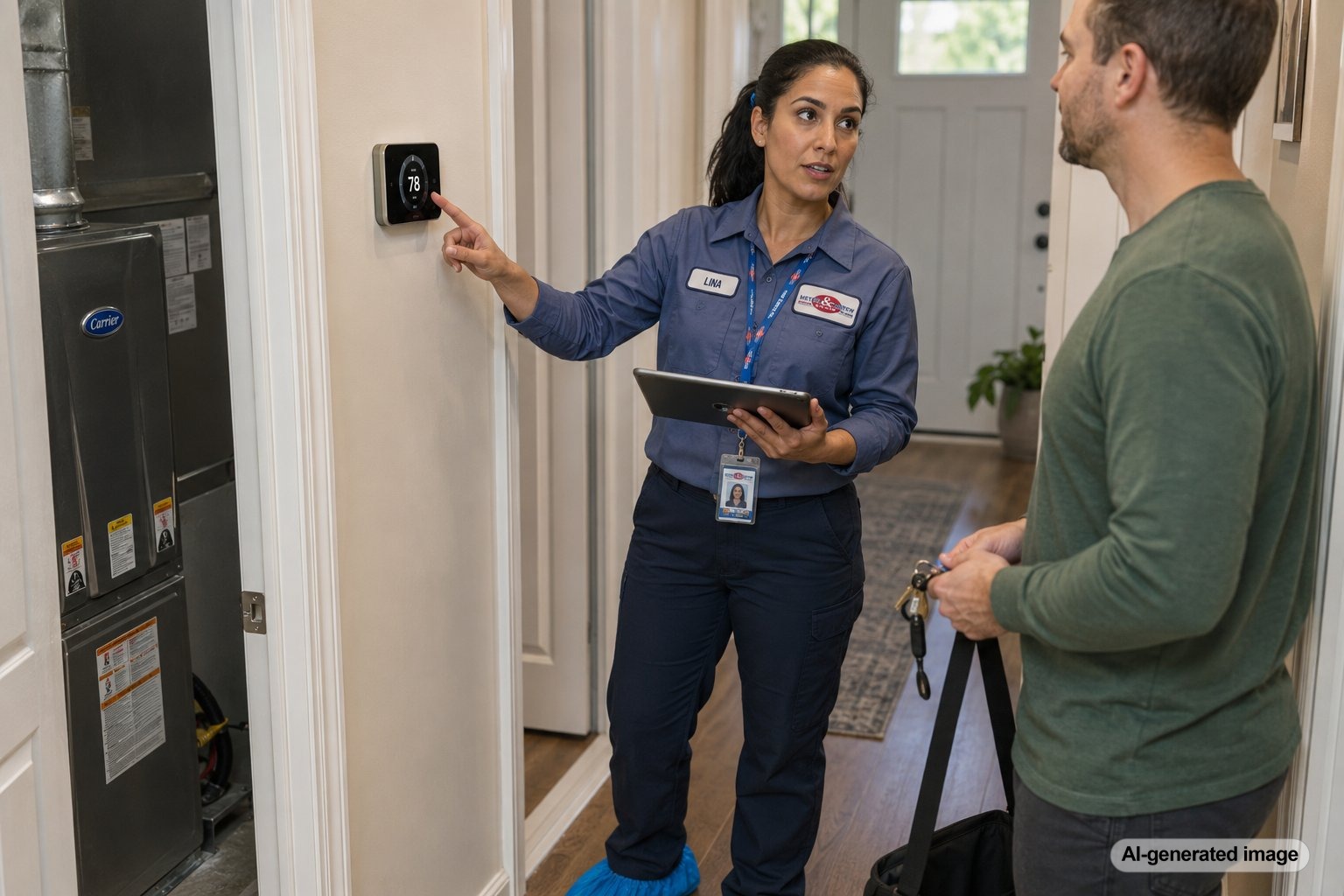
Usually, no. For most New Jersey homes, the better move is to raise the thermostat several degrees when you leave instead of turning the AC completely off. That gives your system a break without letting the house become hot, sticky, and difficult to cool later.
There are exceptions, but Central and Northern New Jersey summers make this question more complicated than simple on-or-off advice. Heat is only part of the issue. Humidity, pets, indoor air quality, home insulation, sunlight, and how long you will be gone all matter. If your AC has been struggling, short cycling, or running constantly, Meyer & Depew’s AC service and maintenance team can help evaluate whether the problem is thermostat strategy, airflow, maintenance, or equipment performance.
For a normal workday or afternoon away, raise the thermostat instead of shutting the AC off. A common approach is to set it about 7 to 10 degrees higher than your normal comfort setting if the home will be empty for several hours. For shorter trips, a smaller adjustment may be enough. Avoid setting the thermostat much colder than usual when you return, because that does not cool the house faster.
Why Turning the AC Off Can Backfire
Turning the AC off feels logical because the system stops running. The problem is what happens inside the house while it is off. Walls, floors, furniture, cabinets, and upstairs rooms absorb heat. Humidity can climb. Sun-facing rooms may become much warmer than the thermostat reading suggests.
When you come home and turn the AC back on, the system has to remove both heat and moisture. That can mean a long recovery period, uncomfortable rooms, and extra strain on equipment that is already working against hot outdoor temperatures. In humid weather, the home may feel clammy even after the temperature starts to drop.
For homes with older ductwork, weak airflow, undersized returns, or rooms over garages, the recovery period can be even more noticeable. You may save some run time while you are gone, but give part of it back when the system runs hard to catch up.
When Raising the Thermostat Makes More Sense
For most daily routines, raising the thermostat is the practical middle ground. You are not paying to hold the house at your most comfortable occupied temperature, but you are also not letting heat and humidity build without control.
For example, if you normally keep the home around 74 degrees, an away setting around 80 to 84 degrees may be reasonable depending on your home, your comfort preferences, pets, and humidity concerns. Some homeowners prefer a smaller setback during extreme heat because their system takes longer to recover. Others with newer equipment, good insulation, and a smart thermostat can use a larger setback without noticing much discomfort.
Smart and programmable thermostats make this easier because they can raise the temperature after you leave and begin cooling before you return. If you are considering better temperature control, Meyer & Depew offers options for all thermostats, including solutions that can support more consistent comfort and scheduling.
When You Might Turn the AC Off
There are a few situations where turning the AC off may be reasonable. If the weather is mild, the outdoor humidity is low, the home will not overheat, and no pets or vulnerable occupants are inside, shutting it off for part of the day may not create a problem. This is more likely during shoulder-season weather than during a hot, humid July afternoon.
A longer vacation is different from a trip to the grocery store. Even then, many homeowners prefer not to turn the AC fully off. A higher vacation setting can help limit humidity and protect belongings while reducing unnecessary cooling. This can be especially important for finished basements, wood floors, musical instruments, electronics, stored documents, and homes that already have moisture concerns.
Pets, Humidity, and Indoor Comfort Matter
If pets are home, do not treat the house as empty. Dogs, cats, birds, and other animals can be sensitive to heat. Choose an away temperature that keeps the indoor environment safe for them, and consider how sunny rooms get during the afternoon.
Humidity is another major factor in New Jersey homes. AC systems help remove moisture as they cool. If the system is off too long during muggy weather, indoor humidity can rise, making the home feel warmer and less comfortable. High humidity can also make musty odors, condensation, and comfort complaints more noticeable.
If your home often feels sticky even when the thermostat says it is cool, the issue may not be the temperature setting alone. Airflow problems, oversized equipment, short run times, duct leakage, poor ventilation, or indoor humidity issues may be involved. Meyer & Depew’s air quality and comfort services can help homeowners look beyond the thermostat when comfort feels off.
Safe Checks Before Changing Your Routine
- Make sure the thermostat is set to cool and the schedule is not fighting your preferred away setting.
- Replace or inspect the air filter if airflow seems weak or the system runs for long periods.
- Confirm that supply and return vents are open and not blocked by furniture, rugs, curtains, or storage.
- Look for obvious debris around the outdoor unit, keeping the area clear without opening the equipment.
- Check whether a breaker has tripped once, if it is safe to do so. If it trips again, stop and call a professional.
Do not open sealed HVAC panels, handle refrigerant lines, bypass safety controls, or attempt electrical repairs. Those tasks can create safety risks and should be handled by a qualified technician.
Do Not Crank the Thermostat Down When You Get Home
Setting the thermostat to 65 degrees when you come home will not make most central AC systems cool faster. It simply tells the system to keep running longer. If your target is 74 degrees, set it to 74 degrees and let the system work toward that point.
If the home takes hours to recover from a modest away setting, that is useful information. The system may need maintenance, the filter may be restrictive, the outdoor coil may be dirty, or the home may have airflow and insulation issues. During extended New Jersey heat and humidity, small performance problems can become much more obvious.
When to Call an HVAC Professional
Schedule professional service if the AC runs constantly, cannot bring the house back to temperature, leaves the home humid, makes unusual noises, trips the breaker, leaks water, or has weak airflow from multiple vents. Also call if your energy bills have changed noticeably and your thermostat habits have not.
A technician can evaluate refrigerant-side performance, electrical components, coil condition, airflow, thermostat operation, and system cycling. The right answer may be simple maintenance, a thermostat adjustment, duct improvements, or a larger comfort discussion if the system is aging or poorly matched to the home.
FAQ: AC Settings When You Leave Home
Is it cheaper to turn the AC off when I leave?
Sometimes, but not always. In hot, humid weather, turning it off can make the home harder to cool later. Raising the thermostat is often a better balance between energy use and comfort.
What temperature should I set my AC to when I am away?
Many homeowners use an away setting several degrees higher than their normal comfort setting. The right number depends on pets, humidity, home insulation, sunlight, system condition, and how long you will be gone.
Should I turn off the AC while on vacation?
In many homes, it is better to use a higher vacation setting instead of shutting the system off completely. That can help limit indoor heat and humidity while reducing cooling demand.
Can a smart thermostat help?
Yes. A smart thermostat can make away settings easier to manage, especially if your schedule changes. It can also help you avoid cooling an empty house at full comfort settings all day.
Why does my house feel humid after the AC has been off?
The AC removes moisture while it runs. If it stays off during humid weather, indoor humidity can rise. Once the AC restarts, it has to remove both heat and moisture before the home feels comfortable again.
For most homes, do not turn the AC fully off every time you leave. Raise the thermostat, keep humidity in mind, protect pets, and pay attention to how long your system takes to recover.
Need help with your heating, cooling, or HVAC system?
Meyer & Depew serves homeowners and businesses throughout Central and Northern New Jersey.
Get a quote or call 908.272.2100.