



How to Cool a Primary Bedroom That Gets Afternoon Sun
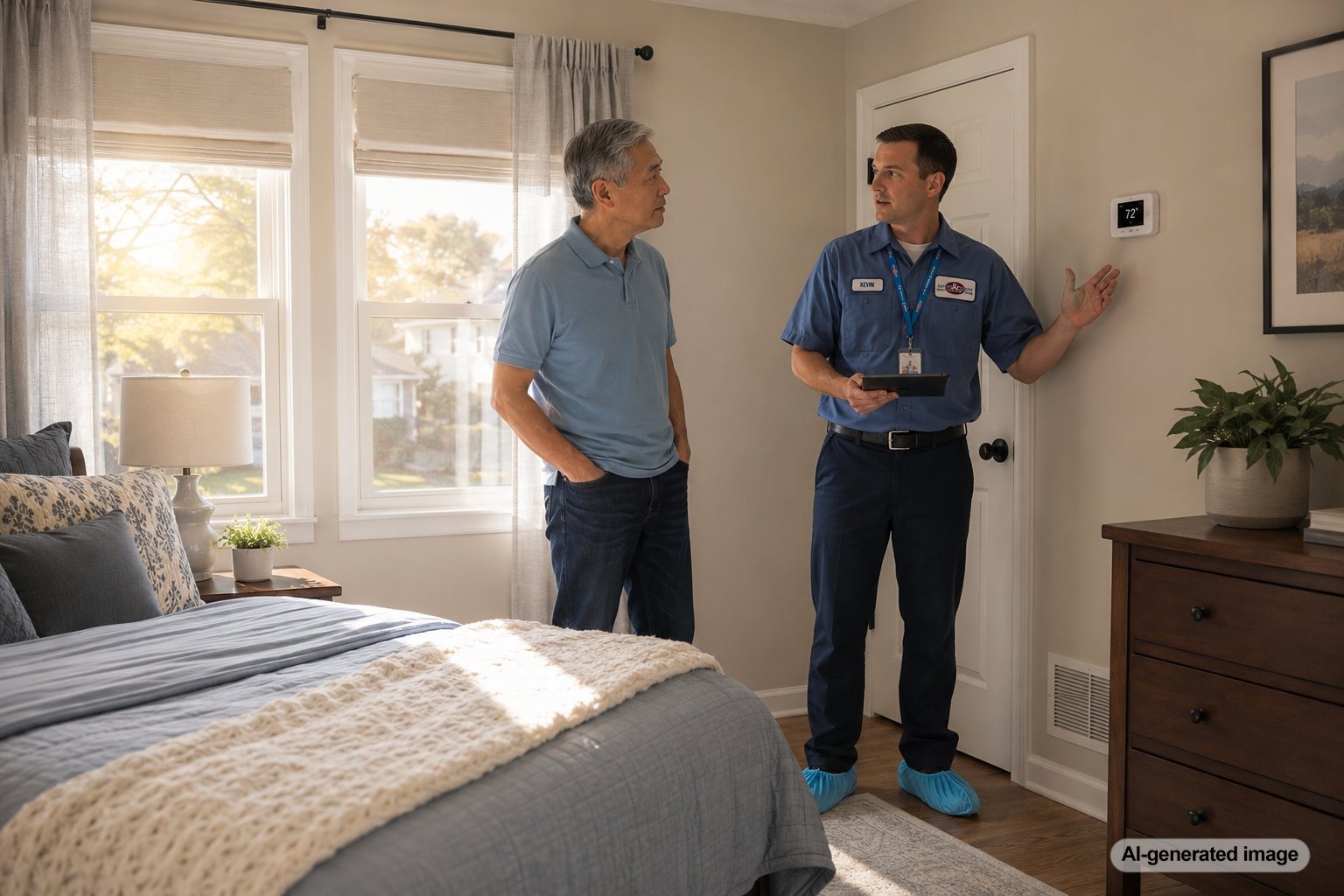
A primary bedroom that gets strong afternoon sun can feel uncomfortable even when the rest of the house seems fine. In many Central and Northern New Jersey homes, west-facing windows, attic heat, limited airflow, and upstairs layouts all work together to make one room lag behind the thermostat. Cooling that room well usually takes more than simply lowering the AC setting.
The right solution depends on why the bedroom is gaining heat and whether the existing system can deliver enough conditioned air to that space. Some improvements are simple, such as better window control and airflow checks. Others may involve duct adjustments, zoning systems, or a dedicated cooling option such as a ductless mini split system.
To cool a primary bedroom that gets afternoon sun, reduce heat entering through the windows, improve air movement, check for airflow restrictions, and make sure the AC system is not being asked to cool the entire home based on one overheated room. If the room stays hot after basic checks, the issue may involve duct design, attic heat, system capacity, zoning, or the need for a room-specific cooling solution.
Why afternoon sun makes a bedroom harder to cool
Afternoon sun is different from morning light because it often arrives during the hottest part of the day. By then, exterior walls, roofing materials, attic spaces, and window glass may already be warm. A west-facing or southwest-facing primary bedroom can absorb heat for hours, then release that heat into the room well into the evening.
This problem is especially common in second-floor bedrooms. Heat naturally rises, attic temperatures can climb, and longer duct runs may deliver less airflow to the farthest rooms. The thermostat, meanwhile, may be located in a hallway or downstairs area that reaches temperature before the sunny bedroom does. The AC shuts off because the thermostat is satisfied, while the bedroom still feels warm.
Start by reducing heat before it enters the room
The most effective comfort improvements often begin at the window. Heavy afternoon sun can overpower a room even when the AC is working properly. Light-filtering curtains may help with glare, but they may not block enough radiant heat. Room-darkening shades, cellular shades, insulated curtains, exterior awnings, or properly selected window film can reduce the heat load before the cooling system has to deal with it.
It also helps to close shades before the room heats up, not after it is already uncomfortable. Waiting until early evening means the walls, floor, furniture, and bedding may have already absorbed heat. In a sunny primary bedroom, prevention usually works better than recovery.
Check airflow before assuming the AC is too small
A hot bedroom does not automatically mean the AC system is undersized. Uneven cooling can come from restricted airflow, a dirty filter, blocked returns, closed dampers, leaky ducts, or ductwork that was never balanced for the room’s actual heat gain. Before jumping to replacement, it is worth looking at the basics.
- Make sure supply vents in the bedroom are open and not covered by furniture, rugs, or curtains.
- Confirm that the return air path is not blocked, especially when the bedroom door is closed.
- Inspect or replace the air filter if it is dirty or overdue.
- Check that nearby hallway or bedroom returns are not obstructed.
- Look for obvious gaps, loose vent covers, or weak airflow from the bedroom supply vents.
If the airflow feels much weaker in that bedroom than in other rooms, the issue may be duct-related. A qualified technician can evaluate duct layout, static pressure, blower performance, and whether balancing adjustments may help.
Be careful with thermostat changes
Lowering the thermostat may cool the sunny bedroom eventually, but it can make the rest of the home too cold and increase system runtime. In some homes, this also encourages short cycling or uneven humidity control if the system is not operating under the right conditions. The thermostat should guide whole-home comfort, not compensate for one room with a unique heat load.
If the primary bedroom is the only room with a major comfort complaint, the better question is whether that room needs better heat control, better airflow, or independent temperature management. That is where zoning, smart thermostat settings, duct improvements, or ductless cooling may become useful options.
When zoning can help
A zoning system allows different areas of the home to be managed more independently. For a primary bedroom that overheats in the afternoon, zoning may help if the ductwork and HVAC system are compatible. Instead of treating the entire house as one temperature zone, the system can respond more directly to the area that needs cooling.
Zoning is not a one-size-fits-all fix. It needs proper design so airflow, duct pressure, equipment operation, and thermostat placement work together. A poorly planned zoning setup can create new comfort issues, so it should be evaluated by an HVAC professional who understands the home as a system.
When a ductless mini split may make sense
A ductless mini split can be a strong option for a primary bedroom that consistently gets hotter than the rest of the home. It gives the room its own cooling source without relying on the main duct system. This can be especially useful for bedrooms over garages, additions, older homes with limited duct access, and rooms with large west-facing windows.
That said, equipment selection and placement matter. The unit must be sized for the room’s heat gain, not chosen by guesswork. If it is too small, it may struggle during peak afternoon heat. If it is too large, it may cool quickly without managing comfort as evenly as expected. A professional load evaluation can help match the equipment to the space.
Do not overlook insulation and attic heat
In upstairs primary bedrooms, the ceiling may be a major source of heat. If the attic above the room is poorly insulated or poorly ventilated, the bedroom can stay warm even after the sun goes down. Ducts running through hot attic spaces can also lose cooling capacity before air reaches the room.
HVAC service can identify comfort clues, but some homes also benefit from broader building improvements such as attic insulation, air sealing, and window upgrades. The goal is to reduce the amount of heat entering the room so the cooling system does not have to fight the same problem every afternoon.
When to call an HVAC professional
Schedule professional service if the bedroom remains hot after you have addressed window coverings, vent obstructions, filter condition, and basic airflow checks. You should also call if the AC runs constantly, the system struggles across multiple rooms, airflow is weak throughout the house, or the room never catches up even at night.
Meyer & Depew can evaluate whether the issue is related to airflow, thermostat location, duct design, equipment performance, zoning needs, or room-specific cooling options. For homeowners comparing AC service, zoning, and ductless solutions, a careful diagnosis is more useful than guessing based on the hottest room in the house.
FAQ
Why is my primary bedroom hotter than the rest of the house?
A primary bedroom can run hotter because of afternoon sun exposure, second-floor heat, attic conditions, long duct runs, poor return airflow, or a thermostat located in a cooler part of the home. The cause is often a combination of heat gain and airflow imbalance.
Should I close vents in other rooms to push more AC into the hot bedroom?
Closing too many vents can create pressure and airflow problems in the HVAC system. It is better to have airflow and duct balance evaluated rather than forcing air to one room in a way the system was not designed to handle.
Can ceiling fans cool a sunny bedroom?
A ceiling fan can make the room feel more comfortable by moving air across your skin, but it does not lower the actual room temperature. It works best as a comfort aid along with shade control, adequate AC airflow, and humidity management.
Is a ductless mini split better than replacing the whole AC system?
It depends on the condition of the existing AC system and whether the problem affects one room or the entire home. If the main system is in good condition and only the sunny bedroom is uncomfortable, a ductless option may be worth discussing. If the whole home struggles, broader AC service or replacement may be more appropriate.
A primary bedroom with afternoon sun needs a comfort strategy that addresses heat gain, airflow, and room-by-room control. Lowering the thermostat alone often treats the symptom, not the cause.
Need help with your heating, cooling, or HVAC system?
Meyer & Depew serves homeowners and businesses throughout Central and Northern New Jersey.
Get a quote or call 908.272.2100.