

How Long Should It Take for AC to Cool a House in Summer?
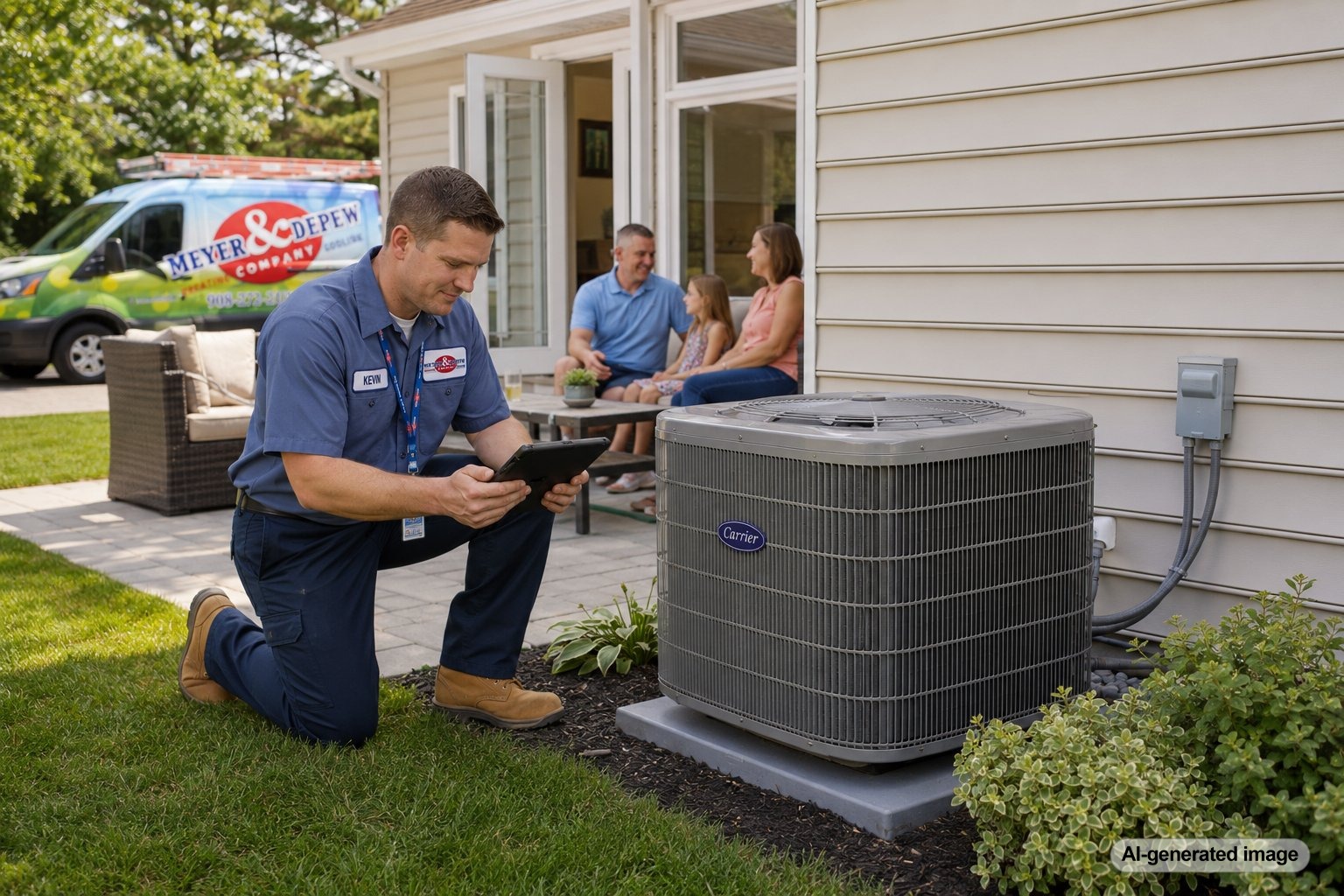
In summer, a healthy central AC system should usually make the home feel noticeably cooler within the first 30 to 60 minutes, but cooling the entire house to the thermostat setting can take several hours. The exact answer depends on how hot the house was when the system started, how humid it is outside, how well the home is insulated, and whether the AC system is sized and maintained properly.
For many homes in Central and Northern New Jersey, dropping the indoor temperature by 5 degrees may take roughly 1 to 3 hours under normal summer conditions. A larger temperature drop, a heat wave, strong afternoon sun, high humidity, or restricted airflow can stretch that timeline. If your AC runs for hours with little change, struggles every hot afternoon, or never reaches the set temperature, it may be time to schedule AC service and maintenance.
As a general rule, expect a working central AC system to cool a house gradually, not instantly. A modest temperature drop may take 1 to 3 hours, while a house that starts very warm may need much longer. If the system is blowing weak air, short cycling, freezing, making unusual noises, or running all day without real progress, a professional should evaluate it.
Why there is no single cooling time for every house
Two homes can have the same thermostat setting and very different cooling results. A well-insulated home with shaded windows may cool steadily. An older home with leaky ductwork, a clogged filter, sunny upstairs rooms, and attic heat gain may take much longer.
Humidity also matters. AC does more than lower the air temperature. It also removes moisture from the air. On a muggy New Jersey summer day, the system may spend more runtime pulling humidity out of the home before the temperature feels comfortable. That does not automatically mean something is wrong, but it does mean the cooling process can feel slower.
What is normal during the first hour?
In the first hour, you should usually notice cooler supply air coming from the vents and some progress at the thermostat. The home may not reach the final set point yet, especially if the indoor temperature started high, but the system should not feel like it is doing nothing.
If the thermostat is set from 80 to 72 degrees, that is a large 8-degree change. During mild conditions, the system may move through that range in a few hours. During a heat wave, it may take longer, especially in upstairs rooms or rooms with large west-facing windows.
Factors that can slow down AC cooling
Cooling time is often affected by a mix of house conditions and equipment conditions. The most common issues include:
- Dirty or restrictive air filters: A clogged filter can reduce airflow and make the system work harder than it should.
- Blocked vents or returns: Furniture, rugs, curtains, or closed vents can interfere with balanced airflow.
- Hot attic or poor insulation: Heat entering through the roof and attic can make upstairs rooms harder to cool.
- Leaky or poorly designed ductwork: Conditioned air may be lost before it reaches the rooms that need it.
- Low refrigerant or coil issues: These require a qualified technician. Homeowners should not add refrigerant or open sealed components.
- Undersized or aging equipment: An older or incorrectly sized system may run constantly and still fall behind during peak heat.
- Thermostat placement or settings: A thermostat near sunlight, appliances, or drafts may read the home incorrectly.
Should you lower the thermostat more to cool faster?
For most central AC systems, setting the thermostat much lower does not make the equipment cool faster. It usually just tells the system to run longer. For example, setting the thermostat to 65 degrees when you really want 72 degrees may increase runtime without speeding up the actual cooling process.
A better approach is to choose a realistic target temperature, keep interior doors open for central air systems, reduce heat gain from sunny windows, and make sure airflow is not being blocked. If the house still will not cool, the problem is likely not the thermostat number alone.
Safe checks before you call
- Confirm the thermostat is set to cool and the temperature setting is lower than the current room temperature.
- Replace or inspect the air filter if it looks dirty or has not been changed recently.
- Make sure supply vents and return grilles are open and not blocked.
- Look for obvious debris around the outdoor unit, such as leaves or grass clippings.
- Check the breaker once, if it is safe to do so. If it trips again, do not keep resetting it.
- Close blinds or curtains during the hottest part of the day, especially on sunny exposures.
These checks can help rule out simple airflow or setting problems. They should not replace professional service when the system is freezing, leaking, blowing warm air, making electrical smells, or failing to cool after several hours of operation.
When slow cooling points to an AC problem
Slow cooling becomes more concerning when the AC runs continuously with little temperature change, the indoor temperature rises even though the system is on, or some rooms are comfortable while others stay hot. Those symptoms can point to airflow problems, duct issues, refrigerant concerns, dirty coils, equipment wear, or a system that is no longer a good match for the home.
Short cycling is another warning sign. If the system turns on and off frequently without completing a steady cooling cycle, it may not be removing heat and humidity properly. That can affect comfort and may put extra stress on equipment.
What about older New Jersey homes?
Many homes in New Jersey were built before modern cooling expectations, insulation standards, and duct design practices. Older homes may have finished attics, additions, sunrooms, undersized returns, or ductwork that was adapted over time. These details can make cooling time less predictable.
In some homes, the answer is not simply a bigger AC system. Oversized equipment can short cycle and leave humidity behind. The better solution may involve airflow corrections, duct improvements, maintenance, zoning, a thermostat update, or, when appropriate, properly planned replacement. Meyer & Depew can help homeowners evaluate cooling performance through practical service, not guesswork. Learn more about residential AC services.
FAQ
Is it normal for AC to run all afternoon in summer?
During very hot or humid weather, longer runtimes can be normal. Continuous operation becomes a concern when the home is not getting cooler, the system cannot reach the thermostat setting, or airflow feels weak.
How many degrees should AC cool per hour?
There is no exact number for every home. Many systems cool gradually, and the rate depends on outdoor temperature, humidity, home insulation, system size, airflow, and maintenance condition.
Why is upstairs cooling slower than downstairs?
Heat rises, upper floors often gain more attic and roof heat, and ductwork may not deliver the same airflow to every level. Zoning, duct evaluation, insulation, or thermostat adjustments may help depending on the home.
Can a dirty filter really make cooling take longer?
Yes. A dirty filter can restrict airflow, reduce comfort, and make the AC work harder. If cooling has slowed and the filter is dirty, replacing it is one of the safest first checks.
When should I call for AC service?
Call for service if your AC runs for hours without meaningful cooling, blows warm air, freezes, leaks, makes unusual sounds, trips the breaker, or cannot keep up during normal summer conditions.
Your AC should make steady progress, but summer cooling takes time. If your home barely cools, never reaches the setting, or only feels comfortable after the system runs constantly, a qualified HVAC technician can check airflow, equipment condition, thermostat operation, and system performance.
Need help with your heating, cooling, or HVAC system?
Meyer & Depew serves homeowners and businesses throughout Central and Northern New Jersey.
Get a quote or call 908.272.2100.