

How Better Filtration Can Help During Summer Allergy Season
Better filtration can help during summer allergy season by capturing more airborne particles before they circulate through your home. In Central and Northern New Jersey, warm weather can bring pollen, grass, outdoor dust, humidity, and heavier AC use all at once. When your HVAC system is moving air every day, the filter becomes an important part of keeping that air cleaner and your comfort more consistent.
A good filter is not a cure for allergies, and it cannot remove every irritant from the home. Still, the right filtration strategy, paired with proper air quality and comfort options and routine HVAC maintenance, may reduce the amount of dust, pollen, and other particles that keep recirculating indoors.
Better filtration may help reduce airborne allergens, protect HVAC components from buildup, support cleaner indoor air, and make summer comfort feel more manageable. The key is choosing a filter your system can handle, replacing it on schedule, and addressing airflow or humidity issues that may be making allergy symptoms feel worse indoors.
Why summer allergies can feel worse indoors
Many people think of allergies as an outdoor problem, but indoor air can carry plenty of irritants. Pollen can come in through open doors, windows, clothing, shoes, pets, and leaky areas around the home. Once those particles are inside, your cooling system may keep moving them from room to room if filtration is weak or the filter is overdue for replacement.
Summer conditions can add another layer. High humidity may make indoor air feel heavier, while dust and biological particles can collect more easily in homes with poor airflow or neglected maintenance. Older New Jersey homes may also have returns, ducts, or comfort zones that were not designed for today’s indoor air quality expectations.
What better filtration actually does
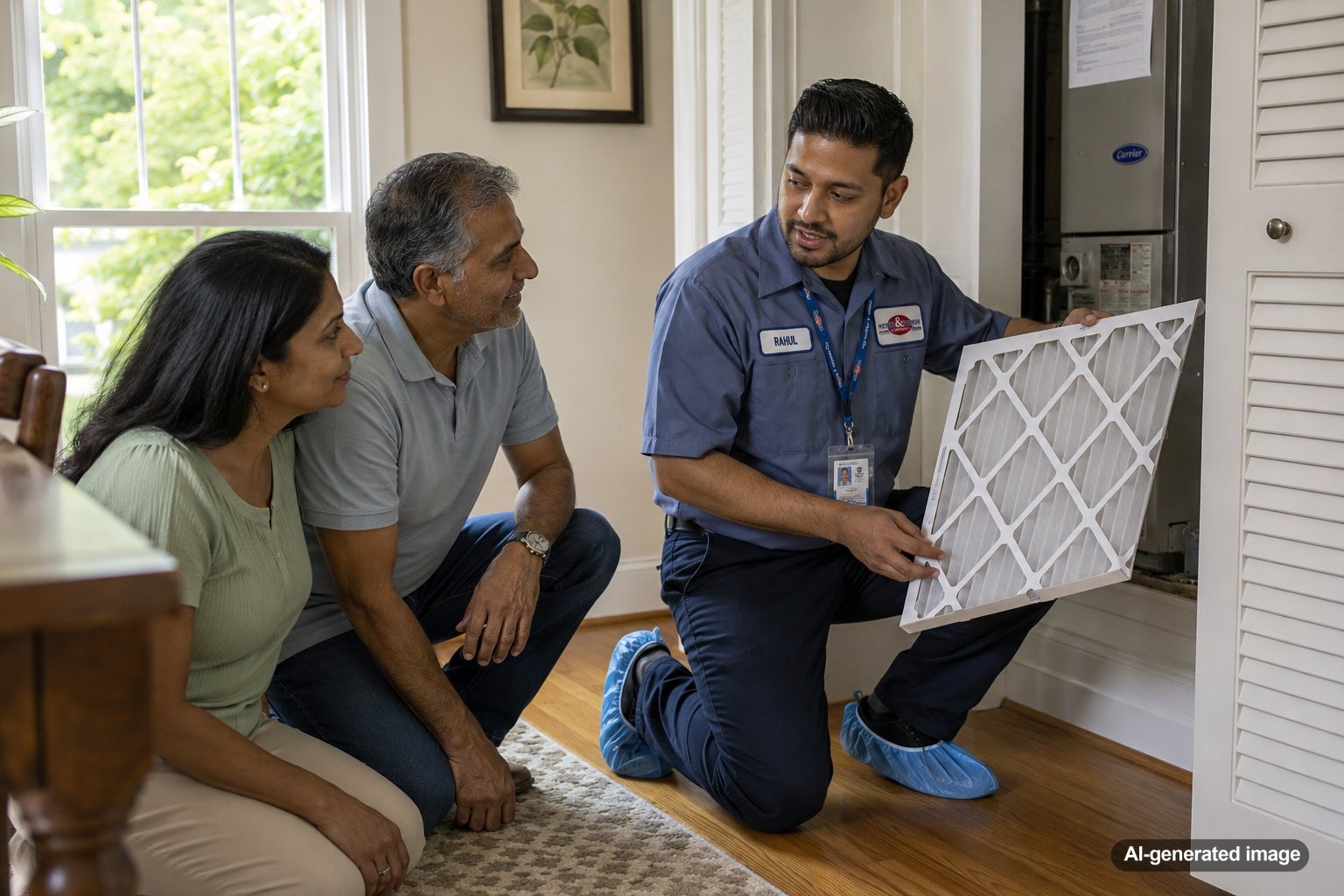
Your HVAC filter is designed to trap particles as air passes through the return side of the system. Depending on the filter type and the system design, it may capture dust, lint, pollen, pet dander, and other airborne debris. A higher-efficiency filter can catch smaller particles than a basic filter, but it must be compatible with your equipment.
That compatibility matters. A filter that is too restrictive can reduce airflow, which may cause comfort problems, longer run times, or added strain on the system. A qualified technician can help determine whether your equipment can support a higher-efficiency filter or whether another indoor air quality solution would be a better fit.
Filter quality and airflow have to work together
It is easy to assume that the highest-rated filter is always the best choice, but HVAC systems need enough airflow to operate properly. If the filter blocks too much air, your AC may struggle to cool the home evenly. You may notice weak airflow at vents, warmer rooms, more frequent cycling, or a system that seems to run constantly during hot weather.
The goal is balanced filtration. For many homes, that means using a filter that captures common allergens without choking the system. For homes with significant allergy concerns, pets, frequent dust, or sensitive occupants, it may also mean considering professionally installed air purification systems that work alongside the HVAC system.
Safe homeowner checks during allergy season
- Inspect the air filter and replace it if it looks dirty or clogged.
- Make sure the replacement filter is the correct size and installed in the right direction.
- Keep supply and return vents open and clear of furniture, rugs, and curtains.
- Look for visible dust buildup around return grilles.
- Keep windows closed on high-pollen days when the AC is running.
- Schedule professional service if airflow feels weak, rooms are uneven, or the system is not keeping up.
These steps are simple, but they can make a real difference. A clogged filter cannot do its job well, and it may also make your AC work harder during the hottest part of the season. If you are replacing filters more often than expected, that can be a sign of high dust load, duct leakage, pet dander, renovation dust, or another issue worth evaluating.
How often should filters be changed in summer?
There is no single schedule that works for every home. A lightly used system in a smaller household may not need the same filter schedule as a busy home with pets, allergy concerns, or constant AC use. During summer, it is smart to inspect the filter monthly and replace it when it appears dirty or restricted.
Homes near active landscaping, wooded areas, busy roads, or construction may see filters load up faster. The same is true for homes where doors open frequently or where pets shed. If someone in the household has allergy sensitivity, a more consistent filter routine may help reduce the amount of debris recirculating through the system.
Filtration is only one part of indoor air quality
Better filtration can help, but indoor air quality is bigger than the filter alone. Humidity, ventilation, duct condition, housekeeping habits, and equipment maintenance all play a role. If indoor air feels stale, sticky, dusty, or uneven from room to room, the issue may involve more than particle capture.
For example, a home with good filtration but poor humidity control may still feel uncomfortable during muggy New Jersey weather. A home with blocked returns may still have rooms that feel stuffy. A home with an aging system may have airflow limitations that make higher-efficiency filtration harder to use safely.
When to call a professional
It is time to schedule service if your AC airflow seems weak, the system runs longer than usual, rooms feel uneven, or the filter gets dirty unusually fast. A technician can check whether the filter is properly sized, whether the system is moving enough air, and whether maintenance or indoor air quality upgrades may be appropriate.
Professional evaluation is especially helpful if you are thinking about moving to a more efficient filter or adding purification equipment. Meyer & Depew can help homeowners throughout Central and Northern New Jersey understand practical options for filtration, maintenance, and cleaner indoor comfort without overcomplicating the decision.
FAQ: Better filtration and summer allergies
Can a better HVAC filter stop allergies completely?
No. Better filtration may reduce some airborne allergens, but it cannot remove every trigger or replace medical allergy care. It can be one helpful part of a broader comfort and indoor air quality plan.
Can I use the strongest filter I can find?
Not always. Some high-efficiency filters can restrict airflow if the HVAC system is not designed for them. It is best to use a filter that improves particle capture while still allowing proper system airflow.
Does my AC need maintenance if I change the filter regularly?
Yes. Filter replacement is important, but it does not replace professional maintenance. Coils, drains, electrical components, refrigerant circuits, blower parts, and airflow performance should be evaluated by a qualified technician.
Can air purification help with summer allergies?
It may help in some homes, especially when paired with proper filtration and maintenance. The right solution depends on your system, your comfort concerns, and the types of particles or air quality issues you are trying to address.
Better filtration can help make summer allergy season more manageable indoors, but it works best when it is matched to the HVAC system and supported by routine maintenance, good airflow, and the right indoor air quality strategy.
Need help with your heating, cooling, or HVAC system?
Meyer & Depew serves homeowners and businesses throughout Central and Northern New Jersey.
Get a quote or call 908.272.2100.