



Why Whole-Home Air Purification Is Different From Room Purifiers
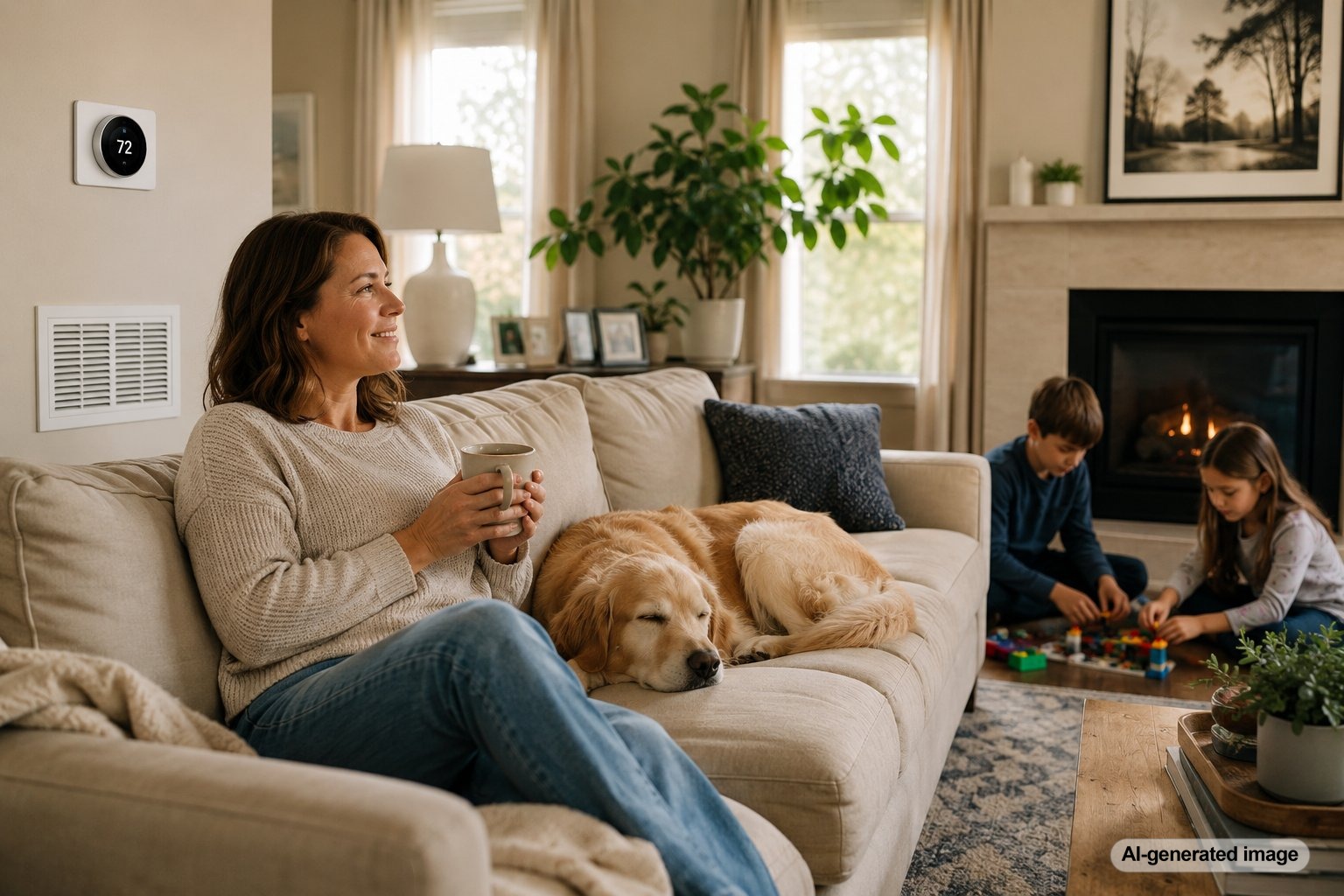
Whole-home air purification is different from a room purifier because it is designed to work with the HVAC system that already moves air through the house. A portable purifier may help in one bedroom, office, or living area, but a whole-home solution is installed as part of the broader comfort system so it can treat circulating air more consistently throughout the home.
For homeowners in Central and Northern New Jersey, that difference matters. Seasonal pollen, humidity, dust, cooking odors, pet dander, renovation debris, wildfire smoke that drifts into the region, and everyday household particles can all affect how a home feels. Meyer & Depew helps homeowners evaluate air purification systems as part of a practical indoor comfort plan, not as a one-size-fits-all gadget.
A room purifier treats the air in a limited space. A whole-home air purification system is installed with the HVAC system and is intended to address air moving through the ductwork. The right choice depends on the size of the home, existing HVAC setup, specific air quality concerns, maintenance expectations, and whether the goal is targeted room support or broader household coverage.
How a room purifier works
A room purifier is a portable unit that pulls air from the space around it, passes that air through one or more filters or treatment stages, and sends it back into the same room. It can be useful in a bedroom, nursery, home office, or other area where someone wants extra filtration in a specific space.
The main limitation is coverage. A portable unit is usually sized for a certain room area, and its effectiveness depends on where it is placed, how often the door is open, whether furniture blocks airflow, how loud the unit is at higher speeds, and whether the filter is changed on schedule. If the purifier is in the bedroom, it is not doing much for the basement, kitchen, family room, or upstairs hallway.
How whole-home air purification works
A whole-home air purification system is typically installed within or alongside the home’s central HVAC system. Instead of treating one isolated area, it works with the airflow that moves through the duct system during heating, cooling, or fan operation. Depending on the system and home, this may help reduce airborne particles, certain odors, and other indoor air concerns more broadly than a standalone unit.
That integration is the biggest difference. The system is not sitting in the corner of one room. It is connected to the equipment that already circulates conditioned air. For homes with central air, forced-air heating, or compatible ducted systems, whole-home purification can be part of a larger air quality and comfort strategy that may also include filtration, humidity control, ventilation, and regular HVAC maintenance.
Key differences homeowners should understand
The best way to compare whole-home air purification with room purifiers is to look at how each one fits real daily life. Both can have a place, but they solve different problems.
| Comparison point | Room purifier | Whole-home air purification |
|---|---|---|
| Coverage | Usually one room or a small area | Designed to work with the central HVAC airflow |
| Placement | Sits on the floor, table, or stand | Installed in or near HVAC equipment or ductwork |
| Maintenance | Filter changes for each portable unit | Maintenance tied to the installed system and HVAC care |
| Daily convenience | May need moving, speed adjustments, and outlet access | Runs as part of the home’s comfort system when properly set up |
Why HVAC integration can make a difference
Air quality is closely connected to airflow. If a home has rooms that feel stale, dusty, humid, or uneven, the issue may not be solved by placing a portable purifier in one corner. Restricted filters, leaky or poorly balanced ducts, low fan runtime, closed vents, blocked returns, and aging equipment can all affect how air moves through the home.
Because whole-home purification works with the HVAC system, it gives a qualified technician the opportunity to look at the bigger picture. That may include the condition of the air filter, blower performance, duct layout, humidity concerns, thermostat settings, and whether the system is circulating air enough to support the homeowner’s goals. Air purification can be helpful, but it works best when the HVAC system is also operating correctly.
When a room purifier may still make sense
Room purifiers are not automatically the wrong choice. They can be practical for renters, small apartments, temporary situations, bedrooms with specific concerns, or homes without compatible ductwork. A portable unit may also be useful as supplemental support in a room where someone spends many hours each day.
The drawback is that homeowners sometimes buy several portable units and still feel like the house has dust, stale air, or uneven comfort. When the concern is spread through multiple rooms, tied to HVAC airflow, or made worse by humidity and ventilation issues, it may be time to look beyond a single-room device.
What to think about before choosing an air purification option
Before comparing products, start with the problem you are trying to solve. A home with pet dander concerns may need a different approach than a home with musty odors, heavy dust, cooking smells, pollen sensitivity, or stale air after windows stay closed for long periods. In New Jersey homes, indoor comfort can also change with spring pollen, summer humidity, damp basements, and heating-season dryness.
- Inspect or replace the HVAC air filter if it is dirty or overdue.
- Make sure supply and return vents are open and not blocked by furniture, rugs, or storage.
- Look for obvious dust buildup around returns, registers, and high-traffic areas.
- Notice whether air quality concerns are limited to one room or spread throughout the home.
- Write down when symptoms or odors seem worse, such as after cooking, during high humidity, or when the system first turns on.
These checks will not diagnose the entire issue, but they can help you have a more productive conversation with an HVAC professional. If there are burning smells, smoke, electrical concerns, suspected carbon monoxide issues, or unsafe conditions, prioritize safety and contact the appropriate emergency service, utility, or qualified professional.
When to call a professional
A professional evaluation is worthwhile when air quality concerns affect several rooms, when dust returns quickly after cleaning, when odors seem to move through the ductwork, when humidity feels hard to control, or when family members notice recurring comfort issues. A technician can review whether a whole-home air purification system is compatible with your HVAC equipment and whether other improvements should be considered first.
It is also important to avoid treating air purification as a cure-all. No system can guarantee perfect indoor air, and some concerns may involve source control, ventilation, humidity management, duct conditions, or building-related issues. The goal is to choose a realistic solution that fits the home and supports healthier, more comfortable indoor conditions.
FAQ: Whole-home air purification versus room purifiers
Is whole-home air purification better than a room purifier?
It depends on the goal. Whole-home purification is often a better fit when the concern affects multiple areas of a home with a compatible HVAC system. A room purifier may be enough when the concern is limited to one specific space.
Does a whole-home air purifier replace the HVAC filter?
Usually, no. The HVAC filter still plays an important role in protecting equipment and helping with basic filtration. A whole-home purification system may add another layer of treatment, but it should be selected and maintained according to the system design.
Can whole-home air purification help with allergies?
It may help reduce certain airborne particles that can bother sensitive individuals, but results vary by home, system type, maintenance, and the source of the particles. It is best viewed as part of a broader indoor air quality plan.
Do room purifiers work if I leave the door open?
They may still move air, but open doors can reduce the ability of a portable unit to focus on one room. Air from hallways and nearby spaces can mix in, which may make performance less predictable.
Should businesses consider whole-building air purification too?
Many commercial spaces have different needs than homes, including occupancy patterns, ventilation requirements, rooftop units, and larger duct systems. Business owners and facility managers should consider a commercial HVAC evaluation before choosing air purification equipment.
Room purifiers are targeted tools for individual spaces. Whole-home air purification is a more integrated approach that works with compatible HVAC systems to support air quality across more of the home. The right choice depends on your home, your equipment, and the air quality issues you are trying to address.
Need help with your heating, cooling, or HVAC system?
Meyer & Depew serves homeowners and businesses throughout Central and Northern New Jersey.
Get a quote or call 908.272.2100.