

Why Repeated AC Repairs May Point to Replacement
Repeated AC repairs are more than an inconvenience. When a cooling system needs service again and again, it may be telling you that one part is no longer the only problem. For homeowners in Central and Northern New Jersey, where summer heat and humidity can put real strain on older equipment, the decision often comes down to whether another repair is reasonable or whether replacement would be the more practical long-term choice.
No one wants to replace an air conditioner too early. At the same time, repeated service calls, uneven cooling, rising utility bills, and unreliable comfort can add up quickly. The goal is not to make a rushed decision, but to understand what your AC repair history is really saying and what a qualified technician can evaluate before you spend more money on the same system.
Repeated AC repairs may point to replacement when the system is older, repairs are becoming more expensive, comfort is getting worse, energy use is climbing, or the same type of failure keeps returning. A professional inspection can help determine whether AC service and maintenance still makes sense or whether AC installation and replacement should be considered.
Why frequent AC repairs deserve a closer look
An occasional repair is normal for many cooling systems, especially as equipment ages. A failed capacitor, worn contactor, clogged condensate drain, or weak blower component may be isolated. Repeated AC repairs become more concerning when the system starts needing service every cooling season, or when one repair seems to lead quickly into another.
This pattern can happen because older AC systems are made up of many components that age together. Replacing one failed part may restore operation for a while, but it does not reset the age of the compressor, coil, fan motor, electrical components, ductwork, refrigerant circuit, or controls. If several parts are near the end of their useful life, repair costs can become less predictable.
In New Jersey homes, repeated repairs can also be tied to conditions around the system. Restricted airflow, dirty coils, poor duct design, oversized or undersized equipment, drainage problems, and heavy humidity loads can all make an AC work harder. A good evaluation looks beyond the broken part and asks why the system is struggling in the first place.
Signs another repair may not be the best investment
There is no single rule that applies to every home, but several warning signs can suggest that replacement deserves serious consideration.
- The AC is older and repairs are becoming more frequent. Age alone does not automatically require replacement, but an older system with recurring failures is different from a newer system with one isolated issue.
- Repair costs are rising. A small part replacement is one thing. Major repairs involving compressors, coils, refrigerant leaks, or repeated electrical failures may change the math.
- Comfort is still poor after repairs. If the system runs but rooms stay humid, warm, or uneven, the problem may be more than one failed component.
- The same issue keeps returning. Repeated frozen coils, drainage shutdowns, short cycling, or weak airflow can point to a deeper system problem.
- Utility bills are climbing without a clear lifestyle change. Higher usage can come from many causes, but an aging or struggling AC may run longer to deliver the same result.
Repair cost is only one part of the decision
It is tempting to compare only the price of today’s repair against the price of a new system. That can be misleading. The real question is whether the repair is likely to provide reliable comfort for a reasonable amount of time.
For example, repairing a relatively new AC with one failed part can be a smart choice. Repairing an older system that has already needed several service calls, struggles during humid weather, and cools unevenly may simply delay the same decision. The cost of discomfort, emergency service, repeated appointments, and uncertainty also matters.
Homeowners should also think about how the home is used. A household with young children, older adults, remote workers, pets, or medical comfort concerns may place a higher value on dependable cooling. A rental property, home office, or small business may also need more predictable performance than a system that fails during peak heat.
Comfort problems can reveal hidden system limitations
Repeated repairs are sometimes blamed on individual parts when the larger issue is system fit or airflow. An AC that is the wrong size, connected to leaky or undersized ductwork, or installed in a home with major airflow restrictions may never perform as intended.
Short cycling is one example. If an AC turns on and off too quickly, it may cool the thermostat area but fail to remove enough humidity from the home. That can leave rooms feeling sticky even when the temperature looks acceptable. Over time, short cycling can also add wear to components.
Weak airflow is another common clue. Dirty filters, blocked returns, closed vents, duct leakage, blower problems, and coil restrictions can all reduce cooling performance. A repair may get the system running, but if airflow remains poor, the homeowner may still experience hot rooms and long run times.
Humidity is especially important in New Jersey summers. A cooling system that is technically operating may still leave the home uncomfortable if it cannot manage moisture well. When that happens repeatedly, it may be time to evaluate whether repair, duct improvements, controls, or replacement would provide a better path.
What homeowners can safely check first
- Confirm the thermostat is set to cooling and the temperature setting is reasonable.
- Inspect or replace the air filter if it is dirty or overdue.
- Make sure supply vents and return grilles are open and not blocked by furniture, rugs, or curtains.
- Look for obvious debris around the outdoor unit, such as leaves, grass clippings, or overgrown plants.
- Check whether the breaker has tripped once, if it is safe to do so. If it trips again, do not keep resetting it.
These checks can help rule out simple airflow or control issues. They are not a substitute for professional diagnosis. Homeowners should not open sealed equipment, handle refrigerant, bypass safety switches, modify wiring, or attempt repairs involving high voltage components.
When replacement becomes the more practical conversation
Replacement usually becomes worth discussing when repair history, equipment age, comfort problems, and future risk all point in the same direction. This does not mean every older AC should be replaced immediately. It means the decision should be based on the whole system, not just the part that failed today.
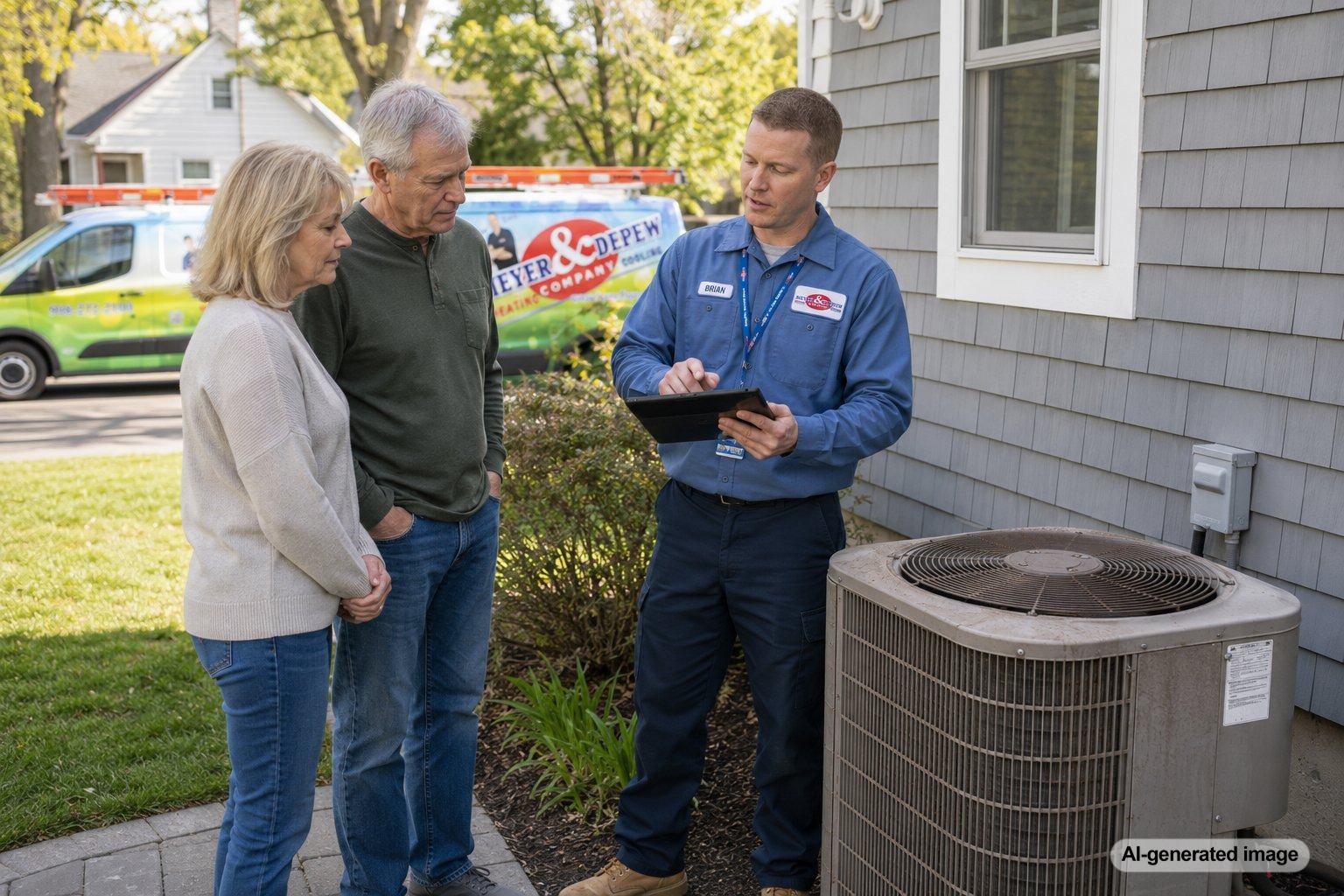
A qualified HVAC technician can help review the condition of major components, refrigerant circuit concerns, airflow, coil condition, thermostat operation, duct limitations, and overall performance. If the system still has a reasonable service life, repair may be the right recommendation. If the system is likely to keep creating repair bills, replacement may offer a clearer long-term plan.
For some homeowners, the best timing is before the next peak summer breakdown. Replacing an unreliable system during a planned appointment can be less stressful than making the same decision during a heat wave, especially when appointment availability and equipment choices may be tighter.
Questions to ask before approving another AC repair
Before investing in another repair, it helps to ask clear, practical questions. You do not need to become an HVAC expert, but you should understand the reasoning behind the recommendation.
- Is this failure isolated, or does it suggest broader wear?
- Are there signs of airflow, duct, or installation issues contributing to the problem?
- How does this repair compare with the system’s age and recent repair history?
- Is the system likely to cool reliably through the season after this repair?
- Would replacement address comfort issues that repairs are not solving?
Good answers should be specific to your home, your system, and your comfort concerns. Vague pressure to replace without explanation is not helpful, but neither is repeatedly repairing a system that is clearly becoming unreliable.
FAQ
Is it always better to replace an AC after several repairs?
No. Several minor repairs over many years may not justify replacement. The concern grows when repairs are frequent, costly, related to major components, or paired with poor comfort and high energy use.
Can maintenance reduce repeated AC repairs?
Routine maintenance may help reduce avoidable strain, catch developing issues earlier, and keep the system cleaner. It cannot prevent every breakdown, especially on aging equipment, but it can provide better information about system condition.
Should I replace my AC if it still cools?
Not automatically. An AC can still cool while becoming inefficient, unreliable, noisy, or unable to manage humidity well. The decision should include comfort, repair history, age, and expected future reliability.
What if only one room is uncomfortable?
One uncomfortable room may point to airflow, duct, insulation, sun exposure, or zoning issues rather than a failing AC. A professional evaluation can help separate equipment problems from distribution problems.
Who should I call if my AC keeps breaking down?
Call a qualified HVAC contractor who can evaluate the full system, not just replace the most obvious failed part. For recurring cooling problems in Central and Northern New Jersey, Meyer & Depew can help assess repair and replacement options.
Repeated AC repairs do not always mean immediate replacement, but they should prompt a bigger conversation. When an older system becomes unreliable, expensive to maintain, or unable to keep the home comfortable, replacement may be the more practical long-term decision.
Thinking about replacing or upgrading your HVAC system?
Meyer & Depew can help you understand your options for comfort, efficiency, and long-term reliability in your New Jersey home or business.
Questions? Contact Meyer & Depew or call 908.272.2100.