



Why Ceiling Fan Direction Matters in Summer
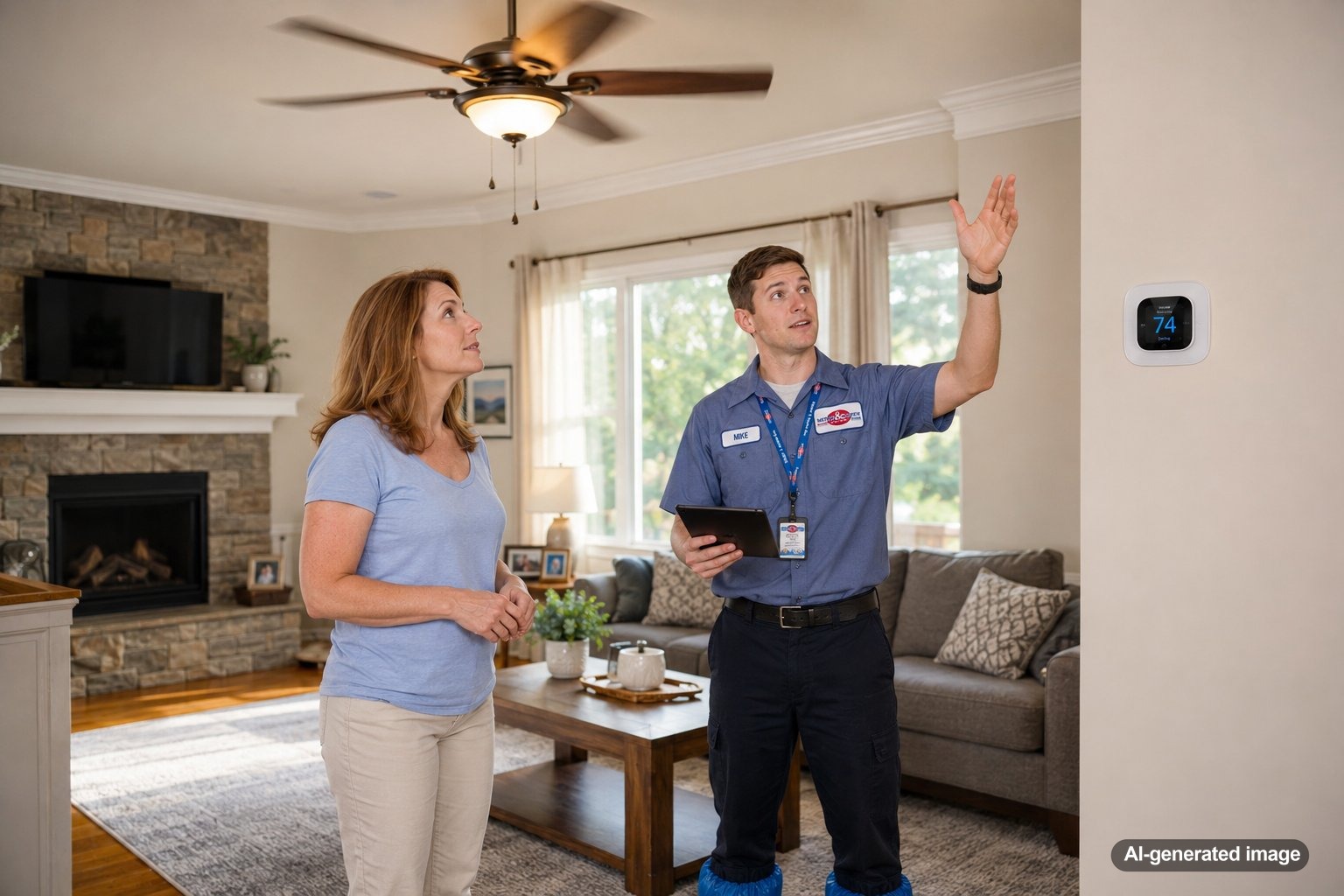
In summer, ceiling fan direction plays a bigger role in home comfort than many people realize. When a fan spins in the correct direction, it helps move air across the skin, creating a cooling effect that can make a room feel several degrees more comfortable without changing the thermostat. This simple adjustment can also support your air conditioning system by reducing how hard it needs to work to maintain a steady indoor temperature. In homes across Central and Northern New Jersey, where humidity and warm days can push cooling systems, getting airflow right can make a noticeable difference. Understanding how fan direction works is a small but practical step toward improving comfort, managing energy use, and getting more consistent cooling throughout the house.
Ceiling fans should rotate counterclockwise in summer. This pushes air downward, creating a wind-chill effect that helps you feel cooler. It does not lower room temperature but improves comfort and can reduce reliance on air conditioning when used correctly.
How ceiling fan direction works in summer
When a ceiling fan spins counterclockwise at higher speed, the blades push air downward. This creates a direct breeze that helps sweat evaporate more quickly from your skin, making you feel cooler even though the thermostat setting has not changed. This is why the direction setting is so important during warm months.
For more balanced home comfort, proper airflow is part of a larger indoor environment strategy. Learn more about improving comfort systems through Air Quality & Comfort solutions that support consistent temperature and airflow throughout the home.
Why it matters in New Jersey homes
Homes in Central and Northern New Jersey often deal with a mix of humidity and warm temperatures during the summer. Ceiling fans help circulate conditioned air more evenly, which can reduce hot spots in bedrooms, living rooms, and upper floors. This can make air conditioning feel more effective without changing equipment settings.
Common considerations
Not every room responds the same way to ceiling fan use. High ceilings, older insulation, and blocked vents can all affect how well air circulates. Ceiling fans work best when supply and return vents are open and unobstructed, allowing conditioned air to move freely through the space.
In some cases, improving overall airflow may involve additional systems like Ventilators that help exchange indoor and outdoor air more effectively.
Safe homeowner checks
- Confirm the fan is set to counterclockwise for summer use.
- Make sure furniture or decor is not blocking airflow beneath the fan.
- Check that air vents are open and not covered.
- Replace a dirty air filter if airflow from the HVAC system feels weak.
When to call a professional
If certain rooms remain uncomfortable even with correct fan direction and a properly running HVAC system, there may be underlying airflow or system balance issues. A qualified technician can evaluate ductwork, system sizing, or ventilation concerns to improve overall comfort.
FAQ
Does ceiling fan direction actually lower temperature?
No. It improves how cool you feel but does not change the actual room temperature.
Should ceiling fans run when no one is in the room?
Generally, no. Fans are most effective when people are present to feel the airflow.
Can ceiling fans replace air conditioning?
No. They support comfort but do not remove heat or humidity like an AC system.
How often should I change fan direction?
Twice a year is typical, switching between summer and winter settings.
Need help with your heating, cooling, or HVAC system?
Meyer & Depew serves homeowners and businesses throughout Central and Northern New Jersey.
Get a quote or call 908.272.2100.