

Why Dehumidification Matters in New Jersey Homes
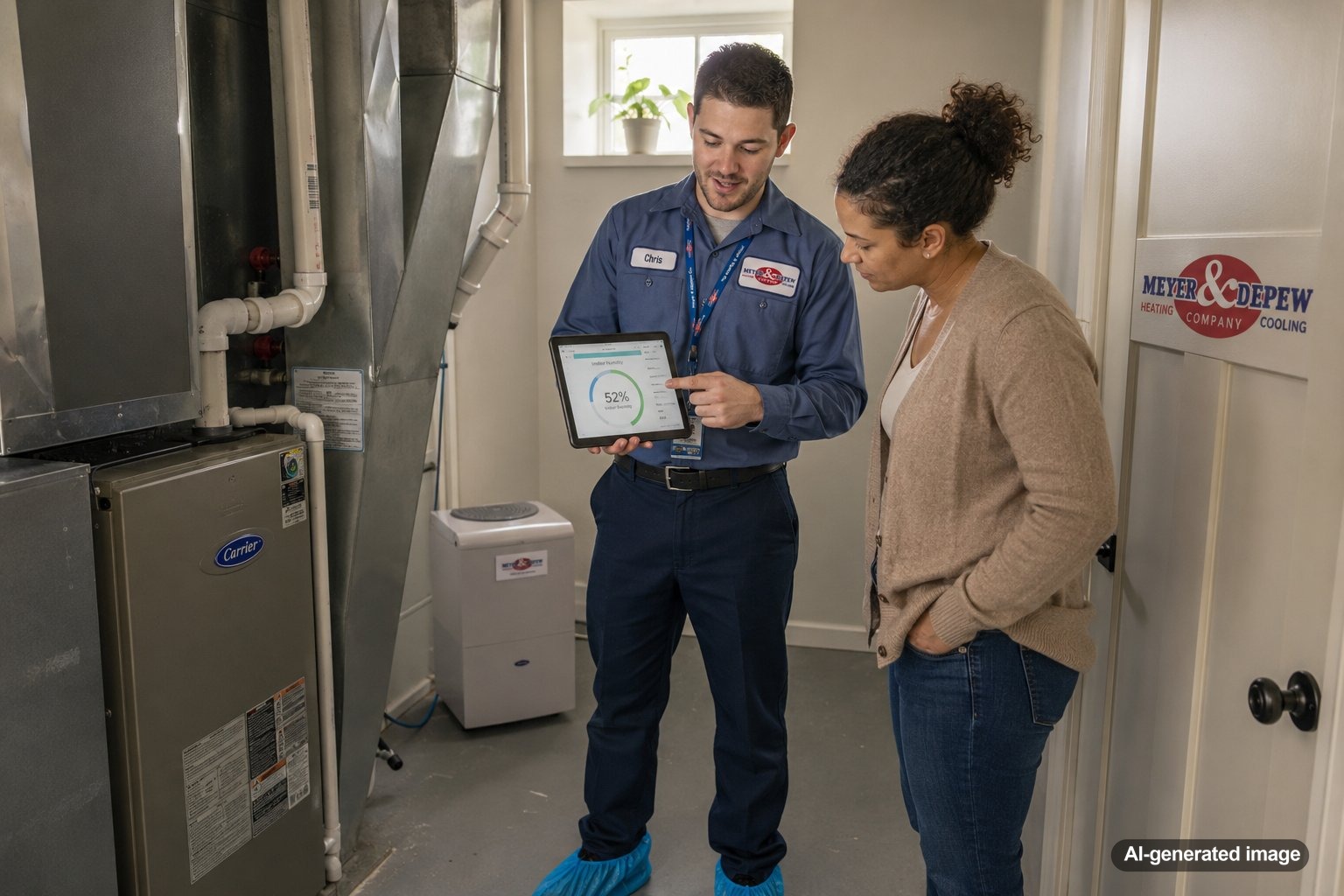
Dehumidification matters in New Jersey homes because humidity affects more than how the air feels. It can make rooms feel sticky even when the thermostat looks reasonable, encourage musty odors, worsen basement dampness, and put extra pressure on an air conditioning system that is already working through a hot, humid summer.
For homeowners in Central and Northern New Jersey, humidity control is part of real home comfort. A cooling system may lower the temperature, but if moisture stays high, the home can still feel uncomfortable. That is where proper air quality and comfort planning becomes important.
Dehumidification helps New Jersey homes feel cooler, smell fresher, and stay more comfortable by removing excess moisture from indoor air. It can also reduce the conditions that contribute to musty basements, condensation, and unnecessary AC runtime. The right solution depends on the home, the ductwork, the cooling system, and where the moisture problem starts.
Why New Jersey Homes Often Feel Humid Indoors
New Jersey summers bring warm outdoor air, frequent humidity, thunderstorms, and long cooling cycles. Older homes, finished basements, crawl spaces, additions, and homes with uneven airflow can all hold moisture in different ways. Even newer homes can feel humid if ventilation, equipment sizing, or airflow are not working together properly.
Humidity also behaves differently than temperature. A thermostat may show 72 degrees, but if indoor relative humidity is high, the room can feel heavy and clammy. People often respond by lowering the thermostat, which may make the AC run longer without fully fixing the moisture problem.
How Humidity Affects Comfort
Air with too much moisture makes it harder for your body to cool itself naturally. That is why a humid 74-degree room can feel less comfortable than a drier room at the same temperature. In many homes, the real issue is not only the temperature setting. It is the balance between temperature, humidity, airflow, and ventilation.
Common signs of excess indoor humidity include sticky air, rooms that never feel quite cool, musty odors, condensation on windows or ducts, damp basement air, and a tendency to keep lowering the thermostat for relief. These symptoms do not always point to one single cause, but they do tell you the home may need a closer look.
Why AC Alone Does Not Always Remove Enough Moisture
Central AC removes some moisture as warm indoor air passes over the cooling coil. That is normal. The challenge is that an air conditioner is primarily designed to cool the air, not act as a dedicated dehumidifier for every moisture condition in the home.
If an AC system is oversized, short cycling, low on airflow, poorly maintained, or serving rooms with different loads, it may not run long enough or consistently enough to remove moisture well. A dirty filter, blocked return, duct leakage, or poor air distribution can also interfere with comfort. In some homes, the cooling equipment may be doing its job, but a basement, crawl space, or ventilation issue is adding moisture faster than the system can manage it.
Routine AC service and maintenance can help a technician evaluate airflow, coil condition, condensate drainage, and system operation. That inspection can reveal whether humidity is related to the cooling system or whether the home may need a separate humidity-control solution.
Portable Dehumidifier vs Whole Home Dehumidification
A portable dehumidifier can be useful in a single damp area, such as a basement storage room or laundry space. It is often a practical first step when the problem is limited to one zone. The tradeoff is that portable units need placement, drainage, filter cleaning, and sizing that matches the space.
Whole home dehumidification is different. When properly selected and installed, it works with the home’s HVAC system to manage humidity across a larger area. This can be especially helpful when the entire home feels damp, when bedrooms feel clammy at night, or when lowering the thermostat is being used as a substitute for real moisture control.
| Option | Best fit | Limitations |
|---|---|---|
| Portable dehumidifier | One damp room, basement corner, or temporary moisture issue | Limited coverage and requires emptying or drainage |
| Whole home dehumidifier | Multiple humid rooms or whole-house comfort concerns | Needs proper HVAC evaluation and professional installation |
| AC maintenance and airflow correction | Humidity tied to short cycling, poor airflow, or maintenance issues | May not solve moisture from basements, crawl spaces, or ventilation problems |
Moisture Problems Are Often More Than A Summer Issue
Humidity problems are easiest to notice in July and August, but moisture can build in other seasons too. Spring rain, damp basements, poor bathroom ventilation, wet crawl spaces, and tightly sealed homes can all contribute to indoor moisture. In fall, a home may feel cool but still damp. In winter, condensation on windows can point to a different moisture balance problem.
That is why humidity control should be evaluated as part of the whole home, not just as a summer comfort complaint. The right answer may involve AC performance, ventilation, ductwork, drainage, insulation, or a dedicated dehumidification system.
- Check the thermostat settings and avoid extreme temperature changes meant to compensate for humidity.
- Replace or inspect the air filter if airflow feels weak.
- Make sure supply and return vents are open and not blocked by furniture, rugs, or storage.
- Look for obvious moisture sources such as damp basement areas, unvented bathrooms, or standing water near equipment.
- Use a humidity gauge to see whether the issue is occasional or consistent.
When To Call A Professional
Schedule professional HVAC help if the home feels humid even when the AC runs, if you notice musty odors from vents, if rooms feel uneven, if the system short cycles, or if condensation appears around ducts or equipment. A qualified technician can evaluate whether the issue is related to airflow, equipment sizing, refrigerant-side performance, condensate drainage, duct design, or indoor air quality needs.
You should also call for help if you see water around HVAC equipment, repeated drain line issues, electrical concerns, or signs that moisture may be affecting building materials. Do not open sealed HVAC equipment, handle refrigerant, bypass safety controls, or attempt electrical repairs yourself.
FAQ: Dehumidification In New Jersey Homes
What indoor humidity level is best?
Many homes feel best when indoor humidity is kept in a moderate range rather than allowed to stay high. A simple humidity gauge can help you see patterns by room and season. If readings stay elevated or comfort remains poor, it is worth having the HVAC system and moisture sources evaluated.
Can a dehumidifier make my home feel cooler?
It can. Drier air often feels more comfortable, which may reduce the urge to keep lowering the thermostat. Results depend on the home, the equipment, and how much excess moisture is present.
Is basement humidity connected to the rest of the house?
Often, yes. Damp basement air can influence comfort and odors in nearby living areas, especially when air moves through stairwells, leaks, returns, or gaps in the building. Basement moisture should not be ignored just because the main living space is upstairs.
Do all homes need whole home dehumidification?
No. Some homes only need better maintenance, improved airflow, a portable unit in a limited area, or attention to ventilation. Whole home dehumidification is most useful when moisture affects comfort across a larger part of the home.
Can Meyer & Depew help evaluate humidity problems?
Yes. Meyer & Depew can evaluate comfort concerns, HVAC performance, and indoor air quality options for homes in Central and Northern New Jersey. The right recommendation depends on what is causing the humidity, not just the fact that the air feels damp.
Dehumidification matters because comfort is not just about temperature. In a New Jersey home, controlling moisture can help rooms feel more comfortable, reduce musty conditions, and support better overall HVAC performance when the solution is matched to the home’s actual needs.
Need help with your heating, cooling, or HVAC system?
Meyer & Depew serves homeowners and businesses throughout Central and Northern New Jersey.
Get a quote or call 908.272.2100.