



What to Do With Your AC After a Summer Power Outage?
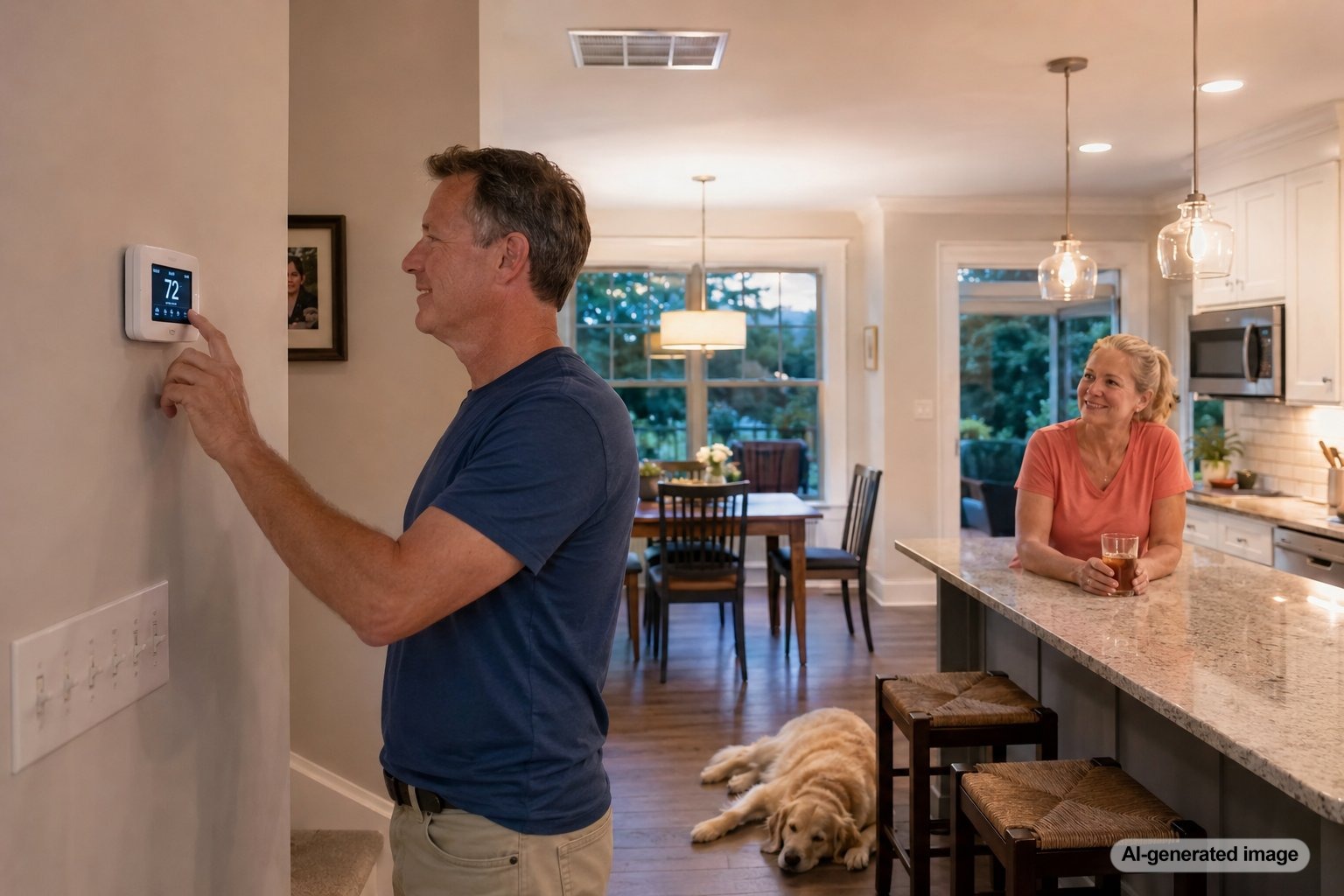
After a summer power outage, avoid turning your AC back on immediately. Restore the thermostat carefully, give the system time to stabilize, and watch for signs that the outage or a power surge may have affected the equipment. A cautious restart can reduce unnecessary strain on the compressor and help you recognize when the system needs professional attention.
Power interruptions are common during New Jersey thunderstorms, heat waves, and utility work. Even when electricity returns quickly, voltage fluctuations can affect thermostats, breakers, control boards, capacitors, and other HVAC components. If your cooling system does not return to normal operation, Meyer & Depew’s AC service and maintenance team can evaluate the problem safely.
- Turn the thermostat to Off before or shortly after power is restored.
- Wait about 30 minutes before requesting cooling.
- Check the HVAC breaker once if the system remains off.
- Confirm that the thermostat, filter, vents, and outdoor unit look normal.
- Schedule service if the breaker trips again, the AC makes unusual noises, or cooling does not return.
Why You Should Not Restart the AC Immediately
When power returns, many appliances and mechanical systems may try to start at the same time. Your air conditioner also needs its internal pressures and electrical controls to stabilize before the compressor starts another cooling cycle.
Many modern thermostats include a built-in delay that prevents the AC from restarting for several minutes. That delay is normal. Repeatedly changing thermostat settings, lowering the temperature dramatically, or cycling the breaker will not make the home cool faster and may add stress to the system.
How to Restart Your AC Safely
1. Set the thermostat to Off
Move the thermostat’s system setting to Off. Leave the fan setting on Auto unless you have a specific reason to run the indoor blower. Turning the thermostat off prevents an immediate cooling call while power is still stabilizing.
2. Wait before requesting cooling
Wait about 30 minutes after reliable power has returned. If lights are still flickering or the electricity is cutting in and out, leave the AC off until the utility supply appears stable.
3. Return the thermostat to Cool
Set the thermostat to Cool and choose a reasonable temperature. Do not set it far below the current indoor temperature in an attempt to speed up cooling. The system will cool at its normal capacity regardless of how low the thermostat is set.
4. Allow time for the system to respond
The thermostat may display a message such as “Wait,