



Can Central AC Cool a Finished Basement Properly?
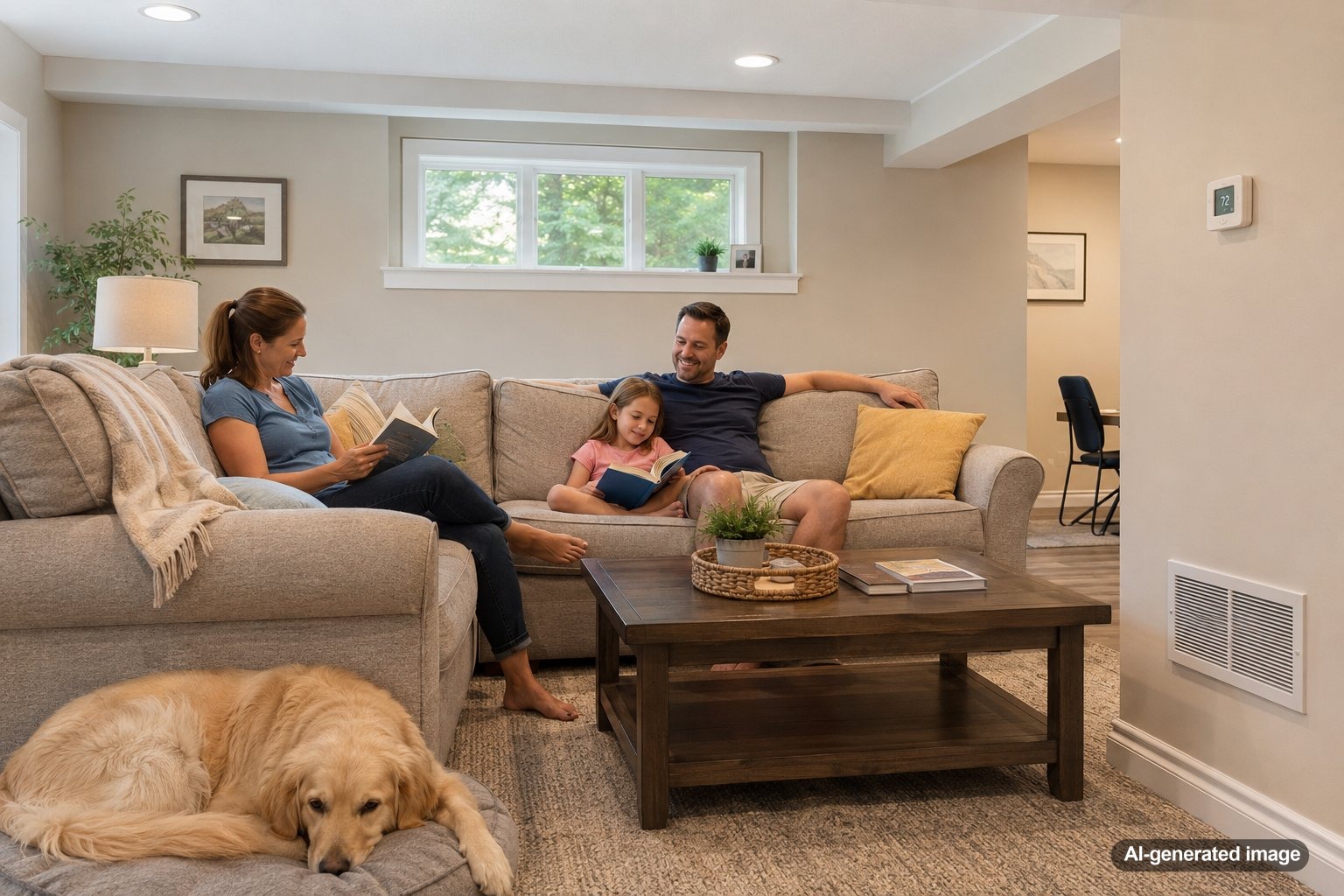
Yes, central AC can cool a finished basement properly, but only when the system delivers enough conditioned air, has a clear return-air path, and controls humidity. Many basements already stay cooler than upper floors, yet they can still feel damp, stale, or uneven because cooling is only part of the comfort equation. In Central and Northern New Jersey, summer humidity often makes basement comfort more challenging than the thermostat reading suggests.
A properly designed solution may involve airflow adjustments, zoning, dedicated return air, duct improvements, or a separate system such as a ductless mini split. The right approach depends on how the basement was finished, how often it is used, and whether the existing central AC was sized with that space in mind.
- Central AC can cool a finished basement if supply and return airflow are both adequate.
- Basements often need humidity control even when the temperature feels cool.
- Closing upstairs vents to force more air downstairs is usually not a good solution.
- Zoning or a ductless system may provide better room-by-room control.
- A professional airflow and load evaluation can identify the most practical fix.
Why Finished Basements Can Be Difficult To Cool Evenly
A basement behaves differently from the rest of the house. Soil surrounding the foundation helps moderate temperature, so the space may start out cooler than the first or second floor. That sounds helpful, but several design issues can still keep the room from feeling comfortable.
The original HVAC system may have been designed before the basement became living space. If so, the ductwork, equipment capacity, and return-air layout may not account for the added square footage. A few supply registers can make the space feel cooler, but without a good return path, air circulation may remain weak.
Finished walls and ceilings can also hide duct restrictions, poorly placed registers, or insulation gaps. A home theater, office, gym, or guest room may have different comfort needs than an open recreation area, especially when doors are closed.
Cooling Is Only Half The Basement Comfort Problem
A basement can be 70 degrees and still feel uncomfortable if relative humidity is high. Moisture can enter through the foundation, outdoor air leakage, laundry activities, or normal summer humidity. Central AC removes some moisture while it runs, but a naturally cool basement may not create enough cooling demand for long runtimes.
That can lead to a familiar situation: the thermostat is satisfied, the AC shuts off, and the basement still feels clammy. In those cases, the solution may involve improving air sealing, correcting drainage or moisture sources, adding dehumidification, or adjusting how the HVAC system serves the space.
For broader humidity and comfort options, review Meyer & Depew’s air quality and comfort services.
Supply Air And Return Air Must Work Together
Supply vents deliver conditioned air, but return vents pull room air back to the HVAC system. Both matter. A basement with multiple supply registers and no effective return path may have weak circulation, pressure imbalances, and uneven temperatures.
Leaving a door open may improve airflow in some layouts, but it is not a dependable design solution for bedrooms, offices, or other rooms that need privacy. Transfer grilles, jump ducts, dedicated returns, or other professionally designed options may be needed.
Register location matters too. A vent placed near the stairwell may cool the open area while enclosed rooms stay warmer. Furniture, rugs, built-ins, and storage can also block airflow without being obvious.
Would Zoning Help A Finished Basement?
Zoning can be useful when the basement and upper floors have different heating and cooling needs. A zoning system uses dampers and controls to direct conditioned air where it is needed, instead of treating the entire house as one temperature zone.
However, zoning must be designed carefully. Simply adding dampers without considering airflow, equipment capacity, duct pressure, and minimum air volume can create new problems. The existing system also needs to be compatible with the proposed controls.
Learn more about professionally designed zoning systems for room-by-room comfort.
When A Ductless Mini Split May Be A Better Fit
A ductless mini split can be a strong option when extending the existing duct system would be difficult, expensive, or disruptive. It gives the basement its own thermostat and can operate independently from the rest of the house.
This approach is especially useful for finished basements that are used only part of the day, have multiple comfort zones, or were completed long after the original HVAC installation. It may also provide better humidity management than relying on a central system that rarely runs because the basement already stays cool.
A ductless system is not automatically the best choice for every basement. Equipment placement, condensate drainage, electrical requirements, room layout, and total heating and cooling load all need to be evaluated.
Safe Checks Homeowners Can Make
- Make sure all basement supply and return vents are fully open and not blocked by furniture, boxes, rugs, or built-ins.
- Inspect or replace the HVAC filter if it is dirty.
- Confirm that closed interior doors are not cutting off the return-air path.
- Compare temperature and humidity readings upstairs and downstairs with a reliable thermometer and hygrometer.
- Look for visible signs of moisture, condensation, or water intrusion that may be separate from the AC system.
Avoid closing many upstairs vents in an attempt to push more air into the basement. That can increase duct pressure, reduce overall airflow, and interfere with normal system operation. Do not modify ductwork, dampers, electrical components, or refrigerant equipment yourself.
Signs The Existing Central AC May Need Professional Evaluation
- The basement remains muggy even when the temperature is low.
- Airflow from basement registers is much weaker than airflow upstairs.
- Rooms become uncomfortable when doors are closed.
- The system runs for long periods but cannot maintain the desired temperature.
- The upper floors become too warm while the basement becomes too cold.
- There is little or no return air from the finished basement.
- The basement was added to the conditioned space without an HVAC design review.
A qualified technician can measure airflow, inspect duct layout, review equipment capacity, check static pressure, and evaluate temperature and humidity differences. That information helps determine whether the best next step is balancing, duct modification, zoning, dehumidification, equipment replacement, or a separate ductless system.
Frequently Asked Questions
Should I leave the basement door open for better cooling?
Leaving the door open may improve air movement in some homes, but it should not be the only return-air strategy. Closed rooms and privacy needs often require a more permanent airflow solution.
Can I add more vents to the basement?
Possibly, but adding supply vents without checking return airflow, duct capacity, and system balance can make comfort worse elsewhere. A professional should evaluate the full duct system first.
Why does my basement feel damp even when it is cold?
Cool air can still contain enough moisture to feel clammy. Because the basement may not need much cooling, the central AC might not run long enough to remove sufficient humidity.
Is a dehumidifier enough?
A dehumidifier may help when moisture is the main issue, but it will not correct poor airflow, inadequate cooling capacity, or hidden water intrusion. The source of the discomfort should be identified before choosing a solution.
Can one thermostat control the basement well?
One thermostat can work in a well-designed system, but it may not reflect basement conditions if it is located upstairs. Zoning, remote sensors, or a separate ductless system may provide more accurate control.
Central AC can cool a finished basement properly when the space has balanced supply and return airflow, appropriate system capacity, and effective humidity control. If the basement was finished after the original HVAC system was installed, a professional evaluation is often the best way to avoid guesswork.
Need help with your heating, cooling, or HVAC system?
Meyer & Depew serves homeowners and businesses throughout Central and Northern New Jersey.
Get a quote or call 908.272.2100.