



Can Low Refrigerant Make an Air Conditioner Use More Power?
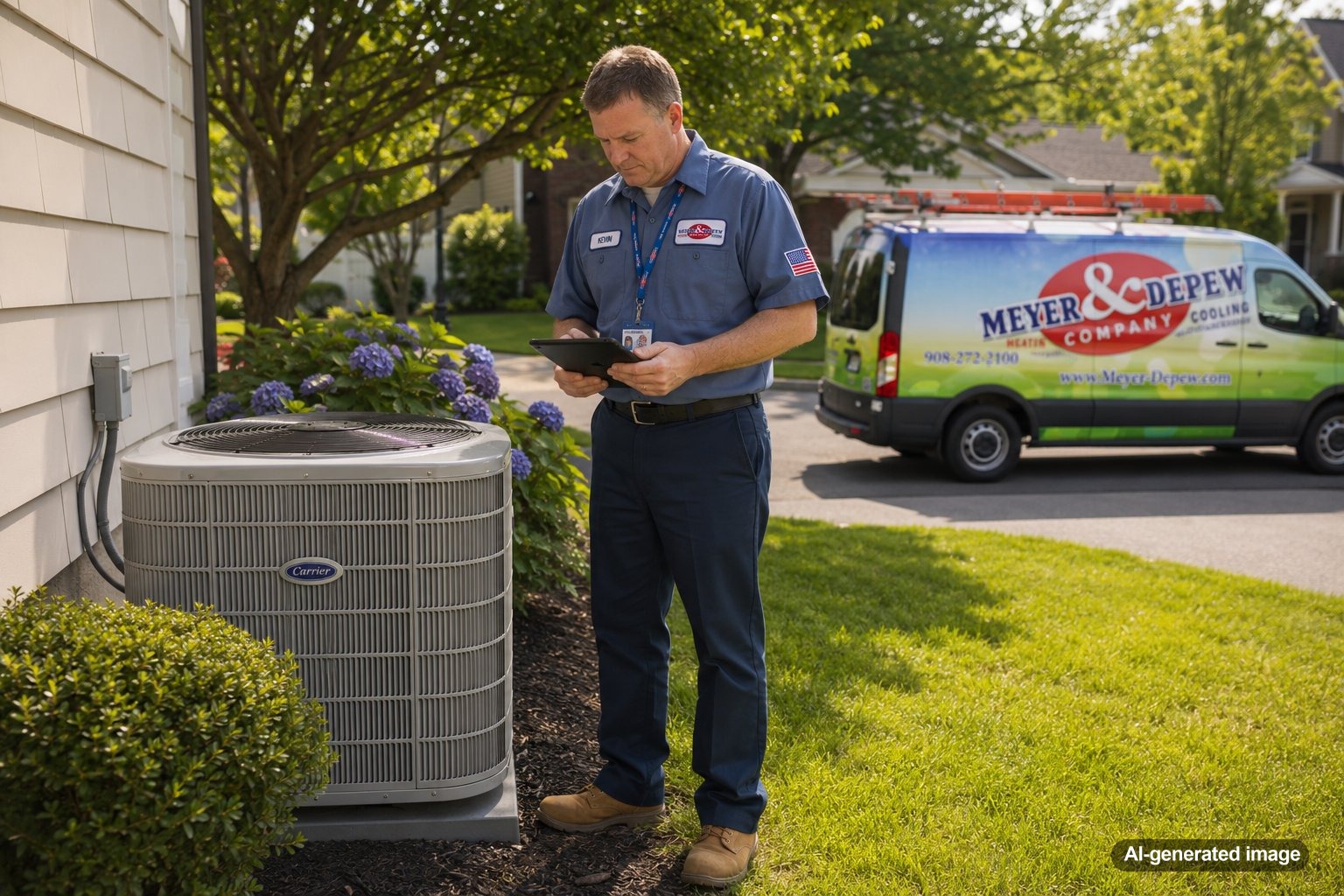
Yes, low refrigerant can make an air conditioner use more power, especially when the system has to run longer to reach the thermostat setting. Refrigerant is essential to the heat-transfer process that removes warmth and humidity from indoor air. When the charge is too low, cooling capacity may fall, comfort can suffer, and the system may consume more electricity while producing less useful cooling.
This problem can become especially noticeable during a hot, humid New Jersey summer, when an AC system already faces a heavy workload. Low refrigerant is not something a homeowner should try to correct by adding refrigerant. A qualified technician must determine why the level is low, locate any leak or related problem, and evaluate the system safely. Meyer & Depew provides professional AC service and maintenance for homeowners throughout Central and Northern New Jersey.
- Low refrigerant can reduce the amount of heat an AC system removes during each cooling cycle.
- The system may run longer or more frequently, increasing total electricity use.
- Cooling may become weak or uneven even though the equipment is operating.
- Ice, unusual noises, warm air, or rising utility use can be warning signs, but they do not confirm low refrigerant by themselves.
- Refrigerant work should always be handled by a qualified HVAC professional.
Why low refrigerant can increase AC power consumption
An air conditioner does not create cold air. It transfers heat from inside the home to the outdoors. Refrigerant circulates through the indoor and outdoor coils, changing pressure and temperature as it absorbs and releases heat.
When the refrigerant charge is correct, the system can perform this process within its intended operating range. If the charge becomes too low, the indoor coil may not absorb heat as effectively. The air conditioner can still draw power, but it may deliver less cooling for every minute it runs.
The increased power use usually comes from longer operating time rather than a simple assumption that the equipment instantly draws much more electricity. A struggling system might run for extended periods, cycle repeatedly, or fail to satisfy the thermostat during peak afternoon heat. Total daily electricity consumption can rise because the system stays on longer to accomplish the same cooling task.
Low refrigerant usually means there is another problem
Refrigerant is contained within a closed system. It is not normally consumed like fuel, and routine operation should not require periodic topping off. If a system is low, a leak, an installation issue, or a previous service problem may be involved.
Simply adding refrigerant without addressing the cause may provide only temporary improvement. If refrigerant continues to escape, performance may decline again, and the underlying leak can become more expensive or complicated to address.
A professional evaluation may include checking system pressures, temperatures, airflow, coil condition, electrical operation, and potential leak locations. These measurements help distinguish an actual refrigerant problem from other conditions that can create similar symptoms.
Signs that may be associated with low refrigerant
No single symptom proves that an AC system is low on refrigerant. Restricted airflow, dirty coils, duct problems, thermostat issues, failing components, or an undersized system can produce overlapping signs. Still, several changes may justify scheduling service.
The AC runs for a long time without reaching the set temperature
Extended runtime is one of the most common efficiency concerns. During extreme heat, longer cycles can be normal. However, a system that suddenly struggles under conditions it previously handled may need attention.
Air from the vents feels less cool
Weak cooling can occur when the system is not transferring enough heat. Before assuming refrigerant is the cause, check that the thermostat is set to cooling, the filter is not heavily clogged, and supply and return vents are open.
Ice develops on refrigerant lines or the indoor coil
Low refrigerant can contribute to coil temperatures falling below freezing. Moisture in the air may then freeze on the coil or nearby tubing. Restricted airflow can also cause icing, so the appearance of ice requires diagnosis rather than guesswork.
If ice is visible, continuing to operate the system can worsen the situation. Turn the cooling mode off and schedule professional service. Do not chip, scrape, or melt ice with tools or direct heat.
Cooling costs rise without an obvious explanation
A higher electric bill can reflect hotter weather, thermostat changes, utility rates, added occupancy, poor insulation, or equipment problems. Low refrigerant is one possible factor when increased energy use appears alongside longer runtime or declining cooling performance.
Hissing or bubbling sounds occur near the equipment
Unusual sounds near refrigerant lines or coils could be associated with a leak, although other mechanical and airflow issues can also create noise. Do not open equipment panels or attempt to locate a leak yourself.
Why the house may feel humid even when the AC is running
Cooling and humidity removal are closely connected. As warm indoor air passes over the cold evaporator coil, moisture condenses and drains away. A refrigerant problem can disrupt this process, leaving rooms feeling sticky even when the thermostat shows a lower temperature.
Humidity can also be affected by oversized equipment, blocked drainage, duct leakage, ventilation, building conditions, and frequent door opening. In New Jersey, outdoor humidity can make these comfort problems more noticeable. A technician can evaluate cooling performance and moisture removal together rather than treating them as unrelated complaints.
Can low refrigerant damage the air conditioner?
Operating with an incorrect refrigerant charge may place added stress on the system. The compressor depends on proper operating conditions, and prolonged operation outside the intended range could contribute to overheating, wear, or eventual component failure.
Damage is not guaranteed, and the severity depends on the equipment, the amount of refrigerant loss, operating conditions, and how long the problem continues. Prompt service can reduce the risk of a relatively manageable issue developing into a larger repair.
Safe checks homeowners can make
Homeowners should not handle refrigerant, attach gauges, open sealed components, or attempt leak repairs. There are, however, a few safe checks that may help rule out basic airflow or control issues.
- Confirm the thermostat is set to cooling and the temperature setting is below the current indoor temperature.
- Inspect the air filter and replace it if it is dirty and replacement is appropriate for your system.
- Make sure supply registers and return vents are open and not blocked by furniture, rugs, or curtains.
- Look for obvious leaves, grass, or debris around the outdoor unit without opening or reaching inside it.
- Note whether the system is running continuously, producing unusual sounds, leaking water, or developing visible ice.
These observations can help a technician understand the pattern. They should not be used to diagnose a refrigerant leak with certainty.
When to schedule professional AC service
Schedule service when cooling performance declines, the system runs unusually long, ice forms, energy use rises unexpectedly, or comfort problems continue after basic filter and thermostat checks. You should also arrange an evaluation if refrigerant has been added before and the system is again losing cooling capacity.
Professional service is particularly important because adding the wrong amount of refrigerant can also reduce performance. Both undercharging and overcharging can interfere with proper operation. The correct charge must be determined using equipment specifications and system measurements.
For recurring maintenance and seasonal inspections, homeowners may also want to review available HVAC service plans. Routine maintenance may help identify developing performance concerns, although it cannot prevent every leak or breakdown.
Frequently asked questions
Will adding refrigerant lower my electric bill?
Correcting a confirmed low-refrigerant condition may improve cooling performance and reduce unnecessary runtime. However, the effect on a utility bill depends on weather, thermostat settings, system condition, insulation, ductwork, energy rates, and whether other problems are present. No specific savings should be assumed without evaluating the complete system.
How often should an AC system need refrigerant?
A properly sealed system should not need refrigerant added on a routine schedule. If the level is low, the cause should be investigated instead of treating refrigerant as a maintenance fluid that naturally runs out.
Can a dirty air filter look like a refrigerant problem?
Yes. A severely restricted filter can reduce airflow, weaken cooling, increase runtime, and contribute to coil icing. This is why filter condition and airflow are typically considered during diagnosis.
Can I keep running the AC if the refrigerant is low?
Continuing to operate a system that is icing, failing to cool, or showing signs of a serious problem could increase stress on the equipment. Turn cooling off if ice is present and arrange professional service. If the system is still cooling but performance has declined, schedule an evaluation before the problem worsens.
Does low refrigerant always mean the AC must be replaced?
No. Some leaks can be repaired, while other situations may make replacement more practical. The decision depends on the leak location, equipment age, refrigerant type, repair history, system condition, and estimated repair cost. A qualified technician can explain the available options without assuming that every low-charge system needs replacement.
Low refrigerant can make an air conditioner less effective and may increase total power use by forcing the system to operate longer. Because several other HVAC problems can create similar symptoms, accurate diagnosis matters. Addressing the cause early may help restore comfort and reduce the risk of additional equipment stress.
Need help with your heating, cooling, or HVAC system?
Meyer & Depew serves homeowners and businesses throughout Central and Northern New Jersey.
Get a quote or call 908.272.2100.