

What Causes a Return Vent to Whistle After a Filter Change?
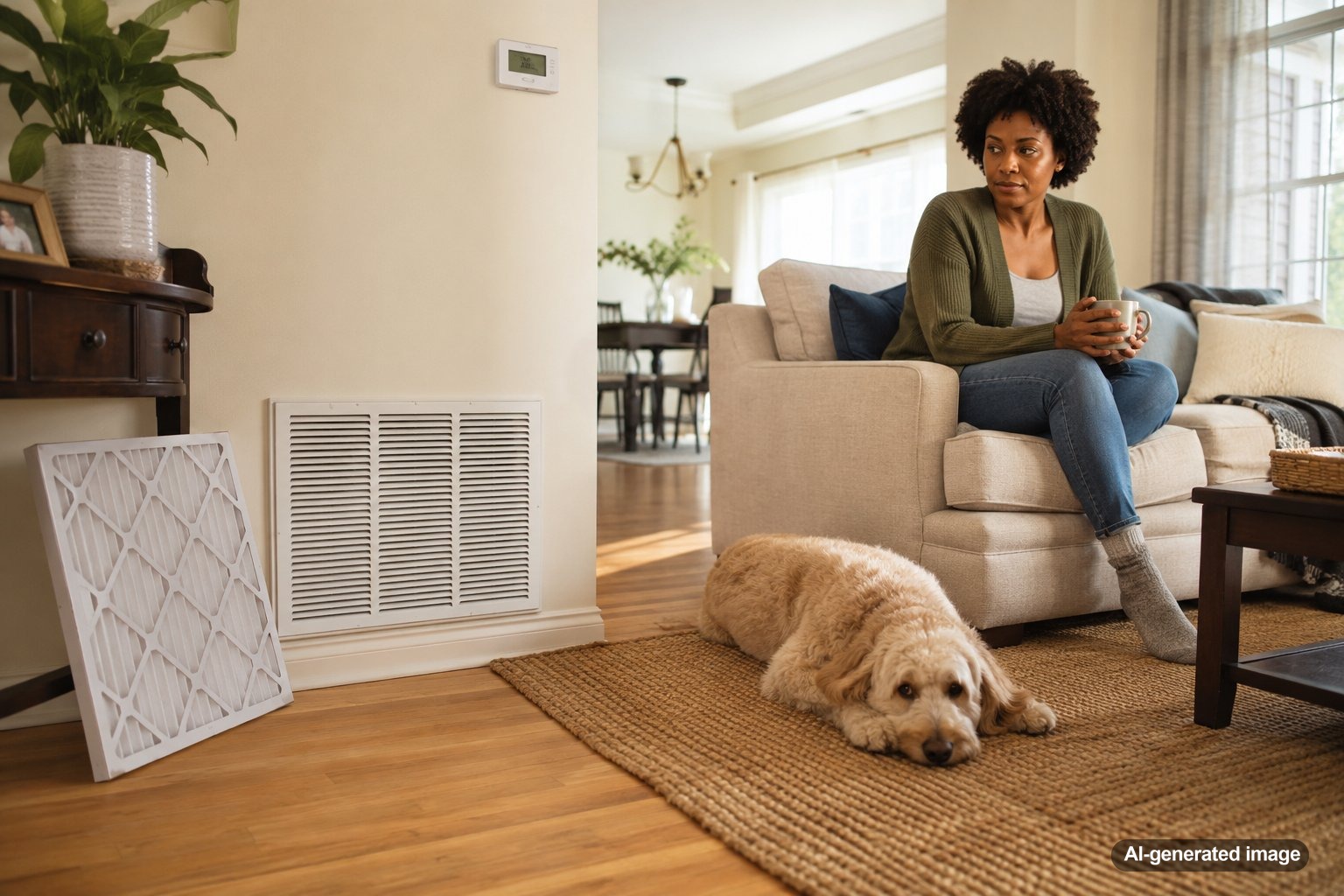
A return vent that starts whistling immediately after an air filter change is usually reacting to a change in airflow. The new filter may be too restrictive, the wrong size, installed incorrectly, or leaving a small gap that pulls air at high speed. The sound does not automatically mean your HVAC system is failing, but it should not be ignored if it continues.
In many Central and Northern New Jersey homes, the return side of the system already works against long duct runs, older return grilles, or limited return-air capacity. A filter change can expose those conditions because even a small increase in resistance may create enough pressure to produce a whistle. If basic checks do not stop the noise, an HVAC service and maintenance visit can help identify the actual airflow restriction.
A return vent may whistle after a filter change because the filter is too restrictive, does not fit the slot correctly, was installed backward, is still wrapped in packaging, or is exposing an existing airflow problem in the duct system.
- Confirm that the filter dimensions match the old filter and the equipment label.
- Make sure all packaging has been removed.
- Check that the airflow arrow points toward the blower or air handler.
- Verify that the filter sits flat without gaps around its edges.
- Schedule professional service if the whistle continues, airflow becomes weak, or the system begins cycling abnormally.
Why a Filter Change Can Make a Return Vent Whistle
Your HVAC blower pulls air from the rooms through return grilles, return ducts, and the air filter before sending conditioned air back through the supply ducts. Every part of that pathway creates some resistance. When resistance rises, air may speed through a narrow opening and create a high-pitched sound similar to air escaping through a small gap.
A clean filter can still create more resistance than the previous one if it has denser media, a higher efficiency rating, deeper pleats, or a tighter fit. The whistle may come directly from the return grille, from the filter slot, or from a nearby seam in the return ductwork. Listening carefully can help narrow down the source, but homeowners should avoid opening equipment panels or reaching into the air handler.
Common Causes of Whistling After a Filter Change
The New Filter Is More Restrictive
Not all filters allow air to pass through at the same rate. A high-efficiency filter may capture smaller particles, but it can also create additional resistance if the HVAC system was not designed for that filter type. More filtration is not always better when it reduces the airflow the equipment needs.
This issue is especially common when a basic filter is replaced with a much higher MERV filter without checking the equipment manufacturer’s guidance. The system may sound louder, rooms may receive less airflow, or the blower may appear to run longer. A qualified technician can evaluate whether the selected filter is appropriate for the system and the existing ductwork.
The Filter Is the Wrong Size
Air filter labels can be confusing because the nominal size printed on the frame may differ slightly from the filter’s actual dimensions. A filter that is too small can leave a narrow gap around the edge. Air rushing through that gap may whistle even though the filter appears to fit at first glance.
A filter that is too large or too thick may not sit fully inside the rack. If the access cover cannot close properly, air can be pulled through the opening and create noise. Compare the new filter with the old one, check the printed dimensions, and confirm the thickness required by the filter rack.
The Filter Was Installed Backward
Most disposable pleated filters include an arrow that shows the correct airflow direction. The arrow should point toward the blower, furnace, or air handler. Installing the filter backward may cause the media to flex or sit improperly, which can affect airflow and create noise.
A backward filter may not always whistle, but it is a simple detail worth checking. Turn the HVAC system off at the thermostat before removing and repositioning the filter.
Packaging or a Protective Layer Was Not Removed
Some filters are sold in clear plastic wrapping that can be easy to overlook, particularly in dim mechanical rooms or utility closets. If the wrapping remains in place, the filter can block most of the return airflow and place unnecessary strain on the blower.
If you suspect packaging was left on the filter, turn the system off and inspect the filter immediately. Do not continue operating the system with a blocked filter.
The Filter Is Bowing or Being Pulled Out of Position
A lightweight filter may bend toward the blower when the system starts. The frame can then expose a small gap along one edge, producing an intermittent whistle. The noise may appear only at higher fan speeds or during certain stages of operation.
The filter should sit flat and remain supported by the rack. Do not wedge objects into the filter slot or tape over equipment openings. If the rack does not hold the filter securely, a technician can evaluate whether the filter cabinet or access cover needs adjustment.
The Return Grille or Ductwork Was Already Undersized
The filter may not be the root cause. It may simply make an existing return-air restriction more noticeable. A return grille that is too small, a blocked return, crushed flexible duct, dirty blower assembly, or poorly configured duct system can create elevated pressure on the return side.
This is more likely when the return has always sounded loud, doors pull shut when the system runs, rooms have weak airflow, or the whistling returns with several different filter types. Older New Jersey homes that have been renovated or expanded may also have HVAC systems serving spaces that were not part of the original duct design.
Safe Checks Homeowners Can Make
- Turn the system off at the thermostat before handling the filter.
- Confirm that the filter is completely removed from its plastic packaging.
- Verify the exact width, height, and thickness.
- Check that the airflow arrow points toward the blower or air handler.
- Make sure the filter is seated flat and the access cover closes fully.
- Confirm that return grilles are open and not blocked by furniture, rugs, curtains, or storage.
- Check supply vents throughout the home and make sure they are not all closed.
After correcting an obvious issue, restart the system and listen for the whistle. If the noise stops, continue monitoring the system for normal airflow and operation. If the sound remains, avoid repeatedly trying different filters without understanding the system’s requirements.
Should You Use a Lower-MERV Filter?
A less restrictive filter may stop the whistle, but choosing one should not be based on sound alone. The right filter balances particle capture with the airflow capacity of the blower, filter cabinet, and duct system. Using a filter that is too restrictive may contribute to weak airflow, longer run times, comfort problems, or equipment stress.
Before changing filter efficiency, check the HVAC equipment documentation or ask a qualified technician what range is suitable. Homes with indoor air quality concerns may benefit from a properly designed filtration or air purification solution rather than forcing a dense one-inch filter into a system that cannot handle the added resistance. Meyer & Depew’s air quality and comfort services can help homeowners explore options that work with the entire HVAC system.
When a Whistling Return Vent Needs Professional Attention
Schedule HVAC service when the whistle continues after confirming the filter size, direction, and fit. Professional evaluation is also appropriate when the sound is accompanied by weak airflow, unusual blower noise, frequent cycling, hot or cold rooms, a filter that bends inward, or an access panel that will not stay secure.
A technician can measure static pressure, inspect the return duct system, confirm blower settings, evaluate the filter rack, and look for restrictions that are not visible from the grille. These measurements are more useful than guessing because two homes with similar equipment may have very different duct layouts and airflow requirements.
Do not modify ductwork, change blower wiring, open sealed equipment compartments, or bypass access-panel switches. Those tasks involve equipment and electrical risks that should be handled by a qualified professional.
Frequently Asked Questions
Is a whistling return vent dangerous?
The sound itself is not usually an immediate danger, but it may indicate restricted airflow or a poor filter fit. Continued airflow restriction can affect comfort and system performance, so the cause should be addressed.
Why did the old dirty filter not whistle?
The old filter may have fit the rack differently, used less restrictive media, or developed deformation that changed the airflow path. It is also possible that the new filter exposed a gap or pressure issue that was not noticeable before.
Can I run the HVAC system without a filter to test it?
Briefly removing the filter may change the sound, but operating the system without filtration can allow dust and debris to reach the blower and indoor coil. It is better to turn the system off, verify the filter specifications, and contact a technician if the problem is unclear.
Can a blocked return vent cause whistling?
Yes. Furniture, curtains, rugs, boxes, or other objects placed against a return grille can restrict airflow and create noise. Keep return grilles clear and avoid closing off rooms in ways that limit the air’s path back to the HVAC system.
Does whistling mean I need new ductwork?
Not necessarily. The cause may be as simple as the wrong filter size or an unsecured filter cover. Duct modifications should only be considered after airflow testing identifies a return-air capacity or duct-design problem.
A return vent that whistles after a filter change is often signaling that air is being pulled through a filter, gap, grille, or duct opening with too much resistance. Check the filter’s packaging, dimensions, airflow direction, and fit first. If the whistle remains, professional airflow testing can determine whether the issue is the filter rack, blower, return grille, or duct system.
Need help with your heating, cooling, or HVAC system?
Meyer & Depew serves homeowners and businesses throughout Central and Northern New Jersey.
Get a quote or call 908.272.2100.