

What Homeowners Should Know About UV Lights in HVAC Systems
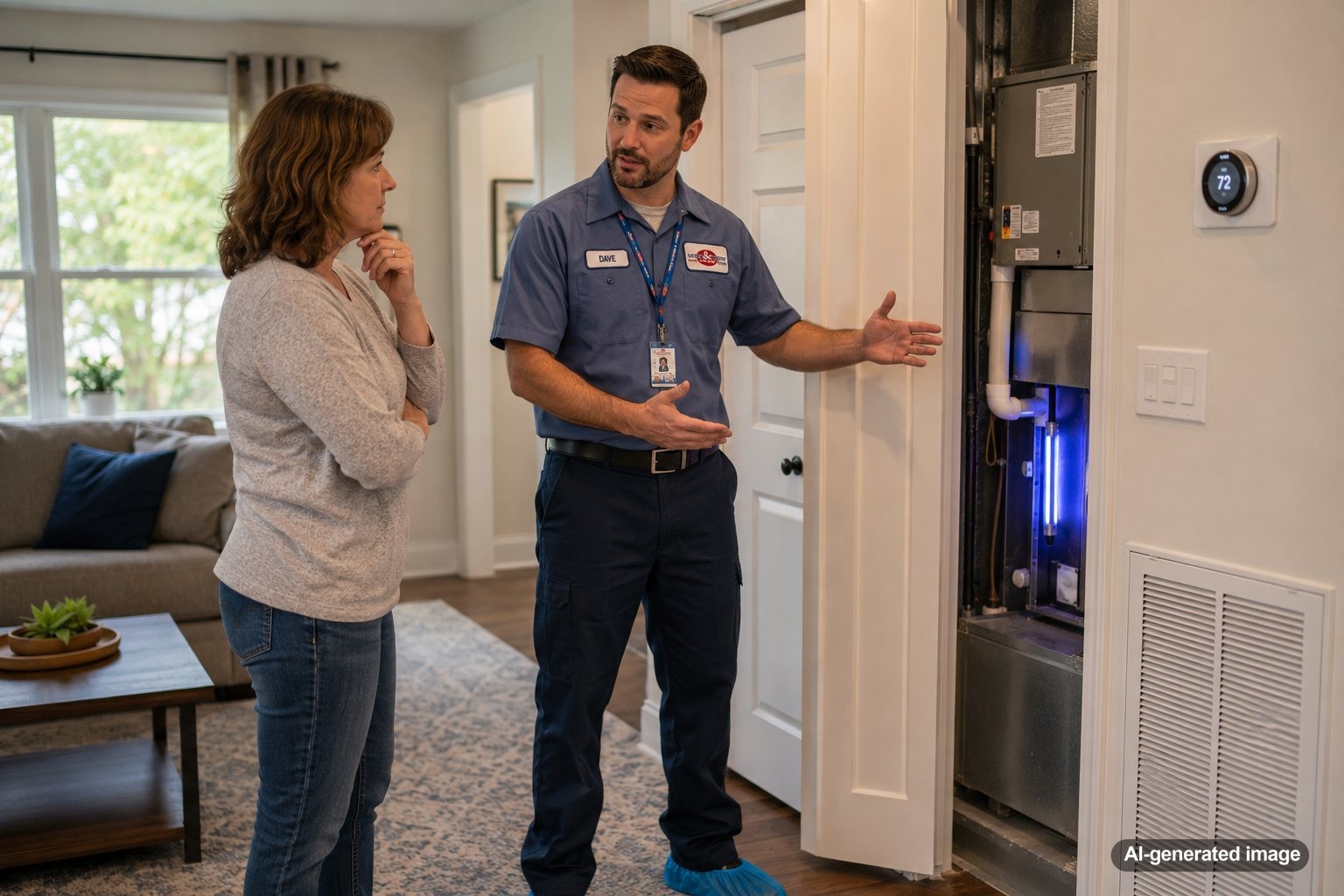
UV lights can be a useful addition to some HVAC systems, but they are not a universal solution for every indoor air quality concern. These systems typically use ultraviolet germicidal light, often called UV-C, inside or near HVAC equipment where it can expose certain microorganisms to ultraviolet energy. For homeowners in Central and Northern New Jersey, understanding what UV lights actually do, where they work best, and what they cannot replace is important before deciding whether to install one.
UV lights are usually considered as one part of a broader indoor air quality strategy. Depending on your home’s needs, that strategy might also include proper filtration, humidity control, ventilation, and professional HVAC maintenance. Meyer & Depew offers information and solutions through its air purification systems services.
HVAC UV lights use ultraviolet energy to help reduce the ability of certain microorganisms to grow or reproduce when those organisms receive sufficient exposure. They are commonly installed near the indoor coil or in ductwork, but their effectiveness depends on placement, exposure time, lamp output, system design, and maintenance.
How UV Lights in HVAC Systems Work
UV lights used in HVAC applications are designed to produce ultraviolet energy in a range that can affect microorganisms such as certain bacteria, mold, and other biological contaminants. The light does not physically trap particles the way an air filter does. Instead, adequate UV exposure can damage microorganisms so they are less able to reproduce.
This distinction matters because a UV light and an air filter perform different jobs. Filters are intended to capture airborne particles as air moves through the system. UV lights target susceptible biological material that is exposed to the light. In many homes, the two technologies may complement each other rather than serving as substitutes.
Where HVAC UV Lights Are Commonly Installed
One common location is near the indoor evaporator coil. During cooling season, that coil can remain damp because moisture condenses on its surface. A consistently illuminated UV light may help limit biological growth on illuminated surfaces around the coil and drain pan area, depending on the equipment configuration and installation.
Another approach places UV lamps in ductwork to expose moving air. This application can be more dependent on system design because air may pass the lamp quickly. Lamp intensity, airflow speed, distance from the light, and the amount of exposure all influence performance.
A qualified HVAC professional can evaluate the available installation space, equipment materials, airflow, electrical requirements, and access for future lamp service before recommending a location.
What UV Lights Can Help With
The strongest reason many homeowners consider an HVAC UV light is to address biological growth in areas where moisture is present and the light can continuously reach the surface. Indoor coils are a common example because they operate in a cool, damp environment during air conditioning season.
UV technology may also be considered as part of a larger air quality plan when a homeowner wants additional control measures beyond filtration alone. The appropriate approach depends on the actual issue in the home. A musty odor, high humidity, visible contamination, excessive dust, or stale air can have different causes and may require different solutions.
For broader indoor air quality concerns, homeowners can also review Meyer & Depew’s Air Quality & Comfort options.
What HVAC UV Lights Do Not Do
UV lights should not be treated as a replacement for normal HVAC maintenance or filtration. They do not remove ordinary household dust, pet hair, pollen, fibers, or other non-biological particles from the air. A properly selected and maintained air filter remains important.
UV lights also do not correct underlying moisture problems. If a home has excessive indoor humidity, water intrusion, a clogged drain, duct leakage, or another moisture source, the cause still needs to be addressed. Shining UV light on one part of the HVAC system does not solve moisture problems elsewhere in the building.
They also cannot sanitize every surface in a house. UV energy works only where sufficient light reaches the target. Areas hidden from the lamp or outside the HVAC system are not being treated by that lamp.
UV Lights and New Jersey Humidity
New Jersey summers can bring extended periods of heat and humidity. During humid weather, an air conditioning system removes moisture as it cools the home, leaving the evaporator coil regularly exposed to condensation. That is one reason coil-mounted UV lights may be discussed as an indoor air quality option.
However, homeowners should look at the whole comfort picture. If indoor humidity regularly feels excessive, windows show condensation, rooms smell musty, or the AC runs without maintaining comfortable conditions, a UV light may not address the underlying cause. Equipment sizing, airflow, runtime, ventilation, drainage, and humidity control can all affect indoor conditions.
Do UV Lights Replace Better Air Filters?
No. UV lights and filters address different types of contaminants. A filter captures particles that pass through it, while ultraviolet light acts on susceptible microorganisms receiving adequate exposure.
Installing the most restrictive filter available is not automatically better, either. An HVAC system needs proper airflow. A filter that creates too much resistance for the system can contribute to airflow and comfort problems. Homeowners should use a filter type appropriate for their equipment and replace or inspect it as recommended.
Maintenance Matters With UV Systems
UV lamps do not maintain their original output indefinitely. A lamp may continue to glow even after its useful germicidal output has declined, so visible light alone is not a reliable way to judge performance. Lamp replacement schedules vary by product and application, which makes following the equipment manufacturer’s instructions important.
Dust or residue on a lamp can also interfere with ultraviolet output. Access, cleaning requirements, lamp condition, and electrical components should be included in routine system evaluation when a UV system is installed.
Because UV equipment operates inside HVAC equipment or ductwork and requires electrical power, homeowners should avoid opening equipment cabinets or attempting electrical modifications themselves.
Factors to Consider Before Installing a UV Light
Before adding UV equipment, it helps to identify the problem you are actually trying to solve. A homeowner concerned about biological growth on an indoor coil may have different needs from someone primarily concerned about airborne dust or dry winter air.
- Installation location: The lamp needs to be positioned where ultraviolet energy can reach the intended area without interfering with equipment operation.
- System compatibility: Certain plastics, insulation, wiring, or other materials may need protection from prolonged UV exposure.
- Lamp access: The installation should allow for future inspection and replacement without unnecessary difficulty.
- Airflow and exposure: In-duct applications must account for the amount of time airborne material is exposed to the light.
- The actual indoor air quality concern: Filtration, ventilation, humidity control, or another solution may be more directly relevant to the problem.
What Homeowners Can Safely Check
- Inspect or replace your HVAC air filter if it is due for service.
- Make sure supply and return vents are open and not blocked by furniture or belongings.
- Pay attention to whether musty odors occur only when the HVAC system runs or are present throughout the home.
- Notice whether the home feels unusually humid even when the AC is operating.
- Check for obvious water around accessible HVAC areas without opening equipment panels.
If you already have a UV light installed, do not look directly at an operating UV-C lamp or bypass equipment safety features to inspect it. Professional service is the safer choice when the lamp or its electrical components need evaluation.
When to Call an HVAC Professional
Professional evaluation makes sense if you are considering a UV light, already have one that may need maintenance, or are trying to solve a recurring indoor air quality problem. A technician can determine whether the concern is related to filtration, moisture, airflow, biological growth, equipment cleanliness, ventilation, or another condition.
This is especially useful when a homeowner is considering several indoor air quality products at once. Adding equipment without identifying the underlying issue can result in unnecessary complexity while leaving the original problem unresolved.
Frequently Asked Questions About HVAC UV Lights
Are UV lights in HVAC systems worth considering?
They may be worth considering when the application matches the problem, particularly when biological growth on illuminated HVAC surfaces is a concern. Their value depends on installation quality, system design, maintenance, and the homeowner’s indoor air quality goals.
Can an HVAC UV light eliminate mold throughout a house?
No. An HVAC UV lamp only affects susceptible microorganisms that receive sufficient ultraviolet exposure. It does not treat hidden areas, building materials, or moisture problems throughout the home.
Does a UV light replace an HVAC filter?
No. Filters remove particles from moving air, while UV lights target certain microorganisms. Both can play different roles in an indoor air quality strategy.
Where is the best place to install a UV light?
The best location depends on the equipment and the intended purpose. Coil-mounted systems are often used to illuminate damp HVAC surfaces, while some systems are designed for duct installation. A qualified technician can determine an appropriate location.
Do HVAC UV lamps need to be replaced?
Yes. Ultraviolet output declines over time even if a lamp still appears illuminated. Replacement timing should follow the specific product manufacturer’s instructions.
UV lights can be a useful HVAC accessory when they are selected for the right reason and installed correctly. They work best as one component of a broader approach that can include filtration, moisture control, ventilation, equipment maintenance, and other air quality measures.
Need help with your heating, cooling, or HVAC system?
Meyer & Depew serves homeowners and businesses throughout Central and Northern New Jersey.
Get a quote or call 908.272.2100.