



What Is Residential Air Balancing?
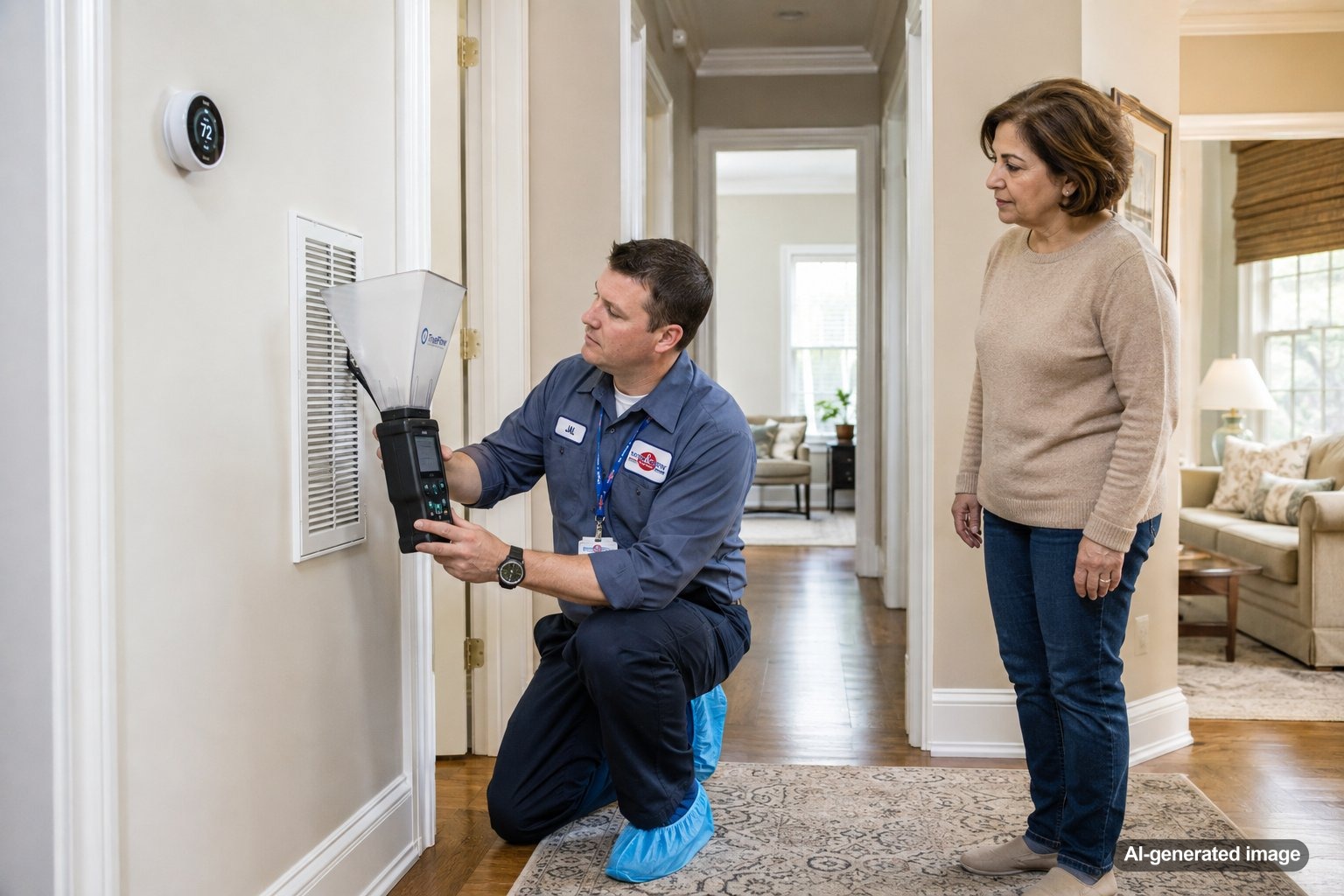
Residential air balancing is the process of adjusting and evaluating airflow throughout a home’s heating and cooling system so each room receives an appropriate amount of conditioned air. The goal is not simply to make every vent blow harder. It is to create more consistent comfort by matching airflow to the needs of different rooms and areas of the house.
If one bedroom is always warmer than the rest of the house, a downstairs room feels chilly in winter, or certain vents barely seem to move air, airflow distribution may be part of the problem. Professional air balancing can help identify whether those differences come from ductwork, vent settings, system design, pressure imbalances, or another HVAC issue. Homeowners dealing with persistent room-to-room comfort differences may also benefit from learning about zoning systems.
Residential air balancing is a systematic way of measuring and adjusting HVAC airflow so heated or cooled air is distributed more appropriately throughout the home.
- It can help reduce hot and cold rooms.
- It involves more than simply opening or closing supply vents.
- Professionals may measure airflow, static pressure, temperatures, and duct performance.
- Air balancing works best when the HVAC equipment and duct system are otherwise operating properly.
How Residential Air Balancing Works
A central HVAC system moves air through supply ducts into individual rooms and pulls air back through return ducts. Ideally, the system delivers enough conditioned air to each area to offset heat gain in summer and heat loss in winter.
In real homes, airflow is rarely identical from one room to another. Different rooms have different needs based on square footage, window exposure, insulation, ceiling height, duct length, exterior walls, and other factors. A room above a garage, for example, may behave very differently from an interior bedroom even if the rooms are similar in size.
During professional air balancing, a technician can evaluate how air is moving through the system and compare actual conditions with what the home requires. Depending on the system, adjustments may involve balancing dampers, registers, blower operation, duct restrictions, or other airflow-related components. The objective is controlled distribution, not maximum airflow everywhere.
What Problems Can Air Balancing Help Address?
Air balancing is often considered when homeowners notice recurring comfort differences that cannot be explained by a simple thermostat setting. Common examples include:
- One or more rooms that stay noticeably hotter or colder than the rest of the home.
- Weak airflow from certain supply registers.
- Strong airflow in some rooms and limited airflow in others.
- Upstairs and downstairs areas that feel significantly different.
- Rooms that take much longer to reach a comfortable temperature.
- Doors that move or pressure changes that suggest supply and return airflow may be out of balance.
Air balancing is not a cure for every comfort problem. Poor insulation, leaky windows, undersized or oversized equipment, duct leakage, blocked ducts, thermostat placement, excessive solar heat gain, and equipment problems can create similar symptoms. A good evaluation looks at the HVAC system as a whole instead of assuming every uneven room only needs a vent adjustment.
Why Closing Vents Is Not the Same as Air Balancing
Homeowners sometimes try to correct uneven temperatures by closing vents in comfortable rooms so more air will supposedly reach uncomfortable ones. Small register adjustments may change airflow somewhat, but closing multiple vents can alter pressure within the duct system and may not solve the underlying problem.
Proper balancing considers the entire air distribution system, including both supply and return airflow. Changing one part of the system can affect another. A professional can make adjustments based on measurements rather than trial and error.
What A Technician May Measure During Air Balancing
Professional air balancing can involve several measurements depending on the home and the type of HVAC system. These may include airflow at individual registers, temperature differences, static pressure in the duct system, blower performance, and the condition of supply and return pathways.
The technician may also inspect for obvious restrictions or duct problems that could be affecting individual rooms. Measurements help distinguish between a distribution issue and a broader HVAC performance problem.
Common Reasons A Home Becomes Unbalanced
Some homes have airflow problems from the beginning because of duct design or installation. In other cases, comfort changes develop over time. Several factors can contribute:
- Long or complicated duct runs: Rooms farther from the air handler may receive different airflow than nearby rooms.
- Duct restrictions: Damaged, crushed, obstructed, or poorly configured ductwork can reduce airflow.
- Dirty filters: A heavily restricted filter can reduce overall system airflow.
- Blocked supply or return vents: Furniture, rugs, curtains, or stored items can interfere with air movement.
- Home renovations: Finished basements, additions, remodeled rooms, and changed floor plans can alter heating and cooling needs.
- Building characteristics: Large windows, cathedral ceilings, sun exposure, insulation differences, and rooms over garages can create different comfort loads.
What Homeowners Can Safely Check First
- Make sure supply registers are open and not blocked by furniture, rugs, or curtains.
- Confirm that return grilles are clear and unobstructed.
- Inspect the HVAC filter and replace it if it is due for replacement.
- Check thermostat settings and make sure the system is operating in the intended heating or cooling mode.
- Notice whether the problem affects one room, one floor, or the entire house.
It can also help to note when the comfort difference is most noticeable. A west-facing bedroom that becomes uncomfortable only on sunny summer afternoons may have a different issue than a room that has weak airflow during every heating and cooling cycle.
Air Balancing Versus HVAC Zoning
Air balancing and zoning can both address uneven comfort, but they are not the same solution. Balancing adjusts airflow distribution within the existing system. Zoning typically uses controls and dampers to manage temperatures in separate areas independently.
Air balancing may be appropriate when the system simply needs better distribution. Zoning may make more sense when different areas have consistently different comfort needs, such as a multi-story home, finished basement, addition, or rooms with significantly different occupancy patterns. Meyer & Depew’s information on zoning systems can help homeowners understand that distinction.
Can Air Balancing Improve HVAC Efficiency?
Correct airflow distribution may help an HVAC system operate under more appropriate conditions, particularly when airflow restrictions or poor distribution are contributing to comfort problems. It can also reduce the temptation to make extreme thermostat changes just to compensate for one uncomfortable room.
However, air balancing should not be treated as a guaranteed energy-saving measure. Energy use depends on equipment condition, insulation, weather, thermostat settings, duct leakage, building characteristics, and many other factors. The main purpose of balancing is to improve airflow distribution and comfort.
When Should You Call An HVAC Professional?
Professional evaluation is worthwhile when significant room-to-room temperature differences persist after basic checks, airflow is unusually weak, or comfort problems have developed after renovations or HVAC changes. It is also appropriate when several vents seem affected or when airflow problems occur alongside unusual equipment behavior.
A qualified technician can determine whether air balancing is likely to help or whether the real issue involves ductwork, equipment performance, zoning, insulation, or another part of the home. If your system is due for professional attention, Meyer & Depew provides AC service and maintenance for homeowners throughout Central and Northern New Jersey.
Frequently Asked Questions About Residential Air Balancing
Does every home need professional air balancing?
No. Many homes maintain acceptable comfort without a dedicated balancing service. It becomes more relevant when there are persistent airflow or room-to-room temperature differences that basic homeowner checks do not resolve.
Can air balancing fix a room that is always hot?
It may help if inadequate airflow is contributing to the problem. A consistently hot room can also result from insulation, windows, sun exposure, duct leakage, equipment sizing, or other factors, so the cause should be evaluated rather than assumed.
Should every vent have the same airflow?
No. Different rooms may require different amounts of conditioned air. Proper balancing is about delivering suitable airflow to each area, not making every register produce an identical reading.
Can I balance my HVAC system by adjusting registers myself?
You can safely make sure registers are open and unobstructed, but comprehensive air balancing relies on system measurements and an understanding of how supply airflow, return airflow, duct pressure, and equipment operation interact.
Is air balancing useful in older New Jersey homes?
It can be. Older homes may have additions, remodeled spaces, long duct runs, multiple floors, or building characteristics that contribute to uneven comfort. An HVAC professional can determine whether balancing, duct improvements, zoning, or another solution is appropriate.
Residential air balancing is a measured approach to distributing heated and cooled air more appropriately throughout a home. When hot rooms, cold rooms, or inconsistent airflow persist, evaluating the entire HVAC air distribution system can reveal whether balancing is the right solution or whether another comfort issue needs attention.
Need help with your heating, cooling, or HVAC system?
Meyer & Depew serves homeowners and businesses throughout Central and Northern New Jersey.
Get a quote or call 908.272.2100.