


What Should You Do With Your Air Conditioner at the End of Cooling Season?
When the last stretch of hot weather fades in New Jersey, you do not need to shut down your air conditioner with a complicated winterization procedure. You should, however, give the system some attention before heating season takes over. A few simple end-of-season steps can help keep debris, airflow problems, and overlooked performance issues from following your AC into next summer.
The most useful approach is to inspect the parts homeowners can safely access, note anything unusual you noticed during the summer, and decide whether professional AC service and maintenance makes sense before the system sits mostly unused. In Central and Northern New Jersey, fall is also a practical transition point because your HVAC attention will soon shift from cooling performance to heating reliability.
At the end of cooling season, inspect or replace the air filter, clear leaves and debris from around the outdoor unit, keep supply and return vents unobstructed, review any cooling problems you noticed during summer, and schedule professional maintenance if the system is due or showed signs of trouble. Do not cover the outdoor unit with an airtight plastic cover or attempt to open, clean, or repair internal electrical or refrigerant components yourself.
Start With the Air Filter
The air filter is one of the simplest places to start. A filter that collected dust through a long cooling season may restrict airflow if it remains in place too long. Because the same duct system may also serve your furnace or other heating equipment, a dirty filter can become a heating-season problem as soon as temperatures fall.
Inspect the filter according to the type of system and filter you have. If it is visibly dirty or due for replacement under the manufacturer’s guidance, replace it with the appropriate size and type. Avoid assuming that a thicker or more restrictive filter is automatically better. HVAC systems are designed for particular airflow conditions, and an overly restrictive filter can sometimes create performance problems.
Clear Leaves and Debris Around the Outdoor Unit
Fall leaves, grass clippings, weeds, seed pods, and other yard debris can collect around an outdoor AC condenser. You can safely remove loose material from the surrounding area while leaving the cabinet and internal components intact.
Keep vegetation and stored items from crowding the unit. The goal is not to perform a deep cleaning yourself. It is simply to prevent obvious material from piling up against the cabinet or restricting the open space around it.
Avoid removing panels, reaching into the unit, spraying electrical components, or attempting to straighten, disassemble, or repair internal parts. Those tasks are better left to a qualified HVAC technician.
Do Not Seal the Outdoor AC in Plastic
Homeowners sometimes assume the condenser should be wrapped tightly for winter. In many cases, sealing an outdoor AC unit in an airtight plastic cover is unnecessary and can create its own problems. Moisture may become trapped, and a covered unit can provide a sheltered space for pests.
If your equipment manufacturer provides specific seasonal protection instructions, follow them. Otherwise, the outdoor equipment is generally built to remain outside through normal weather. If falling debris from trees is a concern, ask an HVAC professional whether a manufacturer-approved top cover or another limited form of protection is appropriate for your particular equipment.
Think Back to How the AC Performed This Summer
The end of cooling season is a good time to review anything that seemed different during the hottest weather. Small problems are easy to forget after temperatures become comfortable again, but they may return when the first hot spell arrives next year.
Consider whether you noticed any of the following:
- Rooms that became noticeably warmer than the rest of the home
- Longer cooling cycles than you remember from previous summers
- Frequent starting and stopping
- Unusual rattling, buzzing, grinding, or other new noises
- Weak airflow from certain supply vents
- Water where you would not normally expect it
- Difficulty maintaining the thermostat setting during hot weather
- Repeated breaker trips or electrical concerns
None of these symptoms identifies a specific failure by itself. Cooling performance can be affected by airflow restrictions, controls, duct conditions, electrical components, refrigerant-side issues, aging equipment, and other factors. A qualified technician can evaluate the system rather than guessing from a symptom alone.
Check Supply and Return Vents Before Heating Season
Seasonal transitions often come with furniture rearranging, fall decorating, or closing off rooms that were used differently during summer. Make sure supply registers and return grilles are not covered by furniture, rugs, boxes, curtains, or other objects.
Closing large numbers of vents is not a reliable way to save energy and can interfere with the airflow the HVAC system was designed to move. If certain rooms consistently receive too much or too little conditioned air, the underlying issue may deserve a closer look rather than simply closing registers.
Review Your Thermostat Schedule
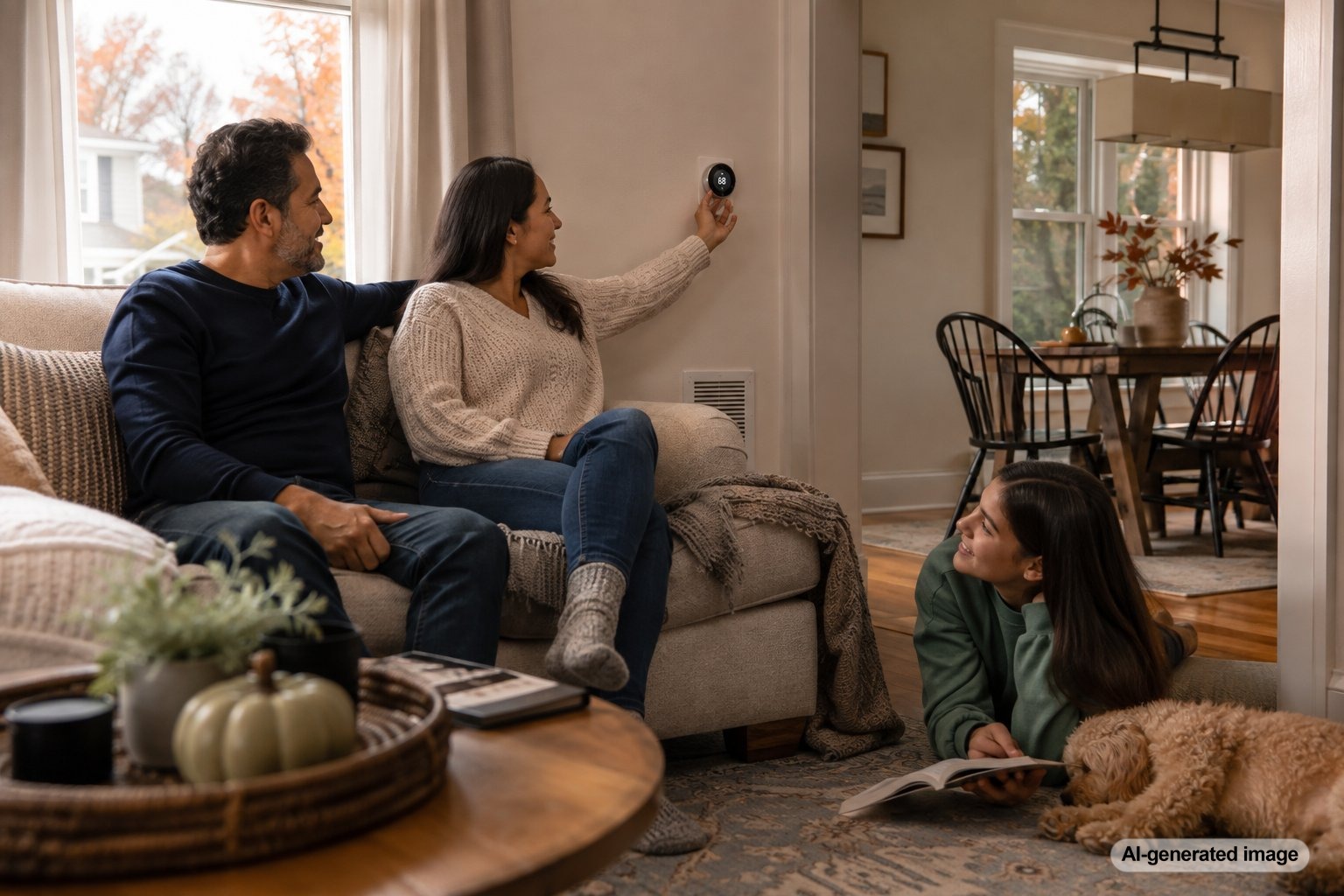
Cooling schedules that made sense in July may not make sense in September or October. As outdoor temperatures change, review programmed cooling setpoints and prepare your thermostat for heating season.
If you use a programmable or smart thermostat, this is also a convenient time to confirm that its time, schedule, and operating mode are correct. You do not need to disconnect or disable the AC equipment simply because the season is changing. Your thermostat will control whether cooling is requested based on its settings and indoor conditions.
Should You Turn Off Power to the Outdoor AC for Winter?
Homeowners should not automatically shut off breakers, disconnect switches, or other electrical supplies to HVAC equipment for the entire winter unless their equipment manufacturer or HVAC professional specifically recommends doing so.
Modern systems vary, and some equipment includes components or controls that depend on power. Heat pumps are especially important to distinguish from conventional cooling-only condensers because a heat pump may provide heating throughout the winter. Turning off power to the wrong equipment could disable your home’s heat.
If you are unsure whether the outdoor unit is an AC condenser or a heat pump, leave the electrical configuration alone and ask a qualified technician.
Consider End-of-Season Maintenance If the System Is Due
Professional AC maintenance does not have to occur on the final day you use the system. The more important issue is maintaining a consistent schedule and addressing known concerns before they become easy to forget.
An HVAC technician can inspect components that homeowners should not access, evaluate operating conditions, look for signs of wear, and identify maintenance concerns that may need attention before the next cooling season. Maintenance cannot prevent every future breakdown, but it may reduce the risk of problems going unnoticed.
If you prefer a more structured approach to recurring HVAC care, a service plan can help keep heating and cooling maintenance on the calendar as the seasons change.
Do Not Ignore a Problem Just Because Cool Weather Arrived
If your air conditioner was struggling near the end of summer, cooler outdoor temperatures can make the problem seem as though it disappeared. The system may run less often or stop running entirely for weeks, but the underlying issue may still be present.
For example, an intermittent electrical issue, unusual noise, airflow problem, or cooling complaint may still require evaluation. Waiting until the first very hot day of the following summer can turn an issue you already knew about into a more inconvenient service call.
If you noticed smoke, sparks, an electrical burning smell, repeated breaker trips, significant water around equipment, or another condition that appears unsafe, stop using the affected equipment when it is safe to do so and contact the appropriate utility, emergency service, or qualified HVAC professional as the situation requires.
A Simple End-of-Cooling-Season Checklist
- Inspect the HVAC air filter and replace it if needed.
- Make sure supply registers and return grilles are open and unobstructed.
- Remove obvious leaves, weeds, and loose debris from around the outdoor unit.
- Review your thermostat schedule for changing fall temperatures.
- Write down any unusual cooling behavior you noticed during summer.
- Leave electrical, refrigerant, and internal equipment repairs to a qualified professional.
Frequently Asked Questions
Should I cover my AC unit for winter?
A tightly sealed plastic cover is generally not something homeowners should add automatically. Outdoor condensers are designed to withstand weather, and an airtight cover may trap moisture or attract pests. Follow the equipment manufacturer’s instructions or ask your HVAC contractor whether limited protection is appropriate for your particular system.
Should I clean the outdoor AC unit before winter?
You can remove loose leaves, grass, weeds, and obvious debris from the area around the unit. Internal coil cleaning, electrical work, panel removal, and other equipment service should be handled by a qualified HVAC technician.
Is fall a good time for AC maintenance?
It can be. The best timing depends on your maintenance schedule and system needs. If the AC had problems during summer or is due for routine service, addressing those concerns before they are forgotten can be useful. Many homeowners also choose spring maintenance so the system can be evaluated closer to the start of cooling season.
Can I switch the thermostat from cooling to heating as soon as temperatures drop?
Yes, when heating is needed and your system is ready for the season. Make sure the thermostat mode and schedule are appropriate. If you have a heat pump, remember that the outdoor equipment may continue running during heating operation, so do not treat it like a cooling-only condenser.
What if my AC was not cooling well at the end of summer?
Make a note of the symptoms and consider scheduling professional service rather than assuming the problem will disappear by next year. Weak cooling can have several possible causes, and a technician can evaluate the system safely.
Ending cooling season does not require elaborate AC winterization. Focus on a clean filter, clear airflow, an unobstructed outdoor unit, sensible thermostat settings, and any unresolved symptoms from summer. Taking care of those basics now can make the transition into heating season more orderly and keep known AC concerns from being forgotten until the next hot spell.
Want to make HVAC maintenance easier to stay on top of?
A service plan can help keep routine heating and cooling maintenance on your calendar before small issues become bigger headaches.
You can also request a service appointment.