



How Can Homeowners Prepare HVAC Systems for Shoulder Season Weather?
Estimated reading time: 9 minutes
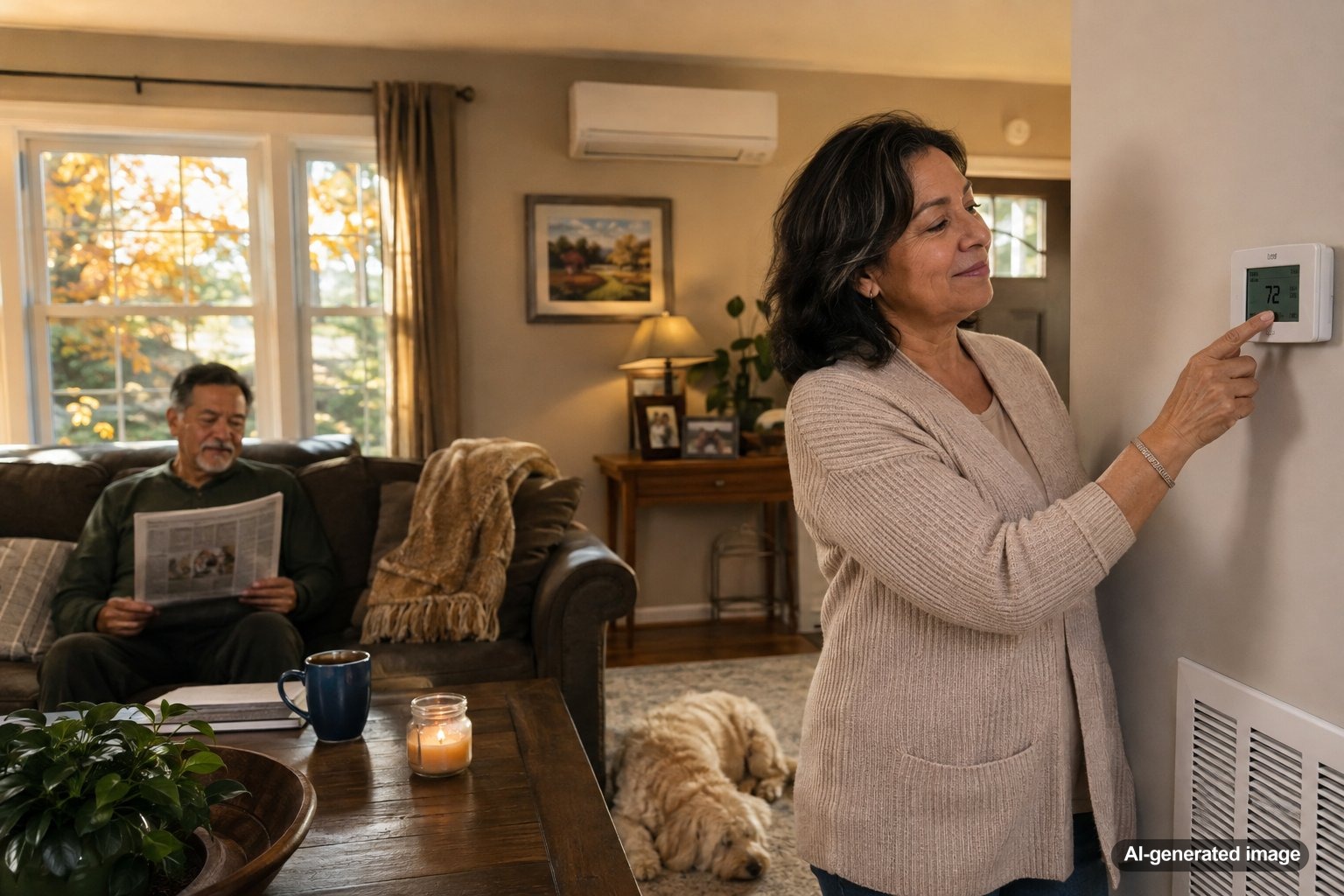
Shoulder season weather can be surprisingly demanding on a home’s HVAC system. In Central and Northern New Jersey, a mild afternoon can be followed by a chilly night, while another day may feel warm enough to bring the AC back into service. Homeowners can prepare by checking basic airflow, reviewing thermostat settings, keeping outdoor equipment clear, and making sure both heating and cooling systems are ready before temperatures become more extreme.
The goal is not to constantly switch equipment on and off or perform complicated maintenance yourself. It is to use the quieter weeks between peak cooling and heating seasons to notice small comfort problems, handle safe homeowner checks, and schedule professional HVAC maintenance when appropriate.
To prepare an HVAC system for shoulder season weather, homeowners should inspect the air filter, make sure supply and return vents are unobstructed, review thermostat schedules, clear leaves and debris from outdoor equipment, test heating and cooling before they are urgently needed, and arrange professional maintenance if the system has not been serviced recently or shows signs of trouble.
Why shoulder season can be tricky for HVAC systems
Shoulder season usually refers to the transitional periods between the main heating and cooling seasons. In New Jersey, these weeks can bring large temperature swings from morning to afternoon and from one day to the next.
That creates a different challenge from a steady summer heat wave or a prolonged winter cold spell. Your system may cool the house one afternoon, remain off overnight, and provide heat the following morning. A heat pump may alternate between heating and cooling modes depending on conditions. Even when equipment runs less overall, changing demands can expose thermostat issues, airflow restrictions, unusual noises, or rooms that respond differently from the rest of the house.
Shoulder season is also a useful time to pay attention to comfort without the pressure of an immediate no-heat or no-cooling emergency. If a bedroom consistently becomes colder than the rest of the house, a system takes unusually long to respond, or airflow seems weaker than expected, those clues are easier to investigate before severe weather arrives.
Start with the air filter and airflow
An air filter is one of the simplest HVAC components a homeowner can safely inspect. If the filter is visibly dirty or due for replacement according to the system and filter manufacturer’s guidance, replacing it can help maintain normal airflow.
Do not stop at the filter. Walk through the home and look at supply registers and return grilles. Furniture, rugs, storage boxes, curtains, or other household items can accidentally obstruct airflow. Make sure the vents intended to be open are open and that return grilles have room to draw air freely.
Avoid assuming that closing several supply registers is an effective way to save energy or redirect air. Forced-air systems are designed around particular airflow requirements, and widespread vent closure can affect system performance. If certain rooms are consistently uncomfortable, the underlying issue may involve ductwork, insulation, system balancing, equipment operation, or the home’s layout rather than a simple vent adjustment.
- Inspect the HVAC air filter and replace it if needed.
- Make sure supply vents and return grilles are open and unobstructed.
- Review thermostat mode, temperature settings, schedules, and batteries if applicable.
- Look for leaves, weeds, or other obvious debris around outdoor HVAC equipment.
- Listen for new rattling, grinding, buzzing, or other unusual operating sounds.
- Pay attention to rooms that heat or cool much differently than the rest of the home.
Review thermostat settings before temperatures start swinging
Thermostat settings that worked during peak summer may not make sense during a mild fall week. Likewise, winter schedules may need adjustment as spring temperatures begin fluctuating.
Check whether the thermostat is in heating, cooling, or automatic changeover mode and make sure the selected mode matches how you want the system to operate. If you use automatic changeover, avoid setting heating and cooling targets so close together that the system frequently switches between modes. The exact settings that make sense depend on the thermostat, equipment, household schedule, and comfort preferences.
If you have a programmable or smart thermostat, shoulder season is also a good time to review schedules created months earlier. Changes in school, work, travel, or occupancy can make an old schedule less useful. Homeowners interested in more control can learn about Meyer & Depew’s thermostat options.
Test both heating and cooling before you truly need them
One of the most useful shoulder season checks is simply confirming that the next season’s equipment operates normally before the first extreme weather day.
Before colder weather settles in, homeowners can briefly operate the heating system and confirm that it starts, produces the expected comfort response, and shuts down normally. Before warmer weather, the same general idea applies to cooling. This is not a substitute for professional inspection, but it can reveal an obvious problem while outdoor conditions are still moderate.
Do not open equipment panels, adjust gas components, handle refrigerant, bypass safety controls, or work on high-voltage electrical components. If the system fails to start, repeatedly trips a breaker, produces a burning odor, makes alarming sounds, or behaves unpredictably, professional evaluation is the safer next step.
Clear seasonal debris around outdoor equipment
Fall leaves, weeds, grass clippings, twigs, and other debris can collect around an outdoor AC condenser or heat pump. Homeowners can visually inspect the area and remove loose debris from around the equipment without opening the cabinet or attempting internal cleaning.
Heat pumps deserve particular attention because they may continue operating throughout the colder months rather than sitting idle after summer. Keep the surrounding area reasonably clear and continue checking it as leaves fall or winter weather arrives.
If the outdoor unit appears damaged, has significant buildup inside the cabinet, or requires disassembly to clean properly, leave that work to a qualified HVAC technician.
Pay attention to humidity as temperatures change
Temperature is only one part of home comfort. Transitional weather can also produce noticeable changes in indoor humidity. Some homes may feel clammy on mild, humid days when the AC does not run long enough to remove much moisture. Later in the season, heating operation can make indoor air feel considerably drier.
If humidity problems are persistent rather than occasional, the cause can involve several factors, including HVAC operation, ventilation, air leakage, household moisture sources, and the characteristics of the home itself. Meyer & Depew offers air quality and comfort solutions for homeowners who want a broader evaluation of indoor comfort.
Use shoulder season to identify uneven comfort problems
Changing weather can make room-to-room comfort differences easier to notice. A sunny upstairs bedroom might become too warm in the afternoon while a shaded first-floor room remains comfortable. Once nighttime temperatures fall, the pattern may reverse.
Some temperature variation is normal, especially in multi-story or older homes. Persistent differences, however, can be related to restricted airflow, duct issues, insulation, air leakage, thermostat location, zoning, equipment sizing, or other factors.
Write down when the problem happens instead of judging it from a single moment. Useful observations include the outdoor conditions, time of day, HVAC mode, thermostat setting, and which rooms feel noticeably different. That information can make a professional comfort evaluation more productive.
Do not ignore unusual system behavior just because the weather is mild
A system that seems acceptable during a 65-degree day may struggle when the first cold snap or hot spell arrives. Shoulder season warning signs are worth addressing before demand increases.
Examples include unusually weak airflow, frequent starting and stopping, unexpected thermostat readings, persistent hot or cold rooms, new noises, strange odors, water where it should not be, or a system that takes much longer than usual to affect indoor temperature.
These symptoms do not point to one guaranteed diagnosis. HVAC systems contain many interacting components, and similar symptoms can have different causes. A qualified technician can evaluate the equipment instead of relying on guesswork.
Schedule maintenance before the next peak season
Shoulder season is a natural time for preventive HVAC service because homeowners can prepare the equipment before it faces sustained heating or cooling demand. Professional maintenance can include checks that are not appropriate DIY tasks, such as evaluating electrical components, system controls, combustion-related components where applicable, condensate management, blower operation, and overall equipment performance.
Maintenance cannot guarantee that an HVAC system will never break down, but regular inspection can help identify developing concerns and gives homeowners an opportunity to address maintenance needs before the system is heavily relied upon.
If your heating or cooling equipment has not been serviced recently, or you have already noticed changes in comfort or operation, the transitional season is a practical time to arrange an appointment.
What should homeowners avoid doing during shoulder season?
Preparation should stay within safe homeowner tasks. Do not use the mild weather as an opportunity to experiment with equipment adjustments that normally require professional training.
- Do not bypass safety switches or controls.
- Do not open sealed HVAC components.
- Do not add or remove refrigerant.
- Do not adjust gas pressure or combustion components.
- Do not modify electrical wiring or high-voltage equipment.
- Do not repeatedly reset a breaker that continues to trip.
If you smell gas, suspect carbon monoxide, see smoke or sparks, notice an electrical burning smell, or encounter another potentially unsafe condition, prioritize safety and contact the appropriate utility, emergency service, or qualified professional as the situation requires.
Frequently asked questions about shoulder season HVAC preparation
Should I turn my HVAC system off completely during mild weather?
Not necessarily. Some homeowners can comfortably leave heating or cooling off for portions of mild weather, while others need HVAC operation because of temperature swings, humidity, household needs, or building characteristics. Use thermostat settings that fit your home and equipment rather than assuming complete shutdown is always best.
Is it bad to switch between heat and AC during shoulder season?
Modern systems may be designed to provide heating and cooling as conditions require, but operation depends on the equipment and controls. Avoid rapid manual switching or unusually narrow thermostat settings that cause unnecessary back-and-forth operation. If you are unsure how your particular thermostat or system should be configured, consult its documentation or an HVAC professional.
When should I change my HVAC filter?
There is no single replacement interval that fits every filter and household. Check the filter regularly and follow the equipment and filter manufacturer’s guidance. Homes with pets, renovation dust, higher system use, or other indoor air conditions may need more frequent attention.
Should heating maintenance be completed before the first cold day?
Scheduling heating maintenance before sustained cold weather is a practical approach because it allows the equipment to be evaluated before it is needed continuously. The same principle applies to cooling maintenance before consistently hot weather.
What if one room becomes uncomfortable every spring or fall?
Recurring seasonal comfort differences can justify a closer look at airflow, ductwork, insulation, air leakage, thermostat placement, zoning, or other home-specific factors. Keeping notes about when and where the problem occurs can help a technician investigate it more effectively.
Shoulder season is an ideal time to give your HVAC system some attention without attempting complicated repairs. Check the filter, vents, thermostat, outdoor equipment, and overall comfort of the home. Test the system before severe weather arrives, take unusual behavior seriously, and use professional maintenance to address equipment checks that go beyond safe homeowner tasks.
Want to make HVAC maintenance easier to stay on top of?
A service plan can help keep routine heating and cooling maintenance on your calendar before small issues become bigger headaches.
You can also request a service appointment.