



Why Does Indoor Air Feel Drier Once Heating Season Begins?
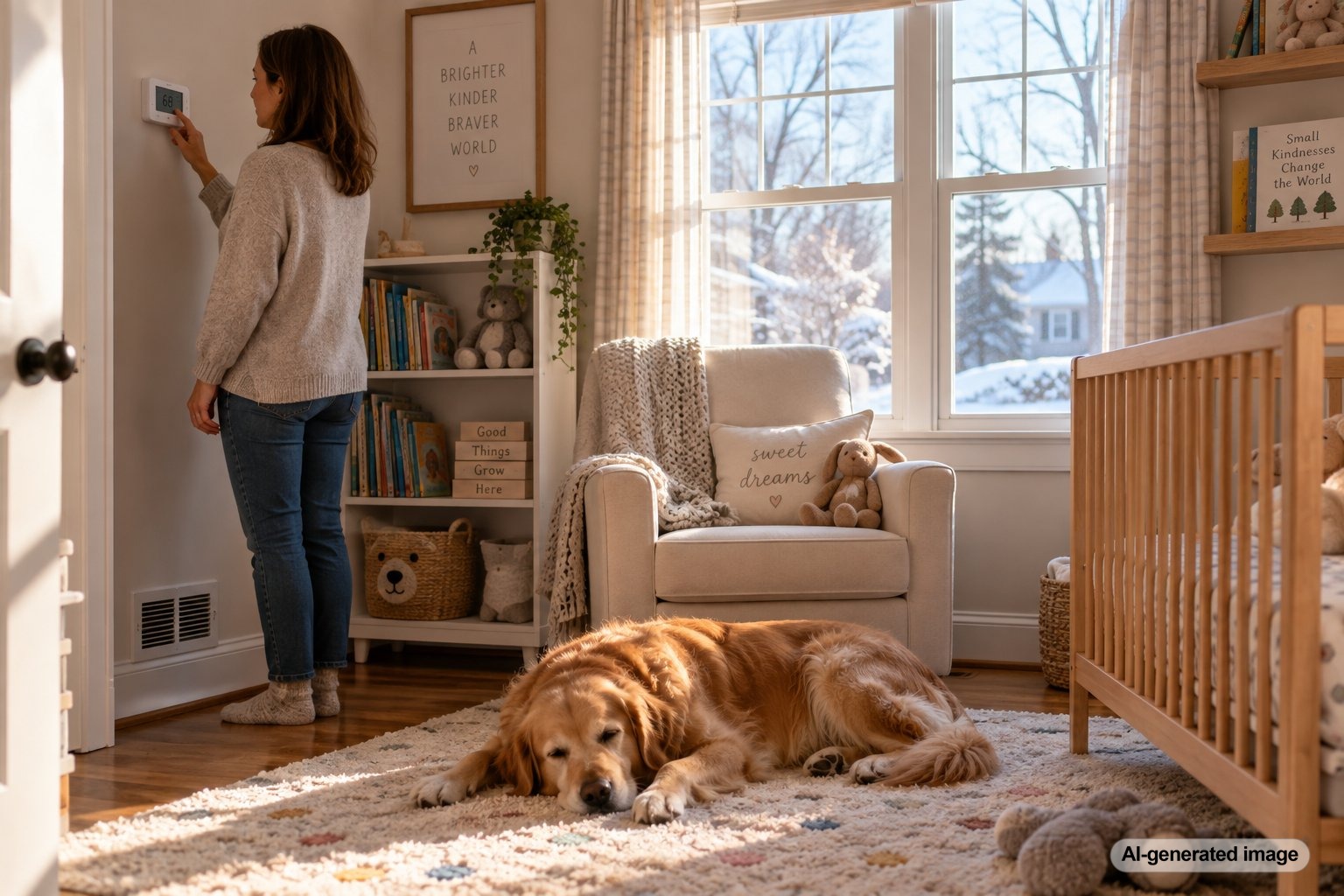
Indoor air often feels noticeably drier once heating season begins because cold outdoor air contains less moisture than warm summer air, and that low-moisture air is continually brought into the home through normal air leakage and ventilation. Once your heating system warms that air, its relative humidity drops even further. The furnace or heating system is not necessarily “removing” large amounts of water from the air. Instead, warming already-dry winter air makes the indoor environment feel much less humid.
For homeowners across Central and Northern New Jersey, the change can become obvious when overnight temperatures begin falling and the heating system starts running regularly. Dry skin, static electricity, irritated nasal passages, shrinking woodwork, and a generally “parched” feeling indoors can all become more noticeable. Understanding why this happens can help you decide whether simple adjustments are enough or whether a humidity-control solution may be worth considering.
Indoor air feels drier during heating season mainly because cold outdoor air starts with relatively little moisture. When that air enters the house and is heated, its relative humidity falls. Longer heating cycles, air leakage, ventilation, and very cold weather can make the effect stronger. A properly selected and maintained whole-home humidifier may help homeowners who consistently struggle with low indoor humidity.
Why warming cold air lowers relative humidity
Relative humidity describes how much moisture the air contains compared with the maximum amount it could hold at its current temperature. Warmer air can hold more water vapor than colder air. That means the same amount of moisture represents a lower percentage of the air’s capacity after the air has been heated.
Imagine a cold winter day when outside air enters your home through doors, windows, exhaust systems, and small gaps in the building envelope. That air may already contain relatively little water vapor. Your heating system raises its temperature to a comfortable indoor level, but heating it does not automatically add moisture. As the temperature rises, the relative humidity falls.
This is one reason dryness often becomes more noticeable during a New Jersey cold snap. The colder and drier the outdoor air becomes, the more challenging it can be to maintain comfortable indoor humidity.
Does your furnace actually dry out the air?
People often say a furnace “dries out” a house. The practical experience is real, but the explanation is slightly more complicated. A typical heating system primarily raises air temperature. It does not necessarily function as a dehumidifier.
The bigger issue is the combination of cold outdoor air, air leakage, ventilation, and heating. Outdoor air enters the home, replaces some of the indoor air, and then gets warmed. Because the incoming air starts with limited moisture, indoor relative humidity can steadily decline while the heating system operates throughout the season.
Homes with more air leakage may experience this effect more strongly because dry outdoor air can replace indoor air faster. Exhaust fans, fireplaces, range hoods, and other equipment that moves air out of the building can also contribute by causing more outdoor air to enter.
Why the problem gets worse when temperatures fall
Mild fall weather may not create much noticeable dryness because outdoor temperatures are still moderate and the heating system runs only occasionally. As winter arrives, several conditions can occur at the same time:
- Outdoor air becomes colder and contains less moisture.
- The heating system runs for longer periods.
- More dry outdoor air can enter through normal building leakage.
- Indoor temperatures remain much warmer than outdoor temperatures, further lowering relative humidity after incoming air is heated.
- Fireplaces and exhaust equipment may increase the amount of replacement air entering the home.
As a result, a house that felt comfortable in October may feel significantly drier during January even if the thermostat setting has not changed.
Signs that your home’s humidity may be too low
Low indoor humidity can affect both comfort and household materials. Common clues can include increased static electricity, dry skin, irritated eyes or nasal passages, and a dry sensation in the throat. Some homeowners also notice gaps developing around certain wood floors, trim, doors, cabinets, or furniture as wood loses moisture during the heating season.
These signs do not prove that humidity is the only issue. Temperature, ventilation, allergies, building materials, and other indoor air quality factors can produce similar complaints. An inexpensive indoor humidity monitor can provide useful context before you make changes.
What indoor humidity level should you aim for in winter?
There is no single humidity setting that is ideal for every house throughout the winter. The appropriate level depends partly on outdoor temperature, insulation, windows, air sealing, and whether condensation develops on cold surfaces.
Trying to maintain very high indoor humidity during extremely cold weather can create condensation on windows or other cold building surfaces. Persistent condensation may indicate that the indoor humidity is too high for current outdoor conditions or that cold surfaces and air leakage need attention.
The goal is balanced humidity: enough moisture to support comfort without creating excessive condensation or moisture accumulation. Homeowners using humidification equipment should follow the equipment manufacturer’s operating guidance and adjust settings as seasonal conditions change.
Simple things homeowners can check
- Use a basic indoor humidity monitor to see whether the problem is actually related to low relative humidity.
- Check whether your HVAC air filter is clean and correctly installed.
- Make sure supply and return vents are open and not blocked by furniture, rugs, or curtains.
- Pay attention to window condensation after changing any humidifier setting.
- If you already have a whole-home humidifier, check its normal homeowner maintenance requirements and make sure it has not simply been left off after the previous heating season.
These checks can help you understand the pattern without opening HVAC equipment or attempting repairs. If a humidifier is leaking, not operating correctly, or appears to have an electrical, plumbing, or control problem, professional service is the safer approach.
Portable humidifiers versus whole-home humidifiers
A portable humidifier can add moisture to a bedroom, office, or other limited area. It may be useful when dryness is concentrated in one room, but it requires regular filling and cleaning. Improper cleaning can allow mineral residue or biological buildup to accumulate, so maintenance is important.
A whole-home humidifier is designed to work with the home’s HVAC system and can provide more consistent humidity control across larger areas when properly selected, installed, and maintained. It can also reduce the need to refill multiple portable units.
Whole-home humidification is part of a broader indoor air quality and comfort strategy. Whether it makes sense for a particular home depends on the HVAC system, building construction, existing humidity levels, and the homeowner’s comfort concerns.
Air leaks can make winter dryness harder to control
Adding moisture may address the symptom, but excessive outdoor air infiltration can make maintaining humidity more difficult. Older New Jersey homes may have gaps around windows, doors, attic penetrations, recessed fixtures, or other areas where outdoor air can enter.
Every time dry outdoor air replaces indoor air, the home’s heating system warms another batch of low-moisture air. If infiltration is significant, a humidifier may need to work harder to maintain the desired level.
Air sealing and insulation improvements can sometimes make humidity easier to manage while also improving comfort. However, tighter homes also need appropriate ventilation. Indoor air quality depends on balancing heating, humidity, ventilation, filtration, and the building envelope rather than treating any one factor in isolation.
Why some rooms may feel drier than others
Humidity generally moves throughout a house, but individual rooms can still feel different. Bedrooms with closed doors, rooms near exterior walls, spaces with greater air leakage, and areas receiving different airflow may not feel the same even when a central humidity monitor shows an acceptable reading elsewhere.
Temperature differences matter as well. A warmer room can show a lower relative humidity reading than a cooler room containing a similar amount of moisture. Before assuming the entire house needs more humidification, compare humidity and temperature readings in several commonly used areas.
When to call an HVAC professional
Consider professional evaluation when indoor humidity remains persistently low despite reasonable adjustments, when an existing humidifier does not appear to work, when comfort varies significantly from room to room, or when you are considering installing a whole-home humidity-control system.
An HVAC professional can evaluate how the heating system, airflow, humidification equipment, controls, and other indoor air quality components work together. The goal is not simply to add as much moisture as possible. It is to help establish appropriate humidity control for the home while reducing the risk of excess condensation.
Frequently asked questions
Why does my house suddenly feel dry when I turn the heat on?
The timing usually reflects a seasonal change rather than the heating system suddenly stripping moisture from the air. Colder outdoor air contains less moisture, and once that air enters the house and is heated, its relative humidity drops.
Can a furnace make dry skin worse?
Low indoor humidity during heating season may contribute to dry-feeling skin for some people. The heating system itself is only part of the picture because outdoor conditions, air leakage, indoor temperature, and personal factors also influence comfort.
Will turning the thermostat down increase humidity?
Lowering indoor temperature slightly can raise relative humidity if the amount of moisture in the air remains unchanged. However, thermostat changes should primarily reflect your comfort and heating needs rather than being used as the sole method of humidity control.
Should I see condensation on my windows after installing a humidifier?
Persistent condensation is not a goal. It can indicate that humidity is too high for the outdoor temperature or that certain surfaces are unusually cold. Humidifier settings may need adjustment, and persistent moisture around windows or other surfaces should not be ignored.
Can a whole-home humidifier help throughout the house?
When properly selected and integrated with a compatible HVAC system, a whole-home humidifier can provide more centralized humidity control than individual portable units. Performance depends on the home, equipment, controls, maintenance, and outdoor conditions.
Indoor air usually feels drier after heating season begins because cold outdoor air starts with less moisture and its relative humidity drops further when it is warmed indoors. Monitoring humidity, limiting unnecessary air leakage, maintaining HVAC equipment, and using properly controlled humidification when appropriate can help create more comfortable winter conditions.
Need help with your heating, cooling, or HVAC system?
Meyer & Depew serves homeowners and businesses throughout Central and Northern New Jersey.
Get a quote or call 908.272.2100.