



Can Falling Leaves Damage or Block an Outdoor AC Condenser?
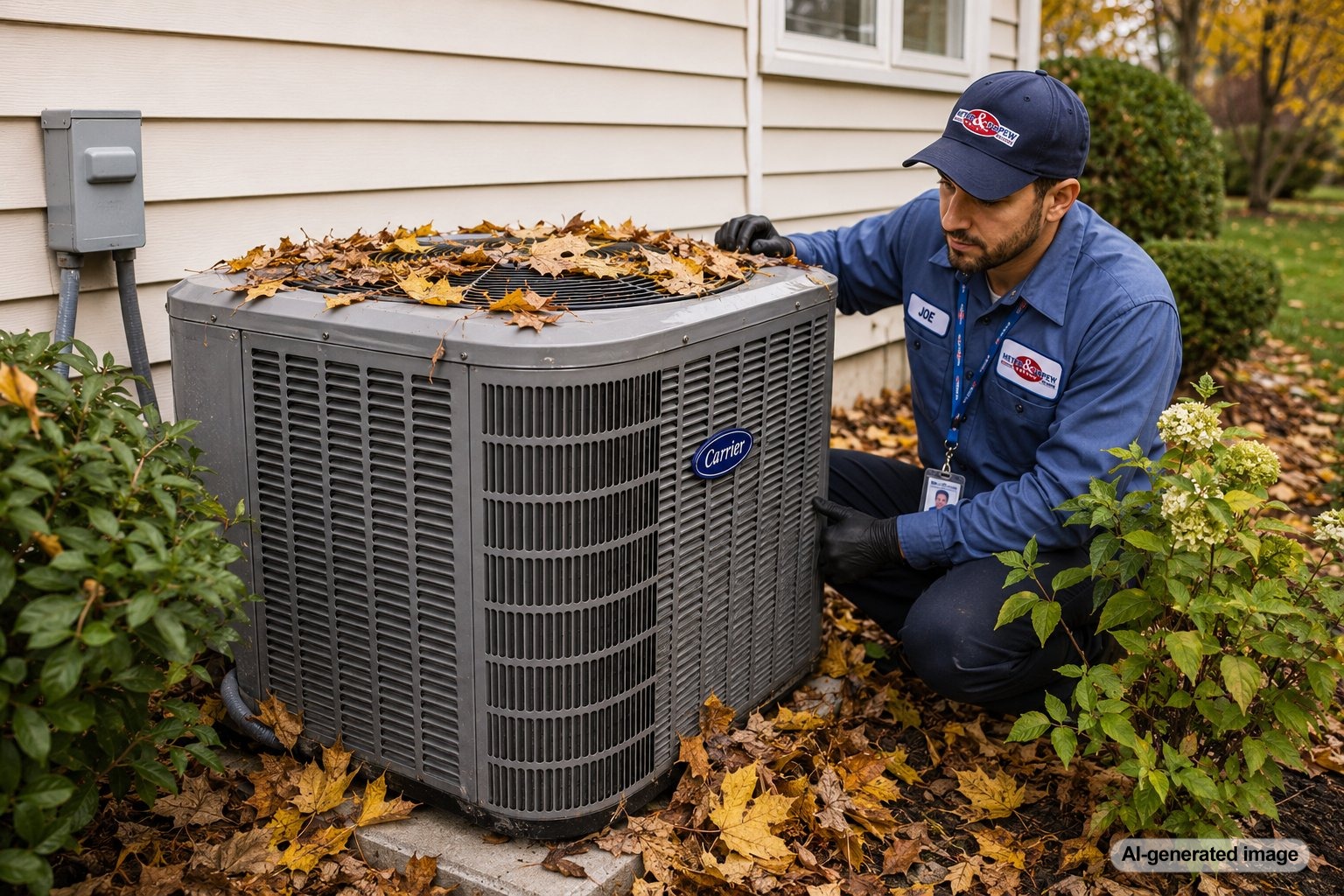
Yes. Falling leaves can block airflow around an outdoor AC condenser, and heavy accumulations may contribute to performance problems if they are allowed to collect against the cabinet or inside accessible exterior openings. A few scattered leaves are usually not an emergency, but a dense layer of leaves, seed pods, grass, or other yard debris can make it harder for the condenser to release heat efficiently.
This is especially worth watching during fall in Central and Northern New Jersey, where leaves can collect quickly around outdoor equipment. Homeowners can safely handle basic cleanup around the unit, while persistent cooling problems or debris that has worked deep into the equipment should be evaluated by a qualified HVAC professional. Meyer & Depew’s AC service and maintenance information can help if your system needs more than routine yard cleanup.
Leaves can become a problem when they pile up against the outdoor condenser, restrict airflow through the coil area, trap moisture, or collect inside the cabinet. Keep the area around the unit reasonably clear, remove loose exterior debris safely, and schedule professional service if airflow or cooling problems continue.
How falling leaves can affect an outdoor AC condenser
An outdoor condenser needs open airflow around its coil surfaces. During cooling operation, the system moves heat from inside the building to the outdoor unit, where that heat is released into the surrounding air. Anything that substantially restricts airflow can make that heat-transfer process more difficult.
Leaves tend to cause trouble in several different ways. They can form a mat against the sides of the condenser, collect between nearby shrubs and the equipment, blow underneath the unit, or settle through openings at the top. Wind-driven debris may also include small twigs, seed pods, mulch, grass clippings, and other material that compounds the restriction.
A small amount of loose debris around the base is different from a condenser surrounded by a thick layer of wet leaves. The amount, location, and density of the material all matter.
Can leaves actually damage the condenser?
Leaves do not automatically damage an AC condenser simply by touching it. The greater concern is what can happen when debris accumulates and remains there for an extended period.
Restricted airflow
A thick layer of leaves against the condenser can reduce the amount of air moving through the outdoor coil. Restricted airflow may force the cooling system to operate under less favorable conditions and can contribute to poor performance.
Moisture held against the cabinet
Wet leaves can stay damp after rain and may hold moisture against exterior surfaces. Keeping organic debris away from the cabinet is a sensible maintenance practice, especially when leaves remain wet for long periods.
Debris inside the unit
Leaves and small pieces of yard debris can sometimes enter through openings in the condenser cabinet. Material inside the unit may interfere with normal airflow or come into contact with the fan area. Homeowners should not reach into the cabinet or remove protective panels to retrieve debris.
Blocked space around the condenser
Sometimes the problem is not the condenser itself but the surrounding landscaping. Leaves can accumulate beneath shrubs, between the house and the unit, or behind decorative screening. Even if the coil surface looks relatively clear, the equipment still needs adequate open space for airflow.
Signs leaf buildup may be affecting your AC
Leaf buildup alone cannot confirm the cause of an AC problem, but certain conditions make an inspection worthwhile. You may notice that the outdoor unit is surrounded by debris, the condenser coil is visibly covered, or airflow around the cabinet appears obstructed.
If the AC is also struggling to cool the home, running for unusually long periods, cycling in a way that seems abnormal, or shutting down unexpectedly, a qualified technician can determine whether debris is contributing to the problem or whether another issue is involved.
Many AC symptoms can have multiple causes, so it is better to avoid assuming that leaves are the only problem based on appearance alone.
How to clear leaves around an outdoor AC unit safely
- Remove loose leaves and yard debris from the ground around the condenser.
- Keep nearby landscaping from pressing directly against the cabinet.
- Look for obvious debris covering the exterior coil area without reaching inside the equipment.
- After mowing or fall cleanup, check that grass clippings and leaf piles have not been blown against the unit.
- If debris is lodged inside the cabinet or the system is not operating normally, schedule professional service.
A broom, rake, or leaf pickup can be used around the surrounding ground with care, but avoid striking the condenser cabinet or delicate coil surfaces. Do not use tools to dig material out from inside the unit, remove panels, or place your hands near the fan or electrical components.
It is also wise to be cautious with powerful leaf blowers. Blasting debris directly toward the condenser can push leaves, dirt, and small objects farther into the cabinet rather than clearing them away.
Should you cover the outdoor AC unit in fall?
Completely wrapping an outdoor condenser is generally not the same thing as simply keeping leaves out. A full cover can trap moisture and may create a sheltered space for pests. Equipment configurations and manufacturer recommendations vary, so homeowners should follow the guidance provided for their specific system.
If leaf accumulation is severe every year, ask an HVAC professional whether a purpose-designed seasonal solution is appropriate for your equipment. Avoid improvised coverings that block ventilation or remain in place when the system could still operate.
Why fall cleanup matters even after cooling season
Once cooler weather arrives, it is easy to stop thinking about the AC condenser. However, debris that sits around the unit all fall and winter may still be there when cooling season returns.
Periodic yard cleanup helps keep organic material from building up around the cabinet. It also gives homeowners an opportunity to notice bent landscaping, drainage issues, storm debris, or other changes around the equipment before the next cooling season.
In New Jersey, where leaves can fall heavily over a relatively short period, checking the condenser more than once during autumn can be more useful than doing a single cleanup early in the season.
When should you call an HVAC professional?
Professional service makes sense when leaves or debris are lodged inside the condenser, the outdoor coil appears heavily clogged, or the AC is showing performance problems that continue after the surrounding area has been cleared.
A technician can inspect the equipment safely, evaluate airflow, clean components when appropriate, and determine whether an unrelated mechanical or electrical issue is contributing to the symptoms. Do not open electrical compartments, remove condenser panels, or attempt to repair wiring, refrigerant components, or the fan assembly yourself.
Frequently asked questions
How much space should I keep clear around my outdoor AC condenser?
The exact clearance depends on the equipment and installation requirements. As a practical rule, avoid allowing leaves, shrubs, stored items, or decorative barriers to crowd the condenser. Follow the manufacturer’s installation guidance for your specific unit.
Can one layer of leaves stop an AC from working?
A few loose leaves generally do not cause the same restriction as a dense accumulation. The concern increases when leaves become packed against the coil area, collect inside the cabinet, or combine with other debris that substantially limits airflow.
Can I hose leaves out of the condenser?
Do not spray water into electrical compartments or use high-pressure water on delicate condenser fins. If the unit needs internal cleaning or significant coil cleaning, professional service is the safer option.
Should I clean around the condenser after every storm?
You do not necessarily need a major cleanup after every storm, but checking for obvious branches, leaves, mulch, or other debris is sensible after high winds or severe weather.
Can leaves cause an AC to overheat?
Severely restricted airflow can make it harder for the outdoor unit to reject heat, but an overheating or shutdown problem can have several possible causes. If the system is operating abnormally, have a qualified HVAC technician evaluate it rather than assuming leaves are solely responsible.
Falling leaves are usually manageable when they are removed before they build up. Keep the area around your outdoor condenser clear, avoid pushing debris into the cabinet, and get professional help when material is lodged inside the equipment or cooling problems persist.
Want to make HVAC maintenance easier to stay on top of?
A service plan can help keep routine heating and cooling maintenance on your calendar before small issues become bigger headaches.
You can also request a service appointment.