



Can Remote Thermostat Sensors Help Fix Cold Bedrooms in Winter?
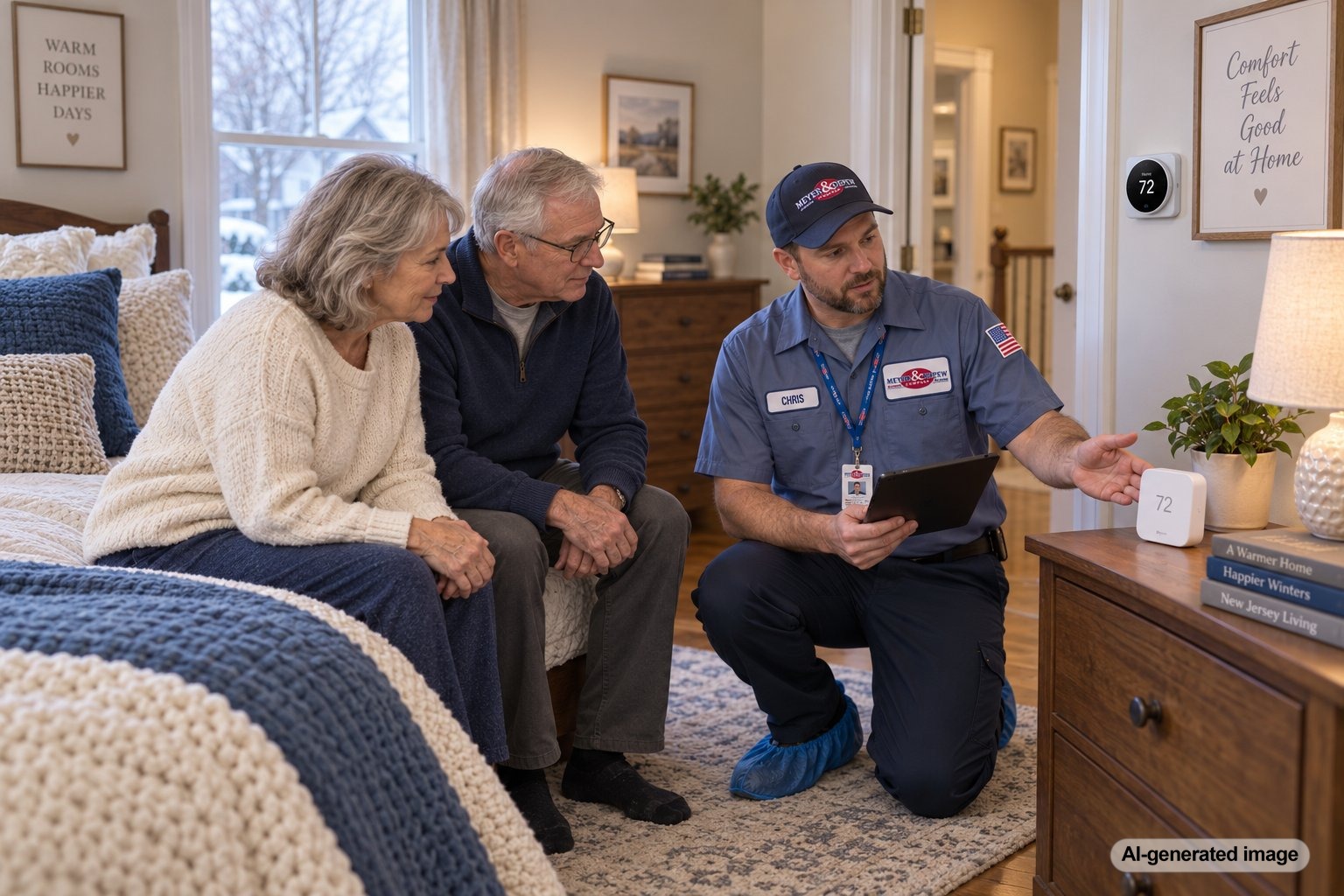
Yes, remote thermostat sensors can help make a cold bedroom more comfortable in winter, especially when the main thermostat is located in a warmer part of the house. A remote sensor gives a compatible thermostat temperature information from another room, allowing the system to make heating decisions based on more than one location. That can be useful in New Jersey homes where upstairs bedrooms, additions, rooms over garages, or spaces far from the furnace tend to run colder.
However, a sensor cannot create more heat or airflow by itself. If the bedroom is cold because of restricted ducts, poor insulation, air leakage, an undersized heating system, or an imbalance in the ductwork, changing how the thermostat measures temperature may improve control without solving the underlying cause. Homeowners considering this approach can learn more about thermostat options and how they fit into a broader comfort strategy.
Remote thermostat sensors can help when a bedroom feels cold because the main thermostat is measuring temperature in a warmer area. Their effectiveness depends on why the bedroom is cold in the first place.
- They can tell a compatible thermostat what the bedroom temperature actually is.
- Some systems can prioritize a bedroom sensor during sleeping hours.
- They may reduce temperature differences caused by thermostat location.
- They cannot correct weak airflow, major duct problems, insulation deficiencies, or equipment sizing issues.
- Persistent room-to-room temperature problems may point to a need for professional airflow or zoning evaluation.
How Remote Thermostat Sensors Work
A traditional thermostat controls the heating system based primarily on the temperature where the thermostat is mounted. That location may not represent every room equally. A thermostat in a first-floor hallway, for example, might read 70 degrees while a second-floor bedroom is several degrees cooler.
A compatible remote sensor measures temperature in another part of the home and communicates that information to the thermostat. Depending on the thermostat and its settings, the system may use the remote reading, average multiple sensors, or prioritize certain sensors at selected times of day.
This can be particularly useful at night. If the thermostat is configured to prioritize a bedroom sensor during sleeping hours, the heating system may continue running until that bedroom reaches the desired temperature instead of shutting off as soon as the warmer hallway reaches the setpoint.
When a Remote Sensor Is Most Likely to Help a Cold Bedroom
A sensor tends to be most useful when the heating system is capable of warming the bedroom but stops too soon because the main thermostat is satisfied first.
The thermostat is in a naturally warmer area
Main thermostats are often located in central hallways or living areas. Those spaces can warm faster than bedrooms located at the end of a duct run, above a garage, near exterior walls, or on another floor.
The bedroom warms up when the system runs longer
If the room eventually becomes comfortable during a long heating cycle, the problem may be partly related to where temperature is being measured. Giving the thermostat information from the colder room can sometimes improve how long the system operates.
The temperature problem changes by time of day
Some homes have acceptable daytime comfort but cold bedrooms overnight. A smart thermostat that can prioritize different sensors on a schedule may help the control strategy follow where people actually spend their time.
When a Sensor May Not Fix the Problem
A remote sensor changes what the thermostat knows. It does not change the heating capacity delivered to the room. If the bedroom cannot receive or retain enough heat, the thermostat may simply run the system longer while other areas become warmer.
Weak airflow from the bedroom vent
If very little warm air reaches the room, possible contributors can include duct restrictions, leakage, balancing issues, a dirty filter, blocked returns, or other airflow problems. A sensor may reveal that the room is cold, but it cannot deliver more air through the vent.
Heat loss through the room itself
Bedrooms over garages, rooms with several exterior walls, older windows, attic exposure, or inadequate insulation may lose heat faster than interior rooms. During a New Jersey cold snap, those differences can become much more noticeable.
The heating system cannot keep the home comfortable
If multiple rooms are cold or the system runs for long periods without reaching the thermostat setting, the issue may extend beyond one bedroom. Equipment condition, system sizing, duct performance, maintenance needs, or the home’s overall heat loss may need to be evaluated.
Why Averaging Multiple Sensors Can Be a Mixed Bag
Some thermostats can average readings from several sensors. That sounds ideal, but averaging does not guarantee that every room reaches exactly the same temperature.
Suppose one bedroom is 66 degrees, the hallway is 70, and another room is 72. An average may tell the thermostat that the house is approximately comfortable even though the cold bedroom still feels chilly. In another configuration, prioritizing the cold bedroom could keep the system running longer and make the already warm room uncomfortably hot.
The best sensor strategy depends on occupancy, room use, airflow, and how large the temperature differences are. Sensors are control tools, not true room-by-room heating devices.
Remote Sensors vs. HVAC Zoning
Remote thermostat sensors and zoning systems address uneven temperatures in different ways. A remote sensor changes the temperature information available to the thermostat. A properly designed zoning system can control where conditioned air is directed by dividing the home into independently controlled areas.
For a recurring bedroom comfort problem, homeowners may want to explore whether HVAC zoning is appropriate. Zoning can be more useful when different floors or sections of a home consistently need different amounts of heating or cooling.
Not every house needs zoning, and not every duct system is a good candidate without additional evaluation. A qualified HVAC professional can assess airflow, duct design, equipment compatibility, and the severity of the room-to-room temperature differences.
Safe Checks Homeowners Can Make First
- Confirm the thermostat is set to the correct heating mode and temperature.
- Make sure the bedroom supply vent is fully open and not blocked by furniture, curtains, or rugs.
- Check that return-air grilles are open and unobstructed.
- Inspect or replace the HVAC filter if it is dirty and replacement is appropriate for your system.
- Compare the bedroom temperature with nearby rooms while the heating system is running.
- Notice whether airflow from the bedroom vent feels noticeably weaker than airflow from vents closer to the HVAC equipment.
Avoid opening ductwork, adjusting internal furnace components, modifying wiring, or attempting to alter system controls beyond normal thermostat settings. Those tasks should be handled by a qualified professional.
Sensor Placement Matters
A remote sensor should measure the room’s typical temperature rather than an unusually hot or cold microclimate. Placement near a sunny window, exterior door, supply register, electronics, lamp, or other heat source can produce a reading that does not reflect the room as a whole.
Follow the thermostat manufacturer’s placement guidance and choose a location with normal room airflow. The sensor should also be positioned where occupants actually experience the room, rather than hidden behind furniture or placed against an unusually cold exterior surface.
When to Call an HVAC Professional
Professional evaluation makes sense when a bedroom stays cold despite reasonable thermostat settings, open vents, a clean filter, and normal operation elsewhere in the home. It is also worth scheduling service when the temperature difference is substantial, airflow is noticeably weak, multiple rooms are affected, or the heating system appears to run excessively.
An HVAC technician can evaluate whether the issue is primarily thermostat placement, airflow balance, ductwork, equipment performance, or another comfort factor. In some homes, a remote sensor is an effective improvement. In others, it may be only one part of the solution.
Frequently Asked Questions
Can a remote thermostat sensor control just one bedroom?
Usually, a standard remote sensor does not independently heat one room. It reports temperature to the thermostat, which still controls the central HVAC system. True room-by-room control may require zoning, ductless equipment, or another system design depending on the home.
Will a bedroom sensor make the rest of the house too hot?
It can if the thermostat is told to prioritize a cold bedroom and the rest of the home already receives more heat. That is one reason large temperature differences should be evaluated rather than addressed only by extending heating cycles.
Where should a bedroom thermostat sensor be placed?
Place it in a representative part of the room according to the manufacturer’s instructions, away from direct sunlight, supply vents, exterior doors, lamps, electronics, and other sources that could distort the temperature reading.
Are thermostat sensors useful in two-story homes?
They can be. Two-story homes commonly develop temperature differences because of airflow patterns, heat movement, duct layout, and varying exposure to outdoor temperatures. A remote sensor can give the thermostat better information about the floor where comfort matters most.
Should I use a sensor or install zoning?
A sensor may be enough when thermostat location is the main problem and room-to-room differences are modest. Zoning may be worth evaluating when different floors or areas consistently require different heating or cooling. The right choice depends on the home’s ductwork, HVAC equipment, and comfort pattern.
Remote thermostat sensors can be a practical way to improve cold bedroom comfort when the main thermostat is located in a warmer part of the home. If the room remains cold because of weak airflow, heat loss, ductwork, or system performance, the underlying HVAC or building issue still needs attention.
Need help with your heating, cooling, or HVAC system?
Meyer & Depew serves homeowners and businesses throughout Central and Northern New Jersey.
Get a quote or call 908.272.2100.