



Why Does One Bedroom Feel Colder When the Door Is Closed?
Estimated reading time: 8 minutes
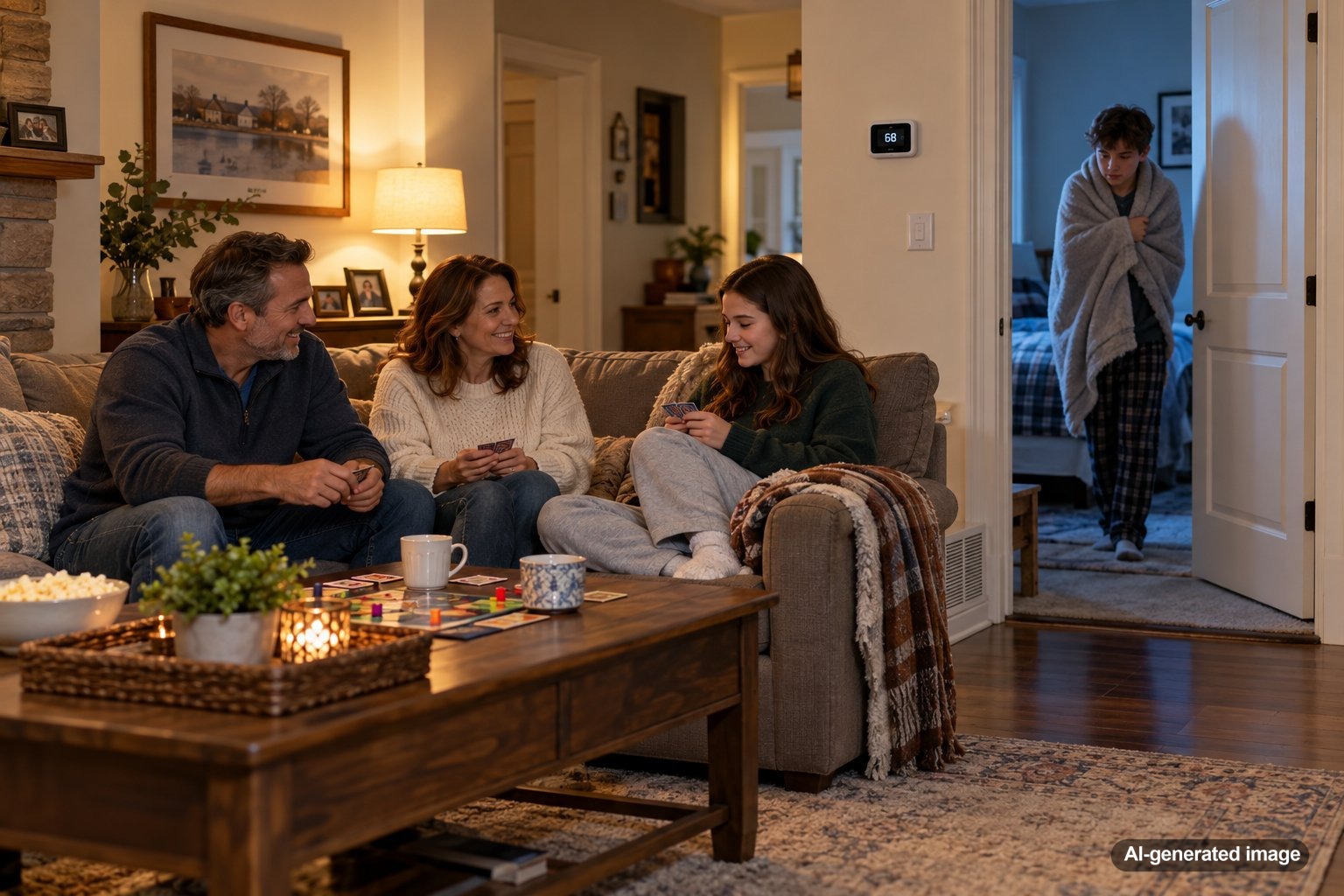
If one bedroom feels noticeably colder whenever the door is closed, the door itself usually is not creating the cold. Closing it can change how air moves into and out of the room. A bedroom may receive heated air through a supply vent but have no easy path for that air to return to the HVAC system. The resulting pressure imbalance can reduce circulation and make the room drift away from the temperature in the rest of the house.
This is a common type of comfort complaint in homes with uneven airflow, older ductwork, room additions, or bedrooms located farther from the heating equipment. The solution depends on whether the problem involves supply airflow, return airflow, duct conditions, insulation, or the way the HVAC system is balanced. For persistent room-by-room comfort problems, zoning systems may also be worth discussing with a qualified HVAC professional.
A bedroom can feel colder with the door closed because closing the door changes the room’s airflow and pressure. Common possibilities include limited return-air pathways, weak supply airflow, duct leakage, poor insulation, exterior exposure, or an HVAC system that is not properly balanced for the room.
- Make sure the bedroom supply vent is fully open and not blocked.
- Check whether the room has a return vent or another path for air to leave when the door is closed.
- Inspect the HVAC filter if it is due for replacement or appears dirty.
- Notice whether the problem occurs only during heating season or throughout the year.
- Schedule professional service if the temperature difference is persistent or significant.
Closing the door can change the room’s air pressure
A forced-air HVAC system works by moving conditioned air into rooms through supply ducts and drawing air back toward the equipment through return ducts. For that circulation to work well, air needs a reasonably clear path through the home.
Some bedrooms have both a supply vent and a dedicated return vent. Others rely on a central return located in a hallway or another part of the house. When a bedroom without its own return is closed off, the space under the door may become the primary path for air to escape.
If that pathway is too restrictive, pressure can build inside the room while the blower is operating. That pressure may reduce the amount of supply air entering the bedroom. Meanwhile, nearby areas connected more directly to the return system can receive a greater share of the HVAC airflow.
This is one reason a bedroom can feel comfortable with its door open yet become colder after the door has been shut for several hours.
The room may already be receiving less heated air
A closed door may make an existing airflow problem more obvious. Bedrooms at the end of long duct runs sometimes receive less airflow than rooms closer to the furnace or air handler. Duct size, layout, balancing dampers, bends, leakage, and restrictions can all affect how much conditioned air reaches a particular register.
A room with marginal airflow may stay reasonably close to the rest of the house when its door is open because air can mix freely through the hallway. Close the door, and that mixing stops. The bedroom then depends much more heavily on its own supply and return-air pathways.
If the register barely moves air compared with other rooms, or if airflow changes noticeably when the bedroom door opens, that information can help an HVAC technician narrow down the cause.
A blocked or undersized return-air path can matter
Return airflow is easy to overlook because homeowners naturally focus on the vent blowing warm air into the room. Yet a supply vent cannot move air effectively into a closed space unless displaced air has somewhere to go.
Depending on the home’s design, a contractor may evaluate whether the bedroom has an adequate return path. Possible solutions are specific to the house and may involve return ductwork, transfer pathways, system balancing, or other professionally designed airflow changes.
Homeowners should not cut openings into doors, walls, or ductwork based on guesswork. Airflow modifications can affect comfort, noise, privacy, fire-rated assemblies, and HVAC performance, so they should be evaluated in the context of the home’s overall system.
Insulation and exterior exposure can amplify the problem
Airflow is not the only reason one bedroom runs cold. A room over a garage, beside an attic, at the end of the house, or with multiple exterior walls may lose heat faster than interior rooms.
Windows, attic insulation, exterior wall insulation, air leakage, and the amount of sunlight the room receives can all influence its temperature. A north-facing bedroom, for example, may have a different heat-loss pattern from a sunny room on another side of the house.
With the bedroom door open, heat from the hallway and adjoining rooms may partially compensate for those losses. Closing the door isolates the room and can make the difference much easier to notice.
This distinction is important because increasing HVAC airflow alone may not address a building-envelope problem. A qualified technician can evaluate the HVAC side of the issue and help determine whether the room’s behavior points toward airflow, equipment operation, or another comfort factor.
Duct leakage or duct temperature losses may affect distant bedrooms
Bedrooms located far from the heating equipment can also be affected by duct conditions. If ducts pass through an attic, crawlspace, garage, or another unconditioned area, heat can be lost before the air reaches the room. Damaged, disconnected, poorly sealed, or inadequately insulated duct sections may also reduce delivered airflow or air temperature.
These problems generally require professional evaluation. Duct systems can be difficult to access, and homeowners should avoid opening HVAC components or making improvised duct modifications.
Your thermostat may not know the bedroom is cold
Most traditional HVAC systems respond to the temperature where the thermostat is located. If the thermostat is in a comfortable hallway or living area, the heating system may shut off even though a closed bedroom remains several degrees cooler.
This is not necessarily a thermostat malfunction. The thermostat may be accurately measuring the temperature around it while having no direct information about the colder bedroom.
Room-by-room temperature differences are one reason homeowners sometimes explore HVAC zoning or other comfort-control options. Whether zoning is appropriate depends on the existing equipment, duct layout, number of comfort areas, and the underlying cause of the imbalance.
Safe checks homeowners can make first
- Confirm that the bedroom supply register is fully open.
- Make sure furniture, curtains, rugs, or belongings are not blocking supply or return vents.
- Inspect the HVAC filter and replace it if needed according to the system and filter manufacturer’s guidance.
- Check whether the room has a dedicated return-air grille.
- Compare airflow from the bedroom register with airflow from nearby rooms.
- Notice whether opening the bedroom door causes an immediate change in airflow, temperature, or door movement.
- Confirm that the thermostat is set correctly and operating normally.
A useful observation is whether the bedroom is colder only when the furnace is running, colder all the time, or uncomfortable during both heating and cooling seasons. A bedroom that runs cold in winter and warm in summer often points toward a different set of possibilities than a room that is uncomfortable only during heating season.
When professional HVAC service makes sense
If the bedroom remains significantly colder despite open and unobstructed vents, professional testing can provide information that visual checks cannot. An HVAC technician can evaluate supply airflow, return-air pathways, duct condition, system operation, and whether the equipment is distributing air appropriately throughout the home.
Professional evaluation is especially worthwhile when several rooms are uneven, airflow is weak throughout the house, the problem has recently become worse, or the heating system is showing other symptoms such as unusual cycling or difficulty maintaining the thermostat setting.
Meyer & Depew provides heating service and maintenance for homeowners throughout Central and Northern New Jersey. A room-specific comfort complaint can often provide useful clues about the overall airflow and performance of the HVAC system.
Frequently asked questions
Should bedroom doors be left open for the HVAC system to work?
Not necessarily. A properly designed system should account for how air will circulate when rooms are used normally. However, some homes depend heavily on open doorways for return airflow. If closing a bedroom door creates a major temperature difference, the airflow design is worth evaluating rather than assuming the door must always remain open.
Can a dirty air filter make one bedroom colder?
A restrictive filter can reduce total system airflow, which may make existing distribution problems more noticeable. Rooms at the end of longer duct runs can sometimes be affected more than rooms close to the equipment. A dirty filter is not the only possible cause, but it is a safe and sensible item to check.
Why is the bedroom cold even though warm air comes from the vent?
The room may be losing heat faster than the HVAC system is replacing it, or the amount of warm air reaching the room may be insufficient. Return-air restrictions, duct losses, insulation, exterior walls, windows, and system balancing can all contribute.
Would a larger bedroom vent solve the problem?
Not automatically. Register size is only one part of an HVAC airflow system. Changing a register without understanding duct capacity, return airflow, and system balance may not correct the underlying issue. A technician can determine where the restriction or imbalance actually exists.
Can HVAC zoning help with a bedroom that is always colder?
Zoning can be useful in some homes with persistent room or area temperature differences, but it is not a universal fix. The existing ductwork, equipment, airflow requirements, and reason for the temperature imbalance should be evaluated before deciding whether zoning is appropriate.
If one bedroom gets colder when the door closes, the change is often revealing an airflow or heat-loss issue that is less noticeable when the room can freely exchange air with the rest of the house. Checking vents, filters, and obvious obstructions is a reasonable starting point. Persistent temperature differences deserve a closer look at supply airflow, return-air pathways, ductwork, insulation, and overall HVAC balance.
Need help with your heating, cooling, or HVAC system?
Meyer & Depew serves homeowners and businesses throughout Central and Northern New Jersey.
Get a quote or call 908.272.2100.