



Why Does Heating Airflow Feel Weak After a Summer of AC Use?
Estimated reading time: 9 minutes
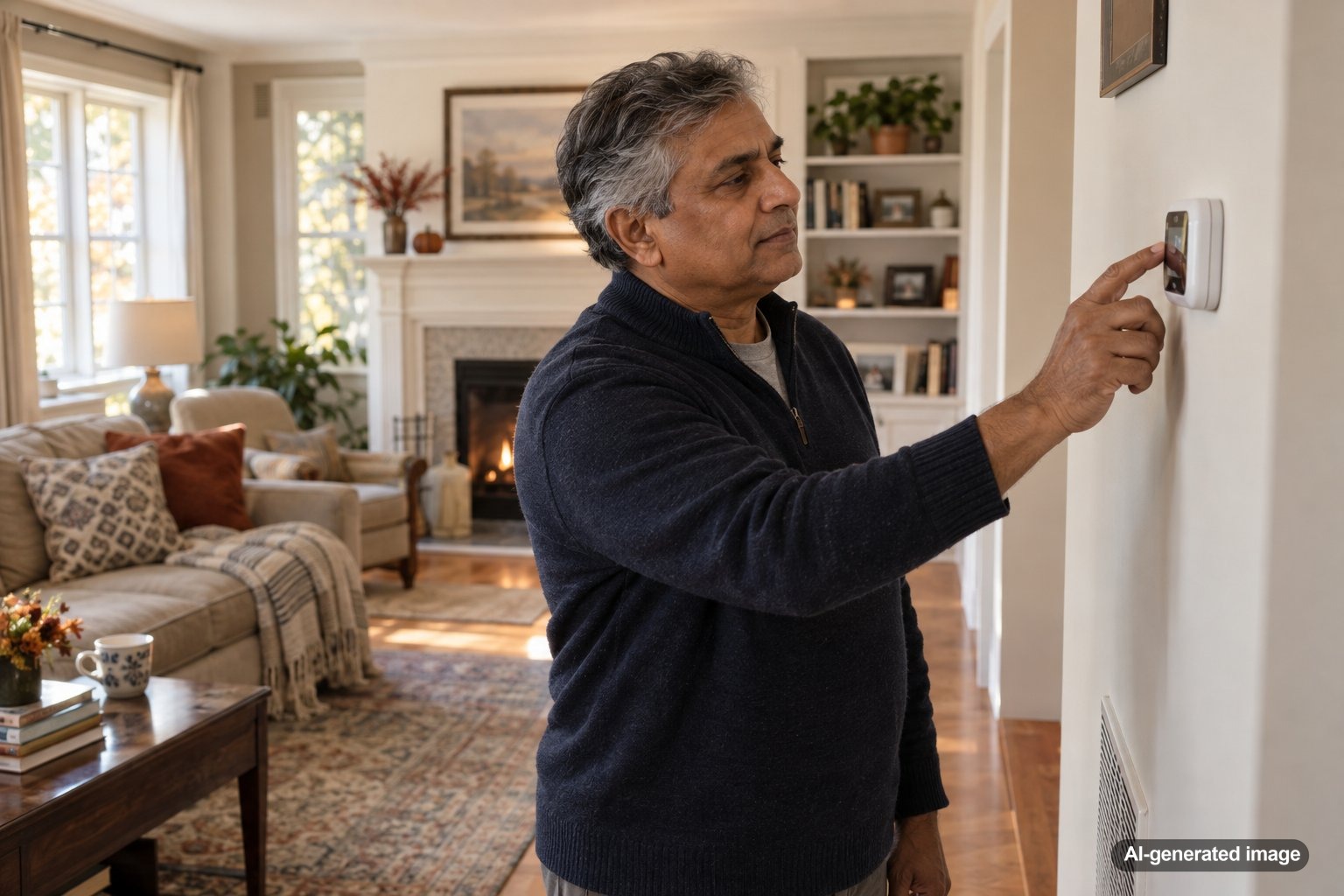
If the first chilly morning of fall arrives and the air coming from your vents feels weaker than you remember, the problem may not have appeared overnight. After months of AC operation, a heating system can begin the season with a dirty filter, blocked return, accumulated debris, duct restriction, or blower-related issue that was less noticeable while the house was being cooled. Heating airflow can also simply feel different from cooling airflow, making the seasonal change more noticeable.
For homeowners in Central and Northern New Jersey, weak airflow at the start of heating season is worth paying attention to because proper air movement helps distribute heat evenly throughout the home. A few safe checks can rule out simple causes, while persistent or widespread airflow problems may justify professional heating service and maintenance.
Heating airflow may feel weak after a summer of AC use because the air filter has become restricted, supply or return vents are blocked, the blower is not moving air as expected, ducts have airflow restrictions, or the system is operating differently in heating mode. Start with simple checks such as the thermostat, filter, and open vents. If airflow remains noticeably weak, professional evaluation can help identify the underlying cause.
Why heating airflow can feel different when the seasons change
Central heating and cooling systems often use the same blower and ductwork to move conditioned air through the home, but the system does not necessarily operate exactly the same way in every mode. Fan speeds, equipment staging, temperature differences, and control settings can vary between cooling and heating.
That means a homeowner who became accustomed to the sound and feel of summer AC airflow may notice a difference when heat starts running. A slight difference is not automatically a problem. The more important question is whether airflow is consistently weaker than it used to be, whether certain rooms receive very little air, or whether the home struggles to reach the thermostat setting.
A dirty air filter may restrict airflow
The air filter is one of the first places to look when airflow seems weak. During a long cooling season, the HVAC system may move a substantial amount of household air through the filter. Dust, pet hair, pollen, and other particles can gradually load the filter and increase resistance to airflow.
If the same filter remains in place when heating season begins, the blower may have to work against that additional restriction. The result can be reduced airflow at supply registers, longer heating cycles, or uneven comfort between rooms.
Inspect the filter and replace it if it is visibly dirty or due for replacement according to the filter or equipment manufacturer’s guidance. Use the correct size and an appropriate filter type for the system. Installing a filter that is significantly more restrictive than the equipment is designed to handle can also affect airflow, so higher filtration is not automatically better for every HVAC system.
Blocked supply or return vents can become more noticeable in fall
Furniture moves, rugs shift, storage boxes come indoors, and rooms get rearranged throughout the year. A return grille that was clear in spring may be partially covered by a sofa in fall. A supply register may be closed because someone wanted less AC in a particular room during summer.
Before assuming there is an equipment problem, walk through the home and make sure supply registers are open and unobstructed. Pay particular attention to return grilles because the system needs a clear path for air to return to the blower before that air can be heated and redistributed.
A single closed register usually will not explain dramatically weak airflow throughout an entire house, but multiple restrictions can affect comfort and make an existing airflow problem more obvious.
The blower may not be moving air as it should
The blower is responsible for pushing conditioned air through the duct system. If airflow is weak at many registers rather than just one room, the blower and its controls may be part of the issue.
Several conditions can affect blower performance, including accumulated dirt, motor problems, control issues, improper fan settings, or restrictions elsewhere in the system that increase the resistance the blower must overcome. These are not problems homeowners should try to correct by opening equipment cabinets or adjusting internal electrical components.
A qualified HVAC technician can evaluate blower operation, system pressure, temperature performance, controls, and other factors without relying on guesswork.
Duct restrictions or leakage may affect certain rooms more than others
If airflow feels normal in some rooms but weak in others, the duct system deserves consideration. Air has to travel through branches, elbows, dampers, grilles, and sometimes long duct runs before reaching each room.
Problems such as crushed or disconnected duct sections, excessive leakage, closed dampers, debris, or poorly balanced ductwork may reduce the amount of heated air reaching certain areas. In some homes, these issues existed during summer but became more obvious once occupants started paying attention to heating comfort.
Room location also matters. Bedrooms at the end of long duct runs, additions, finished spaces, or rooms over garages may react differently from spaces closer to the air handler. If uneven comfort is a recurring problem rather than a new malfunction, options such as zoning systems may be worth discussing after the underlying airflow is evaluated.
A cooling-season coil restriction can carry into heating season
In many central systems, air passes through components used during the cooling season even when the furnace is providing heat. If dirt or debris has accumulated on an indoor cooling coil, airflow can be restricted regardless of whether the AC compressor is operating.
This is one reason airflow problems do not always match the season in which they first become noticeable. A restriction that developed gradually during months of AC use may become apparent only when the homeowner turns on the heat and notices that the usual volume of air is not reaching the rooms.
Cleaning internal coils or inspecting enclosed HVAC components should be handled by a qualified technician rather than treated as a do-it-yourself task.
Thermostat and fan settings are worth checking
Sometimes the issue is simpler than a mechanical problem. Confirm that the thermostat is actually set to heating mode and that the temperature setting is high enough to call for heat. If the thermostat has programmable schedules, smart recovery features, or multiple comfort settings, review those settings as well.
The thermostat fan setting can also change what you notice at the vents. A system set to AUTO generally runs the blower during heating calls, while other fan settings may operate it differently depending on the equipment and controls. Avoid changing advanced installer settings unless you know exactly what they control.
- Confirm the thermostat is set to HEAT and is calling for heating.
- Inspect the air filter and replace it if it is dirty or due for replacement.
- Make sure supply registers are open and not covered by furniture, rugs, or curtains.
- Make sure return grilles are not blocked.
- Compare airflow in several rooms to determine whether the problem is throughout the house or limited to one area.
- Schedule professional service if weak airflow continues after these basic checks.
Pay attention to whether the problem affects one vent or the whole house
The pattern of weak airflow can provide useful information without requiring homeowners to diagnose the equipment themselves. Weak airflow from one register may point toward a local duct, damper, grille, or room-balancing issue. Weak airflow from nearly every register suggests a system-wide restriction or blower-related concern is more likely.
Also notice whether the airflow is weak all the time or changes during the heating cycle. Intermittent airflow, unusual noises, unexpectedly long run times, or difficulty maintaining the thermostat setting are useful details to share with a technician.
When weak heating airflow should be professionally checked
Schedule HVAC service if replacing a dirty filter and clearing obvious vent obstructions does not restore normal airflow, especially if the issue affects multiple rooms. Professional evaluation is also appropriate when airflow has changed significantly from previous heating seasons or when the system seems to run much longer without providing normal comfort.
Other warning signs include unusual blower noises, repeated cycling, burning electrical odors, smoke, sparks, or a tripping breaker. If there is smoke, sparking, an electrical burning smell, a suspected gas leak, or a carbon monoxide concern, prioritize safety, stop using the equipment when appropriate, leave the area if necessary, and contact the appropriate emergency service, utility, or qualified professional.
For ordinary weak-airflow problems, a technician can check the filter setup, blower performance, duct system, indoor coil condition, controls, and heating operation to determine where the restriction or performance loss is occurring.
Could seasonal maintenance help catch airflow problems?
Seasonal HVAC maintenance provides an opportunity to identify developing airflow problems before the system is working through sustained cold weather. A heating inspection can help uncover dirty components, control issues, blower concerns, or other conditions that may affect performance.
Maintenance cannot prevent every breakdown, but it can make it easier to find issues while they are still manageable. Homeowners who prefer to keep routine heating and cooling care on a consistent schedule can also review Meyer & Depew’s service plans.
Frequently asked questions about weak heating airflow
Is weak airflow normal the first time I turn on the heat?
A slight difference between heating and cooling airflow can be normal because equipment may operate differently in each mode. However, airflow that is substantially weaker than previous seasons, affects many rooms, or prevents the home from heating properly should be investigated.
Can a dirty filter really make the heat feel weaker?
Yes. A heavily loaded filter can restrict the amount of air moving through a ducted HVAC system. Checking the filter is one of the simplest and safest first steps when airflow drops.
Why is airflow weak in only one bedroom?
When the problem is limited to one room, possible factors include a closed register, blocked grille, duct restriction, damper position, leakage, a long duct run, or system balancing. A technician can evaluate the distribution system if simple vent checks do not reveal the cause.
Should I close vents in unused rooms to increase airflow elsewhere?
Closing multiple supply vents is generally not a reliable way to correct an airflow problem and can change pressure within the duct system. If certain rooms consistently receive too much or too little conditioned air, have the system evaluated rather than trying to correct it by closing many registers.
Can weak airflow damage a furnace?
Severely restricted airflow can contribute to higher operating stress and may interfere with normal heating performance. The specific effect depends on the equipment and cause of the restriction, so persistent airflow problems should be evaluated rather than ignored.
If heating airflow suddenly feels weak after a summer of AC use, start with the filter, thermostat, open supply vents, and unobstructed return grilles. If those basics look normal and airflow remains weak, the cause may be deeper in the blower, duct system, indoor coil, or controls. Addressing the issue before colder New Jersey weather arrives can help restore more consistent comfort.
Need help with your heating, cooling, or HVAC system?
Meyer & Depew serves homeowners and businesses throughout Central and Northern New Jersey.
Get a quote or call 908.272.2100.