



Why Does My Heating Vent Tick After the Furnace Shuts Off?
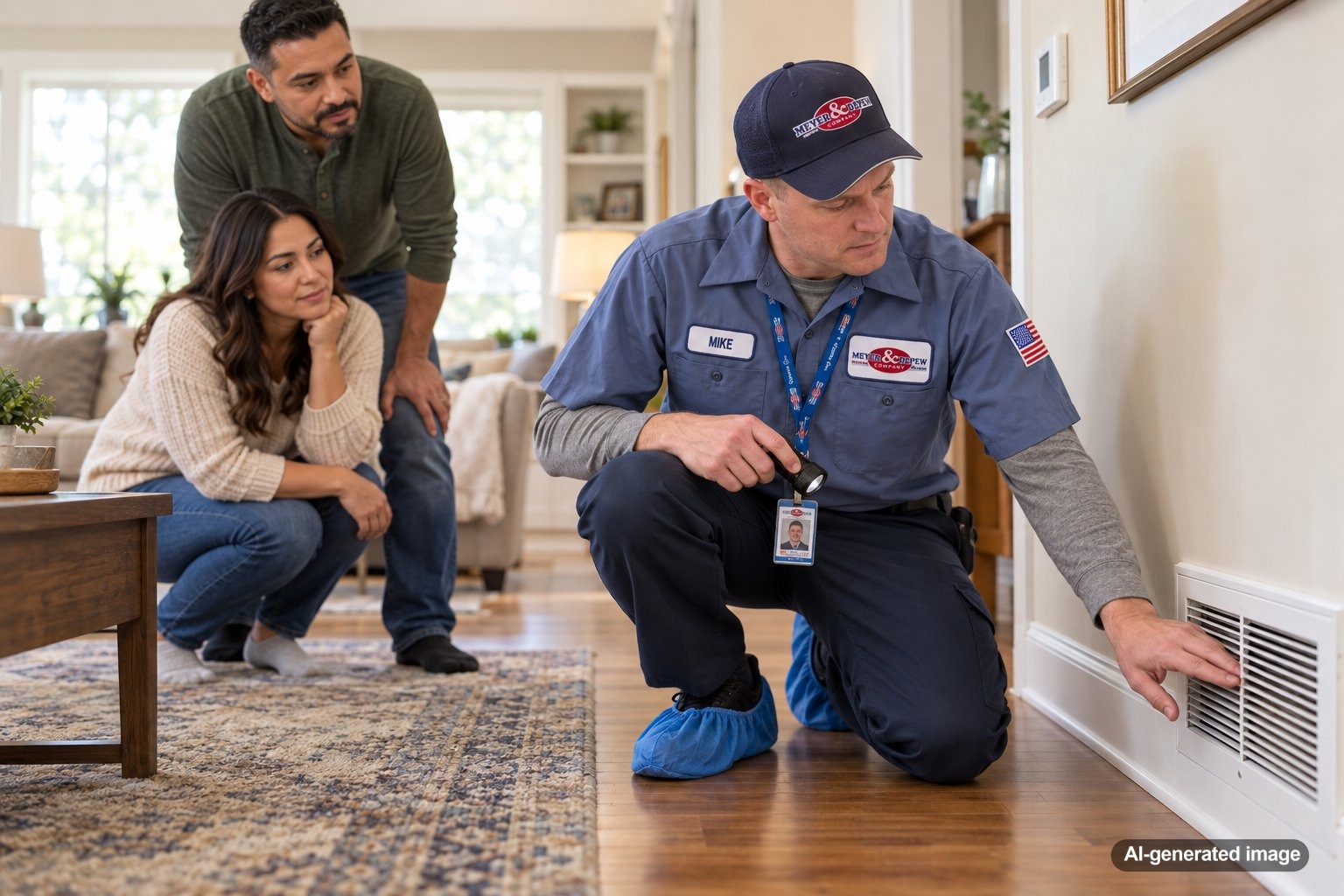
A heating vent that ticks for a short time after the furnace shuts off is often reacting to a normal temperature change inside the ductwork. As warm metal begins to cool, sections of sheet metal can contract slightly and make ticking, clicking, or light popping sounds. The noise is usually more noticeable in a quiet house, especially during the first weeks of heating season in Central and Northern New Jersey.
While an occasional tick may be harmless, repeated or unusually loud noises can sometimes point to duct movement, airflow restrictions, loose vent components, or another condition worth evaluating. If the sound has changed recently or is becoming disruptive, heating service and maintenance can help determine whether the noise is simply normal duct movement or something that needs attention.
Your heating vent may tick after the furnace shuts off because the metal ductwork is cooling and contracting. Light ticking that fades within a few minutes can be normal. Louder popping, persistent noises, new rattling, or sounds accompanied by poor airflow may justify a professional inspection.
Why metal ductwork can tick as it cools
Most forced-air heating systems move warm air through metal ducts. When the furnace runs, the ducts warm up and expand slightly. After the heating cycle ends, the temperature inside the ducts drops and the metal contracts again.
That small movement can create a ticking sound where duct sections meet, where metal passes through framing, or where a register connects to the duct below it. The noise may happen several times as different parts of the system cool at different rates.
This type of sound is often most noticeable after a longer heating cycle. A cold New Jersey morning, for example, may cause the furnace to run long enough for more of the duct system to warm substantially. When the burner or heating equipment shuts off and the blower eventually stops, the cooling process can produce more audible movement than it would after a short cycle.
Why the sound may seem to come directly from the vent
The vent is often the easiest place to hear duct noise even when the movement is occurring farther inside the duct system. Metal ducts can transmit sound, so a small movement near a joint or framing member may seem as though it is coming from the register itself.
The register can also contribute to the noise. A metal vent cover may expand while warm air passes through it and then contract as it cools. If the cover fits tightly against flooring, trim, or drywall, even minor movement can create an audible tick.
Other conditions that can make ticking more noticeable
Temperature changes are common, but the way a duct system is installed and the way air moves through it can affect how much noise you hear.
Ductwork rubbing against framing
A duct that fits tightly through a wall, floor, or ceiling opening may rub against nearby framing as it expands and contracts. The movement can be very small while still producing a noticeable click or pop.
Airflow restriction
A dirty filter, blocked return, or closed supply vents can change airflow and pressure within the duct system. That does not automatically mean restricted airflow is causing the ticking, but pressure changes can make flexible sections of ductwork or larger sheet-metal panels move more noticeably.
Loose register or grille
A register that is not sitting securely may shift slightly when airflow starts or stops. The resulting sound may resemble the ticking associated with cooling ductwork.
Large temperature swings
Duct noises may become more noticeable when the heating system has been off for several hours and then runs for an extended period. Greater temperature differences can mean greater expansion and contraction of metal components.
Safe checks homeowners can make
- Inspect the HVAC air filter and replace it if it is dirty and replacement is appropriate for your system.
- Make sure supply vents are open and not blocked by furniture, rugs, curtains, or other objects.
- Check that return-air grilles are not obstructed.
- Gently confirm that the visible register cover is secure without removing or modifying ductwork.
- Notice whether the ticking happens only for a few minutes after shutdown or continues for a much longer period.
Avoid opening furnace panels, modifying ductwork inside walls, or attempting electrical or combustion-related repairs. If the sound appears to come from the furnace itself rather than a vent or duct, a qualified HVAC technician can identify the source more safely.
When a ticking vent deserves professional attention
Consider scheduling service when the noise is new, getting louder, occurs throughout the heating cycle, or has changed from a light tick into a sharp pop, rattle, bang, or scraping sound. Service is also appropriate if you notice weak airflow, uneven heating, unusual furnace cycling, or other changes in system performance.
A technician can listen for the source of the noise, evaluate airflow, inspect accessible duct connections, and determine whether the sound reflects ordinary thermal movement or a condition that could be corrected. Meyer & Depew provides residential heating services throughout Central and Northern New Jersey.
Does ticking mean the furnace is failing?
Not necessarily. A few ticks from a vent or duct after shutdown can occur even when the heating equipment is operating normally. The location, intensity, timing, and frequency of the sound matter more than the presence of a single noise.
A sound that comes directly from the furnace cabinet, however, should not automatically be assumed to be normal duct expansion. If you are unsure where the sound originates, professional evaluation can help separate duct noise from equipment noise without unnecessary guesswork.
Frequently asked questions
How long should duct ticking last after the furnace shuts off?
Light thermal-expansion noises often fade as the ductwork cools. There is no universal duration because duct materials, system design, run time, and temperature differences vary from home to home. Persistent or increasingly loud noise is worth having evaluated.
Why does my vent tick more on very cold nights?
The furnace may run longer during colder weather, allowing the ductwork to become warmer before the heating cycle ends. The larger temperature change as the metal cools can make expansion and contraction noises more noticeable.
Can a dirty air filter cause ticking ducts?
A dirty filter does not necessarily cause ticking directly, but it can restrict airflow and change pressure within the duct system. Inspecting the filter is a reasonable homeowner check when HVAC noises change.
Should I close the noisy vent?
Closing a vent is generally not a reliable way to solve duct noise and can alter airflow through the system. Keep normal supply vents open unless an HVAC professional has advised otherwise for your specific system.
Is a popping sound the same as a ticking sound?
Both can result from metal movement, but a loud or forceful pop may involve greater duct movement or pressure changes. If popping is frequent, disruptive, or accompanied by airflow or comfort problems, it is reasonable to have the system inspected.
A few light ticks after the furnace shuts off are commonly associated with metal ductwork cooling and contracting. Pay attention to whether the sound is brief and consistent or whether it is becoming louder, longer, or accompanied by other heating problems.
Need help with your heating, cooling, or HVAC system?
Meyer & Depew serves homeowners and businesses throughout Central and Northern New Jersey.
Get a quote or call 908.272.2100.