



Is a Higher-Efficiency Furnace Worth the Cost for a Smaller New Jersey Home?
Estimated reading time: 14 minutes
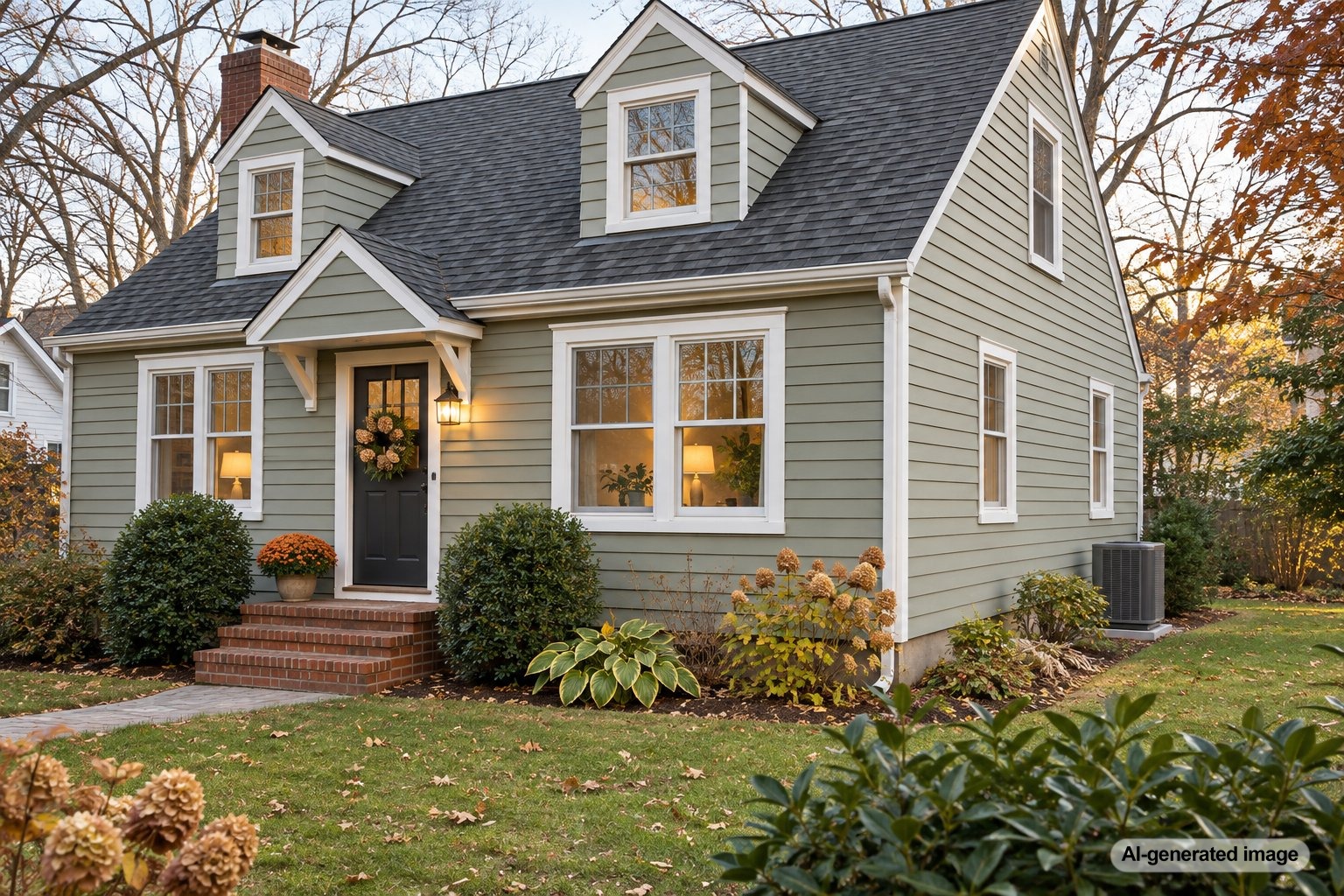
A higher-efficiency furnace can be worth the investment for a smaller New Jersey home, but the answer isn’t as simple as choosing the furnace with the highest efficiency rating. A compact house generally needs less heating energy than a larger property with similar insulation and exposure to cold weather. That means the potential fuel savings from upgrading to a premium furnace may be smaller, even when the equipment is significantly more efficient. The real question is whether those savings, along with any comfort improvements, justify the additional installation cost over the years you expect to own the home.
For homeowners in Central and Northern New Jersey, winter heating demands are substantial enough to make furnace efficiency worth evaluating. However, an efficient furnace that is incorrectly sized or poorly matched to the home’s ductwork may not deliver the experience the homeowner expects. Before investing in a replacement, it helps to understand how efficiency ratings, installation requirements, heating loads, and long-term ownership costs fit together.
A high-efficiency furnace may be a worthwhile upgrade for a smaller New Jersey home when:
- The existing furnace is aging and replacement is already necessary.
- Annual heating costs are high enough to make improved fuel efficiency financially meaningful.
- The home can accommodate the required venting, condensate drainage, and installation changes without excessive additional expense.
- The homeowner expects to remain in the property long enough to benefit from lower operating costs.
- The selected system is properly sized and provides comfort features that address real heating concerns.
A more moderately efficient furnace may offer better overall value when heating demand is low, installation modifications are expensive, or the additional efficiency would take too long to recover its upfront cost.
Why Furnace Efficiency Matters Differently in a Smaller Home
Smaller homes usually have a lower total heating load than larger homes, although square footage alone doesn’t determine how much heat a building needs. Insulation, air leakage, window performance, ceiling height, layout, and exposure to outdoor temperatures also affect demand.
Consider two New Jersey houses with similar insulation and heating equipment. One is a modest single-story home, while the other has substantially more conditioned space. The larger house may consume more natural gas over the heating season. If both homeowners upgrade to more efficient furnaces, the larger house may realize greater absolute fuel savings simply because it uses more energy for heating.
This distinction is important when evaluating heating installation and replacement options. A smaller home can absolutely benefit from efficient equipment, but the investment should be based on its actual heating requirements rather than assumptions about what the most expensive furnace will accomplish.
Understanding 80% AFUE vs. 95% AFUE Furnace Efficiency
Gas furnace efficiency is commonly expressed through Annual Fuel Utilization Efficiency, or AFUE. This rating estimates the percentage of the fuel’s energy that becomes useful heat over a typical heating season under standardized testing conditions.
For example, an 80% AFUE furnace converts approximately 80% of the fuel energy into useful heat, while a 95% AFUE furnace converts approximately 95%. The remaining energy is lost through the heating process, including exhaust losses.
The difference is meaningful, but it is easy to misunderstand what the numbers represent.
- 80% AFUE: Approximately 80% of the fuel energy becomes useful heating output.
- 95% AFUE: Approximately 95% of the fuel energy becomes useful heating output.
- Important distinction: A 95% AFUE furnace doesn’t automatically reduce an existing heating bill by 15%. The percentage-point difference in efficiency is not the same as the percentage reduction in fuel consumption.
For the same required amount of delivered heat, an upgrade from 80% to 95% AFUE would theoretically reduce furnace fuel consumption by approximately 15.8%, assuming comparable operating conditions. Actual household gas bill savings may be different because water heating, cooking, utility charges, weather, thermostat settings, and other variables can affect the total bill.
Why a 15-Point Efficiency Difference Doesn’t Mean 15% Off the Gas Bill
Imagine a homeowner spends part of the annual natural gas budget on heating and the remainder on a gas water heater, cooking appliances, and other uses. Improving furnace efficiency only affects the portion of fuel consumption associated with space heating. Fixed utility charges also remain.
Consequently, even a noticeable reduction in furnace gas consumption may translate into a smaller percentage reduction in the total utility bill.
To evaluate potential savings accurately, compare heating-related fuel usage rather than assuming the entire gas bill will decline by the furnace’s efficiency improvement.
How to Calculate Whether the Higher Efficiency Will Pay for Itself
The financial case becomes clearer when the homeowner separates the additional installation expense from the expected annual heating savings.
Start with four pieces of information:
- The installed cost of a suitable standard-efficiency or moderately efficient furnace.
- The installed cost of a comparable high-efficiency furnace.
- The home’s estimated annual fuel consumption for space heating.
- The projected difference in heating fuel consumption between the proposed systems.
The additional investment is the difference between the two installed quotes, including any necessary venting, drainage, electrical, or other installation changes. The estimated annual savings depend on the home’s heating load, the efficiency ratings of the alternatives, and the relevant fuel cost.
A Simple Illustrative Payback Calculation
Suppose a homeowner receives two installation proposals, and the higher-efficiency option costs an additional $1,800. Assume the homeowner’s estimated annual heating fuel savings would be $150.
Dividing the additional investment by the estimated annual savings gives a simple payback period of 12 years.
This is a hypothetical example, not a price quote or savings estimate for a particular New Jersey home. It also excludes changes in fuel prices, maintenance differences, financing costs, and the time value of money.
If the same upgrade produces greater annual savings, the payback period shortens. If the home uses relatively little heating fuel, recovering the added investment could take considerably longer.
The calculation should compare the two replacement options, not the entire price of the new furnace. When a homeowner already needs to replace failing equipment, the relevant financial question is generally how much extra the higher-efficiency option costs compared with a suitable alternative.
The Installation Costs That Can Change the Decision
One of the most overlooked factors in a furnace efficiency comparison is the installation itself. Two furnaces may appear similar when comparing equipment specifications, but their installation requirements can be substantially different.
Venting Changes for Condensing Furnaces
Many furnaces in the 90% AFUE range and above are condensing models. They recover additional heat from combustion exhaust, allowing water vapor in the exhaust to condense. This design typically requires a compatible venting system rather than simply reusing the existing venting arrangement without evaluation.
A qualified HVAC contractor must determine suitable vent materials, pipe routing, termination locations, and compliance with manufacturer instructions and applicable codes.
For a small house with a straightforward venting route, these changes may be relatively manageable. In another home, the furnace location, finished walls, property layout, or obstacles may make the work more involved.
Condensate Drainage Requirements
Condensing furnaces produce water that must be drained appropriately. Depending on the equipment location, the installation may require a suitable drain connection, condensate pump, or additional piping.
Basement configurations, crawl spaces, freezing exposure, and finished interior areas can influence the installation design.
The additional work doesn’t automatically make a high-efficiency furnace a poor choice. It simply belongs in the cost comparison before a homeowner commits to the equipment.
Existing Ductwork and Airflow
Replacing the furnace doesn’t eliminate restrictions in existing ductwork. A small home with narrow returns, undersized ducts, or poorly balanced air distribution may continue to experience uneven heating even after receiving a premium furnace.
Before installation, a contractor should evaluate whether the existing air distribution system can support the selected equipment’s required airflow.
Proper Furnace Sizing May Matter More Than Buying the Highest AFUE Rating
A frequent misconception is that a smaller house simply needs the smallest furnace available. In reality, heating equipment should be selected based on a calculated heating load.
A professional load calculation considers factors such as insulation, windows, air leakage, construction characteristics, and local winter design conditions. The resulting heating requirement helps determine the appropriate equipment capacity.
Buying a furnace that is too large can create problems even when its AFUE rating is excellent.
- Frequent cycling: An oversized furnace may satisfy the thermostat quickly and shut down before completing a longer heating cycle.
- Temperature fluctuations: Rapid heating cycles can contribute to noticeable swings in indoor temperature.
- Airflow concerns: Equipment capacity and blower operation must be compatible with the duct system.
- Limited comfort improvement: A premium efficiency rating doesn’t compensate for poor equipment selection or distribution problems.
For a small Cape Cod, ranch, or older two-story house in New Jersey, an accurate load calculation can be especially valuable when the existing furnace was oversized or when insulation improvements have reduced the home’s heating needs.
Replacing an old furnace with another unit of identical capacity may repeat an existing sizing problem. Furnace capacity should be evaluated independently of the previous equipment’s nameplate rating.
Can a High-Efficiency Furnace Make a Small House More Comfortable?
Yes, but comfort depends on more than AFUE. The furnace’s heating stages, blower characteristics, installation quality, and compatibility with the home all influence performance.
Single-Stage vs. Two-Stage Heating
A single-stage furnace generally operates at one primary heating output when running. A two-stage furnace can operate at a lower heating output during less demanding conditions and move to a higher output when necessary.
In some smaller homes, two-stage operation can provide longer heating cycles at a lower output, potentially reducing noticeable temperature swings compared with an oversized single-stage system.
However, the benefit depends on sizing, controls, ductwork, and the home’s actual heating characteristics. A properly sized single-stage furnace may still provide satisfactory comfort.
Modulating Furnaces and Variable-Speed Blowers
Some premium furnaces offer modulating heating output, allowing the equipment to adjust heat production more gradually. Variable-speed blower technology can also improve airflow control under appropriate operating conditions.
These features may be appealing in a small home where occupants are sensitive to temperature changes or where airflow noise is a concern.
They should be evaluated separately from the AFUE rating, however. A higher efficiency number alone doesn’t establish whether a furnace includes two-stage operation, modulation, or a variable-speed blower.
Uneven Rooms Still Need a Separate Evaluation
Some compact New Jersey homes have a colder upstairs bedroom, a finished attic that is difficult to heat, or a room above an unconditioned garage.
These problems can involve insulation, air leakage, duct layout, and heat distribution rather than furnace efficiency. A new furnace may improve certain aspects of operation without correcting the underlying issue.
In some situations, an evaluation of zoning systems or other room-specific comfort options may be more useful than simply choosing a furnace with a higher AFUE rating.
When a High-Efficiency Furnace Makes Financial Sense
A high-efficiency furnace deserves serious consideration when several favorable conditions occur together.
The Existing Furnace Is Near the End of Its Useful Service Life
If a furnace requires replacement regardless of efficiency, comparing two new systems is more meaningful than comparing a new system against the cost of continuing to operate an otherwise functional older unit.
The homeowner can evaluate the additional investment and expected operating savings without treating the full replacement expense as an efficiency upgrade cost.
The Home Has Meaningful Annual Heating Demand
A smaller home can still consume substantial heating energy if it has significant air leakage, limited insulation, older windows, or considerable exposure to cold weather.
These conditions can increase the potential value of efficient equipment, although improving the building envelope may also deserve attention.
A homeowner with consistently high heating-related gas consumption may see a stronger financial case for a higher-efficiency furnace than someone whose compact home already has a relatively low heating load.
The Installation Is Relatively Straightforward
When suitable venting and drainage routes are readily available, the installed price difference between efficiency options may be easier to justify.
Installation complexity can sometimes be more influential than the equipment price difference alone.
The Homeowner Plans to Stay Long Term
Lower annual operating costs become more valuable when the homeowner expects to remain in the property for many heating seasons.
A homeowner planning to move relatively soon may place greater weight on initial investment, reliability, and current comfort rather than a long projected payback period. Any effect on resale value is uncertain and should not be assumed to recover the upgrade cost.
When a More Moderately Efficient Furnace May Be the Better Value
Higher efficiency is not always the most economical choice.
A suitable lower-efficiency option may deserve consideration when:
- The home is well insulated and requires relatively little heating energy.
- The additional installed cost of a condensing furnace is substantial.
- The homeowner expects to sell the property before the estimated savings offset the upgrade expense.
- The budget would otherwise prevent necessary ductwork corrections or other important installation improvements.
- A properly sized furnace with a less expensive configuration can meet the household’s comfort and reliability needs.
Availability and permissibility of particular furnace efficiency levels can also depend on applicable federal requirements, state and local codes, and the installation circumstances. A contractor should confirm which options are appropriate and compliant for the specific home.
The objective is not to purchase the lowest-priced furnace. It is to select an efficient, properly installed system that delivers dependable heating at a reasonable total ownership cost.
What About Improving Insulation Before Replacing the Furnace?
For an older smaller home, reducing heat loss can sometimes produce benefits that compete with or complement a furnace efficiency upgrade.
Air leakage around attic penetrations, poorly insulated spaces, and other building-envelope problems can increase the amount of heat the furnace must provide.
When these conditions are addressed, the home’s heating load may decline. That can reduce annual fuel consumption and potentially change the furnace capacity needed for a future replacement.
For example, an older compact house with significant attic heat loss might benefit from appropriate insulation and air-sealing improvements before final furnace sizing decisions are made.
These improvements should be evaluated carefully and performed using appropriate building-science practices. Air sealing can affect ventilation and combustion-air considerations in homes with fuel-burning appliances, so professional evaluation is important.
If the existing furnace is unsafe or no longer dependable, necessary heating replacement should not be delayed solely to complete unrelated efficiency projects.
Questions to Ask Before Choosing a Replacement Furnace
Homeowners don’t need to become heating engineers to make an informed decision. They do benefit from asking contractors to explain how each proposed system fits the property.
- What heating load calculation supports the proposed furnace capacity?
- What are the AFUE ratings of the available replacement options?
- How much additional installed cost is associated with the higher-efficiency model?
- Will new venting, condensate drainage, or other modifications be required?
- Does the existing ductwork provide adequate airflow for the proposed equipment?
- What comfort differences should I realistically expect between the models?
- What annual fuel savings might be reasonable based on my home’s heating usage?
- How do the equipment warranties and ongoing maintenance requirements compare?
Homeowners can also gather recent utility bills, note which rooms are uncomfortable, and identify any recurring heating concerns before the appointment.
These details can help the contractor explain the options in practical terms. They are more useful than relying on square footage alone or assuming the most efficient furnace is automatically the best fit.
When to Schedule a Professional Furnace Evaluation
A professional assessment is worthwhile when an existing furnace is aging, repair needs are becoming more frequent, heating bills have increased without an obvious explanation, or the home has persistent comfort problems.
A qualified contractor can assess furnace condition, heating capacity, airflow, venting requirements, and replacement options. The evaluation can also help distinguish a furnace-related issue from insulation or ductwork limitations.
Routine professional maintenance remains important regardless of efficiency rating. For homeowners planning to keep an existing system, heating service and maintenance can help identify operating concerns and support dependable performance.
If you notice a gas odor, suspect carbon monoxide exposure, or encounter smoke or another potentially dangerous condition, prioritize safety. Leave the affected area when appropriate and contact the gas utility, emergency services, or a qualified professional rather than attempting furnace repairs yourself.
Frequently Asked Questions About High-Efficiency Furnaces for Small Homes
Is a 95% AFUE furnace worth it for a 1,200-square-foot house?
It can be, but the home’s square footage isn’t enough to determine financial value. The decision depends on heating load, current fuel consumption, installed price difference, venting requirements, and expected years of ownership. A professional estimate can compare suitable options using the home’s actual conditions.
Does a high-efficiency furnace heat a house faster?
Not necessarily. AFUE measures fuel-use efficiency, not heating speed. Heating capacity, equipment staging, airflow, and thermostat operation affect how quickly indoor temperatures change. A properly sized system is generally more important than selecting excessive capacity in an attempt to heat rooms faster.
Will a smaller house use less natural gas with a high-efficiency furnace?
For the same delivered heating output, a properly operating higher-AFUE gas furnace generally consumes less fuel than a comparable lower-AFUE unit. However, the total savings depend on heating demand, system operation, and whether other changes accompany installation.
Can an existing furnace vent be reused with a high-efficiency furnace?
Not automatically. Many high-efficiency condensing furnaces have venting requirements that differ from those of older noncondensing furnaces. A qualified installer must evaluate the approved venting materials, routing, termination, and equipment specifications before determining what can be retained or modified.
Should I replace a working 80% AFUE furnace just to improve efficiency?
Not always. If the existing furnace is operating safely and reliably, the cost of replacing it early may outweigh the additional fuel savings. Age, condition, repair history, expected ownership period, and available replacement options should all be considered. An evaluation can help determine whether continued maintenance or replacement makes more sense.
The Bottom Line: Buy the Right Furnace, Not Just the Highest Efficiency Rating
A higher-efficiency furnace can be a smart investment for a smaller New Jersey home, especially when replacement is already necessary, heating fuel consumption is meaningful, and installation modifications are manageable. However, the highest AFUE rating doesn’t automatically provide the best financial return. Proper sizing, ductwork compatibility, installation quality, comfort features, and long-term ownership plans should guide the decision.
For many homeowners, the most useful comparison is between two properly sized, professionally installed systems with clearly explained upfront costs and realistic operating expectations. That approach makes it easier to identify where additional efficiency delivers genuine value and where other improvements might deserve priority.
Thinking about replacing or upgrading your HVAC system?
Meyer & Depew can help you understand your options for comfort, efficiency, and long-term reliability in your New Jersey home or business.
Questions? Contact Meyer & Depew or call 908.272.2100.