

Why Does My AC Shut Off Before the House Reaches the Set Temperature?
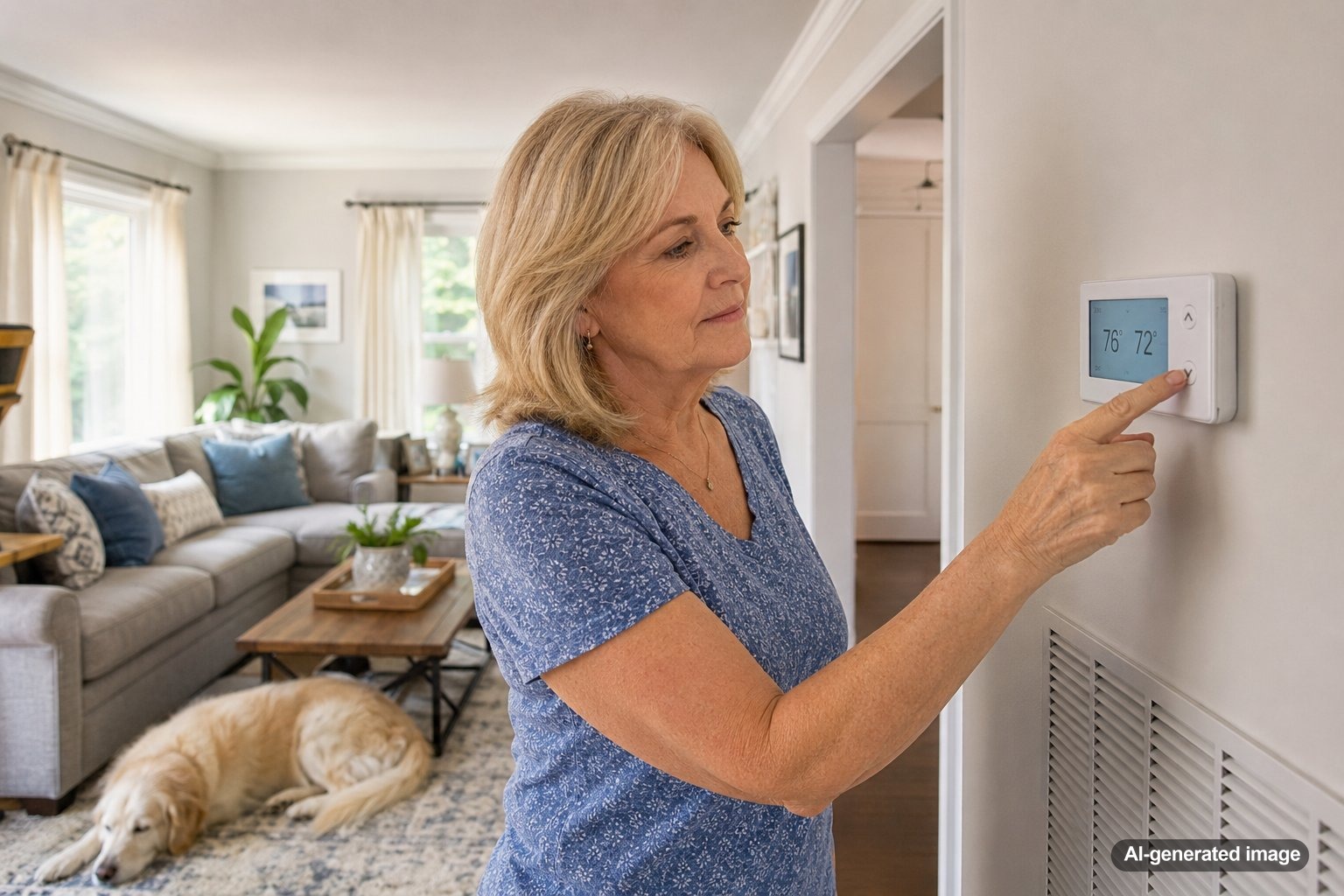
If your AC shuts off before the house reaches the temperature you selected, something may be interrupting the normal cooling cycle. The cause can be as simple as a thermostat reading the wrong part of the home or a restricted air filter, but it can also involve airflow, electrical controls, equipment protection systems, or a developing mechanical problem. The important clue is whether the system stays off, restarts a few minutes later, or repeatedly runs in short bursts.
For homeowners in Central and Northern New Jersey, the problem can become especially noticeable during hot, humid weather when the cooling system has to run longer to remove both heat and moisture. If the behavior keeps happening, professional AC service and maintenance can help determine whether the thermostat, airflow, or cooling equipment is responsible.
An AC that shuts off before reaching the set temperature may be responding to an inaccurate thermostat reading, restricted airflow, a frozen or overheating component, an electrical control issue, or a safety limit that is stopping operation. Start with safe checks such as the thermostat settings, air filter, vents, and return grilles. If the system repeatedly starts and stops or cannot maintain comfort, schedule professional service.
Why an AC can stop before the thermostat reaches its target
A normal cooling cycle begins when the thermostat senses that the indoor temperature is above the set point. The thermostat calls for cooling, the indoor blower moves air through the system, and the outdoor equipment operates until the thermostat determines that the desired temperature has been reached.
When the AC stops early, one of two broad situations is usually happening. Either the thermostat believes the target temperature has already been reached, or the cooling system is being interrupted before the thermostat is satisfied. Distinguishing between those situations helps narrow down the possible causes.
For example, if the thermostat display shows that the room has reached the set temperature even though nearby rooms still feel warm, thermostat location or temperature sensing may be involved. If the thermostat still shows a temperature above the set point but the outdoor unit has stopped, the system may be experiencing an operational or control problem.
The thermostat may be reading a cooler area than the rest of the house
A thermostat only measures temperature where it is installed. It does not directly know what is happening in every bedroom, upstairs hallway, finished basement, or sun-exposed room.
If the thermostat is located near a supply vent, in a shaded interior hallway, or in another naturally cool area, it may become satisfied before warmer rooms have caught up. The opposite problem can happen if heat from sunlight, appliances, or another source affects the thermostat reading.
Homes with persistent room-to-room temperature differences may benefit from a broader comfort evaluation rather than simply lowering the thermostat. Depending on the home and existing equipment, options such as thermostat upgrades or zoning may provide better temperature control.
A dirty air filter can restrict the airflow the system needs
Airflow is critical to normal AC operation. When a filter becomes heavily loaded with dust and debris, the blower may have difficulty moving enough air through the indoor equipment.
Restricted airflow can reduce cooling performance, contribute to unusually cold coil temperatures, and place additional stress on the system. In some situations, protective controls may interrupt operation before the thermostat reaches its target.
Filter problems can also make the house feel as though the AC is shutting down too soon because less conditioned air is reaching the rooms even while the equipment is operating.
Blocked or closed vents can contribute to poor cooling
Closing multiple supply vents is sometimes used as an attempt to push more air into other rooms, but residential HVAC systems are designed around a particular range of airflow. Too many closed or obstructed vents can interfere with that airflow.
Furniture, rugs, storage boxes, curtains, and other household items can also block supply registers or return grilles without anyone noticing. A blocked return can be particularly important because the system needs a steady path for indoor air to return to the equipment.
Make sure accessible supply vents are open and that return grilles have clear space around them. If airflow remains weak in multiple rooms, the underlying issue may require professional evaluation.
The evaporator coil may be getting too cold
The indoor evaporator coil absorbs heat from the air moving through the AC system. If airflow becomes too low or another cooling-system problem develops, the coil can become cold enough for moisture on its surface to freeze.
A frozen coil can cause cooling performance to decline sharply and may contribute to irregular system operation. Common warning signs can include weak airflow, unusually long periods without effective cooling, visible ice on accessible refrigerant lines, or water appearing after accumulated ice begins to melt.
Do not try to chip ice from the equipment or open sealed HVAC components. If you suspect freezing, turn off cooling and arrange for qualified service so the underlying cause can be evaluated.
The outdoor unit may be overheating or protecting itself
Outdoor AC equipment releases heat collected from inside the home. On very hot days, the unit already operates under demanding conditions. Restricted outdoor airflow, accumulated debris, a failing component, or an electrical problem can increase operating stress.
Some systems have protective controls designed to stop operation when unsafe conditions are detected. To the homeowner, this can look like the AC simply shutting off too early and then restarting after a period of time.
You can safely look for obvious leaves, grass clippings, or other debris around the outdoor unit, but do not open electrical panels or attempt to service capacitors, wiring, motors, refrigerant components, or other internal parts.
Electrical or control problems can interrupt a cooling cycle
An AC depends on several electrical controls to coordinate the thermostat, indoor blower, outdoor unit, and safety devices. A weak connection, damaged control component, failing contactor, sensor issue, or other electrical fault can cause intermittent operation.
These problems are not always consistent. The AC might run normally during one cycle and stop early during the next. Frequent clicking, repeated starts and stops, a breaker that keeps tripping, or equipment that behaves differently from one cycle to another are reasons to have the system inspected.
If a breaker has tripped, it is reasonable to check it once if you can do so safely. A breaker that trips again should not be repeatedly reset. Continuing to reset it can conceal an electrical problem that needs professional attention.
Short cycling is different from simply having an uneven house
Short cycling means the AC repeatedly turns on and off in unusually brief intervals instead of completing normal cooling cycles. This is different from a system that runs a normal cycle, reaches the thermostat temperature, and shuts off while one distant room remains warmer.
Short cycling may be associated with thermostat problems, airflow restrictions, equipment sizing issues, electrical controls, overheating, freezing, or other faults. Because several different causes can create similar symptoms, the timing of the cycles is useful information for a technician.
If possible, note approximately how long the AC runs before stopping, whether the indoor blower continues operating, whether the outdoor unit stops at the same time, and how soon the system restarts. Those observations can help with diagnosis without requiring you to open or repair anything.
Could the AC be oversized for the house?
An oversized cooling system can sometimes bring the area around the thermostat down to temperature quickly and shut off before it has had enough runtime to distribute cooling evenly or remove as much humidity as desired.
However, equipment size should not be assumed from short cycles alone. Thermostat placement, airflow problems, controls, duct conditions, maintenance issues, and mechanical faults can produce similar symptoms. Proper system sizing requires more than comparing the equipment capacity with the home’s square footage.
If early shutoffs have been happening since the system was installed, or the home has always had uneven temperatures and noticeable humidity, a professional comfort and sizing assessment may be useful.
Humidity can make the house feel warmer even when the thermostat is satisfied
New Jersey summers can bring significant humidity. Because an AC removes moisture while it cools, the length and consistency of cooling cycles can influence how comfortable the home feels.
A thermostat may show that the desired temperature has been reached while occupants still feel warm or clammy. That does not necessarily mean the thermostat is wrong. High indoor humidity can change how comfortable a given temperature feels.
If temperature readings appear normal but the home consistently feels humid, the issue deserves a broader look at runtime, airflow, equipment operation, ventilation, and indoor humidity rather than simply lowering the thermostat further.
- Confirm that the thermostat is set to COOL and that the set temperature is below the current indoor temperature.
- Check whether the thermostat schedule or energy-saving settings are changing the set point automatically.
- Inspect the air filter and replace it if it is dirty and replacement is appropriate for your system.
- Make sure supply registers and return grilles are open, uncovered, and not blocked by furniture or household items.
- Look for obvious leaves, grass, or debris restricting airflow around the outdoor unit.
- Notice whether the indoor blower continues running after the outdoor unit stops.
- If a breaker has tripped, check it once if it is safe to do so. Do not repeatedly reset a breaker that continues to trip.
When should you call an HVAC professional?
Schedule service when the AC repeatedly shuts off while the thermostat still shows the house above the set temperature, especially if the problem happens on multiple cooling cycles.
Professional evaluation is also appropriate if you notice weak airflow, suspected ice, unusual noises, frequent breaker trips, an outdoor unit that repeatedly starts and stops, or a system that cannot maintain normal comfort during weather it previously handled without difficulty.
Stop using the equipment and seek qualified help promptly if you notice smoke, sparks, an electrical burning smell, exposed or damaged wiring, or another condition that appears unsafe. Refrigerant and high-voltage electrical components should only be handled by trained professionals.
Frequently asked questions
Why does my AC turn off when the thermostat is still above the set temperature?
The system may be experiencing an interrupted cooling cycle caused by airflow, controls, electrical issues, freezing, overheating, or another equipment problem. The thermostat could also be displaying a reading that does not accurately represent conditions elsewhere in the home.
How do I know if my AC is short cycling?
Short cycling generally involves repeated on-and-off operation in noticeably brief intervals rather than normal cooling cycles. If the AC starts, stops, and restarts frequently without maintaining the set temperature, professional evaluation is recommended.
Can a dirty filter make my AC shut off early?
Yes. A heavily restricted filter can reduce airflow and contribute to operating conditions that interfere with normal cooling. Checking the filter is one of the safest and most useful first steps for a homeowner.
Should I keep lowering the thermostat if the house is not getting cool?
Usually not. Setting the thermostat much lower does not correct airflow, mechanical, electrical, or control problems. If the system is already calling for cooling but cannot reach the current set point, lowering it further is unlikely to address the underlying issue.
Why does my AC stop and then start again a few minutes later?
That pattern could indicate short cycling or a protective control interrupting operation. Because several thermostat, airflow, electrical, and mechanical problems can cause similar behavior, recurring cycles should be professionally evaluated.
An AC that shuts off before the house reaches the set temperature should not automatically be blamed on the thermostat. Start with simple checks involving settings, filters, vents, returns, and visible outdoor airflow. If the system keeps stopping early, cycles repeatedly, or shows signs of freezing or electrical trouble, a qualified HVAC technician can determine why the cooling cycle is being interrupted.
Need help with your heating, cooling, or HVAC system?
Meyer & Depew serves homeowners and businesses throughout Central and Northern New Jersey.
Get a quote or call 908.272.2100.