



What Is the Best Thermostat Location for Summer Comfort?
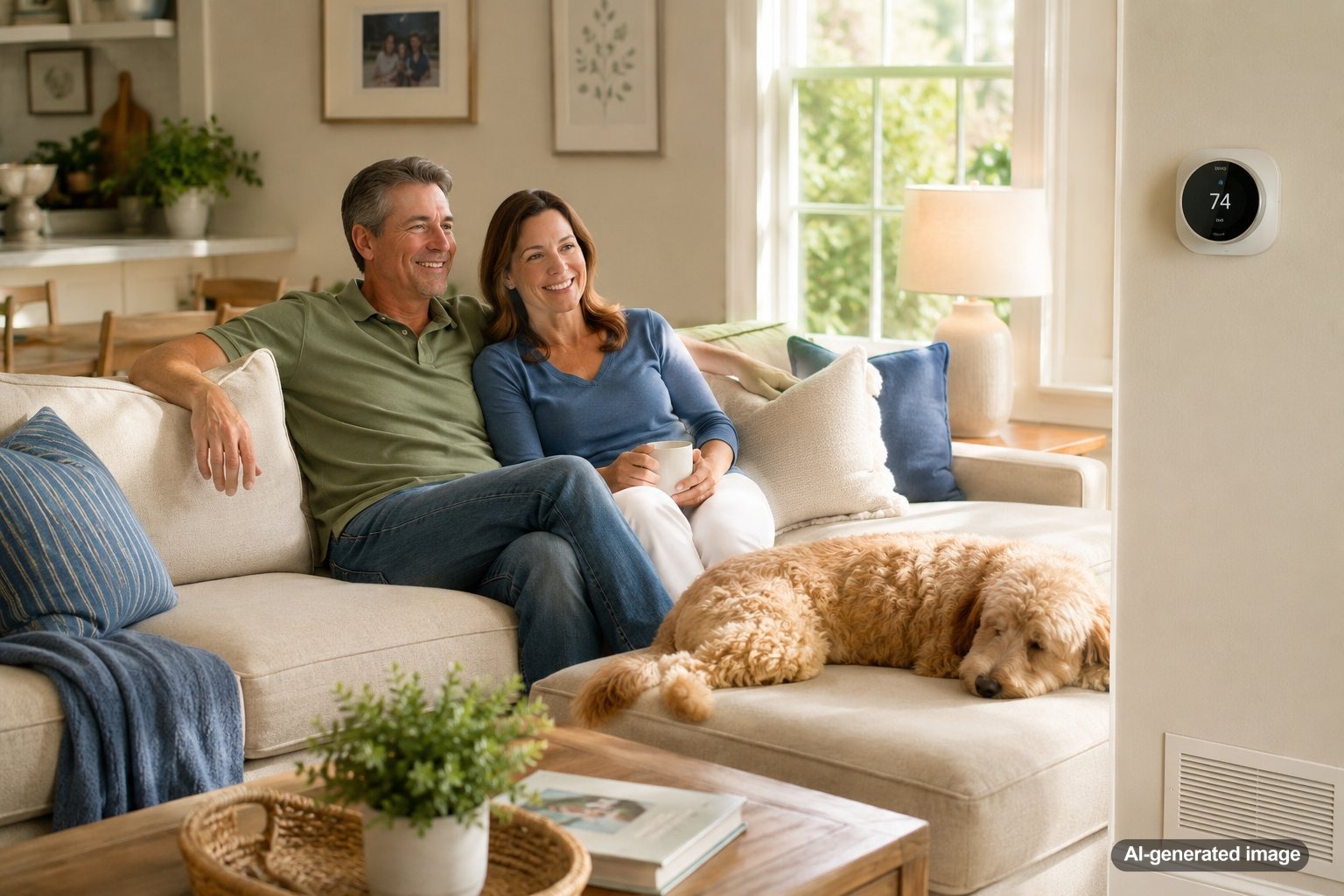
The best thermostat location for summer comfort is on an interior wall in a frequently used part of the home, away from direct sunlight, supply vents, exterior doors, windows, kitchens, and other heat sources. A thermostat can only control your cooling system based on the temperature it senses, so a poorly chosen location may cause the AC to run too long, shut off too soon, or leave certain rooms uncomfortable.
In Central and Northern New Jersey, where summer heat and humidity can change quickly, accurate temperature sensing matters. Proper placement can help your thermostat respond to the conditions people actually experience instead of reacting to a hot hallway, a drafty entry, or a blast of cold air from a nearby vent. Homeowners considering an upgrade can also review Meyer & Depew’s thermostat options.
- Choose an interior wall in a central, regularly occupied area.
- Keep the thermostat away from sunlight, windows, doors, vents, appliances, and lamps.
- Install it where normal household air can circulate around it.
- Avoid rooms that are consistently warmer or cooler than the rest of the home.
- Have a qualified HVAC professional evaluate placement when moving or replacing a thermostat.
Why Thermostat Location Matters in Summer
Your thermostat acts as the temperature sensor for the entire cooling system. When the surrounding air reaches the set temperature, the thermostat tells the AC to stop. When the temperature rises, it signals the system to start again.
If the thermostat is exposed to unusually warm conditions, the cooling system may keep running even after most rooms are comfortable. If it is located near a cold supply vent, the thermostat may think the house has cooled before distant rooms reach the desired temperature. These inaccurate readings can contribute to uneven comfort, longer run times, frequent cycling, and unnecessary thermostat adjustments.
The Best General Location for a Thermostat
For many homes, the best location is an interior wall near the center of the main living area. The thermostat should be in a space the household uses regularly, such as a central hallway near the living room, rather than an isolated room that stays closed most of the day.
The area should have normal air circulation without being directly in the path of conditioned air. It should also reflect the typical temperature of the home. A location that is naturally hotter, colder, sunnier, or draftier than surrounding rooms may not provide a representative reading.
Thermostat Locations to Avoid
Direct Sunlight
Sunlight can warm the thermostat housing and sensor, making the thermostat register a temperature higher than the actual room temperature. This may cause the AC to run longer than necessary, especially during the brightest part of the afternoon.
Near Supply Vents or Returns
A thermostat placed too close to a supply vent may receive a direct stream of cold air and shut the system off early. Placement immediately beside a large return may also expose the sensor to airflow that does not accurately represent the occupied space.
Exterior Doors and Windows
Exterior walls, drafty windows, and frequently opened doors can expose the thermostat to outdoor heat and changing air temperatures. A thermostat near a busy entry may respond every time the door opens instead of measuring normal indoor conditions.
Kitchens and Heat-Producing Appliances
Ovens, cooktops, refrigerators, televisions, lamps, and other electronics may add localized heat. A thermostat near these sources may call for extra cooling even when the rest of the house is already comfortable.
Little-Used or Closed Rooms
A guest room, formal dining room, or home office with a closed door may not reflect the temperature in the main living spaces. The same concern applies to stairwells, laundry rooms, garages, and unfinished areas.
How High Should a Thermostat Be Mounted?
A thermostat is typically installed at a height that allows it to sense the air in the occupied portion of the room while remaining easy to read and adjust. Existing wiring, wall construction, accessibility needs, manufacturer instructions, and local requirements may affect the exact height.
The important point is to avoid placing the thermostat unusually high near the ceiling or unusually low near the floor, where temperature differences may be more noticeable. A qualified technician can determine an appropriate height and verify that the sensor has open airflow around it.
What If the Most Comfortable Room Is Not Near the Thermostat?
Some homes have temperature differences that cannot be corrected by thermostat placement alone. A second-floor bedroom may remain warmer than a first-floor hallway because of solar heat gain, duct design, insulation, airflow, or the natural movement of warm air.
In these situations, moving the thermostat may simply change which area feels comfortable. A better solution may involve airflow balancing, remote room sensors, a smart thermostat, duct improvements, or a properly designed zoning system.
Can a Smart Thermostat Fix a Poor Location?
A smart thermostat may offer scheduling, remote access, occupancy features, and compatibility with room sensors, but it still needs reliable temperature information. Installing a smart thermostat in the same problematic location as the old thermostat may preserve the original comfort issue.
Remote sensors can help some systems account for temperatures in bedrooms or other priority rooms. Depending on the thermostat, the system may average several sensor readings or prioritize a particular room at certain times. Compatibility and setup should be evaluated carefully because not every HVAC system supports every thermostat or sensor arrangement.
Safe Checks Homeowners Can Make
- Notice whether sunlight reaches the thermostat during the day.
- Check for a supply vent blowing directly toward the thermostat.
- Look for nearby lamps, electronics, appliances, exterior doors, or windows.
- Make sure furniture, curtains, artwork, or shelving are not trapping air around the thermostat.
- Compare the thermostat reading with a reliable room thermometer placed nearby for a general reference.
A small temperature difference between devices does not automatically mean the thermostat is defective. Thermometers may respond at different speeds or have different accuracy ranges. Persistent comfort problems should be evaluated in the context of the entire HVAC system.
When to Call an HVAC Professional
Professional help is appropriate when you are replacing a thermostat, moving it to another wall, adding remote sensors, changing to a smart thermostat, or dealing with recurring temperature differences. Relocating a thermostat may require new low-voltage wiring, wall access, equipment compatibility checks, and configuration changes.
An HVAC technician can also determine whether the thermostat is the real cause of the problem. Uneven summer comfort may be related to blocked returns, restricted filters, duct leakage, incorrect system sizing, equipment performance, zoning issues, or inadequate airflow. If your AC is not cooling properly, schedule AC service and maintenance rather than assuming thermostat placement is the only issue.
Frequently Asked Questions
Should a thermostat be in the hallway or living room?
Either may work if the location is central, regularly exposed to normal household air, and free from sunlight, drafts, vents, and heat sources. A hallway that is closed off or rarely occupied may be less representative than an open living area.
Is it bad to place a thermostat on an exterior wall?
An exterior wall may be affected by outdoor temperatures, sunlight, insulation conditions, and drafts. An interior wall is generally preferred when a suitable location is available.
Can a thermostat be placed near a return vent?
It should not be placed where concentrated airflow affects the sensor. A technician can assess the distance, airflow pattern, and room layout before choosing a final location.
Will moving the thermostat fix uneven cooling?
It may help when the existing thermostat is receiving misleading temperature readings. It will not correct every airflow, duct, insulation, sizing, or equipment problem.
Should I move my thermostat myself?
Moving a thermostat may involve wiring, equipment setup, wall repairs, and system configuration. Professional installation can reduce the risk of wiring errors, compatibility problems, and inaccurate operation.
The best thermostat location is a central interior wall that reflects the temperature of the home’s main occupied spaces. Keep it away from direct sunlight, drafts, vents, doors, windows, appliances, and isolated rooms. If summer comfort remains uneven, the thermostat may be only one part of a larger airflow or HVAC issue.
Need help with your heating, cooling, or HVAC system?
Meyer & Depew serves homeowners and businesses throughout Central and Northern New Jersey.
Get a quote or call 908.272.2100.