



Can Fall Humidity Make Indoor Air Feel Clammy Even When It Is Cool Outside?
Estimated reading time: 11 minutes
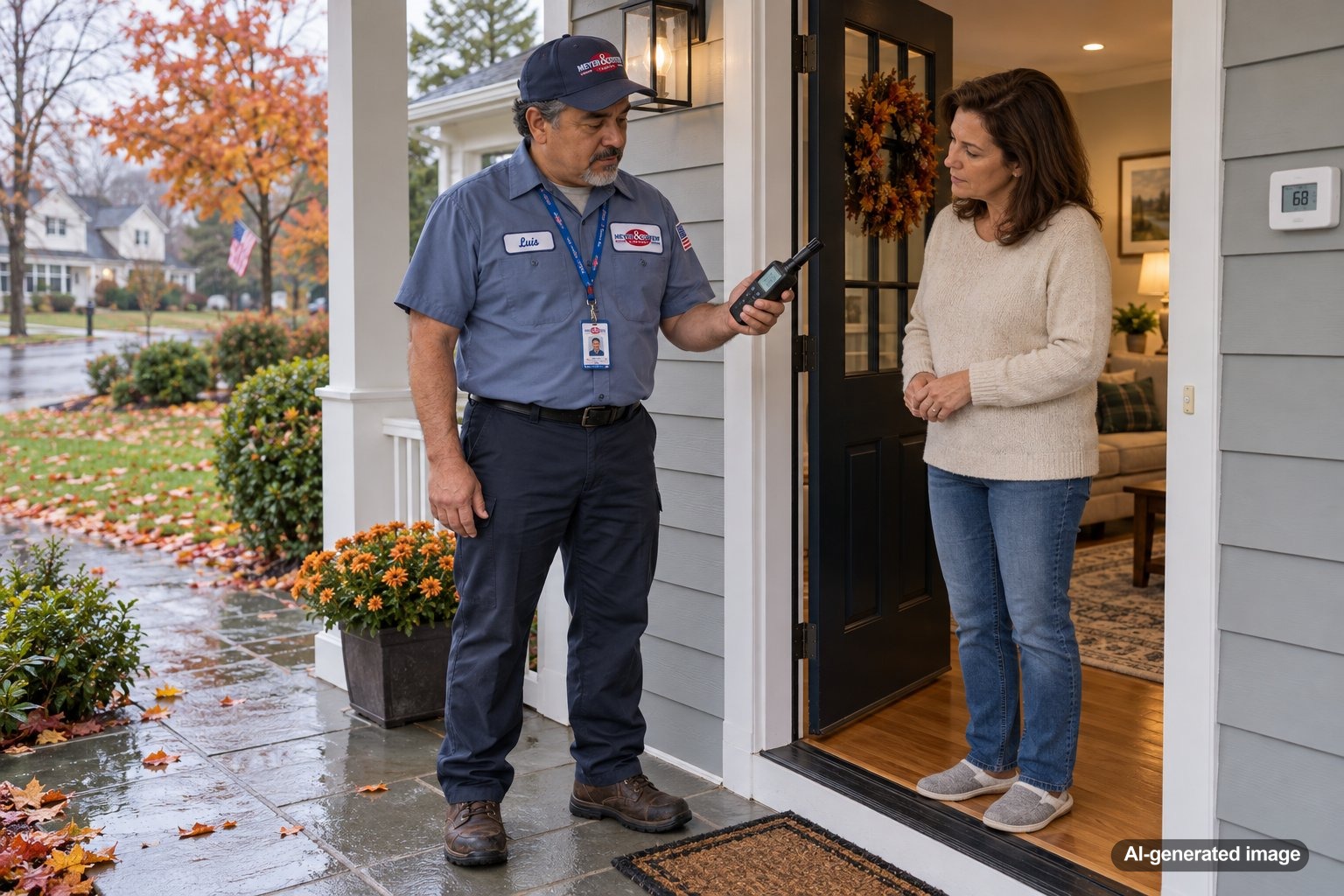
You open the windows on a cool October morning, expecting your house to feel fresh. Instead, the air inside seems oddly sticky. The thermostat says 68 degrees, but your living room feels more like a damp basement than a comfortable fall retreat. Yes, fall humidity can make indoor air feel clammy even when outdoor temperatures have dropped. In Central and Northern New Jersey, cool nights, rainy weather, and changing HVAC operating patterns can create the perfect conditions for this uncomfortable combination.
The confusing part is that your home may not need much cooling or heating. Yet humidity can remain elevated long after summer temperatures disappear. Understanding the difference between temperature and moisture helps explain why a cool house sometimes feels uncomfortable and what you can do about it. If dampness becomes a recurring issue, exploring your home’s indoor air quality and comfort options may be worthwhile.
Fall humidity can absolutely make a home feel clammy despite cool outdoor temperatures. Common reasons include:
- Cool, damp outdoor air entering the house without providing much drying benefit.
- An AC system that runs less frequently and removes less moisture.
- Indoor moisture from cooking, showering, laundry, and basement conditions.
- Limited ventilation or uneven air circulation.
- Humidity lingering in building materials after periods of wet weather.
The right solution depends on where the moisture is coming from, not just what the thermostat displays.
Why Cool Air Can Still Feel Clammy
Temperature and humidity describe two different conditions. Your thermostat measures how warm or cool the air is, while relative humidity describes how much water vapor the air contains compared with the maximum it could hold at that temperature.
Air can feel cool and damp at the same time. For example, a room at 68 degrees with 65% relative humidity may feel less comfortable than a room at the same temperature with 45% relative humidity. The higher humidity can slow moisture evaporation from your skin and contribute to that sticky sensation.
There is another important detail: relative humidity rises when air cools if its moisture content stays the same. This means a home that felt reasonably comfortable in the afternoon may seem noticeably damper after indoor temperatures fall overnight.
For many homes, maintaining indoor relative humidity around 30% to 50% is a useful general target, although ideal conditions vary with outdoor temperatures, building construction, and individual comfort needs. Consistently high readings deserve attention, particularly when accompanied by condensation or musty odors.
Why Fall Weather Creates Unusual Indoor Humidity Problems in New Jersey
New Jersey fall weather often changes dramatically over a short period. A sunny afternoon might be followed by a rainy evening, a cool night, and a warmer, humid morning. Those transitions can make indoor moisture conditions harder to manage than homeowners expect.
Cool Rainy Days Can Keep Moisture Levels Elevated
A fall day can feel chilly outside while the air remains close to saturation. Rain, fog, and persistent damp conditions contribute to that sensation.
Outdoor relative humidity alone does not tell you whether opening a window will dry your house. Cool air at high relative humidity may contain less total moisture than warmer indoor air. Once brought indoors and warmed, that outdoor air may actually help lower indoor relative humidity. On a mild, muggy day, however, open windows may introduce more moisture.
The useful comparison is the actual moisture content of indoor and outdoor air, often represented by dew point, rather than relative humidity percentages alone.
Cool Nights Change Indoor Relative Humidity
Suppose your home is 73 degrees during the afternoon and gradually cools to 66 degrees overnight. If the amount of water vapor in the air stays roughly constant, relative humidity rises as the temperature falls.
You might notice this most clearly in bedrooms, finished basements, and rooms that stay cooler than the rest of the house. The air can feel damp even though no additional moisture was introduced overnight.
Wet Ground and Basement Conditions Can Add Moisture
Rain-soaked soil, foundation moisture, and poorly drained areas around a home can contribute to damp basement conditions. This is especially relevant in older New Jersey homes with unfinished basement walls, crawl spaces, or recurring water intrusion.
A basement can remain humid when the upstairs living area feels relatively dry. Moisture from below may also influence adjacent rooms, particularly when air moves between floors.
If you notice persistent wet spots, foundation seepage, or standing water, those moisture sources need to be addressed directly. HVAC equipment alone cannot correct a building water-intrusion problem.
Why Your AC May Stop Removing Humidity in the Fall
During summer, a conventional central AC system provides cooling and removes some moisture as warm indoor air passes over its cold evaporator coil. Water vapor condenses on the coil and drains away.
In fall, outdoor temperatures often become mild enough that the thermostat rarely calls for cooling. The system might operate for only a few minutes or remain off for most of the day.
That is comfortable from a temperature standpoint, but it also means the AC is no longer removing much indoor moisture.
This creates a common fall comfort problem: your home has reached the desired temperature without reaching a comfortable humidity level.
Lowering the thermostat to force more cooling may temporarily remove some moisture, but it can also make the house uncomfortably cold. It is not a reliable long-term humidity-control strategy.
Some HVAC systems offer enhanced dehumidification capabilities, while other homes benefit from separate humidity-control equipment. A qualified technician can evaluate whether your existing system is operating properly and what options fit the building.
Everyday Activities Can Keep Fall Indoor Humidity High
When the AC stops running regularly, ordinary household activities can become more noticeable sources of moisture.
- Cooking: Boiling water, simmering soups, and other cooking activities release moisture into the air, especially without effective kitchen exhaust.
- Showers: Hot showers can raise bathroom humidity substantially. Moisture may spread to nearby rooms if ventilation is inadequate.
- Laundry: Indoor clothes drying and improperly vented dryers can add significant moisture.
- Houseplants: Plants release water vapor through transpiration, although their impact varies with the number of plants and other conditions.
- Basements and crawl spaces: Moisture evaporation from damp surfaces can continue regardless of the thermostat setting.
- Unvented combustion appliances: These can introduce both moisture and potentially dangerous combustion pollutants. Use only properly installed, appropriately vented equipment.
One shower or a pot of pasta is unlikely to explain persistent whole-house dampness by itself. Several moisture sources combined with limited drying and ventilation, however, can make a noticeable difference.
How to Tell Whether Your House Is Actually Too Humid
A clammy sensation is a useful clue, but it is not a reliable measurement. Air movement, surface temperatures, clothing, and personal comfort preferences can all influence how a room feels.
An inexpensive digital hygrometer can help you separate a genuine humidity problem from a temperature or airflow issue. Consider checking readings in the living room, bedroom, and basement rather than relying on a single location.
Look for patterns such as:
- Indoor relative humidity regularly remaining above 60%.
- Bedroom humidity rising overnight as temperatures fall.
- A basement reading substantially higher than upstairs readings.
- Condensation appearing on cooler windows, pipes, or surfaces.
- A recurring musty smell, particularly after rainy weather.
- Soft furnishings or bedding feeling damp despite comfortable room temperatures.
Take readings at different times over several days. A brief increase after a shower is different from elevated humidity that persists across multiple rooms throughout the day.
Condensation deserves particular attention. Window moisture may result from high indoor humidity, cold glass, or a combination of both. Persistent condensation can contribute to damage and may indicate that moisture management needs improvement.
Safe Ways to Make a Clammy House More Comfortable
Before considering equipment changes, a few practical checks may help reveal what is happening.
- Measure humidity: Use a hygrometer to track indoor temperature and relative humidity together.
- Check thermostat settings: Make sure the fan is set appropriately. Continuous fan operation on some AC systems can redistribute moisture remaining on the cooling coil after a cooling cycle.
- Inspect the air filter: Replace a dirty filter according to your equipment manufacturer’s guidance. Restricted airflow can affect HVAC operation, although a clean filter is not a substitute for dehumidification.
- Keep vents clear: Make sure supply registers and return air openings are not blocked by furniture or storage.
- Use exhaust ventilation: Run properly vented bathroom and kitchen exhaust fans during moisture-producing activities and afterward as needed.
- Check for visible moisture: Look for plumbing leaks, wet basement surfaces, and condensation around windows or exposed pipes.
- Use outdoor air strategically: Open windows when outdoor conditions can help dry the house, rather than assuming every cool day provides a drying benefit.
A properly sized portable dehumidifier may help in an isolated damp room or basement. It should be operated and maintained according to manufacturer instructions, including safe drainage and regular cleaning.
If moisture affects several rooms or repeatedly returns after simple adjustments, a broader evaluation is usually more useful than continually lowering the thermostat.
When Ventilation Helps and When It Can Make Things Worse
Opening windows on a crisp fall afternoon can make a home feel wonderful. But outdoor air is not automatically dry just because it feels cool.
Consider two different fall afternoons. On the first, the weather is cool with a relatively low dew point. Ventilation may help remove moisture from the home. On the second, the weather is mild, foggy, and unusually humid. Leaving windows open for hours may make indoor conditions worse.
Mechanical ventilation can also be part of a humidity-management strategy, but the equipment must be suitable for the home’s needs. Ventilation brings in outdoor air, while dehumidification actively removes moisture. These functions are related but not interchangeable.
Homeowners considering more consistent fresh-air exchange can learn about residential ventilation systems and discuss how outdoor moisture conditions affect their operation.
Could Your HVAC System Be Contributing to the Clammy Feeling?
Sometimes the issue is primarily seasonal weather and indoor moisture. In other cases, HVAC operation plays a role.
Possible contributing factors include an AC system that cycles too briefly to provide adequate moisture removal, improper airflow, thermostat fan settings, or equipment that was not selected with the home’s humidity needs in mind.
System sizing matters as well. An oversized cooling system can satisfy the thermostat quickly without operating long enough for effective moisture removal under certain conditions. This is one reason equipment capacity should be evaluated based on the home rather than simply choosing a larger unit.
Persistent dampness does not automatically mean your AC is malfunctioning. Conventional cooling equipment is primarily controlled by temperature demand, and mild fall weather can limit its opportunity to dehumidify even when it is working correctly.
A professional assessment can distinguish normal seasonal operation from a maintenance problem, airflow imbalance, equipment-control issue, or a need for dedicated dehumidification.
When to Schedule Professional Help
Occasional clamminess during a rainy fall day may resolve as the weather changes. A recurring problem deserves more investigation, especially when it affects sleep, produces persistent condensation, or makes finished living spaces difficult to use.
Consider professional HVAC service if:
- Indoor humidity remains elevated despite reasonable ventilation and moisture-control efforts.
- Your house feels cold and damp whenever the AC stops running for the season.
- Multiple rooms have noticeably different humidity or airflow conditions.
- The cooling system has unusually short operating cycles or inconsistent performance.
- You are considering whole-home humidity control or changes to existing HVAC equipment.
Visible mold, recurring water intrusion, or extensive wet building materials may also require a qualified moisture-remediation or building specialist. The water source should be corrected rather than relying solely on humidity-control equipment.
For HVAC-related concerns, a technician can review cooling performance, airflow, controls, and possible moisture-management solutions. The goal is to identify the actual cause rather than assume that another thermostat adjustment will fix the problem.
Frequently Asked Questions About Fall Indoor Humidity
Can indoor humidity be high when it is only 60 degrees outside?
Yes. Outdoor temperature alone does not determine indoor humidity. Moisture sources inside the home, building conditions, and outdoor dew point all influence indoor moisture levels. A cool day can coincide with a damp house.
Why does my house feel more humid at night in the fall?
As indoor air cools overnight, its relative humidity can increase even without additional moisture entering the house. Bedrooms with limited airflow or moisture from occupants’ breathing may show higher readings by morning.
Should I turn on the heat to get rid of humidity?
Heating air generally lowers its relative humidity without removing water vapor. This may make a room feel less clammy, but the actual moisture remains unless ventilation, dehumidification, or another process removes it. Heating alone is not a complete solution for persistent excess moisture.
Will running the AC on a cool fall day remove moisture?
It may remove moisture while actively cooling, but operation depends on the system and thermostat settings. Forcing extra cooling can leave the house too cold, and short cycles may provide limited dehumidification. Dedicated humidity control may be more appropriate for recurring problems.
What humidity level should I aim for in a New Jersey home during fall?
Approximately 30% to 50% relative humidity is a common general target. Actual conditions should account for outdoor temperatures, window condensation, building characteristics, and comfort. Repeated readings above 60% warrant investigating the moisture source.
Comfort in the Fall Is About More Than the Thermostat
A home can be cool enough according to the thermostat and still feel unpleasantly damp. Fall weather exposes this difference because cooling equipment runs less often while indoor moisture production continues.
Start by measuring humidity, checking for obvious moisture sources, and paying attention to when the problem appears. Those observations can reveal whether you are dealing with a short-lived weather pattern, a damp basement, insufficient ventilation, or an HVAC-related concern.
If the clammy feeling persists, professional evaluation can help determine which changes are appropriate for your particular home instead of treating every humidity problem as a reason to run the AC longer.
Need help with your heating, cooling, or HVAC system?
Meyer & Depew serves homeowners and businesses throughout Central and Northern New Jersey.
Get a quote or call 908.272.2100.