



Can Loose Registers Become Noisier During Heating Season?
Estimated reading time: 11 minutes
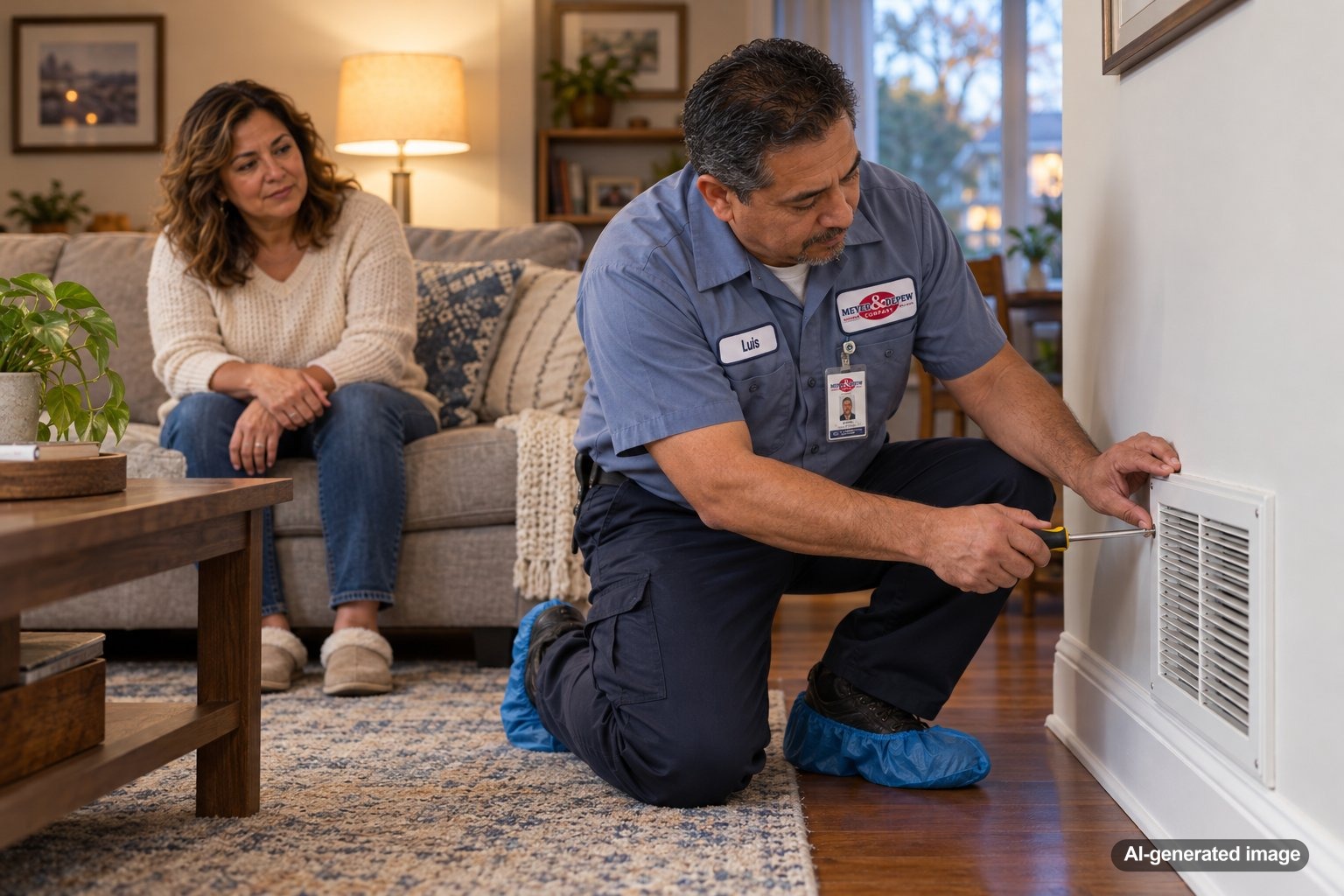
A faint rattle from a floor register in October might become an irritating buzz by January. If you have noticed that a heating vent seems louder every time your furnace starts, a loose register could be responsible. Yes, loose registers can become noticeably noisier during heating season, particularly when frequent heating cycles, moving air, and temperature changes cause the cover or surrounding materials to vibrate. The sound may be harmless, but understanding where it comes from can help you distinguish a simple fitting issue from a problem that deserves professional attention.
In Central and Northern New Jersey, heating systems may run for extended periods during colder weather. That gives small noises more opportunities to show up. A register that seemed perfectly quiet during occasional fall heating can become a persistent distraction when the system operates throughout the day. Although not every vent noise indicates a serious problem, recurring rattling, buzzing, or clicking is worth investigating. If the noise accompanies weak airflow or inconsistent heating, a broader evaluation through professional heating service and maintenance may be helpful.
Loose heating registers can become noisier during heating season because the system runs more frequently, metal components expand and contract, and airflow can make an unsecured cover vibrate.
- A metallic rattle may indicate a loose register cover or grille.
- Clicking or popping around startup and shutdown can result from temperature-related expansion and contraction.
- A steady buzzing sound may come from a register vibrating against its frame or surrounding flooring.
- Noise that occurs at multiple vents or accompanies poor airflow may point to a larger duct or HVAC issue.
- A few safe observations can help determine whether professional service is needed.
Why a Loose Register Can Get Louder When the Heat Is Running
A heating register is the grille or vent assembly through which conditioned air enters a room. Many floor registers sit inside an opening in the flooring, while wall and ceiling registers are typically secured with screws. Depending on the design, a register may also contain adjustable louvers or a damper that controls the direction or amount of airflow.
When the heating system operates, moving air passes through the ductwork and across the register. A securely fitted register generally produces little mechanical noise. However, if its frame, fasteners, louvers, or damper are loose, normal airflow can make those components vibrate.
The register does not necessarily become progressively looser throughout winter. Instead, increased heating activity makes an existing fit problem easier to notice. In some cases, repeated vibration or changes in surrounding materials may also aggravate the looseness.
Five Reasons Heating Season Can Make Register Noise More Noticeable
1. Longer and More Frequent Heating Cycles
During mild weather, your furnace may operate only occasionally. When temperatures fall, the system typically runs more often to maintain indoor comfort. Each heating cycle creates another opportunity for a loose register to rattle.
Consider a bedroom register that buzzes briefly whenever the blower starts. During early fall, the sound might occur infrequently enough to escape attention. In midwinter, repeated cycles can make the same noise seem much more significant.
2. Expansion and Contraction of Metal Components
Metal ductwork and register components can expand as they warm and contract as they cool. This movement sometimes produces clicking, ticking, or popping sounds.
A small click shortly after warm air begins flowing is different from a continuous metallic rattle. The first may reflect normal thermal movement, while the second is more suggestive of a vibrating or unsecured component.
However, the distinction is not absolute. Duct connections, framing contact, and other nearby materials can create similar sounds. An HVAC technician may need to examine the installation to identify the source.
3. Loose Screws, Frames, or Register Inserts
Wall and ceiling registers commonly rely on mounting screws. Over time, these fasteners can loosen, allowing the cover to vibrate against the wall or duct opening.
Floor registers present a slightly different situation. Some designs are not screwed down and instead depend on the fit between the register and the floor opening. A register that sits unevenly or moves inside an oversized opening may chatter when air passes through it.
These differences matter because a loose floor register is not necessarily missing a fastener. Its design, the condition of the surrounding flooring, and the size of the opening all affect how securely it sits.
4. Adjustable Louvers and Dampers Can Vibrate
Sometimes the visible frame is secure, but the moving pieces inside the register are not. Adjustable louvers or a damper may vibrate under airflow, especially when positioned nearly closed.
A partially restricted opening may also create a noticeable whistle or hiss as air moves through a smaller passage. That sound differs from a loose metal cover, even though both seem to originate at the register.
Register dampers should not be used to compensate for an unexplained airflow or system balancing problem. Closing multiple vents can change airflow conditions and may create additional operating concerns.
5. Ductwork Movement Can Transfer Noise to the Register
The register is not always the actual source of the sound. When the blower starts, changes in air pressure can cause portions of ductwork to flex slightly. The resulting noise may travel through the duct system and become audible at a room register.
This possibility is particularly relevant when the sound seems to come from behind the wall or below the floor rather than from the visible cover.
In older New Jersey homes, modifications to flooring, room layouts, and heating systems can create unusual contact points between ductwork and surrounding materials. A professional inspection can help determine whether the noise comes from the grille, the duct connection, or another component.
What Different Heating Register Noises May Mean
The timing and character of a noise provide useful clues, although sound alone cannot establish a diagnosis.
- Rapid metallic rattling: Often associated with a loose register cover, adjustable component, or nearby metal connection.
- Low buzzing: May occur when a cover or grille vibrates against its mounting surface during blower operation.
- One or two clicks at startup: Could result from metal expanding as heated air reaches the register or ductwork.
- Popping after the system shuts off: Sometimes occurs as warmed materials cool and contract.
- Whistling or hissing: May indicate air passing through a restrictive opening, damper, or narrow gap rather than a loose register.
- Thumping or banging: Could involve duct movement, but recurring or forceful sounds should be evaluated rather than attributed automatically to a register.
Pay attention to whether the noise occurs at a single register or throughout the house. A sound isolated to one grille is more consistent with a local fitting or airflow issue. Similar noises across several rooms may justify examining the duct system or blower operation.
Why the Noise May Be Worse in One Room
Not every supply register experiences identical airflow conditions. The length and configuration of a duct run, the location of a branch connection, and the register design can influence the sounds occupants hear.
A register close to the heating equipment may experience different airflow conditions from one located at the end of a long duct branch. Likewise, a ceiling grille with loose mounting screws can behave differently from a floor register resting in a wood floor opening.
Flooring materials can also influence noise. A register surrounded by wood flooring may have a different fit as indoor temperature and humidity conditions change. These changes do not prove that the flooring is causing the sound, but they can affect how tightly a register sits.
Another overlooked factor is room acoustics. A small buzz may be especially noticeable in a quiet bedroom or home office even when the register is no louder than one in a busy living area.
Safe Things Homeowners Can Check Before Calling for Service
You do not need to open HVAC equipment or modify ductwork to gather useful information about a noisy register. Begin with a few basic observations.
- Identify the timing. Notice whether the noise starts with the blower, continues throughout the heating cycle, or occurs as the system shuts down.
- Look at the visible cover. Check whether the register appears crooked, raised, damaged, or noticeably out of position. Avoid removing ceiling covers or reaching into ductwork.
- Check adjustable louvers. If the register has a normal user-operated adjustment, make sure it is not nearly closed or positioned in a way that causes obvious vibration.
- Keep the opening unobstructed. Move furniture, rugs, and other objects away from supply and return vents.
- Inspect the air filter. If accessible, check whether the filter needs replacement according to the equipment manufacturer’s recommendations.
- Note which rooms are affected. Record whether the noise is isolated to one register or occurs at several locations.
Do not place objects inside a register to stop vibrations, tape over the airflow opening, or force components into position. These approaches can restrict airflow, create maintenance problems, or conceal the actual source of the noise.
If the register is visibly damaged, mounting hardware is missing, or the opening appears unsafe, arrange for an appropriate professional to inspect it.
When a Noisy Register Points to a Larger Heating Problem
A loose register alone generally does not indicate that your furnace is failing. However, certain accompanying symptoms make a professional HVAC evaluation more appropriate.
Schedule service if the noise is becoming substantially louder, occurs at multiple registers, or seems to originate deep inside the duct system. Professional attention is also appropriate if you notice weak airflow, uneven heating, unusual blower sounds, or frequent system cycling.
For example, a rattling grille in one bedroom with otherwise normal heating might be a localized issue. Several registers that begin whistling while rooms become difficult to heat suggest that airflow conditions deserve closer examination.
A qualified technician can evaluate accessible duct connections, airflow restrictions, equipment operation, and other factors that may contribute to the sound. Depending on the findings, the solution could involve a register fitting, ductwork correction, or another targeted repair.
If you notice smoke, sparks, an electrical burning odor, or signs of overheating, stop using the equipment when safe and contact a qualified professional. For a suspected gas leak, leave the building and contact your gas utility or emergency services from a safe location. A carbon monoxide alarm should also be treated as an emergency, not as a routine register-noise concern.
Can Routine Heating Maintenance Help With Register Noise?
Routine maintenance does not guarantee quiet ductwork, but it provides an opportunity to identify operating issues that may contribute to unusual sounds.
During a heating system evaluation, a technician can assess equipment performance and consider whether airflow restrictions or other system conditions are relevant to the noise. The exact inspection depends on the equipment, the symptoms, and the service being performed.
For homeowners who want a more consistent approach to seasonal equipment care, Meyer & Depew offers residential HVAC service plans. Regular attention to heating equipment can help homeowners stay informed about system condition, although a specific register or ductwork repair may require separate evaluation.
It is also worth remembering that not every noise is an equipment maintenance issue. An improperly sized floor opening, damaged register, or loose wall grille may require a localized correction rather than extensive furnace work.
Frequently Asked Questions About Loose Heating Registers
Can a loose register damage my furnace?
A loose register cover by itself typically does not damage a furnace. However, if the noise is related to widespread airflow restrictions, improperly adjusted dampers, or another system issue, those conditions may affect equipment operation. A technician can help distinguish a simple loose cover from a broader airflow concern.
Why does my heating vent only rattle when the furnace first turns on?
The initial blower airflow may cause a loose grille or internal component to vibrate. Temperature changes can also create brief clicking or popping sounds as metal warms. The exact source depends on the register and duct arrangement.
Is it normal for heating vents to click during winter?
Occasional light clicking may result from normal expansion and contraction of metal components. Persistent rattling, loud banging, or a significant change in the sound warrants closer attention, particularly when heating performance is also affected.
Why is my floor register noisy but my wall registers are quiet?
Floor and wall registers are often mounted differently. A floor register may rely on a snug fit in the flooring rather than screws, making it more susceptible to movement if the opening is uneven or oversized. Airflow and duct configuration can also vary from room to room.
Should I close a noisy heating vent to stop the sound?
Closing the vent is generally not the best solution. It may reduce a particular noise in some cases, but restricting airflow can create other problems and may produce whistling or additional vibration. Identifying the source of the noise is a better approach.
The Bottom Line: A Louder Register Does Not Always Mean a Bigger Problem
Loose registers can absolutely become more noticeable during heating season. Frequent furnace operation, moving air, thermal expansion, and imperfect mounting conditions can turn a small vibration into a recurring rattle or buzz.
The most useful distinction is whether the sound appears to come from one loose cover or accompanies changes in heating performance elsewhere in the home. A quiet system is desirable, but the goal is not simply to silence the register. It is to understand what is producing the noise and whether it affects safe, reliable operation.
For homeowners in Central and Northern New Jersey, paying attention to when the sound occurs and which registers are involved can make a service visit more productive. If the noise persists or develops alongside uneven temperatures or reduced airflow, a qualified HVAC technician can help determine the appropriate next step.
Need help with your heating, cooling, or HVAC system?
Meyer & Depew serves homeowners and businesses throughout Central and Northern New Jersey.
Get a quote or call 908.272.2100.